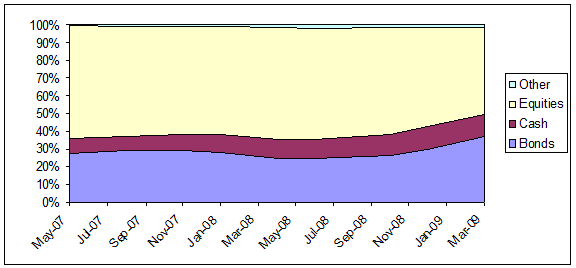
Asset allocations changed significantly during the first quarter of 2009, as fixed income positions increased and equity positions decreased. Although some of these shifts were attributable to market movements (US equities declined approximately 11% and foreign equities declined by approximately 14% during the quarter, while the Lehman AGG was down 0.3%), these shifts were attributable to proactive decisions or rebalancing by advisors. Cash positions remained unchanged during the quarter.
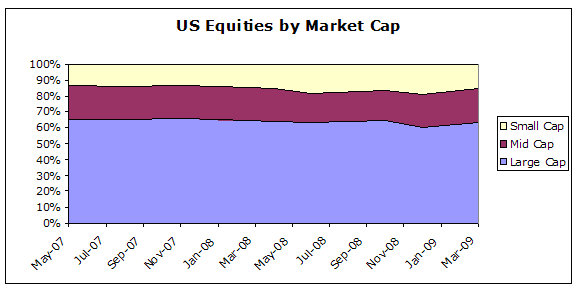
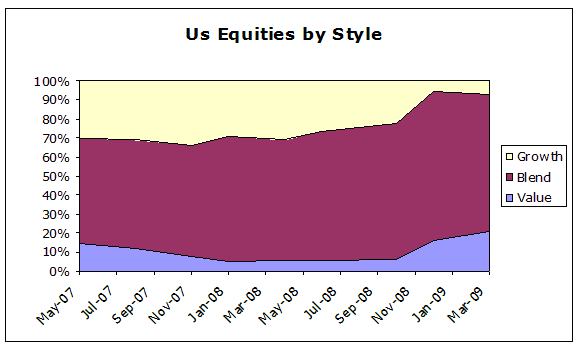
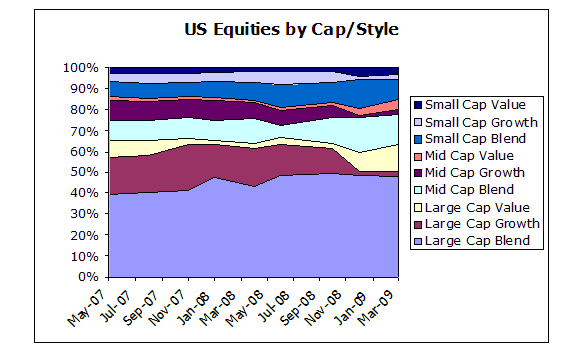
Shifts occurred within US equity allocations, as assets moved out of large and mid-cap and into small cap (reversing movements in the prior quarter), as well as out of blend and into value and growth. These shifts, particularly at the style level, reflect changes in classifications due to rapidly changing market dynamics, and not due to proactive shifts by advisors.
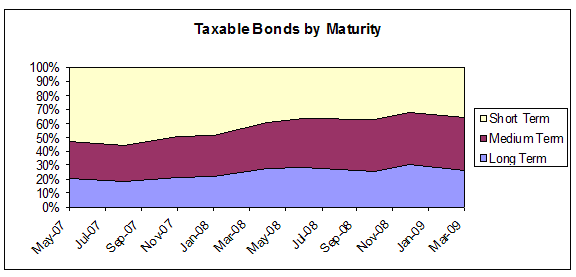
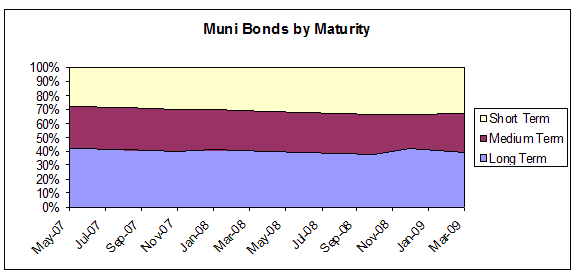
In the fixed income markets, advisors contracted maturities in the taxable and municipal markets, increasing short and medium term holdings and decreasing long term holdings.
Here are some of the more significant movements during the quarter:
- Cash positions increased by 0.1%, continuing a trend that has been evident since August of 2007. Since that time, cash holdings have increased from 7.9% to 12.3% of total assets. During the first quarter, equity holdings (US and non-US) decreased by 6.8%, while the SPY declined by 11.0%, and developed non-US markets (based on EFA) declined by 14.0%. Fixed income positions increased by 6.8%, while the benchmark performance (the Lehman AGG) was down 0.3%. If advisors had not rebalanced during the quarter, equity allocations would have decreased by approximately 3.1% and bond positions would have increased by 2.1% due to market movements, and cash would have increased by 0.9%. Since the actual movements exceed these approximations, we can infer that, in the aggregate, advisors rebalanced and/or made proactive re-allocations during the fourth quarter.
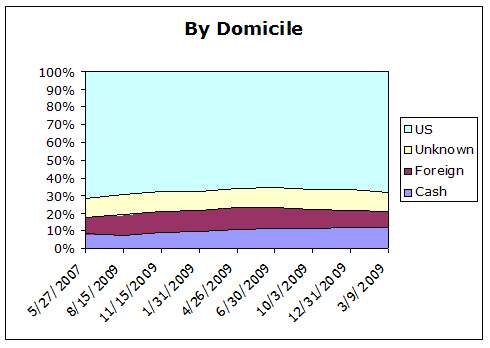
- Continuing a trend from the third quarter, assets shifted into US equity and fixed income markets (+1.4%), as non-US positions decreased (-0.8%). This is partly attributable to market movements and not due to rebalancing by advisors. Since our analysis began in May of 2007, there has been a shift in assets out of US markets (from 71.4% to 68.3%) and non-US markets (from 9.8% to 8.5%), as cash positions have increased from 8.4% to 12.3%. This is largely the result of market movements rather than proactive decisions or rebalancing by advisors.
- Within the US equity markets, there was a shift into large cap (+3.4%) and mid cap (+0.4%) and out of small cap (-3.8%), as well as into value (+4.7%) and growth (+1.6%) and out of blend (-6.1%). Over the past three quarters, allocations to growth have decreased by 25.5%, from 31.0% to 7.1%. This shift in style allocations is not due to market movements, and instead is explained by changes in classifications of funds and individual stock positions (i.e., more stocks and funds are now classified as value than in the previous quarter).
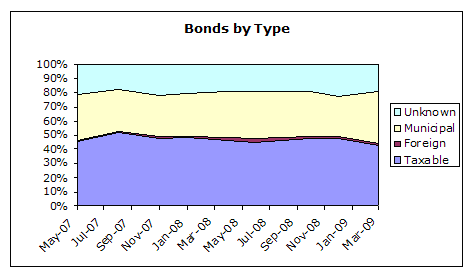
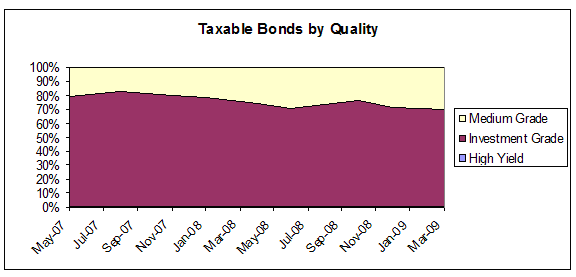
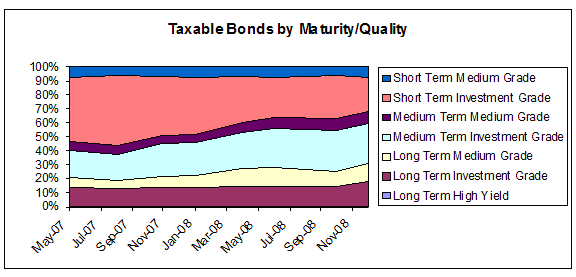
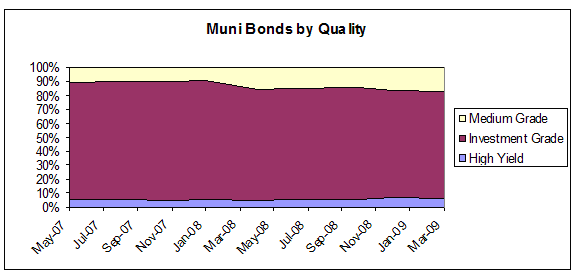
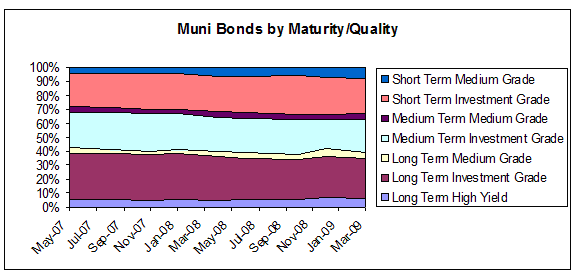
- Within fixed income allocations, muni bond assets increased by 7.8% and taxable bond assets decreased by 4.1%. More significantly, taxable and municipal maturities contracted, after having extended over the last several quarters. On the taxable side, maturities shortened considerably, with short term assets increasing by 3.2%, medium term assets increasing by 0.7% and long term assets decreasing by 3.9%. On the municipal side, short term assets decreased by 0.6%, while medium term assets increased by 2.6%, and long term assets decreased by 1.9%. Investment grade taxable bond holdings decreased by 1.6% and medium grade holdings increased by almost the same amount. Municipal bond holdings exhibited the same pattern, with investment grade holdings increasing by 0.1%, medium grade holdings increasing by 0.8%, and high yield holdings decreasing by 0.8%. These changes in quality are mitigated by the fact that ratings are generally being downgraded, so a lack of rebalancing or proactive decisions would have the same effect on allocations.
Methodology
Every quarter we review changes in Asset Allocation in the Advisor Perspectives (AP) Universe. Previous analyses were done:
January 6, 2009
October 8, 2008
July 22, 2008
May 13, 2008
February 19, 2008
November 15, 2007
August 15, 2007
May 27, 2007
This week we look at changes from December 31, 2008 to March 31, 2009.
Our analysis looks at changes across the entire AP Universe. The AP Universe consists of assets from high net worth (HNW) and ultra-high net worth (UHNW) investors being managed by Registered Investment Advisors (RIAs). The AP Universe is divided into three tiers based on account size. In the tier containing the Largest Accounts, the average account size is approximately $3.7 million (and this remained constant over the 12 week period). Approximately 94% of the assets (by market value) are in the Largest Accounts, so this analysis is primarily indicative of shifts in this account tier.
The tables below show the complete data for the AP Universe for each of the prior measurement periods. The number in parentheses is the total AUM as of 3/31/09.
Mary Pitek, Operations Manager for Advisor Perspectives, contributed to this article.
By Asset Class ($45,522,151,751)

Asset Class |
5/27/07 |
8/15/07 |
11/15/07 |
1/31/08 |
4/26/08 |
6/30/08 |
10/3/08 |
12/31/08 |
3/31/09 |
Bonds |
27.7% |
29.2% |
28.9% |
28.1% |
24.8% |
24.6% |
26.7% |
30.4% |
37.21% |
Cash |
8.4% |
7.9% |
9.0% |
9.8% |
10.7% |
11.1% |
11.2% |
12.2% |
12.26% |
Equities |
63.5% |
62.1% |
60.9% |
60.9% |
62.7% |
62.4% |
60.4% |
56.0% |
49.17% |
Other |
0.4% |
0.8% |
1.2% |
1.2% |
1.8% |
1.9% |
1.7% |
1.4% |
1.36% |
Asset Class |
Change From |
5/27 to
8/15 |
8/15 to
11/15 |
11/15 to
1/31 |
1/31 to
4/26 |
4/26 to
6/30 |
6/30 to
10/3 |
10/3 to
12/31 |
12/31 to
3/31 |
Bonds |
1.5% |
-0.3% |
-0.8% |
-3.4% |
-0.2% |
2.1% |
3.7% |
6.81% |
Cash |
-0.5% |
1.1% |
0.8% |
0.9% |
0.4% |
0.1% |
1.0% |
0.06% |
Equities |
-1.4% |
-1.2% |
0.0% |
1.8% |
-0.3% |
-2.0% |
-4.4% |
-6.83% |
Other |
0.4% |
0.4% |
0.0% |
0.6% |
0.1% |
-0.2% |
-0.3% |
-0.04% |
By Domicile ($45,522,151,751)
Domicile |
5/27/07 |
8/15/09 |
11/15/09 |
1/31/09 |
4/26/09 |
6/30/09 |
10/3/09 |
12/31/09 |
3/31/09 |
Cash |
8.4% |
7.9% |
9.0% |
9.8% |
10.7% |
11.1% |
11.2% |
12.2% |
12.26% |
Foreign |
9.8% |
11.5% |
12.1% |
11.7% |
13.3% |
12.7% |
11.1% |
9.1% |
8.5% |
Unknown |
10.4% |
11.2% |
11.3% |
10.6% |
10.6% |
11.4% |
11.1% |
11.8% |
10.96% |
US |
71.4% |
69.4% |
67.5% |
67.9% |
65.4% |
64.7% |
66.7% |
66.9% |
68.29% |
Domicile |
Change From |
|
5/27 to 8/15 |
8/15 to 11/15 |
11/15 to 1/31 |
1/31 to 4/26 |
4/26 to 6/30 |
6/30 to 10/3 |
10/3 to 12/31 |
12/31 to
3/31 |
Cash |
-0.5% |
1.1% |
0.8% |
0.9% |
0.4% |
0.1% |
1.0% |
0.06% |
Foreign |
1.7% |
0.6% |
-0.4% |
1.6% |
-0.6% |
-1.6% |
-2.0% |
-0.6% |
Unknown |
0.8% |
0.1% |
-0.7% |
0.0% |
0.8% |
-0.3% |
0.7% |
-0.84% |
US |
-2.0% |
-1.9% |
0.4% |
-2.6% |
-0.7% |
2.0% |
0.2% |
1.39% |
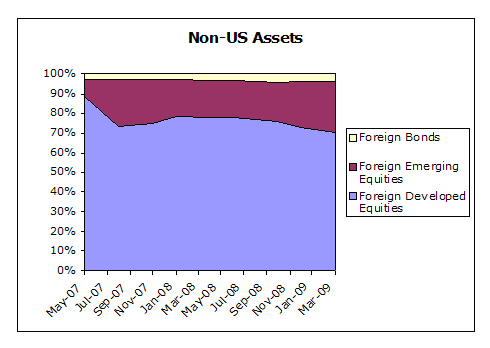
Non-US Assets ($3,868,037,202)
Non-US
Assets |
5/27/07 |
8/15/07 |
11/15/07 |
1/31/08 |
4/26/08 |
6/30/08 |
10/3/08 |
12/31/08 |
3/31/09 |
Foreign
Developed
Equities |
88.4% |
73.2% |
75.1% |
78.2% |
77.6% |
77.9% |
75.6% |
72.7% |
70.81% |
Foreign
Emerging
Equities |
8.7% |
23.9% |
21.8% |
18.6% |
18.9% |
18.7% |
19.8% |
23.3% |
25.19% |
Foreign
Bonds |
2.9% |
2.9% |
3.1% |
3.3% |
3.5% |
3.5% |
4.7% |
4.0% |
4.0% |
Non-US Assets |
Change From |
5/27 to
8/15 |
8/15 to
11/15 |
11/15 to
1/31 |
1/31 to
4/26 |
4/26 to
6/30 |
6/30 to
10/3 |
10/3 to
12/31 |
12/31 to
3/31 |
Foreign Developed
Equities |
-15.2% |
1.9% |
3.1% |
-0.5% |
0.3% |
-2.3% |
-2.9% |
-1.89% |
Foreign Emerging
Equities |
15.2% |
-2.1% |
-3.2% |
0.3% |
-0.2% |
1.1% |
3.5% |
1.89% |
Foreign Bonds |
0.0% |
0.2% |
0.2% |
0.2% |
-0.1% |
1.2% |
-0.7% |
0.0% |
US Equities by Market Cap ($17,499,535,303)
US Equities
by
Market Cap |
5/27/07
|
8/15/07 |
11/15/07 |
1/31/08 |
4/26/08 |
6/30/08 |
10/3/08 |
12/31/08 |
3/31/09 |
Large Cap |
65.3% |
65.2% |
66.0% |
65.0% |
64.0% |
63.3% |
64.1% |
60.0% |
63.44% |
Mid Cap |
21.1% |
20.2% |
20.1% |
20.5% |
20.4% |
18.3% |
19.0% |
20.7% |
21.05% |
Small Cap |
13.6% |
14.6% |
14.0% |
14.5% |
15.6% |
18.4% |
16.9% |
19.3% |
15.5% |
US Equities by Market Cap |
Change From |
5/27 to 8/15 |
8/15 to 11/15 |
11/15 to 1/31 |
1/31 to 4/26 |
4/26 to 6/30 |
6/30 to 10/3 |
10/3 to 12/31 |
12/31 to 3/31 |
Large Cap |
-0.1% |
0.8% |
-1.0% |
-1.0% |
-0.7% |
0.8% |
-4.1% |
3.44% |
Mid Cap |
-0.9% |
-0.1% |
0.4% |
-0.1% |
-2.1% |
0.7% |
1.7% |
0.35% |
Small Cap |
1.0% |
-0.6% |
0.5% |
1.1% |
2.8% |
-1.5% |
2.4% |
-3.8% |
US Equities by Style ($17,499,535,303)
US Equities
by Style |
5/27/07 |
8/15/07 |
11/15/07 |
1/31/08 |
4/26/08 |
6/30/08 |
10/3/08 |
12/31/08 |
3/31/09 |
Value |
13.8% |
12.0% |
7.1% |
5.2% |
5.7% |
5.8% |
6.3% |
16.1% |
20.75% |
Blend |
55.7% |
57.0% |
58.9% |
65.4% |
63.3% |
67.9% |
70.9% |
78.3% |
72.21% |
Growth |
30.5% |
31.0% |
34.1% |
29.4% |
31.0% |
26.3% |
22.9% |
5.5% |
7.05% |
US Equities |
Change From |
by Style |
5/27 to 8/15 |
8/15 to 11/15 |
11/15 to 1/31 |
1/31 to 4/26 |
4/26 to 6/30 |
6/30 to 10/3 |
10/3 to 12/31 |
12/31 to 3/31 |
Value |
-1.8% |
-4.9% |
-1.9% |
0.5% |
0.1% |
0.5% |
9.8% |
4.65% |
Blend |
1.3% |
1.9% |
6.5% |
-2.1% |
4.6% |
3.0% |
7.4% |
-6.09% |
Growth |
0.5% |
3.1% |
-4.7% |
1.6% |
-4.7% |
-3.4% |
-17.4% |
1.55% |
US Equities by Market Cap/Style ($17,499,535,303)
US Equities
by
Cap/Style |
5/27/07 |
8/15/07 |
11/15/07 |
1/31/08 |
4/26/08 |
6/30/08 |
10/3/08 |
12/31/08 |
3/31/09 |
Large Cap
Blend |
39.4% |
40.5% |
41.7% |
47.3% |
43.3% |
46.2% |
49.0% |
48.3% |
44.83% |
Large Cap
Growth |
17.3% |
17.3% |
21.4% |
16.0% |
18.1% |
14.5% |
12.1% |
2.6% |
2.89% |
Large Cap
Value |
8.6% |
7.4% |
2.8% |
1.7% |
2.6% |
2.6% |
2.9% |
9.0% |
11.75% |
Mid Cap
Blend |
9.5% |
9.5% |
10.1% |
10.0% |
11.6% |
6.2% |
11.9% |
16.4% |
13.57% |
Mid Cap
Growth |
9.3% |
8.8% |
8.4% |
9.6% |
7.7% |
6.2% |
5.7% |
0.9% |
1.72% |
Mid Cap
Value |
2.3% |
1.9% |
1.5% |
1.0% |
1.1% |
1.2% |
1.3% |
3.4% |
4.44% |
Small Cap
Blend |
6.8% |
7.0% |
7.0% |
8.1% |
8.5% |
10.8% |
9.9% |
13.6% |
9.28% |
Small Cap
Growth |
3.9% |
4.9% |
4.2% |
3.9% |
5.1% |
5.6% |
5.0% |
2.0% |
2.0% |
Small Cap
Value |
2.9% |
2.7% |
2.8% |
2.6% |
2.0% |
2.0% |
2.0% |
3.8% |
3.25% |
US Equities by
Cap/Style |
Change From |
5/27 to
8/15 |
8/15 to
11/15 |
11/15 to
1/31 |
1/31 to
4/26 |
4/26 to
6/30 |
6/30 to
10/3 |
10/3 to
12/31 |
12/31 to
3/31 |
Large Cap Blend |
1.1% |
1.2% |
5.6% |
-4.0% |
2.9% |
2.8% |
-0.7% |
-3.47% |
Large Cap Growth |
0.0% |
4.1% |
-5.4% |
2.1% |
-3.6% |
-2.4% |
-9.5% |
0.29% |
Large Cap Value |
-1.2% |
-4.6% |
-1.1% |
0.9% |
0.0% |
0.3% |
6.1% |
2.75% |
Mid Cap Blend |
0.0% |
0.6% |
-0.1% |
1.6% |
-5.4% |
5.7% |
4.5% |
-2.83% |
Mid Cap Growth |
-0.5% |
-0.4% |
1.2% |
-1.8% |
-1.5% |
-0.5% |
-4.8% |
0.82% |
Mid Cap Value |
-0.4% |
-0.4% |
-0.5% |
0.2% |
0.1% |
0.1% |
2.1% |
1.04% |
Small Cap Blend |
0.2% |
0.0% |
1.1% |
0.4% |
2.3% |
-0.9% |
3.7% |
-4.32% |
Small Cap Growth |
1.0% |
-0.7% |
-0.3% |
1.2% |
0.5% |
-0.6% |
-3.0% |
0.0% |
Small Cap Value |
-0.2% |
0.1% |
-0.2% |
-0.6% |
0.0% |
0.0% |
1.8% |
-0.55% |
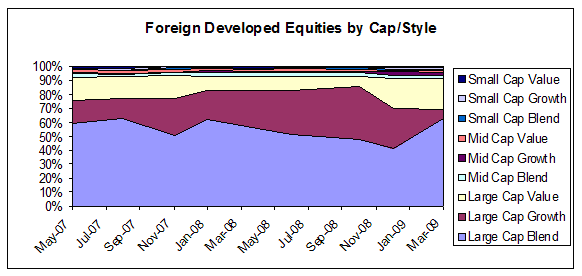
Foreign Developed Equities by Market Cap ( $2,738,963,561)
Non-US
Equities
by Cap |
5/27/07 |
8/15/07 |
11/15/07 |
1/31/08 |
4/26/08 |
6/30/08 |
10/3/08 |
12/31/08 |
3/31/09 |
Large Cap |
92.0% |
92.8% |
93.2% |
92.7% |
92.7% |
92.6% |
93.0% |
91.5% |
91.53% |
Mid Cap |
5.7% |
4.4% |
4.6% |
5.9% |
5.7% |
5.8% |
5.3% |
5.9% |
5.93% |
Small Cap |
2.2% |
2.7% |
2.2% |
1.5% |
1.6% |
1.6% |
1.7% |
2.6% |
2.54% |
Non-US Equities by Cap |
Change From |
5/27 to
8/15 |
8/15 to
11/15 |
11/15 to
1/31 |
1/31 to
4/26 |
4/26 to
6/30 |
6/30 to
10/3 |
10/3 to
12/31 |
12/31 to
3/31 |
Large Cap |
0.8% |
0.4% |
-0.5% |
0.0% |
-0.1% |
0.4% |
-1.5% |
0.03% |
Mid Cap |
-1.3% |
0.2% |
1.3% |
-0.2% |
0.1% |
-0.5% |
0.6% |
0.03% |
Small Cap |
0.5% |
-0.5% |
-0.7% |
0.1% |
0.0% |
0.1% |
0.9% |
-0.06% |
Foreign Developed Equities by Style ($2,738,963,561)
Foreign Developed Equities by Style |
5/27/07 |
8/15/07 |
11/15/07 |
1/31/08 |
4/26/08 |
6/30/08 |
10/3/08 |
12/31/08 |
3/31/09 |
Blend |
61.9% |
64.4% |
54.4% |
65.3% |
58.7% |
55.0% |
51.3% |
43.6% |
64.88% |
Growth |
17.9% |
16.4% |
27.1% |
23.1% |
29.8% |
33.5% |
39.4% |
34.2% |
9.22% |
Value |
20.2% |
19.2% |
18.5% |
11.7% |
11.5% |
11.5% |
9.3% |
22.1% |
25.9% |
Foreign Developed Equities by Style |
Change From |
5/27 to
8/15 |
8/15 to
11/15 |
11/15 to
1/31 |
1/31 to
4/26 |
4/26 to
6/30 |
6/30 to
10/3 |
10/3 to
12/31 |
12/31 to
3/31 |
Blend |
2.5% |
-10.0% |
10.9% |
-6.6% |
-3.7% |
-3.7% |
-7.7% |
21.28% |
Growth |
-1.5% |
10.7% |
-4.0% |
6.7% |
3.7% |
5.9% |
-5.2% |
-24.98% |
Value |
-1.0% |
-0.7% |
-6.8% |
-0.1% |
0.0% |
-2.2% |
12.8% |
3.8% |
Foreign Developed Equities by Market Cap/Style ($2,864,719,516)
Foreign
Developed
Equities
by
Cap/Style |
5/27/07 |
8/15/07 |
11/15/07 |
1/31/08 |
4/26/08 |
6/30/08 |
10/3/08 |
12/31/08 |
3/31/09 |
Large Cap
Blend |
59.0% |
62.6% |
50.1% |
62.0% |
55.6% |
52.0% |
47.8% |
41.3% |
62.47% |
Large Cap
Growth |
16.3% |
14.7% |
26.2% |
21.2% |
27.9% |
31.5% |
37.8% |
29.4% |
6.66% |
Large Cap
Value |
16.8% |
15.5% |
16.9% |
9.5% |
9.3% |
9.1% |
7.3% |
20.9% |
22.41% |
Mid Cap
Blend |
2.6% |
1.4% |
2.5% |
2.6% |
2.7% |
2.4% |
2.2% |
1.5% |
1.92% |
Mid Cap
Growth |
0.9% |
0.8% |
0.7% |
1.8% |
1.7% |
1.9% |
1.5% |
3.7% |
1.52% |
Mid Cap
Value |
2.2% |
2.3% |
1.4% |
1.5% |
1.3% |
1.5% |
1.6% |
0.7% |
2.48% |
Small Cap
Blend |
0.3% |
0.4% |
1.9% |
0.7% |
0.4% |
0.6% |
1.3% |
0.9% |
0.49% |
Small Cap
Growth |
0.7% |
0.9% |
0.2% |
0.1% |
0.2% |
0.1% |
0.1% |
1.2% |
1.04% |
Small Cap
Value |
1.3% |
1.5% |
0.2% |
0.7% |
1.3% |
0.9% |
0.4% |
0.5% |
1.0% |
Foreign Developed
Equities by Cap/Style |
Change From |
5/27 to
8/15 |
8/15 to
11/15 |
11/15 to
1/31 |
1/31 to
4/26 |
4/26 to
6/30 |
6/30 to
10/3 |
10/3 to
12/31 |
12/31 to
3/31 |
Large Cap Blend |
3.6% |
-12.5% |
11.9% |
-6.5% |
-3.6% |
-4.2% |
-6.5% |
68.97% |
Large Cap Growth |
-1.6% |
11.5% |
-5.0% |
6.7% |
3.6% |
6.3% |
-8.4% |
15.06% |
Large Cap Value |
-1.3% |
1.4% |
-7.4% |
-0.2% |
-0.2% |
-1.8% |
13.6% |
8.81% |
Mid Cap Blend |
-1.2% |
1.1% |
0.1% |
0.1% |
-0.3% |
-0.2% |
-0.7% |
2.62% |
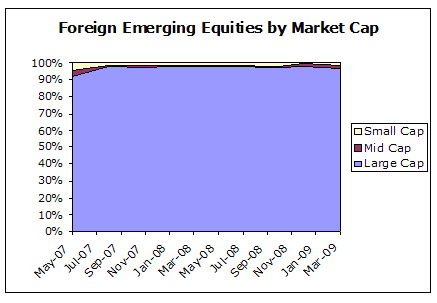
Foreign Emerging Equities by Market Cap ($974,269,292)
Foreign
Emerging
Equities
by
Market Cap |
5/27/07
|
8/15/07 |
11/15/07 |
1/31/08 |
4/26/08 |
6/30/08 |
10/3/08 |
12/31/08 |
3/31/09 |
Large Cap |
92.4% |
97.4% |
96.9% |
97.9% |
98.1% |
98.2% |
97.3% |
98.3% |
96.16% |
Mid Cap |
3.1% |
1.4% |
2.2% |
0.8% |
0.7% |
0.6% |
0.9% |
0.9% |
2.41% |
Small Cap |
4.6% |
1.2% |
1.0% |
1.3% |
1.2% |
1.2% |
1.8% |
0.8% |
1.42% |
Foreign Emerging Equities
by Market Cap |
Change From |
5/27 to
8/15 |
8/15 to
11/15 |
11/15 to
1/31 |
1/31 to
4/26 |
4/26 to
6/30 |
6/30 to
10/3 |
10/3 to
12/31 |
12/31 to
3/31 |
Large Cap |
5.0% |
-0.5% |
1.0% |
0.2% |
0.1% |
-0.9% |
1.0% |
-2.14% |
Mid Cap |
-1.7% |
0.8% |
-1.4% |
-0.2% |
-0.1% |
0.3% |
0.0% |
1.51% |
Small Cap |
-3.4% |
-0.2% |
0.3% |
0.0% |
0.0% |
0.6% |
-1.0% |
0.62% |
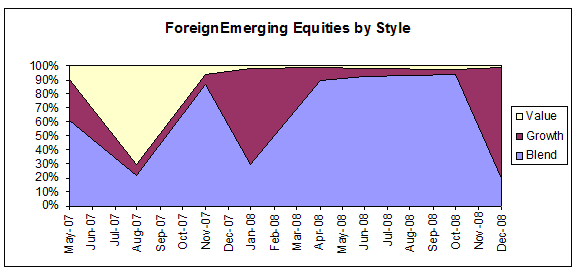
Foreign Emerging Equities by Style ($974,269,292)
Foreign Emerging
Equities
by Style |
5/27/07 |
8/15/07 |
11/15/07 |
1/31/08 |
4/26/08 |
6/30/08 |
10/3/08 |
12/31/08 |
Blend |
60.4% |
21.5% |
86.6% |
29.4% |
89.5% |
92.4% |
94.2% |
20.2% |
Growth |
30.0% |
7.8% |
7.6% |
68.7% |
8.8% |
5.5% |
3.3% |
78.4% |
Value |
9.6% |
70.8% |
5.9% |
1.8% |
1.6% |
2.1% |
2.5% |
1.4% |
Foreign Emerging
Equities by Style |
Change From |
5/27 to
8/15 |
8/15 to
11/15 |
11/15 to
1/31 |
1/31 to
4/26 |
4/26 to
6/30 |
6/30 to
10/3 |
10/3 to
12/31 |
Blend |
-38.9% |
65.1% |
-57.2% |
60.1% |
2.9% |
1.8% |
-74.0% |
Growth |
5.5% |
-0.2% |
61.1% |
-59.9% |
-3.3% |
-2.2% |
75.1% |
Value |
61.2% |
-64.9% |
-4.1% |
-0.2% |
0.5% |
0.4% |
-1.1% |
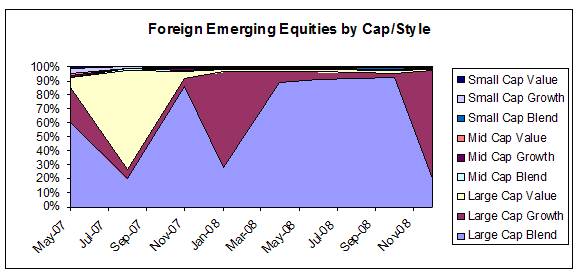
Foreign Emerging Equities by Market Cap/Style ($974,269,292)
Foreign
Emerging
Equities
by
Cap/Style |
5/27/07 |
8/15/07 |
11/15/07 |
1/31/08 |
4/26/08 |
6/30/08 |
10/3/08 |
12/31/08 |
3/31/09 |
Large Cap
Blend |
59.8% |
20.3% |
85.7% |
28.0% |
88.3% |
91.1% |
92.4% |
19.8% |
19.84% |
Large Cap
Growth |
25.4% |
6.7% |
6.0% |
68.5% |
8.6% |
5.4% |
3.0% |
77.4% |
1.77% |
Large Cap
Value |
7.2% |
70.3% |
5.2% |
1.4% |
1.1% |
1.7% |
1.9% |
1.1% |
74.55% |
Mid Cap
Blend |
0.5% |
1.1% |
0.3% |
0.6% |
0.4% |
0.4% |
0.8% |
0.4% |
0.58% |
Mid Cap
Growth |
1.3% |
0.3% |
1.6% |
0.1% |
0.2% |
0.1% |
0.0% |
0.5% |
0.19% |
Mid Cap
Value |
1.3% |
0.1% |
0.3% |
0.1% |
0.1% |
0.0% |
0.2% |
0.0% |
1.65% |
Small Cap
Blend |
0.2% |
0.1% |
0.6% |
0.8% |
0.8% |
0.9% |
1.0% |
0.0% |
0.06% |
Small Cap
Growth |
3.3% |
0.8% |
0.0% |
0.1% |
0.0% |
0.0% |
0.3% |
0.5% |
0.07% |
Small Cap
Value |
1.0% |
0.3% |
0.3% |
0.4% |
0.4% |
0.4% |
0.4% |
0.3% |
1.29% |
Foreign Emerging Equities
by Cap/Style |
Change From |
|
5/27 to
8/15 |
8/15 to
11/15 |
11/15 to
1/31 |
1/31 to
4/26 |
4/26 to
6/30 |
6/30 to
10/3 |
10/3 to
12/31 |
12/31 to
3/31 |
Large Cap Blend |
-39.5% |
65.4% |
-57.7% |
60.3% |
2.8% |
1.3% |
-72.6% |
0.04% |
Large Cap Growth |
-18.7% |
-0.7% |
62.5% |
-59.9% |
-3.2% |
-2.4% |
74.4% |
-75.63% |
Large Cap Value |
63.1% |
-65.1% |
-3.9% |
-0.2% |
0.6% |
0.2% |
-0.8% |
73.45% |
Mid Cap Blend |
0.6% |
-0.8% |
0.3% |
-0.2% |
0.0% |
0.4% |
-0.4% |
0.18% |
Mid Cap Growth |
-1.0% |
1.3% |
-1.5% |
0.0% |
-0.1% |
-0.1% |
0.5% |
-0.31% |
Mid Cap Value |
-1.2% |
0.2% |
-0.2% |
0.0% |
-0.1% |
0.2% |
-0.2% |
1.65% |
Small Cap Blend |
-0.1% |
0.5% |
0.2% |
0.0% |
0.1% |
0.1% |
-1.0% |
0.06% |
Small Cap Growth |
-2.5% |
-0.8% |
0.1% |
0.0% |
0.0% |
0.3% |
0.2% |
-0.43% |
Small Cap Value |
-0.7% |
0.0% |
0.1% |
0.0% |
0.0% |
0.0% |
-0.1% |
0.99% |
Bonds by Type ($13,143,532,430)
Bonds by
Type |
5/27/07 |
8/15/07 |
11/15/07 |
1/31/08 |
4/26/08 |
6/30/08 |
10/3/08 |
12/31/08 |
3/31/09 |
Taxable |
45.8% |
51.9% |
47.5% |
48.2% |
46.2% |
45.1% |
47.3% |
47.4% |
43.26% |
Foreign |
1.0% |
1.1% |
1.3% |
1.4% |
1.9% |
1.8% |
1.7% |
1.2% |
0.91% |
Municipal |
32.4% |
28.4% |
29.1% |
29.7% |
32.8% |
34.3% |
32.4% |
29.2% |
36.95% |
Unknown |
20.8% |
18.6% |
22.2% |
20.7% |
19.1% |
18.8% |
18.7% |
22.2% |
18.88% |
Bonds by Type |
Change From |
5/27 to
8/15 |
8/15 to
11/15 |
11/15 to
1/31 |
1/31 to
4/26 |
4/26 to
6/30 |
6/30 to
10/3 |
10/3 to
12/31 |
12/31 to
3/31 |
Taxable |
6.1% |
-4.4% |
0.7% |
-2.0% |
-1.1% |
2.2% |
0.1% |
-4.14% |
Foreign |
0.1% |
0.2% |
0.1% |
0.5% |
-0.1% |
-0.1% |
-0.5% |
-0.29% |
Municipal |
-4.0% |
0.7% |
0.6% |
3.1% |
1.5% |
-1.9% |
-3.2% |
7.75% |
Unknown |
-2.2% |
3.6% |
-1.5% |
-1.6% |
-0.3% |
-0.1% |
3.5% |
-3.32% |
Taxable Bonds by Maturity ($7,327,319,115)
Taxable
Bonds
by Maturity |
5/27/07 |
8/15/07 |
11/15/07 |
1/31/08 |
4/26/08 |
6/30/08 |
10/3/08 |
12/31/08 |
3/31/09 |
Long Term |
20.8% |
18.6% |
21.3% |
22.2% |
27.4% |
28.2% |
24.9% |
30.4% |
26.51% |
Medium Term |
26.2% |
25.0% |
30.0% |
29.6% |
32.7% |
35.2% |
37.6% |
37.5% |
38.24% |
Short Term |
53.0% |
56.4% |
48.7% |
48.2% |
39.9% |
36.6% |
37.4% |
32.1% |
35.25% |
Taxable Bonds
by Maturity |
Change From |
|
5/27 to
8/15 |
8/15 to
11/15 |
11/15 to
1/31 |
1/31 to
4/26 |
4/26 to
6/30 |
6/30 to
10/3 |
10/3 to
12/31 |
12/31 to
3/31 |
Long Term |
-2.2% |
2.7% |
0.9% |
5.2% |
0.8% |
-3.3% |
5.5% |
-3.89% |
Medium Term |
-1.2% |
5.0% |
-0.4% |
3.1% |
2.5% |
2.4% |
-0.1% |
0.74% |
Short Term |
3.4% |
-7.7% |
-0.5% |
-8.3% |
-3.3% |
0.8% |
-5.3% |
3.15% |
Taxable Bonds by Quality ($7,327,319,115)
Taxable
Bonds
by Quality |
5/27/07 |
8/15/07 |
11/15/07 |
1/31/08 |
4/26/08 |
6/30/08 |
10/3/08 |
12/31/08 |
3/31/09 |
High Yield |
0.8% |
0.6% |
0.6% |
0.7% |
0.6% |
0.6% |
0.5% |
0.6% |
0.58% |
Investment
Grade |
78.1% |
81.7% |
79.1% |
77.9% |
73.5% |
70.5% |
75.2% |
71.1% |
69.5% |
Medium
Grade |
21.1% |
17.6% |
20.4% |
21.4% |
25.9% |
29.0% |
24.3% |
28.3% |
29.93% |
Taxable Bonds by Quality |
Change From |
5/27 to
8/15 |
8/15 to
11/15 |
11/15 to
1/31 |
1/31 to
4/26 |
4/26 to
6/30 |
6/30 to
10/3 |
10/3 to
12/31 |
12/31 to
3/31 |
High Yield |
-0.2% |
0.0% |
0.1% |
0.0% |
0.0% |
-0.1% |
0.1% |
-0.02% |
Investment Grade |
3.6% |
-2.6% |
-1.2% |
-4.5% |
-3.0% |
4.7% |
-4.1% |
-1.6% |
Medium Grade |
-3.5% |
2.8% |
1.0% |
4.5% |
3.1% |
-4.7% |
4.0% |
1.63% |
Taxable Bonds by Maturity/Quality ($7,327,319,115)
Taxable
Bonds
by
Maturity/
Quality |
5/27/07 |
8/15/07 |
11/15/07 |
1/31/08 |
4/26/08 |
6/30/08 |
10/3/08 |
12/31/08 |
3/31/09 |
Long Term
High Yield |
0.8% |
0.6% |
0.6% |
0.7% |
0.6% |
0.6% |
0.5% |
0.6% |
0.58% |
Long Term
Investment
Grade |
13.2% |
12.3% |
13.3% |
13.2% |
14.2% |
13.8% |
14.2% |
17.3% |
13.89% |
Long Term
Medium
Grade |
6.8% |
5.7% |
7.4% |
8.4% |
12.6% |
13.8% |
10.2% |
12.5% |
12.04% |
Medium Term
Investment
Grade |
19.0% |
18.8% |
23.5% |
23.6% |
26.0% |
27.5% |
29.7% |
29.1% |
29.41% |
Medium Term
Medium
Grade |
7.2% |
6.2% |
6.5% |
6.0% |
6.6% |
7.7% |
7.9% |
8.4% |
8.84% |
Short Term
Investment
Grade |
45.9% |
50.6% |
42.2% |
41.2% |
33.2% |
29.1% |
31.2% |
24.7% |
26.2% |
Short Term
Medium
Grade |
7.1% |
5.8% |
6.5% |
7.1% |
6.6% |
7.5% |
6.2% |
7.4% |
9.05% |
Taxable Bonds by
Maturity/Quality |
Change From |
5/27 to
8/15 |
8/15 to
11/15 |
11/15 to
1/31 |
1/31 to
4/26 |
4/26 to
6/30 |
6/30 to
10/3 |
10/3 to
12/31 |
12/31 to
3/31 |
Long Term High Yield |
-0.2% |
0.0% |
0.1% |
0.0% |
0.0% |
-0.1% |
0.1% |
-0.02% |
Long Term
Investment Grade |
-0.9% |
1.0% |
-0.1% |
1.0% |
-0.4% |
0.4% |
3.1% |
-3.41% |
Long Term
Medium Grade |
-1.1% |
1.7% |
1.0% |
4.3% |
1.2% |
-3.6% |
2.3% |
-0.46% |
Medium Term
Investment Grade |
-0.2% |
4.7% |
0.1% |
2.4% |
1.5% |
2.2% |
-0.6% |
0.31% |
Medium Term
Medium Grade |
-1.0% |
0.3% |
-0.5% |
0.7% |
1.1% |
0.2% |
0.5% |
0.44% |
Short Term
Investment Grade |
4.7% |
-8.4% |
-1.1% |
-7.9% |
-4.1% |
2.1% |
-6.5% |
1.5% |
Short Term
Medium Grade |
-1.3% |
0.7% |
0.6% |
-0.4% |
0.9% |
-1.3% |
1.2% |
1.65% |
Muni Bonds by Maturity ($6,259,193,829)
Muni Bonds
by Maturity |
5/27/07 |
8/15/07 |
11/15/07 |
1/31/08 |
4/26/08 |
6/30/08 |
10/3/08 |
12/31/08 |
3/31/09 |
Long Term |
41.9% |
41.2% |
40.5% |
40.9% |
40.4% |
39.4% |
38.0% |
41.3% |
39.43% |
Medium Term |
30.2% |
30.6% |
29.5% |
29.3% |
28.3% |
28.6% |
28.2% |
24.8% |
27.41% |
Short Term |
27.8% |
28.2% |
30.0% |
29.9% |
31.3% |
32.0% |
33.8% |
33.8% |
33.16% |
Muni Bonds by Maturity |
Change From |
5/27 to
8/15 |
8/15 to
11/15 |
11/15 to
1/31 |
1/31 to
4/26 |
4/26 to
6/30 |
6/30 to
10/3 |
10/3 to
12/31 |
12/31 to
3/31 |
Long Term |
-0.7% |
-0.7% |
0.4% |
-0.5% |
-1.0% |
-1.4% |
3.3% |
-1.87% |
Medium Term |
0.4% |
-1.1% |
-0.2% |
-0.9% |
0.3% |
-0.4% |
-3.4% |
2.61% |
Short Term |
0.4% |
1.8% |
-0.1% |
1.4% |
0.7% |
1.8% |
0.0% |
-0.64% |
Muni Bonds by Quality ($6,259,193,829)
Muni Bonds by Quality |
5/27
2007 |
8/15
2007 |
11/15
2007 |
1/31
2008 |
4/26
2008 |
6/30
2008 |
10/3
2008 |
12/31
2008 |
3/31
2009 |
High Yield |
6.3% |
5.6% |
4.5% |
5.5% |
5.0% |
5.2% |
5.4% |
7.3% |
6.5% |
Investment Grade |
82.0% |
83.7% |
85.5% |
85.0% |
79.5% |
79.8% |
80.3% |
76.6% |
76.7% |
Medium Grade |
11.7% |
10.7% |
10.0% |
9.5% |
15.5% |
15.0% |
14.3% |
16.0% |
16.8% |
Muni Bonds by Quality |
Change From |
5/27 to
8/15 |
8/15 to
11/15 |
11/15 to
1/31 |
1/31 to
4/26 |
4/26 to
6/30 |
6/30 to
10/3 |
10/3 to
12/31 |
12/31 to
3/31 |
High Yield |
-0.70% |
-1.10% |
1.00% |
-0.50% |
0.20% |
0.20% |
1.90% |
-0.76% |
Investment Grade |
1.70% |
1.80% |
-0.50% |
-5.50% |
0.30% |
0.50% |
-3.70% |
0.06% |
Medium Grade |
-1.00% |
-0.70% |
-0.50% |
6.00% |
-0.50% |
-0.70% |
1.70% |
0.81% |
Muni Bonds by Maturity/Quality ($6,259,193,829)
Muni Bonds by
Maturity/Quality |
5/27
2007 |
8/15
2007 |
11/15
2007 |
1/31
2008 |
4/26
2008 |
6/30
2008 |
10/3
2008 |
12/31
2008 |
3/31
2009 |
Long Term High Yield |
6.3% |
5.6% |
4.5% |
5.5% |
5.0% |
5.2% |
5.4% |
7.3% |
6.5% |
Long Term
Investment Grade |
32.8% |
33.2% |
34.0% |
33.6% |
31.0% |
29.8% |
28.6% |
29.2% |
28.6% |
Long Term
Medium Grade |
2.9% |
2.4% |
2.0% |
1.7% |
4.4% |
4.4% |
4.0% |
4.8% |
4.3% |
Medium Term
Investment Grade |
25.6% |
26.4% |
26.5% |
26.2% |
23.8% |
24.4% |
24.2% |
21.0% |
22.8% |
Medium Term
Medium Grade |
4.6% |
4.2% |
3.0% |
3.0% |
4.5% |
4.1% |
3.9% |
3.8% |
4.6% |
Short Term
Investment Grade |
23.6% |
24.1% |
25.1% |
25.1% |
24.6% |
25.6% |
27.5% |
26.4% |
25.3% |
Short Term
Medium Grade |
4.2% |
4.2% |
5.0% |
4.7% |
6.6% |
6.5% |
6.3% |
7.4% |
7.9% |
Muni Bonds by
Maturity/Quality |
Change From |
5/27 to
8/15 |
8/15 to
11/15 |
11/15 to
1/31 |
1/31 to
4/26 |
4/26 to
6/30 |
6/30 to
10/3 |
10/3 to
12/31 |
12/31 to
3/31 |
Long Term High Yield |
-0.7% |
-1.1% |
1.0% |
-0.5% |
0.2% |
0.2% |
1.9% |
-0.8% |
Long Term Investment
Grade |
0.4% |
0.8% |
-0.4% |
-2.6% |
-1.2% |
-1.2% |
0.6% |
-0.6% |
Long Term Medium Grade |
-0.5% |
-0.4% |
-0.3% |
2.6% |
0.0% |
-0.4% |
0.8% |
-0.5% |
Medium Term Investment
Grade |
0.8% |
0.1% |
-0.3% |
-2.4% |
0.6% |
-0.2% |
-3.2% |
1.8% |
Medium Term Medium
Grade |
-0.4% |
-1.2% |
0.0% |
1.5% |
-0.4% |
-0.2% |
-0.1% |
0.8% |
Short Term Investment
Grade |
0.5% |
1.0% |
0.0% |
-0.5% |
1.0% |
1.9% |
-1.1% |
-1.1% |
Short Term Medium Grade |
0.0% |
0.8% |
-0.3% |
1.9% |
-0.1% |
-0.2% |
1.1% |
0.5% |
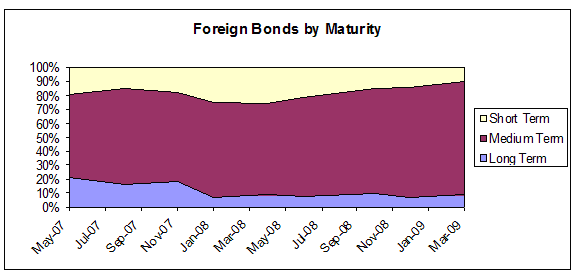
Foreign Bonds by Maturity ($154,804,349)
Foreign
Bonds
by Maturity |
5/27/07 |
8/15/07 |
11/15/07 |
1/31/08 |
4/26/08 |
6/30/08 |
10/3/08 |
12/31/08 |
3/31/09 |
Long Term |
21.6% |
16.4% |
18.4% |
7.3% |
8.4% |
8.0% |
9.4% |
7.1% |
8.6% |
Medium Term |
59.2% |
68.8% |
63.5% |
67.5% |
65.6% |
70.4% |
76.0% |
79.1% |
80.51% |
Short Term |
19.2% |
14.8% |
18.1% |
25.3% |
25.9% |
21.6% |
14.6% |
13.9% |
10.89% |
Foreign Bonds by Maturity |
Change From |
5/27 to
8/15 |
8/15 to
11/15 |
11/15 to
1/31 |
1/31 to
4/26 |
4/26 to
6/30 |
6/30 to
10/3 |
10/3 to
12/31 |
12/31 to
3/31 |
Long Term |
-5.2% |
2.0% |
-11.1% |
1.1% |
-0.4% |
1.4% |
-2.3% |
1.5% |
Medium Term |
9.6% |
-5.3% |
4.0% |
-1.8% |
4.8% |
5.6% |
3.1% |
1.41% |
Short Term |
-4.4% |
3.3% |
7.2% |
0.7% |
-4.3% |
-7.0% |
-0.7% |
-3.01% |
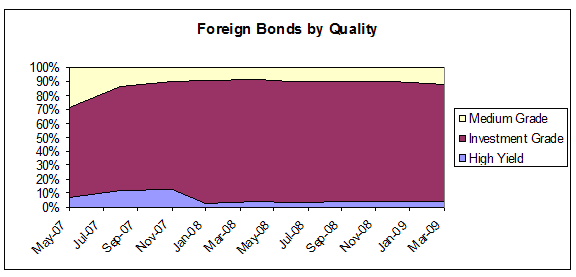
Foreign Bonds by Quality ($154,804,349)
Foreign
Bonds
by Quality |
5/27/07 |
8/15/07 |
11/15/07 |
1/31/08 |
4/26/08 |
6/30/08 |
10/3/08 |
12/31/08 |
3/31/09 |
High Yield |
7.5% |
11.3% |
12.0% |
2.9% |
3.8% |
3.6% |
4.1% |
3.8% |
4.21% |
Investment
Grade |
64.1% |
75.4% |
77.5% |
87.7% |
87.9% |
86.6% |
85.7% |
85.3% |
83.8% |
Medium
Grade |
28.4% |
13.4% |
10.4% |
9.4% |
8.4% |
9.9% |
10.2% |
10.9% |
11.99% |
Foreign Bonds by Quality |
Change From |
|
5/27 to
8/15 |
8/15 to
11/15 |
11/15 to
1/31 |
1/31 to
4/26 |
4/26 to
6/30 |
6/30 to
10/3 |
10/3 to
12/31 |
12/31 to
3/31 |
High Yield |
3.8% |
0.7% |
-9.2% |
0.9% |
-0.2% |
0.5% |
-0.3% |
0.41% |
Investment Grade |
11.3% |
2.1% |
10.2% |
0.1% |
-1.3% |
-0.9% |
-0.4% |
-1.5% |
Medium Grade |
-15.0% |
-3.0% |
-1.0% |
-1.0% |
1.5% |
0.3% |
0.7% |
1.09% |
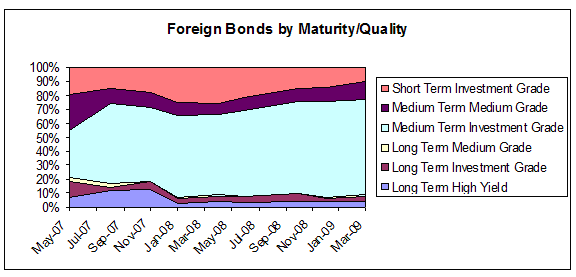
Foreign Bonds by Maturity/Quality ($154,804,349)
Foreign
Bonds
by
Maturity/
Quality |
5/27/07 |
8/15/07 |
11/15/07 |
1/31/08 |
4/26/08 |
6/30/08 |
10/3/08 |
12/31/08 |
3/31/09 |
Long Term
High
Yield |
7.5% |
11.3% |
12.0% |
2.9% |
3.8% |
3.6% |
4.1% |
3.8% |
4.21% |
Long Term
Investment
Grade |
11.1% |
3.0% |
6.2% |
4.1% |
4.2% |
4.2% |
5.0% |
3.1% |
4.18% |
Long Term
Medium
Grade |
2.9% |
2.2% |
0.1% |
0.3% |
0.4% |
0.2% |
0.2% |
0.2% |
0.22% |
Medium Term
Investment
Grade |
33.7% |
57.5% |
53.1% |
58.4% |
57.7% |
60.8% |
66.1% |
68.3% |
68.74% |
Medium Term
Medium
Grade |
25.4% |
11.2% |
10.3% |
9.1% |
7.9% |
9.6% |
10.0% |
10.7% |
11.77% |
Short Term
Investment
Grade |
19.2% |
14.8% |
18.1% |
25.3% |
25.9% |
21.6% |
14.6% |
13.9% |
10.89% |
Foreign Bonds by
Maturity/Quality |
Change From |
|
5/27 to
8/15 |
8/15 to
11/15 |
11/15 to
1/31 |
1/31 to
4/26 |
4/26 to
6/30 |
6/30 to
10/3 |
10/3 to
12/31 |
12/31 to
3/31 |
Long Term High Yield |
3.8% |
0.7% |
-9.2% |
0.9% |
-0.2% |
0.5% |
-0.3% |
0.41% |
Long Term Investment
Grade |
-8.1% |
3.2% |
-2.1% |
0.1% |
0.0% |
0.8% |
-1.9% |
1.08% |
Long Term Medium Grade |
-0.7% |
-2.1% |
0.2% |
0.2% |
-0.2% |
0.0% |
0.0% |
0.02% |
Medium Term Investment
Grade |
23.8% |
-4.4% |
5.3% |
-0.6% |
3.1% |
5.3% |
2.2% |
0.44% |
Medium Term Medium
Grade |
-14.2% |
-0.9% |
-1.2% |
-1.2% |
1.7% |
0.4% |
0.7% |
1.07% |
Short Term Investment
Grade |
-4.4% |
3.3% |
7.2% |
0.7% |
-4.3% |
-7.0% |
-0.7% |
-3.01% |
Read more articles by Robert Huebscher and Mary Pitek