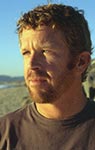
Steven Drobny is the cofounder of Drobny Global, an international macroeconomic research and advisory firm that counts many of the leading global hedge funds and money managers as clients. He is also author of the recently released book, The Invisible Hands: Hedge Funds off the Record – Rethinking Real Money, available via the link below. The book profiles global macro hedge fund managers (and one pension manager) who successfully navigated the markets during the 2008 financial crisis. Through this series of interviews – the bulk of which are anonymous – Drobny seeks to open up a dialogue between hedge fund managers and “real money” managers (pensions, university endowments, charitable foundations, family offices, and others), the latter of which suffered huge losses in 2008.
We interviewed Drobny on April 30, 2010.
Can you provide some background about your firm and how you became interested in this topic?
We’ve been around for a little over 10 years as an advisor and independent research firm serving primarily global macro hedge funds. We produce research focused on global markets, commodities, currencies, fixed income, and equities (broad markets, not individual stocks). Although our client base is predominantly the big macro funds, we also have some prop desks, real money managers, and individuals who run their own money.
My business partner, Dr. Andres Drobny, produces the research and coordinates what is a living discourse on world markets through frequent communications with our network of smart guys and gals. He is a former academic who did his PhD at Cambridge, taught at Cambridge and King’s College, London, and then became Chief Economist at Bankers Trust in the late 1980s and early 1990s. He later became a strategist and prop trader at Credit Suisse First Boston. In the late 1990s he retired from Wall Street, and started this research business in California.
Is he related to you?
Strangely there is no relation. I was working at Deutsche Bank in London in the late 1990s, selling currencies, fixed income and derivative structures to macro hedge funds. Because we had the same last name, people would get us confused. I looked him up one day and we joined up a year later. We’ve been business partners for a decade.
Your book looks at ten global macro hedge fund managers who were successful through the 2008 crisis. What are some of the common threads among them?
Obviously, things went haywire in 2008 – but using this as an excuse for poor performance is simply unacceptable and irresponsible, especially if you are running an institutional real money portfolio with hard dollar liabilities. The money managers who survived and either preserved capital or made money in 2008 were hyper-focused on downside risk protection, an important part of which is liquidity – how you get out of things when the world is ending.
Within global macro, there are many different styles and sub-strategies, though across them all, when those successful managers put on a position, they tended to ask: “How much am I willing to lose?” “How am I going to get out if I am wrong?”
Because downside loss protection is the starting point for macro managers’ investment processes, those managers tended to persevere when things went crazy – they had cash and weren’t painted into a corner. They weren’t illiquid and were able to think clearly about what the future.
This methodology is in contrast to most other investment managers who begin their investment process with, “I want to make X.” They look around the world and try to figure out how they can make X, and they put on those positions. In buoyant markets, you get paid for pushing out the liquidity spectrum, although many do not realize that they are collecting risk premium from this illiquidity. And when things go bad, they learn the cost of those decisions. These managers spent their whole time in the crisis trying to put out fires, as opposed to looking forward and figuring out how to make money from the situation.
Did you interview any managers who fared poorly during the crisis?
Of course – we are talking to investors and managers all the time. We do a couple of conferences a year for our client base and have an active, ongoing dialogue with managers as a normal course of our business. Most investors and portfolio managers didn’t do well in 2008 so you would have to try really hard to avoid speaking with people that lost money in ‘08.
A big part of the book is targeted to managers of institutional money – pensions, endowments, foundations, and family offices. I’ve talked to a lot of them and they pretty much all got clocked – most to the tune of down 25%-50%.
Most of them said, “It’s not my fault. It was a black swan, an unpredictable event, a 100-year storm.” Several of the managers profiled in my book profited tremendously so at we know that there were a bunch of people who did see it coming and did make money.
As a professional investor, saying, “It’s not my fault – I couldn’t have seen it coming,” begs the question of why are you paid to be a professional money manager entrusted with others’ capital, often the broader public’s capital in the case of pension funds. Not only are you managing the assets of the plan beneficiaries, but also if you get it really wrong, it’s the taxpayers who are on the hook for it. In the case of hedge funds, why does anyone pay you if you return the same levels as an index fund, or worse? Pointing to others who also lost money or claiming absolution because what conspired was rare is just ridiculous, especially in the institutional management world, where money is managed to hard-dollar liabilities. Interim volatility is crucially important. Yet real money managers build their portfolios much like their peers – reaching for return – and they all end up with the same positions thanks to their consultants. It’s no wonder they all got clocked when the troubles came.
Several real money managers told me they knew the current model didn’t work, but they didn’t have any clue what the new model should be. I wrote The Invisible Hands to start the discussion about a new model and to present a few ideas toward that end.
For a financial advisor who might be selecting a hedge fund or conducting due diligence among hedge funds, what advice would you offer?
My advice would be first, at a portfolio level, to model an extreme scenario where it all goes wrong. How much would you lose? If that loss is too large, you need to rethink your process. With any investment you look at, you should ask where things can go very wrong – you have to look at worst-case scenarios, because these scenarios happen more frequently than most models predict. If they are conducting due diligence on hedge fund managers, they should ask that same question to the manager and fully flesh out the answer.
With any investment, we are told how much money can be made or was made. “It’s a ten-bagger or a twenty-bagger.” But what risks are being assumed to get these kinds of returns?
There are a few important concepts to highlight here. First, understanding the source of returns is key to understanding the implicit risks in your portfolio. Returns must be examined on a risk-adjusted basis. Second, let’s talk about where it goes wrong. How much are you willing to lose in a worst-case scenario? Gains and losses are asymmetric: if you lose 50% it takes 100% to get flat. Similarly, if you make 50% then lose 50%, you are down 25% from your starting point.
Much more attention needs to be paid to downside risk. The wealthiest university endowments should not be taking on huge risks, as they are already extremely rich. Likewise, overfunded pension funds and wealthy individuals should be trying to preserve this wealth, to preserve their capital, instead of trying to hit the ball out of the park.
To what extent can individuals, or advisors managing retirement portfolios for individuals, utilize the same principles that large institutions employ?
Anyone can do this stuff. It’s not rocket science; it’s just hard. You should be wary of anyone who is trying to sell you complex, hard-to-understand, jargon-filled investment products. Any pension or endowment could easily manage their portfolio with widely available liquid stocks, bonds, currencies, and commodities. The US bond market is the largest market in the world, and that should be decent position in anyone’s portfolio.
Any institution who says, “I can’t do it like Yale” is not being truthful. What does Yale do that an individual investor or financial advisor can’t do? Well, Yale does a lot of real assets and a lot of private equity. Equity and equity-like products are where Yale’s outperformance has come from in the last 10 years. But I would argue that this is where their losses will come from over the next five to 10 years. Further, maybe they shouldn’t have been in that stuff anyway. Did Yale really understand that they were getting paid in return for the illiquidity? For the leverage? If they had analyzed their returns on a risk-adjusted basis, they would probably have more fixed income and less “equity like” assets.
What evidence do you have that private equity will be the downfall of endowments over the next decade?
I make this claim for a few reasons. First, when people invest in private equity (PE), they tend to allocate twice their target allocation. If someone says they want 20% in private equity, they wind up allocating 40% to private equity because private equity funds draw down their capital over time. Because PE funds don’t take all their capital at once, managers investing in the category are forced to over-bet the size of their allocation to wind up with their desired target allocation. Then there is a recycling process in private equity whereby money gets returned to investors after successful exits or liquidity events. This is followed by new calls for capital, and the money is redeployed.
The cycle is effective as long as private equity continues to create exits and liquidity events, but when the disbursements stop coming while capital calls persist (which is what happened in 2008/2009), an investor’s position in private equity grows. At the same time, if a manager’s assets are shrinking – a likely scenario that would coincide with difficulties in private equity – that percentage allocated to private equity grows even faster. We saw this happen with CalPERS, Yale and other institutional real money investors. They increased their exposure to private equity because they had no choice.
Private equity is leveraged at the fund level because most, if not all, of their deals are done with lots of debt and then private equity is implicitly leveraged again at the investor level via the over committing process. And this leverage is a big part of what is called “returns” in PE.
At the same time, debt is not cheap anymore. Banks have tightened their balance sheets. It’s not so easy to lever these plays, which decreases the potential returns. Second, private equity investing as a strategy is dependent upon rising asset values. Well, that’s a big question mark. Part of the success of the endowment model was to reduce cash and bond allocations and increase equity and equity-like investments. For the last thirty years, we’ve had falling inflation, falling interest rates, and rising asset values. With inflation and interest rates are currently zero, how much further can they fall to goose asset prices and P/E ratios? We all know trees don’t grow to the sky, the NASDAQ didn’t go to a billion, and housing prices don’t go up forever.
One question everyone should ask themselves – pensions, endowments, financial advisors, everyone – is what happens if we are in a debt-deflation period, like Japan has been in for the last 20 years? Since 1990, the Japanese stock market is down 75% and their real estate markets are down 50%-60%.
If you take a Japan scenario and overlay it to Yale’s, CalPERS’, or most financial advisors’ portfolios, then everyone is in big trouble. Investors are mostly invested in equities or in equity-like and illiquid assets. Asset prices had a pretty good run for 20 or 30 years, but that was a historical anomaly. We’d have to have another historical anomaly over the next twenty years for these portfolios to make money, and I’d argue that’s highly unlikely. We’ve already had 10 years of flat stock prices.
One of the issues you raise in your book is that the target rate of return of 7.5-8% for most pension funds may be unrealistic. Is this continuing to force them into investments or asset classes that have an inordinate amount of risk?
Yes. It’s completely unrealistic that they will make those returns. What they do is back-model asset classes and say, based on the last 10-20 years, “if we are going to hit 8%, we have to be in X,” and that forces them to be in stocks, private equity, and hedge funds that have done well. My argument is that this backward-looking approach is the wrong way to go about it. Let’s instead be forward-looking and, at the same time, think about managing downside risk.
The joke is out in the open that these guys don’t make 8%, but they have to say they will make 8% to game their funding status calculations. If you lower the future return assumption, then the size of the unfunded liabilities explodes, requiring the state to kick in more money. In the end it’s the taxpayer who is on the hook for this irresponsible behavior. It’s basically an accounting game to kick the can down the road and postpone the day of reckoning, which is a political decision. That’s why I dedicated the book to the taxpayer.
Among the hedge funds you work with, specifically those with a broad mandate for the asset classes in which they invest, are there any asset classes that look particularly attractive?
It depends. What looks attractive today may not look attractive tomorrow. I’d argue that private equity in its current form should be avoided, as we discussed. It’s a tough question because the world is constantly changing, so we have to be clear about objectives, which include concepts such as time horizon, liquidity, etc. With interest rates and inflation at zero, the swings between inflation and deflation are huge and demand a more dynamic approach to managing money.
Given your views on interest rates and deflation, would bonds at 4% still be a reasonably attractive asset class?
Sure. Government bonds should be an important part of any fund manager’s portfolio.
Were you able to form any opinion about the skill level of hedge fund managers versus managers of actively managed mutual funds?
This came up often in my book, and it essentially comes down to compensation. It’s Economics 101, or rather Capitalism 101. The highest paying position is generally going to attract the best talent. You see it in sports – that’ the best analogy.
If a mutual fund job means making a few hundred thousand a year and dealing with bureaucracy, red tape, and restrictions, versus a hedge fund job where the pay is potentially a lot more if successful with significantly more flexibility, then clearly the more talented guys are going to choose the latter and work in the hedge fund industry.
So the skill level is measurably higher in the hedge fund universe?
Yes, besides a few exceptions the best fund managers in the world are running hedge funds. But that’s not to say that all hedge fund managers are more skilled than pension, endowment, and other real money guys. The barrier to entry in hedge funds is quite low. There are not 10,000 more talented hedge fund managers than everybody else. You have to be able to deduce that skill and to parse through the weeds.
You devoted a separate section to an eleventh anonymous manager, “The Pensioner.” What was unique about this manager?
The Pensioner is a guy who runs a big chunk of a very large pension and he has an absolute return mandate within that pension. Unlike many pension funds, who have a bond guy, an equity guy, or a private equity guy, The Pensioner has an absolute return mandate, to simply make money in any environment. And the size of his portfolio within that pension is larger than most pensions. He made money in 2008 because he has a very forward-looking and extremely innovative approach within the pension world.
I was chatting with this pension manager one night when my book was nearly complete. He was talking about what he was doing within his group and how he thinks pensions should be run. It was clearly “next level” in terms of sophistication, so I asked him if I could include an interview with him in the book before we went to press. Like all the other anonymous interviews, anonymity assured candor, as these managers shared intimate details of their investment processes. If nothing else, I really think every pension fund manager should read that chapter.
Notably, The Pensioner discusses how to use “good leverage” within a real money portfolio in order to be able to meet return objectives. He also talks about many of the prevailing myths in money management and where people get it wrong in the pension world. It’s a great chapter.
Have you invested your own money with any of the successful managers you studied?
Yes. Definitely. In an uncertain world, it’s the best place to have your money.
Steven Drobny would like to hear from you. If you have any thoughts, comments, ideas or suggestions for rethinking real money investing, please visit www.drobny.com/books.html to get in touch.
Read more articles by Robert Huebscher