Of all the challenges facing our nation, none is as daunting as trying to achieve economic growth and reduce unemployment without adding layers of debt to our already bloated deficit. Legislators and economists have debated the merits of stimulus measures, changes in tax rates, and monetary policies, but they are no closer to a consensus than they were at the onset of the financial crisis.
One person, however, says a genuine solution is possible.
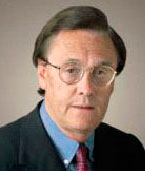
He is H. “Woody” Brock, the founder and president of Strategic Economic Decisions, a consulting firm focused on economic forecasting and market analysis. His clients include the world’s largest hedge funds, private equity firms, and corporations. I spoke with him on July 27.
Brock is virtually unique among leading economic thinkers. He focuses on the big problems – like healthcare and the nationalization of commodity resources – for which, he says, only a higher level of deductive logic can yield solutions. He scoffs at pundits who support their views by crunching data and building models, instead relying on high-powered and deep theories from which he can sometimes deduce an optimal solution to a problem.
Among his qualifications are four graduate degrees, two apiece from Harvard and Princeton. He studied under the Nobel laureate Kenneth Arrow, who he considers perhaps the most important theoretical economist of 20th century, and he relies extensively on the works of the late Nobel laureate James Tobin and Stanford economist Mordecai Kurz.
Brock believes 2010 is a watershed year for the US, and the reasons why will help explain the origins of his “growth without deficits” proposals.
Lesser and later
“There are many different kinds of revolutions or tipping points,” Brock told me, “and the one the US confronts this year will not be a newsy event, like the fall of the Berlin Wall in 1989.” Instead, it will be a sea change the way people think about their lives – their retirement prospects, in particular. Moreover, he said this will be a global phenomenon impacting citizens from Greece to California.
Brock offered a specific timetable – before Christmas – for this conceptual revolution to unfold, as Americans recognize the insufficiency of their pensions and other assets to fund their retirements. He did not go as far to say that pension plans would default, but he predicted that Americans (and others) would acknowledge the reality that their retirement benefits would be less than they expected, and in many cases would kick in later than they had expected.
“The social contract underlying the welfare state is unwinding,” he said, and we will all recognize that our entitlement programs will not provide cradle-to-grave protection. “Switches in the beliefs of people about such momentous issues as the social contract represent the real news today, and are far more important than short-term market developments,” Brock said. “Yet the media are the last to grasp this point.” Driving the recognition that retirement assets will be “later and lesser” will be extensive media coverage of pension fund defaults, along with today’s climate of slow economic growth and high unemployment.
The US faces a fiscal drag from deficit reduction unlike any previously encountered. Historically, Brock said, economic recoveries have occurred when deficits were reduced from about 4.5% to a sustainable level of 2.5% of GDP. Now, we must reduce the deficit from 10% or 11% to the same sustainable level – a task the US has not faced in the past five decades. This reduction constitutes fiscal drag on GDP growth.
The pain from this adjustment will be most evident in the unemployment numbers. “We need approximately 3.5% GDP growth to employ graduates newly entering the workforce,” Brock said; but there are another eight million currently unemployed (some say twelve million) to be hired along with new workforce entrants. Yet GDP growth is only 2.8% at present, a quarter of the rate that is needed.
GDP growth shy of 3% may sound good to some, he said, but it is a “disaster” for the job market and will be insufficient to reduce the ranks of those now without jobs. “These are the headwinds giving us the worst recovery in half a century,” Brock said.
Redefining the deficit
In the context of those challenges, invigorating growth without incurring needless deficits might seem an impossible task. Brock, however, contends that the solution has been around for nearly 40 years. It was set forth by the Stanford University economists Arrow and Kurz in their 1970 book, Public Investment, the Rate of Return and Optimal Fiscal Policy.
In today’s setting, the logic of their analysis would be to continue to incur a large deficit for the next decade, or even longer, according to Brock, but to redefine what we mean by “deficit” in the first place.
Our government must continue to spend, but it must focus that spending on projects with high long-term payoffs and not on transfer payments or needless public works projects. Some of the areas where Brock would like to see higher investment include bullet trains, nuclear power plants, rebuilding the electrical grid, new oil refineries, and the development of shale gas as an energy source. Additionally, there will be the obvious bridge and tunnel infrastructure.
The price paid for excess consumer consumption and leverage over the last 45 years has been underinvestment in those types of projects. As a result, those projects are much more “needed” than before, so that their rate-of-return on capital invested should be very high, Brock said.
Moreover, spending should be structured so that the government will profit from it. Brock cited the Australian investment bank Macquarie, which has developed a successful model of privatizing public projects, and managing those projects so as to avoid boondoggles and to be economically viable from start-to-finish. The US should adopt a similar model, Brock urged.
It is not simply a matter of spending money on traditional public works infrastructure, Brock said. What’s needed is a new Marshall Plan, which rebuilt and created a strong economic foundation for Europe following World War II.
Of the $787 billion in the 2009 stimulus package, only $32 billion (4%) was classified as infrastructure spending. Moreover, some of that was for projects (e.g., repairing and improving facilities at public parks and constructing cemeteries) that don’t meet Brock’s high rate-of-return criteria.
The bond market will welcome Brock’s approach if it is implemented properly. Bond market vigilantes react to deficits stemming from unproductive low-rate-of-return spending by raising interest rates. But when federal money is spent with an eye toward high long-term returns, the bond market will recognize that the resulting deficit should be amortized over many decades, as it represents investments with rates-of-return above the cost-of-capital. Vigilantes like these kinds of deficits, and will not drive interest rates higher.
Success along these lines will require very strong leadership, such as what John F. Kennedy offered in the space program. That is where many of Brock’s most serious concerns lie. Although he liked Obama initially, he now says the president lacks the leadership qualities now required. “I hear calming words, like ‘hope’ and ‘change,’” Brock said, “but I don’t hear calls for serious long-term investments such as bullet trains, nor for the willingness to live with the resulting large deficits required.”
One of the most outspoken proponents of Keynesian deficit spending has been the economist Paul Krugman, who won the Nobel Prize for economics in 2008. I asked Brock whether his views were really that different from those of Krugman. Brock said Krugman would agree with him, but that Krugman has had two years to make these points, but never did. Instead, Brock said Krugman has turned matters into an ideological debate, arguing that it’s good now to sustain today’s huge deficit. Krugman, however, does not introduce the critical Arrow-Kurz distinction between “good” and “bad” deficits as measured by the rate-of-return on the underlying government spending. More generally, Brock said, this crucial point is never mentioned by anyone in today’s debate on the deficit.
Keynes advocated that “animal spirits” – the psychological drive to propel private sector spending – was necessary for economic growth. That view has been recently popularized in a book by Yale economist Robert Shiller and the Nobel laureate George Akerlof. I asked Brock whether Obama could provide the charisma and leadership to foster animal spirits. “Had he been a pro-growth, pro-small business president from the start, which he should have been, the answer could have been yes,” Brock said.
That, unfortunately, has not been the case, according to Brock, who said that Obama was the first president ever to be cited by the Chamber of Commerce as being anti-business.
“Even with presidential leadership, it would have been hard after a 35-year binge to get animal spirits in private spending and investment up to the level needed,” he said. “But with this kind of administration, it is dead-on-arrival. An adequate level of private investment spending is probably a dead duck for the next few years.”
Reforming healthcare
No plan for economic growth is complete without a solution for rising health care costs – currently 17% of GDP. Brock said that he supports the idea of insuring 31 million additional Americans, but he calls “Obamacare” one of the worst pieces of legislation in recent history.
Obamacare increased the demand for healthcare, by imposing penalties for those who might choose to be uninsured. Demographics will further increase demand as baby boomers enter retirement.
Yet the recent legislation did nothing to increase the supply of medical services, he said. As in any economic system, increased demand in the absence of increased supply will force prices higher, and precipitate rationing of health care services. If this is not addressed, “we will be bankrupted,” Brock said, by which he meant that medical costs will rise to 30% or 35% of GDP by mid-century.
The supply of medical services is broadly restricted in a number of ways, particularly with respect to the number of doctors and specialists, Brock said. The medical industry has long operated like a cartel to constrain the number of medical schools and the number of would-be doctors admitted to them.
Supply should be dramatically increased by expanding the population of doctors and “para-medicals”, according to Brock, but other improvements are necessary as well. Productivity enhancing expert systems (automated doctors) should be developed to perform the tasks associated with examination and diagnosis in routine cases.
Additionally, Brock said there is no reason why a patient should have to be examined by a nurse and then also seen by a doctor when there are no signs that the diagnosis is anything other than routine. Para-medicals should step in and provide a basic level of care in many such cases.
“The fundamental theory cannot be debated,” Brock said. “If you increase demand, then supply must increase at a still faster rate in order for total health care costs to diminish as a share of GDP. And this is precisely the outcome that the President and I and most others want.”
The consequences of failure
The obvious consequence of failing to heed the logic just discussed will be a protracted period of slow growth, large unproductive deficits, and painfully high unemployment, according to Brock. And burgeoning medical costs will force reductions in other budget areas. Military spending would be a principal victim if healthcare spending continues to spiral out of control, Brock said, and the Pentagon could become a “museum” by mid-century. America’s fate would far transcend Japan’s lost decade.
Is another, more sinister outcome – high inflation or even hyperinflation – a possibility?
Brock identified two ways inflation might occur, but he said neither is likely, at least for the next few years. “Monetary inflation” would indeed be possible if the government continues to monetize its debt (by purchasing securities, through primary dealers, on the open market, thereby crediting bank reserves in return). But inflation need not result from this strategy; in order for lots of new money to flow into the system as a result of monetization, there has to be a strong demand for new bank loans in the first place. If there is not, then the huge new bank reserves generated by monetization remain “inert” as they do not get transformed into new demand deposits in customers’ accounts. No new money per se is thus created, and inflation can remain low.
Today, there is virtually no net new demand for loans, at least by households. Indeed, households have been paying down their stock of debt – for a variety of reasons – for the last two years. Brock said this deleveraging has never happened under similar conditions, and makes the likelihood of monetary inflation small.
Of course, inflation could indeed take off if the government adopted the very different strategy of radically printing money and distributing it to citizens via a “helicopter drop,” to use Fed Chairman Bernanke’s descriptor. Brock considers this strategy to be very unlikely. Bond market vigilantes would immediately react to such actions on the part of the government, forcing real bond yields higher, thereby stifling economic growth.
Brock noted that the past infrequency of such severe inflation suggests inflation receives more concern that it warrants. The more common scenario historically is deflation, and that, along with slow growth, is the danger we face unless we adopt the type of high-growth spending initiatives he advocates.
Read more articles by Robert Huebscher