Over the last 40 years, the one trend you could not afford to miss was globalization, which transformed the way consumer, labor and capital markets operated.
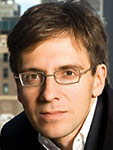
We are not in that globalized world today, according to Ian Bremmer. “The state is back,” said the 40-year old president and founder of Eurasia Group, a political consulting firm. Both in the U.S. and throughout the world, governments are exerting their influence through regulation, trade restriction, subsidies, and bailouts.
As a consequence, Bremmer said we are at “the end of the free market,” which is also the title of his latest book. Bremmer delivered a keynote address at the Financial Planning Association conference in Denver last week.
Bremmer had some surprising predictions of countries poised for growth (Iraq) and those facing the greatest risks (South Korea). I’ll review his forecasts for critical parts of the world, but first let’s look at what he said about how politics are affecting the markets and investment opportunities around the globe.
The three waves
The demise of free markets has taken different paths in developed and emerging markets. Bremmer said we have moved from a G7 world in which most countries agreed on the role of free markets to a G20 world with an absence of such agreement. “We went from a world of herding cats,” he said, “to one of herding cats and animals that don’t like cats.”
Two fundamentally different economic systems have emerged. Developed markets – the US, Europe and Japan – hew to some government support for free markets and a dominant position for large multi-national corporations. In emerging markets, the state is the dominant actor and uses markets for political purposes. The former group are struggling to recover economically, according to Bremmer, while in the latter group many (China, Russia, and the Persian Gulf countries among them) are doing much better.
Moreover, Bremmer said, we are now in an environment where the world’s largest economies are fundamentally antagonistic to one another. This can be seen, for example, in the global tensions with exchange rates, as China, the US, and others are poised to engage in competitive devaluations. Threats of tariffs and protectionist measures are adding to this discord. “We have never lived through this,” he said, adding that those tensions will change capital allocation and lead to protectionism.
Three “big waves” led to those international economic tensions, according to Bremmer. He described the first in one word, “panic,” following the collapse of Lehman Brothers. At that time, every government recognized the seriousness of the situation, and all acted quickly and effectively, mostly through stimulus measures but in some cases through austerity.
The second wave unfolded in mid-April of 2009, Bremmer said, roughly when Larry Summers said we were no longer in a recession. That moved global sentiment from panic mode to blame mode, as world leaders in developed markets faced anti-incumbency pressures. Democrats are in trouble in the US, the Japanese government was replaced, and widespread demonstrations have taken place throughout Europe. By contrast, most emerging market populations have been happy with their governments in recent years.
Only in the last week or so before Bremmer’s talk did the third wave appear, and it is the one that Bremmer argues will engulf free markets. Currency wars are underway, Bremmer said, highlighting the absence of effective global economic governance. Inward-focused anger that characterized the second wave will transform to animosity directed to other governments in this third wave, and “that’s where you will start to see protectionism and the G20 actually breaking down,” he said. Direct foreign investment will face increased obstacles, global growth will slow, and more fights will emerge between corporations and governments.
A tour of the developed markets
Bremmer had just returned from a trip to Europe when he spoke, and he confidently stated that the likelihood of a collapse of the Eurozone is “effectively zero.” “Governments are not willing to take the pain of pulling out,” he explained. Non-economic drivers will keep the EU intact. Political leaders will act to preserve the union for their own reasons, even if their constituencies want otherwise – which, he said, explained the Greek bailout.
Greek debt holders will suffer a “haircut,” Bremmer said, but not a “workout or collapse.” Spain and Portugal are in worse shape, he said, mostly because of the perilous situation of their banks and the lack of a cross-national bailout mechanism. “Spain,” he said, “is not going to get its act together any time soon.” In one of his few specific market recommendations, Bremmer said the situation in those two Iberian countries was “worth following and potentially shorting.”
Surprising, at least to many of those in the audience, was Bremmer’s statement that the UK is in the best shape of any European country. The UK elections were a positive development for that country, since both of the prevailing parties supported 20-25% budget cuts and the resulting coalition government will remain in power for at least five years. “Nowhere else – in Europe, Japan, or the US – is there that kind of support for austerity,” Bremmer said.
Bremmer had very few positive things to say about Japan. “They used to not have a foreign policy,” he said, “and now they don’t have an industrial policy either.” Japan, according to Bremmer, has very little capacity to govern, and its political party system is broken, without adequate mechanisms to form a coalition. Japan’s impediments will take years to fix, and, until then, the country will have flat growth, which will be “really hard” on its equity markets. “It’s a stagnant story,” Bremmer said.
In the US, Bremmer predicted a “dramatic hit” for the Democrats. He finds it “quite possible” that they will lose the House, but he does not expect them to lose the Senate. “It doesn’t matter that much,” he said, in any case he expects the outcome of the elections will be “policy gridlock.” The big issue is the pending expiration of the Bush tax cuts, and he said the financial community is angling for a deal on an extension. “There’s a good chance that won’t happen,” he said, because of lack of support for an extension among Democrats. “That will hit markets pretty hard.”
The emerging markets
Among the emerging markets, the biggest risks are not in Iran. Bremmer said the likelihood of a strike by either the US or Israel against Iranian nuclear targets before Iran goes nuclear is “effectively zero.” The challenges to such an operation – logistical, technological, and political – are too great. The new US policy toward Iran, Bremmer said, will be based on a series of arms deals, including a recent $60 billion sale to Saudi Arabia, which will be followed by similar deals with Israel, Oman, the United Arab Emirates, and Bahrain. Longer term, Iran’s growing influence will be destabilizing, “but not in the next 12-24 months,” Bremmer said.
The most serious risk over the next 12 months is South Korea, thanks to the current political succession maneuverings in and unpredictable nature of North Korea. “We have no idea how bad the situation is in North Korea,” Bremmer said, adding that the North Koreans could launch a conventional attack against the South. “Any exposure to South Korea should be hedged,” Bremmer said. “It’s not a 50% likelihood, but nor is it 2%. It’s real.”
“Iraq,” Bremmer said, “without question has moved from becoming the biggest security problem to the biggest investment opportunity.” It will soon produce between six and 12 million barrels of oil per day, approaching the output of Saudi Arabia. Most energy contracts, though, are not going to US companies. Instead, they are going to countries such as France, which recently sent 25 oil executives with President Sarkozy on a business development trip to Iraq. A byproduct of Iraqi oil production will be depressed oil prices, which Bremmer said would reduce incentives to develop alternative energy sources globally.
The US is losing its war in Afghanistan, Bremmer said, and in five to 10 years that country will be a failed state. “This will be a big hit to the Obama administration, but not a big global issue,” he said. “If you had to choose which war to lose, you are losing the right one.”
China’s goals, Bremmer said, are decoupling, especially from the US, and becoming more responsive to its own people. In 2012, a group of “technocrats” will become the political leaders in China, according to Bremmer, and their priority will be to lower unemployment and build infrastructure in the country’s interior. As a result, Bremmer expects a continued high demand for commodities, and foreign companies that provide infrastructure support will be well-positioned.
“I am hugely bullish on India,” Bremmer said. He dismissed India’s difficulties supporting the recent Commonwealth Games. India only started spending 7% to 7.5% of GDP on infrastructure in the last two years, whereas China started 30 years ago. India, he said, will replicate the “gaudy gains” China made a decade ago, eventually outstripping them.
Singapore will be a big winner in Asia, Bremmer predicted. It will attract big multi-national companies that don’t want to be headquartered in either China or India. Bremmer was also bullish on Indonesia, citing its demographics, commodity resources and openness to direct foreign investment.
African countries offer similar opportunities, but over a longer time frame. Multi-national companies are now making the highest per-capita investments and profits in Africa. Bremmer said South Africa will benefit, as it will be the choice for companies seeking to locate their headquarters on the continent.
Africa was Bremmer’s pick for long-term investors seeking diversification, but for those making a bet now, “it should be on the US,” he said. In making that call, Bremmer cited America’s demographics, research and development investment, blue-water navy, rule of law, and patent protection. “If there is going to be a big breakthrough in technology, it is going to be in the US,” he said.
“In the long-term,” he added, “the dollar looks good.”
Read more articles by Robert Huebscher