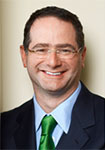
David J. Winters is the Chief Executive Officer of Wintergreen Advisers, LLC, an independent investment advisor founded in 2005. Mr. Winters is the Portfolio Manager of Wintergreen Fund, Inc. (WGRNX), a no-load global value Fund which launched in October, 2005. Prior to forming Wintergreen Advisers, Mr. Winters held various positions with Franklin Mutual Advisers, LLC., where he lead the Mutual Series group of global and domestic equity value funds, including serving as the Portfolio Manager of Mutual Discovery from 2001 through 2005.
We spoke to Mr. Winters on April 5.
Max Heine employed you, Seth Klarman, and Michael Price. Why and how did Mr. Heine attract such talent, and what is the most important thing that you learned from him?
Max was a very interesting and a nice man. He also had a personality that attracted people to him, especially those who were fans of his investment record. As a value investor, Max very much focused on the downside. Having left Germany in the 1930s, he saw how things could go wrong. He was very interested in preservation of capital, and then secondly how you create capital gains.
I can only speak for myself, but his expertise in bankruptcies and liquidations was particularly interesting. Very few people on Wall Street, especially back then, were interested in this sort of backwater. If you did the work, you could buy bonds at big discounts to their asset value.
He liked working with young, enthusiastic, and curious analysts. He really emphasized the importance of details, because often some codicil or bond indenture gave you a greater understanding of how a situation would work out or how assets would be allocated.
All of us who had the privilege of working with him had a lot of respect for what he was and who he was.
Your annual shareholder letter states that you now believe that your current portfolio is the best that you've ever managed. Do you have a quantitative method of measuring the undervaluation in it? If so, will you share it with us, and some of the methodology you use to determine value?
We try to figure out on a company-by-company basis what we think it’s worth versus where it trades. You can come up with a statistic that a company trades at a 40% discount to NAV, which means it's got 60% upside. We have a lot of those statistics, which to us means that we've got a deeply undervalued portfolio on a numerical basis.
But the other thing that we have learned over the years in investing is how important it is to have management in place that's focused on creating value for all shareholders, and doing it in a manner where they are not shooting from the hip but rather being very thoughtful about it. We've got really good team of CEOs working for the Wintergreen shareholders around the world and for all their shareholders.
The third element that makes us really excited about the portfolio today is its international scope. That gives us something that is very hard to quantify, but the idea is global diversification of currencies and free cash flows.
We found that when we have these three elements together it's very powerful. Because people fled stocks in droves since 2008, you can buy really great quality companies at very reasonable prices.
Your annual shareholder letter mentions multiple times the quality of management in various companies, something you just spoke about. What do you look for quantitatively and qualitatively to measure management?
Quantitatively, we want to see that when they have retained capital in the business they have been able to deploy that capital wisely in terms of growing per-share intrinsic value. That is the key thing it all comes down to.
Also quantitatively, we want to see how they pay themselves. You can learn a lot by vetting a proxy statement.
Thirdly – and this is harder – you've got to really see that these people wake up in the morning and they eat and breathe doing what is right to move the ball along for the shareholders. You want management that, when they go to sleep at night, all they dream about are making money for the shareholders. That's harder to find out.
I've met a lot of people over the years, and sometimes you meet people who just aren't focused on what matters. That you can figure out pretty quickly.
When you look at the proxy statements, what are the red flags you look for, and what are the things you really like to see?
One of the worst red flags is when you see a CEO design his or her own compensation without any outside oversight. That's an enormous red flag. What you really want to see is that people are paid well, but they are really only paid well if over time they make the company more valuable. It is tricky because ultimately it has to do with stock price, and today's stock prices are very cheap.
Stock prices used to be a lot more expensive, so it's hard. It's not just the stock price that can be a component; compensation can also be based on recurring cash flow, and that is really hard to hide.
If a company is thoughtful, they can create an incentive program that gets the CEO and the management team focused on making the company worth more on a per-share basis, and that is the key thing. But too many compensation programs are such that the CEO wins and the shareholder loses. We vote against those compensation plans or we just don't own the stock.
Your prospectus permits you to short stocks. How does shorting fit into your value investing process?
When we set up Wintergreen, my business partner and I had ideas of creating a prospectus that gave us maximum investment flexibility. We would have a lot of the tools of a hedge fund in a mutual fund format. We have shorted stocks when we have either found something that was very overvalued or we have been able to figure out that something didn't make sense. We have also done some shorting as hedges.
It is something in our tool bag, but it is not a big component of what we do. Today, we have no shorts; we are very long and super-enthusiastic. Our portfolio is undervalued and has great potential. We eat our own cooking. We've all got our money in the fund.
A number of highly regarded value investors including Warren Buffett have expressed negative opinions about investing in gold. What is different about your practice of the value discipline in general that causes you to include gold and gold mining shares in your portfolio? Specifically, what do you see in Barrick Gold that makes it a value investment, and do you need to have an opinion about gold to make that kind of an investment?
Gold for many years has been a bad investment. What makes things different now is that we are in a period of time where there is significant currency debasement in much of the Western world. Even though there is no rampant inflation at this point, there has been a reduction in purchasing power in the countries that have weak currencies and that would include the United States.
Gold is one of the ways that people can have a store of value. Having some gold is smart, and inflation could very well be around the corner. The cost of doing business, including underlying commodity prices, is going up. With the tragedy in Japan it puts even more of a premium on hydrocarbons over time.
Barrick is very special because its average cost of production is about $450 an ounce, and gold is about $1,400 an ounce. It's actually a very good business, and it is run by a management team that is focused on creating value for the shareholders. It really hasn't participated in the rally very much. It is deeply undervalued. With the potential for gold to go up, the stock being so cheap, and the management being so focused, we think that Barrick is a very good place to have part of our portfolio.
And it is a Canadian company. We love Canada. It's a great place to do business.
Is there anything else in your portfolio that you hold specifically as a hedge against inflation?
The majority of our portfolio consists of companies that have significant amounts of free cash flow over time and growing free cash flow in many different currencies. They have a lot of pricing power; they have the ability, in a responsible manner, to raise their prices and people will still consume their products.
A very large percentage of what we own is in those types of businesses. Most of the Wintergreen portfolio is an inflation hedge – and probably could be a deflation hedge too – because people are going to continue to feed their pets and eat chocolate bars and so on.
We also own companies with very little debt. It is a very financially conservative portfolio.
You hold a position in Leucadia National. How do you analyze a company that provides little more than a 10K as a source of information? How do you assess the intrinsic value of Leucadia National?
Leucadia National is a complicated conglomerate. It takes a lot of work to try to figure it out. We've done the work over the years. It is like anything – you just really just have to go through the numbers and figure out what the assets are worth. If you are willing to do the work, it is all in the documents. They don't lay it out in a nice tidy manner. You have to think it through.
The other thing about Leucadia National is it is run by two men, Joe Steinberg and Ian Cumming, who I have a great deal of respect for- both professionally and personally. They are totally low key. They don't want any publicity. They just want to do their work. They have created a lot of value for their shareholders. We like guys or gals like that.
Your fund uses currency forward contracts, and there is a body of thought that currency hedging does not eliminate risk – that at best all it does is smooth the reported results. Why do you use those contracts? Why do you pay fees to do that?
The fees are pretty modest. With a currency that we really have no opinion on, we will hedge out the translation effect and basically lock in our price in US dollars for a period of time. With a currency that we really are quite enthusiastic about, we'll be either under-hedged or completely un-hedged. An example of that would be the Swiss franc. We love this Swiss franc because the country is completely solvent. Owning Swiss francs is a good thing.
Going back to 2008, many value investors did not cover themselves in glory. Why didn't the margin of safety limit losses as it had in previous bear markets? What did you learn from that experience?
It was the worse financial crisis since the late 1920s. There was effectively no place to hide unless you sold. It just kept getting worse and worse, which is not the way it usually happens.
Part of the dynamic was that there were a lot of people who either were forced sellers or panicked sellers. What they could sell were the most liquid high-quality companies. Companies that usually would hold up well didn't.
We had quite a bit of cash going into 2008. We used that period of time to be buyers, and we were a big buyer of securities through the whole period, even though it was obviously treacherous. We also did what we call “upgrading,” because we found that so many securities had fallen that we could buy even better quality companies. So we would sell one to buy another.
We used the period to deploy our cash and to really be focused on being a buyer as opposed to a panicker, and it's paid off. We got a nice bounce in 2009 and last year. We own a portfolio that is very undervalued with great prospects. Two and a half years later, I believe we did the right thing. At the time it was obviously a very challenging environment, but there are bright days ahead and lots of money to be made.
In the interviews of you that we reviewed in order to prepare for this interview, we could not help but notice that you appear very optimistic. Is optimism an important part of the temperament for good value investor?
It depends. Some people are just negative by nature. But the most successful investors who I've known and the most successful CEOs who I've known have been fundamentally optimistic people.
Often times, being a value investor means you are buying something today at a huge discount. What Ben Graham taught us was that the market in the short run is a voting machine; in the long run it is a weighing machine. So you have got to think that ultimately stock prices and Mr. Market will recognize the value in securities.
You also have the market for corporate control coming back.
What do you mean by corporate control?
There are going to be more corporate takeovers. So some of the extreme under-valuations may not continue in the future if somebody comes along and takes control of them. In the past, there's been an active market in control of corporations. That is beginning to resurface again. If a stock is trading in the market at 20 and it is worth 50, somebody might bid to take control of it. That is what has happened for many years.
We are optimistic that good managers will continue to do sensible, value-creating things, as they have done in the past. There is a theory in economics about how people extrapolate current experience far into the future. It has been a rough time to be an equity investor, and because of that valuations have come way down. People are discouraged. People often want to buy when stocks are up and sell when they are down. There are a lot of slow, fat pitches for long-term investors.
If I were a financial advisor today, I would certainly be increasing my allocation to equities and absolutely international equities, because US investors are underweight to the US and very underweight internationally. The action really is outside the US.
Are there any other important questions that you think advisers should be asking right now?
I would be thinking that you can get almost nothing on cash, that bonds don't yield that much, and that if rates go up, which will happen at some point, bonds will get crushed. Really the only place that you are going to make superior returns going forward is in the equity of high-quality global companies.
If you just look around, there are certain things that clearly are going up in price, like many things that we consume. Prices just keep going up; purchasing power doesn’t.
Inflation and loss of purchasing power are the real bogeymen. You've got to find companies that have a global footprint, pricing power, and good management. That's where I would be putting my clients’ money, and I am in with both feet at Wintergreen, as are my partners and my family.
Read more articles by Robert Huebscher