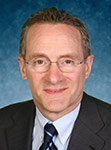
Howard Marks is widely regarded for his thought-provoking essays on the discipline and process of value investing. He is the chairman and co-founder of California-based Oaktree Capital, and he delivered the keynote address at the Value Investing Congress in Pasadena last week.
His latest book, The Most Important Thing: Uncommon Sense for the Thoughtful Investor, is available from the link above.
Below are his remarks. Excerpts from the Q&A appear here.
I titled this presentation “The Human Side of Investing, or the Difference between Theory and Practice.” That subtitle is very simple: It is from a great quote from Yogi Berra, who said, "In theory, there is no difference between theory and practice, but in practice there is." That is extremely true about investing.
Everybody knows about financial analysis, and financial analysis of course is the core of value investing. Most of us have also had exposure to investment theory as taught on college campuses nowadays, and it is distinct from financial analysis.
It is very important to realize that there is another side. The textbooks and professors will tell you about the dependable workings of the market, which I will try to debunk a little bit. They will describe a simple roadmap to investment success, as if, as you do this and this and this, you will make money. But that assumes that there is an underlying process that can be counted on to work. That is not true. The thing that keeps it from working unfailingly is what I call the human side of investing, and that is really why I wrote the book.
The difference between theory and practice
For example, investment theory tells us that markets are efficient, objective, and clinical, and for that reason they price assets correctly. The truth is markets are made up of people, with their emotions, insecurities, their tendency to go to extremes, and their other foibles. Thus, they often make mistakes and swing to erroneous extremes.
In theory, people are risk averse, and for that reason riskier assets must provide higher returns than safe assets in order to attract capital. I believe that this is one of the greatest underlying errors that markets make. Riskier assets must appear to offer higher returns on invested capital, but they need not provide it. In fact, riskier assets usually appear to promise higher returns, but that doesn't mean they are coming. If riskier assets could always be expected to provide higher returns, then they wouldn't be riskier. It is really as simple as that.
In theory, there is an appropriate risk premium that is incorporated into prospective returns on riskier assets. In practice, sometimes the risk premium is inadequate, and sometimes it is excessive, and it is incumbent upon us to know the difference.
We are all familiar with the graphic that shows an increasing return on assets as risk increases, and theory says this is how markets are. But I have seen markets that look the opposite, as in the middle of 2007, for example. The returns were low all across the spectrum, and in particular the slope of the risk-return line was low, meaning that the incremental return on assets as risk increased was very modest.
We have also seen times when the risk premium was excessive. The fourth quarter of 2008, after the Lehman bankruptcy, was a good example – returns were very high, and, in particular, the incremental return for taking incremental risk was particularly high. If you think about it, it is the slope of this line that tells you whether it is wise to step out and pursue higher returns, or whether it is wise to stay back and be safe with lower risk assets.
In theory, since markets price assets fairly, if you buy at market prices you should be able to expect a fair risk-adjusted return. That's what theory says. But, in practice, buying without discernment at the market price will give you returns that are all over the lot. If prices aren't always fair – and we are sure they are not – then buying at the market price cannot be counted on to give us a fair risk-adjusted return.
In theory, people want more of something at lower prices, and less of it at higher ones. We all learned in microeconomics that this is what the demand curve looks like. When price is high, the quantity demanded is low. But when price is low the quantity demanded is high. It makes only sense; that is why people buy more of things when they go on sale.
But, in truth, investors warm to investments when prices rise and shun them when they fall. We all know investors – certainly not ourselves – who buy at 80 and when it hits 100 they say, “I've got this right.” When it hits 120 they say, “This is working I'm going to double up.” If instead they buy at 80 and it goes to 60, they say, “I better wait a moment.” At 40, they say, “I should lighten up,” and at 20 they say, “I should sell the rest before it goes to zero.”
For many investors, the demand curve looks inverted. They buy at higher prices and sell at lower prices, and this is an example of what we must do the exact opposite. A lot of what I say about the human side of investing concerns something I call the pendulum. The pendulum of investment psychology is constantly fluctuating between optimism and pessimism, between greed and fear, between credulousness and skepticism, between risk tolerance and risk aversion. It will always swing, and it is the presence of optimism, greed, credulousness, and risk tolerance that makes markets most dangerous.
In theory, that pendulum should be at what we call the happy medium. If you ask a statistician, “On average, where is the pendulum?” he will tell you on average it is in the middle. But think about that pendulum. How much of its time does it spend in the middle at the happy medium? Very little at all; rather there are frequent excesses, and these constitute the errors of herding behavior.
The pendulum of investor behavior
One of the first lessons I heard about pendulums and the swing of investor behavior regarded something I was taught in the early 1970s: the three stages of a bull market. These succinctly capture the essence of investor psychology.
The first stage comes when a few people begin to realize that there will be improvement. The second stage occurs when most people realize that improvement is already taking place. The third stage comes when everyone thinks that things will be getting better forever. Clearly, the first is early; the last is laughably late. One of my favorite adages – perhaps my favorite of all – is that what the wise man does in the beginning, the fool does in the end. So it's the buyer in the third stage – who buys when optimism is incorporated, under the assumption that things will always get better – who pays the price.
A few years ago, in the heat of the crisis, I added my corollary to this: the three stages of a bear market. They are just as obvious when you think about it. If you think about a bear market, the first stage comes when a few people realize that things are overpriced and dangerous. The second stage comes when most people see that the decline is under way. The third stage comes when everyone believes that things will get worse forever. Of course it is when that kind of negative psychology is rampant and priced into assets that we have great opportunities to buy if we are able to behave counter-cyclically.
The importance of being contrarian
This introduces the importance of being contrarian, but also the difficulty. Mark Twain said that whenever you find yourself on the side of the majority, it is time to reform. That is no less true about investors. Think about it for a moment, what makes a market top? Increasing numbers of people become optimistic. Increasing numbers of people come to believe that things will get better forever. When the last person believes this is so and buys, that is the top. A top is coincident with maximum bullishness.
We must act in a contrarian fashion. We should sell when everyone else is bullish. But one of the things I go back to often in the book is: What is it that will keep us from succumbing to the same mania that captures everybody else? The answer is we have to be objective. We have to be value-based. We have to be steadfast in our attention to the pendulum at the extremes.
David Swenson, who runs the endowment at Yale and has done so for almost 25 years now, has a great way of putting the challenge. Establishing and maintaining an unconventional investment profile requires acceptance of uncomfortably idiosyncratic portfolios which frequently appear downright imprudent in the eyes of conventional wisdom. Of course, conventional wisdom is one of the great oxymorons. What most people believe to be true is rarely true in the investment world, and thus, this brings us back to the importance of contrarianism. But we must realize that it is inherently lonely and inherently uncomfortable. We must be ready for that and able to tolerate that if we are going to succeed with extreme value positions.
One of the important factors behind the fluctuation between bull and bear markets, between booms and crashes and bubbles, is that investor memory has to fail us – and fail universally – in order for the extremes to be reached. John Kenneth Galbraith said, "Contributing to euphoria are two further factors little noted in our time or past times. The first is the extreme brevity of the financial memory...” If people had good memories, if they could call to mind and derive the significance of the events of the past, they would be less likely to repeat or less likely to go to the same extremes. But most people do not have the ability to bear these things in mind. Some of them happened too long ago.
For example, 1929 was repeated in 2007-2008, but by definition you would have to have been born 100 years earlier to be able to make use of that lesson. Most people who were around in 2008 were not born in 1908.
Memory – and the resulting prudence – always comes out the loser when pitted against greed. There is very little man is more likely to believe than that which will make him rich if true. So the prevalence of greed, self-interest, and wishful thinking has great power to overcome memory and caution. As I said before, what the wise man does in the beginning, the fool does in the end. These trends are always taken to excess. The investors who are not aware of them always pay the price.
Pro-cyclical behavior is one of the greatest and one of the most frequent mistakes. What is our goal? What most of us learned at an early age from our fathers, our mothers, and our friends was to buy low and sell high. But what do most people do? They buy high and sell low. This is a conundrum. When the cycle is going well, and has been going well for quite a while, when enthusiasm is widespread, when the media are positive, and in particular when financing is readily available, markets tend to be at high levels. All of these things coincide with rising cycles. All of these things are prevalent. All of these things encourage investing, but often just at the wrong time. So we must try to be anti-cyclical at the time when most others are behaving pro-cyclically.
On being humble
Another factor I want to spend some time on is the tendency of people to overstate what they know about the future, and the ability of this to introduce great risk. One of the dividing factors between value investors and so-called growth investors is the value investor's emphasis on the value here and now. It would be convenient to say that the value investor emphasizes current assets, current cash, current cash flow, current earnings, and the growth investor is all about buying a piece of the future dream. But it clearly is not that black and white.
In particular, it is very hard to value a company without some idea of what the future holds for it, especially in terms of earnings and cash flow. So we must all give thought to the future, especially to macro issues of economic performance, market performance, interest rates and the like. We should be very cautious in what we expect of our prescience. I have several great quotes I'm going to share. I have many more in the book. I seem to never run out, but my favorites are these.
John Kenneth Galbraith said, "We have two kinds of forecasters, those who don't know and those who don't know they don't know." I am proud to class myself in the first category. I know I don't know, so I do not invest with great reliance on knowledge of the macro future. This tends to save us more than it gets us into trouble.
The ability to get into trouble is described by this quote from Amos Tversky. He was an Israeli behaviorist who was a teacher at Stanford until he passed away in 1996. He said, "It is frightening to think that you might not know something, but more frightening to think that by and large the world is run by people who have faith that they know exactly what is going on."
The truth of the matter is, whenever we are involved in any process that subjects us to the uncertainties of the future, we should assess our foreknowledge. As Tversky says, it's intimidating to throw up your hands and say “I don't know what the future holds.” But if in fact the future is unknowable, then it is much more dangerous to say I'm going to know the future and act as if you know it, than to accept the limits on your foreknowledge.
Perhaps as usual, Mark Twain said it the simplest and the best. "It ain't what you don't know that gets you into trouble. It's what you know for certain that just ain't true." Thinking that you know the future when you don't and acting in reliance on what you think is your foreknowledge is incredibly dangerous. I can't stress this enough.
Two schools of investors
I divide investors into two schools: The “I know” school and the “I don't know” school. For my first 20 years in business in what I would call the institutional establishment, I ran into the “I know” school most of the time. These are people who will tell you exactly what is going to go on one, three, five, or 10 years from now in the economy, in the markets, in interest rates, which economies will do best, which industries, and which stocks. They tend to invest on the assumption that they are right. Then when they turn out to be wrong, they try to correct their mistakes and invest on the next set of scenarios rather than acknowledging that perhaps rightly there are limitations on their foreknowledge.
The “I know” school invests for one outcome, economy, market, interest rates, industry, and company. They concentrate their portfolios given that they know what the future holds. They lever heavily, and they target maximum price gains.
Most of the outstanding investors that I have known over the years belong to the “I don't know” school with regard to the macro environment. They may know companies and securities better than anybody else in the world, but with regard to the macro they assume that they don't know what the future holds. So they hedge against uncertainty. They diversify. They avoid or limit leverage, and they emphasize the avoidance of losses rather than – or I would say as least as important as – the acquisition of gains.
When most people think about the future, they ignore that the future is a distribution of possibilities. If you are a student, and you know what is more likely than something else, you might think about the future as a distribution of probabilities if you can wisely assign probability. But it is a range of events that could happen. Most people – especially in the “I know” school – think in terms of the average or the norm, and think that the thing they think is most likely to happen will happen and they ignore the outliers.
The essence of risk
One of my favorite adages is this one: Never forget the six-foot tall man who drowned crossing the river that was five feet deep on average. The important thing to remember about investing is that it is not sufficient to set up a portfolio that will survive on average. The key is to survive at the low ends. It is the “I know” school who concentrate and leverage and so forth, who got into trouble in 2008. It was leverage in particular that prevented people from making it through the low points, and that is what we must do.
In particular, most investors ignore the possibility of extreme outcomes – the so-called back swans, the things that have never happened before, or happened so infrequently that they are dismissed. The single-scenario investors have this difficulty I mentioned of seeing future events as a range of possibilities. They think that the event at the center of their distribution is the one that will happen. Clearly as you look at distributions, you see that even though one event may be most likely there are still many, many other events that together have a higher cumulative probability.
A great quote to help us understand the real essence of risk comes from Elroy Dimson, who is a professor at the London Business School. He says, "Risk means more things can happen than will happen.” It is not standard deviation. It is not variability. It is this sense that the future events are highly variable and unknowable that gives us the best sense for risk.
It's important to recognize what I call the twin impostors. They are short-term gain or outperformance, and short-term underperformance. Both are impostors, because neither one says anything about real investment skill. Investing performance is what happens when events collide with an existing portfolio. Maybe a portfolio has been assembled very wisely, very prudently, and with a lot of analytical talent, and the events that occur just were unforeseeable. That doesn't mean the performance that results tells you anything about the wisdom of the portfolio or the ability of the investor.
I refer a lot to The Black Swan, which is an excellent book by Nassim Nicholas Taleb. Here are a couple of points, or my characterization of points that he makes. Investors are right and wrong all the time for the wrong reasons. We all know people who got famous in our business for being right once in row. The correctness of a decision cannot be judged merely from the outcome. Good decisions fail all the time. Bad decisions work all the time. Randomness alone can produce just about any outcome in the short run. It is for reasons like these that we must be leery about attaching great importance to short-term performance.
Instead you must appreciate what Taleb in his book calls alternative histories – the other things that reasonably, probably could have happened. The difficulty of seeing events as nothing more than part of a range of possibilities must be dealt with, and if we can understand that, then we reduce the significance we attach to the events that actually happened. If short-term outperformance or underperformance is of limited relevance, what matters? Long term, it is not who can only do it once or who can do it for a year. It is who can do it for 10 years or maybe 20. These are the people who are worth our attention.
If we think of the past as having been just as potentially variable as the unknown future, then we see that it is very difficult to make consistently correct decisions. In particular, we should all acknowledge that what should happen and what will happen are two different things. It is folly to bet all your chips on what you think should happen. So many times that doesn't happen, and the people who expect too much get into trouble. That is what caused Lord Keynes to say that markets can remain irrational longer than we can remain solvent.
The pitfalls of investment bureaucracy
It is hard to do the right thing in the investment business. I want to stress that. Everybody in the audience with the requisite experience has learned that firsthand. It is impossible to do the right thing at the right time. It's as simple as that.
We are all going to have times when we look wrong. My third great adage is being too far ahead of your time is indistinguishable from being wrong. You may do the right thing. It may take years to work. In that period you are going to look wrong if you are a contrarian and out of step, and yet this is how you must behave.
In particular we must avoid the pitfalls of investment bureaucracy. Those of us who work for investing institutions, or who have clients who are investing institutions, all know about bureaucracy. And Dave Swensen of Yale put it well, “Active management strategies demand un-institutional behavior from institutions, creating a paradox that few can unravel.” Institutional behavior tends to emphasize the avoidance of embarrassment, and performance that is indifferent. That makes it very, very hard to make good decisions. Most of the institutional investors spend extraordinary effort and often make decisions for the purpose of avoiding embarrassment. In particular, they often over-diversify, and the common thread running through the institutional portfolios that I have seen is over-diversification.
Keynes said it is better to fail conventionally than to succeed unconventionally. We all know that this is a hallmark of pure bureaucracy.
I want to mention to you something that I consider the ultimate conundrum. Most people say, “Well, I would never do so much of something, that if it failed it would cost me a problem.” But if that is your rule, then you will never do enough of some things, so that if it succeeds it will make a difference for the positive. We must get over that, and we must take the chance of doing a lot of something that fails. We must take the chance of being embarrassed, and the chance of being too early, if we are going to be superior investors. That sums up so much of what I have to say.
In many ways, the forces that influence investors push them towards mistakes. Investing in things with obvious appeal and things that are easily understood, things that are unpopular, and things that have been doing well, all of these things are very, very common. This is what most people's decision rules are. They tend to imply elevated prices, limited return potential, and substantial risk.
At most points in time, the real bargains are found in doing things that others will not do, not the things described above. These are not the things that appeal to the herd. The things that we must do are the things that the herd disdains. Smart investing doesn't consist of buying good assets, but of buying assets well. This is a very, very important distinction that very, very few people understand. Price is what matters for investment success. Only disciplined objective unemotional experts can know when the price is right.
Investing when markets aren’t efficient
To sum up, the efficient market hypothesis tells us that the market operates smoothly to incorporate information into prices so that no individual can consistently do much better than the market. In fact, inefficiencies and the mistakes of the investing crowd arise all the time. They are the superior investors’ reason for being. At the extremes, when the actions of the crowd create bubbles and crises, the mistakes of others create opportunities for us to make or lose vast sums.
My company's philosophy is all about trying to avoid mistakes, and perhaps trying to take advantage of them. We are dedicated to understanding and controlling risk first and foremost. Our motto is that if we avoid the losers, the winners take care of themselves. We have a very strong insistence on consistency. We are involved only in certain markets, not the mainstream of the equity and bond markets. Our people and our funds practice a high degree of investment specialization. With specialization comes the potential for superior expertise, which is what all of this must be based on. We do not rely on macro economic forecasts or projections for our decisions. We do not raise and lower cash for purposes of market timing. This is the message I wanted to impart to you today, and now I will be glad to take your questions.
Some excerpts from the Q&A appear here.
Read more articles by Robert Huebscher