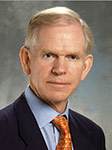
In his most recent commentary, Jeremy Grantham became one of the first mainstream investment professionals to publicly forecast a world economy threatened by diminishing natural resources. A survey of our readers showed that an overwhelming majority agree with Grantham’s views. But constructing a portfolio positioned to capitalize on those themes is exceedingly difficult.
Grantham is co-founder and chief investment strategist of the Boston-based global manager Grantham, Mayo, Van Otterloo & Co. He is widely recognized for his prescience in identifying asset class bubbles and long-term investment trends.
In the first part of his most recent commentary, published in April, Grantham articulated his view of diminishing resources. “The world is using up its natural resources at an alarming rate, and this has caused a permanent shift in their value,” he wrote. “We all need to adjust our behavior to this new environment. It would help if we did it quickly.”
I’ll summarize Grantham’s views and the results of our readership survey, which was conducted over the last few weeks. Then I will look at the various ways one might invest based on Grantham’s outlook.
The days of abundant resources are over
Grantham has written about diminishing resources in the past, but his April commentary was by far his most exhaustive review of the subject. A combination of diminishing resources and a growing population has permanently reversed a trend of decreasing commodity prices, according to Grantham.
Commodity prices declined over the 20th century at a 1.2% annual rate, he wrote, because the marginal cost of production was less than the gains in productivity, given the supply and demand characteristics across markets for natural resources. “But this was just an accident,” Grantham warned. Indeed, over the last eight years, he said the price declines of the previous 100 years were reversed.
Now, the world faces a “paradigm shift” of higher prices for resources, according to Grantham, as the demand for resources will outstrip their supply. For example, the rate of oil production is peaking on a worldwide basis (it peaked in the US in the 1970s), and the marginal cost of production is rising.
It’s not just peak oil, though — all peak resources threaten economic growth, he wrote. Grantham’s assessment of a paradigm shift in prices was based an equally weighted basket of 33 industrial and agricultural commodities.
Copper and iron ore are exhibiting “peak” characteristics. Agricultural commodities are as well, because most of the increase in crop production has come at the expense of increased use of fertilizers, and fertilizer use is constrained by, among other things, diminished resources such as potash and phosphates.
The primary culprit driving the paradigm shift is growth in emerging markets, particularly China, he wrote. China’s high level of capital spending is upsetting the balance of global supply and demand. China uses 53.2% of the world’s share of cement, 47.7% of its iron ore, and 46.9% of its coals.
The supply-and-demand imbalances driving prices higher are a permanent, long-term trend, according to Grantham.
Grantham explained why he has been one of very few in the investment industry to embrace peak resources. Human beings are naturally optimistic, he wrote, and it takes a strong contrarian discipline to advocate a view that will lead to lower economic growth and, hence, muted returns in the capital markets.
Grantham cited two factors that, in the short term, could cause commodity prices to decline. Although he said weather will be instable due to global warming, weather patterns could be more favorable in the next year, decreasing agricultural prices. China also faces a number of challenges that could slow its growth. There is an 80% chance that commodity prices could decline significantly in the short term if one of those events were to occur, he wrote.
The net of Grantham’s outlook is that while certain investors will benefit — primarily, land and resource owners — the global economy and per-capita affluence will grow more slowly than they have in the past, when resource supplies were relatively unconstrained.
Advisor Perspectives’ readers agree
We wanted to see whether our readers agreed with Grantham, and our survey revealed that an overwhelming majority did.
A total of 539 readers responded to our survey, which was emailed to readers on June 2. More than 90% of respondents had read Grantham’s commentary.
The respondents’ AUMs were distributed as follows:
Under $100 million |
42.6% |
$100 - $500 million |
31.7% |
$500 million - $1 billion |
9.8% |
Not an investment advisor |
9.6% |
No response |
1.4% |
Over 81% of respondents either agreed directly with Grantham’s thesis or took the slightly more temperate view that resource shortages would slow growth but not eliminate it, as shown in the table below.
Question: Jeremy Grantham suggests the adoption of a new “frame of reference: to recognize that we now live in a different, more constrained, world in which prices of raw materials will rise and shortages will be common…. Rapid growth is not ours by divine right; it is not even mathematically possible over a sustained period.” What is your opinion of his premise?
|
I fundamentally agree. |
40.2 % |
I think shortages will slow growth, but not eliminate it. |
41.1 % |
There may be challenges, but nothing too serious |
11.5 % |
He's too pessimistic – the future will be fine. |
6.1 % |
No Response(s) |
<1 % |
Over 93% of respondents agreed with Grantham about the investment opportunities, as shown below.
Question: Do you generally agree with Jeremy Grantham that there are excellent long-term investment opportunities in resources and resource efficiency?
| Yes |
93.1 % |
No |
5.9 % |
No Response(s) |
<1 % |
Over 88% of respondents agreed that China is a short-term risk to commodities, as shown below.
Question: Grantham said that potential problems in China (the slowing of its economy) represent a risk, at least in the short-term, for commodities. Do you agree?
| Yes |
88.4 % |
No |
10.5 % |
No Response(s) |
<1 % |
No consensus was clear about the appropriate way to position portfolios, as shown in the table below.
Question: If you have recently increased or plan to increase your exposure to natural resources, how will you do that? (check as many as apply)
| ETFs (such as USO or OIL) |
35.6 % |
Through commodity-oriented funds (such as the ETF GNR or the PIMCO Commodity Real Return Strategy Fund) |
40.1 %
|
Through natural resource mutual funds (such as Allianz Global Resources or RS Global Natural Resources Fund) |
39.3 % |
Through holdings in individual equities |
41.6 % |
Through increased holdings of physical commodities and resources (precious metals, land, emergency supplies) |
13.6 % |
Other |
19.3 % |
Of the 539 respondents, 456 (85%) chose one of the first five options in the table above.
Rising commodity prices will likely produce secondary effects, such as inflation and higher growth in emerging markets, particularly those rich in natural resources. The responses below showed that our readers are also acting on these themes:
Question: Are there other ways you have recently altered, or plan to alter, your asset allocation in response to concerns about natural resources and energy? (check as many as apply)
Increased exposure to inflation hedges |
58.1 % |
Decreased exposure to the US dollar |
32.0 % |
Increased exposure to emerging markets |
45.1 % |
Other |
18.6 % |
Of the 539 respondents, 443 (82%) chose one of the first three options in the table above.
Some disagreed with Grantham
Many readers, however, disagreed with Grantham’s thesis, and offered their thoughts in the comment field in our survey.
Some argued that Grantham’s predictions were too pessimistic and compared them to those of Thomas Robert Malthus, who forecast that population growth would limit economic growth. “Malthus wrote his first edition in 1798 and has been wrong for 213 years,” one person wrote.
Grantham cited Malthus in part one of his commentary as well. He said that the 200+ years since Malthus’ wrote comprised a relatively short time span — and therefore that it is not surprising that these themes are becoming more important now.
Other readers cited Julian Simon, who wagered with Paul Ehrlich in 1980 that the price of five commodities (copper, chromium, nickel, tin and tungsten) would decrease over the ensuing decade. Simon won the bet as those prices trended downward. That result, however, doesn’t disprove Grantham’s thesis, as prices may still increase going forward.
A number of readers wrote that Grantham was simply too pessimistic about the potential for technology and innovation to deliver new energy sources. Some noted that when whale oil was a primary fuel source, many feared it would be too quickly depleted.
Niels Jensen and his colleagues at Absolute Return Partners wrote a rebuttal to Grantham, The Case for Human Ingenuity, which was published on May 2. In it, they cited a number of new technologies that may replace hydrocarbons, and argued that commodities as an investment may not offer the diversification value they have in the past.
Portfolio construction for a world of diminishing resources
Last week I hosted a conference call with six advisors, all of whom responded to our survey and were in agreement with Grantham’s thesis. I wanted to understand how they chose various funds, ETFs and securities to support a long-term view of diminishing resources.
What emerged from that discussion was that there is no clear and precise way to capture the trend in resources — at least not through an investment strategy accessible to advisors.
The most obvious and direct path is through commodity-based ETFs such as OIL and USO, which over one-third of respondents reported using or planning to use. The problem, though, is that the returns on those funds are derived only partially from the spot price of the commodity. The remainder — and often the bulk — of the return is driven by selling futures contracts as they expire, buying new contracts and earning interest on the underlying collateral.
Some of the six advisors use natural resource-based commodity funds, such as the PIMCO Commodity Real Return Strategy fund, but they noted that the fund has had high turnover in the past and is best suited for a tax-sheltered account. As an actively-managed fund that invests in commodity-linked derivatives backed by inflation-indexed securities, it has some of the same problems with rolling futures contracts as commodity-based ETFs do.
Another approach is to use funds and ETFs that invest in companies whose revenues are closely linked to commodities prices. Dick Vodra, of Spire Investment Partners in McLean, VA, uses the agricultural ETF MOO. Phil Appel with Merrill Lynch in Michigan uses Allianz’ Global Resource fund and RS’ Global Natural Resources fund. But all agreed that those funds expose investors to risk factors other than commodity prices, since they are dependent on the equity-market valuations placed on individual firms.
Jay Abella of NJ-based Investment Partners likes master limited partnerships (MLPs), especially Canadian ones. He said that those investments require substantial due diligence, including an assessment of their tax structures. But they typically provide a source of reliable income, which can offset the volatility created by short-term fluctuations in energy prices.
Short-term volatility in energy prices led some advisors to choose managed futures. Those funds, however, generally follow trends and don’t provide long-term exposure to commodities. “They don't fall into commodity investing, even though one of the things they trade is commodities,” Appel said. “They can be short when you want to be long and long when you want to be short.”
Yet another approach is to invest in alternative energy through funds such as Calvert’s Global Alternative Energy fund and PAX Global Green fund. These funds, however, often invest in companies that are not yet profitable or operate in industries that are heavily dependent on government subsidies.
“One of the conclusions I’m hearing from the group,” Vodra said, “is that there are very few attractive investments on earth right now, and that may be a reflection of reaching the peak in many resources.”
One of the struggles with resource-based investing, according to Vodra, is that banks can be reluctant to make asset-based loans because they view the current prices of many resources as unrealistically high, so they have no confidence what revenues to expect when a mine or well actually goes into production. Troy Jones with Oklahoma-based Access Financial Resources said that investors could also look at which industries to short — including those that are too heavily dependent on debt financing.
Grantham, for his part, offered a few investment suggestions in the second part of his commentary, published in May: forestry, agricultural land, and resource-efficiency plays. Those are long-term investments, according to Grantham, and most advisors cannot invest directly in forests and land in the same manner (e.g., with lack of liquidity) as a firm like Grantham’s can.
That leaves a market opportunity for an enterprising fund company — a “peak resource” mutual fund that captures the long-term upward trend in commodity prices that Grantham predicted. Without such a fund, advisors will need to continue to work with investment vehicles that imperfectly correlate to resource prices.
Read more articles by Robert Huebscher