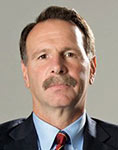
Michael C. Aronstein is the president and chief executive officer of Marketfield Asset Management, LLC, a registered investment advisory firm that offers discretionary asset management for families, individuals and institutions. He is also the chief investment strategist for Oscar Gruss & Son, a New York Stock Exchange member firm that provides research and investment advice to institutional managers. In 1995, he was cited in the Financial Times Guide to Global Investment as one of the ten best investors of the decade. His views on macroeconomic and strategic issues have been regularly sought by and disseminated through the media.
The Marketfield Fund (MFLDX) is a mutual fund regulated under the Investment Company Act of 1940. The fund seeks low volatility absolute return in excess of broad equity indexes and operates under a broad investment charter that allows it to employ equity securities, fixed-income instruments, commodities, futures and options. The fund may hold short positions of up to 50% of its capital.
I spoke with Aronstein on November 3.
Let me begin by congratulating you on your performance. Since its inception in 2008, your fund has returned 31% while the S&P has been down 15%. Are those numbers fairly accurate?
We've had a pretty good run versus the run-of-the-mill benchmark.
Some of our readers may not be familiar with the Marketfield Fund. Would it be fair to describe the fund as a long-short hedge fund without the performance fee?
I think of it as a hedge fund that has wide discretionary latitude on both sides of a variety of markets. We tried to package it in as customer-friendly a format as possible. The 40-Act structure is somewhat of a pain in the neck, but you can easily manage around that. When we made that decision in 2006, it was somewhat controversial.
We had a strong suspicion that the one-sidedness of the hedge fund structure would be called into question. Over a long period of time it is easier to build in an enduring institution when you don't have that gigantic variability that comes from the performance fee, because if you have a bad year or two and you are way below your high-water mark, all your good people leave.
You’ve identified some key macro themes that permeate your process and your thinking about the markets, starting with the demise of sovereign governments. What do you mean by that?
The problem with governments is an aspect of the cresting of the credit cycle that we've had for a generation. Credit cycles don't end nicely. We have already seen the ending in the corporate sector in the US, which began with the peak in 1999 and 2000. It was prompted in large part by the collapse of Asian currencies that made their manufacturing costs impossible to compete with for US manufacturers.
Between 1998 and 2002, the corporate sector in the US had a near-death experience. The only part that was healthy was technology and related growth areas, and those got pounded post-2000. So the US corporate sector in general has spent a decade restructuring, and its balance sheets are in good shape. So they have emerged from the peak of the credit cycle into a more sustainable position.
The household sector in the US is four years into its restructuring. It rode the wave up by accumulating excess mortgage debt, and that process has reversed. The effects are not pretty.
The US automobile business is undergoing a restructuring that began in 1969, when it reached its secular peak. That's the difficult thing about managing money. You could see the seeds of destruction planted in that industry, and look how long it took. It was 40 years before you finally had what appeared to be a terminal event in the bankruptcy of GM and Chrysler. People who had a jaundiced view of that business from the late 1960s on were right. But it didn't help in anything practical. It was a good story, but we are disciplined by the need to apply all this in a very practical sense in real-time.
The one area in our economy that hasn't gotten the message yet, in terms of the ultimate futility of accumulating debt as a means of maintaining one's lifestyle or position, is government. It is not just a problem here. It is a problem all over the world. But these problems are part of a bigger picture. Greece is not happening in isolation, nor are the stresses in the budgets of California, Illinois, New Jersey, New York and Wisconsin, and all the tensions that those engender.
These are all part of a bigger theme. I'm not sure when instability will arise from those government excesses – five, 10, 15, 20 or 50 years. Instability will be there, but it only asserts itself once in a while, and it asserts itself when the markets discipline the users of excessive leverage.
As it is doing now for Greece. Your second theme was a new environment for corporations related to how the nature of the business cycle is changing.
That's related to the first process. The corporate sector has tried to detach itself from the pressures of fluctuations in the credit cycle. You've seen that sector perform surprisingly well over this cycle, including out of the distress in 2008 and 2009 with the exception of the sectors that were right in the eye of the leveraged storm – real estate, housing and leveraged finance, and the ancillary businesses on Wall Street that took advantage of the last gasp on the upside.
You’ve also talked about how the consumer is not nearly as impaired as many people believe, and that most household debt is purely housing-related.
People talk about the consumers’ balance sheet and then they leave it there and don't bother to actually look at its constituent elements. You realize the big excesses have been due to overindulgence in real estate leverage. We had a whole generation that was taught to buy as big a house, and borrow as much as one could, and to use that as a cornerstone for wealth building and as a substitute for real savings.
That whole mythology has been shattered. Restructuring the mortgage portion of consumer debt is a long, slow process. But as people spend less money putting a roof over their head or buying second and third homes, that leaves more for the rest of consumer spending.
That's one thing that has played out in real-time in the equity market. Consumer discretionary in general has been great, and people still don't believe it.
This is despite the bankruptcies and store closings that we have seen among retailers. There has been a general contraction. But despite those, you still feel strongly about retail?
Retail sales are – by almost any measure – at all time highs. Retail and consumer discretionary stocks have made all time highs – not recovery highs – but all-time highs from the 2007-2008 period. There's a popular misconception that gets played over and over again, by various media and in investment conferences.
The theme of frugality is a misconception?
People are much more value-conscious as they become more aware of the fact that credit has its downside. But beyond that, the whole idea of a secular ratcheting down of discretionary expenditure is incorrect.
You’ve also said that a secular theme that has worked well for investors in emerging markets has now run its course. Your fund has been heavily short the iShares Emerging Markets ETF. What outcome do you expect – a hard landing in emerging markets?
The hard landing will be in emerging markets’ financial assets. Those countries certainly have the wherewithal to keep their economies going reasonably well at the core. But that doesn't necessarily correlate with performance in the financial markets.
From a longer-term standpoint, the one real risk you have as a US investor in all those exotic destinations is if inflation really starts taking hold almost everywhere in emerging markets. It's beginning to have a very poor effect on the local currency values, which in turn for a US investor makes a total return from foreign equities disappointing. That's the real mitigating factor – the strength of the currency.
Even though these economies have performed tremendously over the last decade and the capital markets have followed, the real bonanza for people investing in emerging markets has been the fact that the currencies have gone dramatically higher in places like Brazil, India, and a lot of Asia, with the exception of China. So that's compounded the returns, and investors have been drawn to past performance because it's very explicable.
In your 2010 year-end shareholder letter, you make the case for owning equities of large publicly traded G-7 companies. How do you do the individual stock-picking for the long side of your funds, and how do you characterize the stock selection process? Is it top-down? Is it value or growth?
The top-down process within the fund determines how we go about looking from the bottom up. It's a two-pronged attack. We have a very – and I hope – logically consistent and comprehensive view of the world. It's something that's all I've done for the last 33 years, and I spend all day every day maintaining and developing our macroeconomic framework along with Michael Shaoul, who is one of our partners and a member of the investment committee.
The macro view acts as our filtration mechanism. It tells us where to look and what themes might be arising. We have a bottom-up process that is run by David Johnson, who is our director of research, and who is a very good investor in his own right – notwithstanding my musings about the world. He has a team of young and very competent analysts, all of whom we train to be generalists.
We have strong views about what kinds of businesses are the best within the context of the themes that we identify. We have our opinions about how public businesses ought to be run, and what things are important, and what kind of profiles the management ought to have.
Somebody coming to our shop and listening to our research process would feel that it was reasonably typical, until they hear how much effort we spend on these broad theoretical top-down themes in order to then direct and aim the research process.
There are probably 20,000 securities in which we could potentially invest. We need a mechanism for whittling that down to a manageable size. A lot of managers use some quantitative screening process or there is some methodology by which they arrive at a manageable point. Of course, the mutual fund business is set up in a way where you start from a pretty confined universe. A typical mutual fund is small-cap growth, or large-cap emerging market value, or natural resources in Europe. So you have a very limited data set from which to select companies, whereas we set ourselves up as kind of free-range chickens.
Do you use a value-driven process at the individual security level?
It's hard. There are times at which we feel value – in the sense of buying things that have really been beaten up – is an appropriate strategy. And there are other times when we think growth – buying things that have real top-line participation and potential – is right, and the market changes depending on the phase of the business and macroeconomic cycles.
Value is another way of saying you have a strategy that bets on mean reversion, and growth is another way of saying trend-following. Those are really the only two ways to invest in a systematic form.
Sometimes mean reversion is the right approach and sometimes you have serial correlation, which leads to much more of the trend-following approach. I'm not automatically drawn to things that have gone down a lot, because most of the time markets sell things down for good reasons. The reasons don't become apparent until the things are really down, in many cases.
But we are value-oriented in a conceptual, intellectual and theoretical sense. I like to understand what aspects of economic theory are being dismissed by people and are out-of-favor for the time being.
Are there any of those that you think are being dismissed right now?
One is the value of the free market structure of the US versus the rest of the world. The model that we have here is a much more traditionally liberal in the 19th century sense than most everywhere else on Earth. That's being discounted.
There is also a big overvaluation of the Keynesian model of intervention by governments. That's akin to pets.com trading at 100-times revenues.
US corporate profit margins for US companies are near historic highs. What has changed that might prevent margins from reverting to the mean as they have historically?
Corporate management has watched TV and they're scared. Typically corporations would get really carried away at high points in cycles and make all kinds of grandiose plans about more capital spending and acquire everybody in their space. Even though they pay 15-times cash flow for a company they could have bought at three-times cash flow four years earlier, they argue that there was a good reason to do it. To some extent, companies have gotten much more disciplined in that way.
The 2008 crisis put the fear of God into a lot of people. For two months nobody could sell commercial paper. The corporate treasurers now have a different view about risk. I would hope that that would stick. The industrial sector in the United States has been flogged for so long that at the first sign of respite, they are not about to go dancing on table tops just yet.
But we are always worried about the kinds of exuberance that accompany cycle peaks in various businesses. Business managers got their pictures on the covers of all kinds of things. That's what happened to financial services and the big integrated investment banks from 2006 to 2008, and to some extent in 2009. . Those guys ran around like Russian oligarchs, and they lost sight of the fact that they were running public businesses. Doing anything successfully is in large part about risk management and ego restraint.
So that would argue for a reversion to the mean in terms of corporate profits at some point?
In some sectors perhaps, but the kind of sharper version, the kind of periodicity that you saw in business profitability for the last 30 years is not likely to recur. More cyclical companies have been through the wringer and are going to look more like stable growers. They are going to have the margin profile of a consumer staple company than a big industrial.
A lot of industrial technology is really hard to compete with, not strictly from a technological manufacturing sense, but from the infrastructure you need to be a global participant. You can't just go out and make jet engines and say, “here is my engine.” Your customers are going to want to know see your service infrastructure, your global delivery process, your risk management tools, your information technology center, and on and on.
So in those industries the margins are going to be more permanent?
I think so.
Will increased market volatility be a structural theme?
Yes. Over the past decade, part of the regulatory response to the popularity of financial markets and the game of investment management in general has been to eliminate market-makers. They were viewed to be unfairly profitable and were seen as taking advantage of investors. Now you have markets without market makers. First they destroyed the specialist system in the stock exchanges. Now the penny spreads really make it impossible for people to hold both sides of the market and make a reasonable amount of money without taking a lot of risk. So you don't have people who are willing to accept the obligation of maintaining an orderly market by trading against the trend.
On top of that, you have a regulatory apparatus that is weighing on all of the big international investment banks, which means they cannot use their balance sheets to make markets in off-the-run securities in traditional dealer markets, mainly in fixed income. They are not going to be willing to step up and take the other side of trades when the trend happens to be temporarily one way because the regulators just jump all over them.
So you have markets without market makers, and those markets become illiquid and really volatile.
That's why people can't tolerate equities. It has nothing to do with the business characteristics of the underlying companies. It's because they watch these things jump around in a seemingly whimsical fashion with no rhyme or reason. In the aftermath of 2008, people have an embedded post-traumatic stress disorder. Over the last three days, the stock market went down 5% to 6% and it's up a couple percent today. That is the new normal.
The bond market, which is where people have taken shelter, is getting more and more like that.
Is that a result of the same change in the structure of the markets?
Yes, and it's one of the unintended consequences of the whole regulatory thrust of the past decade. Investors are not paying an eighth to trade stocks, so instead they are subject to local volatility that is 10 times what it had been in the past. So they don't trade stocks at all, or they don't invest at all.
Coming back to some of your holdings, at June 30 you were also short a number of European and US investment banks, and I believe that has worked well for you. Does that trade have more to go? If so, are you concerned that there might be a knock-on effect on business activity in US stocks?
It has more to go. We've been short these for the most of the last four years, on and off. These businesses have passed the peak of their secular appeal. They have outmoded business models with cost structures that are remnants of a past era. These businesses can’t grow back into their embedded cost structures. They have attracted the attention and scorn of the whole world, including a gigantic regulatory apparatus and all the political bodies. They have become piñatas.
Over time, these businesses are going to devolve into their individual elements. Parts will break off from the mother ship. They'll go through the same process that the big conglomerates went through post- their boom in the 1960s – the rationalization process. But it won’t be a pleasant march.
One money manager told me – this is a great phrase… “there is nothing uglier than the march from growth to value.”
In terms of the effect on the global economy, the capital markets are willing to fund reasonable ideas directly without the intermediation of a big financial institution. Plenty of banks haven't gotten involved in all the heroic stuff in trading and risking capital, yet we still have a big banking infrastructure in the US that's not part of the “everybody wanting to be Goldman Sachs” trend. Goldman will still exist in some form, but not as the invulnerable bastion of managed conflicts that has drawn the bulk of graduates from Harvard Business School and Wharton to the promise of riches beyond the dreams of avarice.
In your annual letter, you said the harsh lesson of 2006 to today is that “houses have no inherent tendency to appreciate any more than cars or other durable consumption goods.” On June 30, you were long four housing-related companies. Do you think housing prices are bottoming? And what makes builders attractive?
We have been wrong about builders. That's been a value play that turned into a value trap in the last year. The scarcity of builders really is the attraction at this point, and their access to financing. Speculative and small builders are going to have a harder accessing third-party capital. Some of the big public builders still have cash and access to it. They've managed their way through this reasonably well, keeping cash flow positive even at the expense of enterprise value in a lot of cases.
Now we are getting down to a point – and I have had this feeling for a long time – where a much larger proportion of the population, particularly younger people, is going to rent. You'll have a housing infrastructure that is owned by the holders of permanent capital – long-term investors like pension funds and endowments. They'll use their capital in the way that big pools of capital should be used – as risk mitigators – to take long risks that can only be undertaken by companies or institutions big enough to diversify away the idiosyncratic risk. That's the whole notion behind life and property-casualty insurance.
You can apply the same theory to the housing stock. The people who are taking the transactional risk of owning and then possibly having to dispose of a house shouldn't be doing so. They are better off having something that they can live in, and paying somebody else a rate-of-return to hold the property. Over time, if they have to move, particularly as a young family, it is not a big deal.
In contrast, right now a lot of people are impaired by the over-commitment to a big illiquid asset. That myth grew, and I’ve thought this for my whole life that a house is a consumption good. It doesn't have any place in the chain of production that would render it a capital asset.
When I started my career, short-term rates were 7% on the way to 20%. Mortgage rates were in the same range, on their way to the mid-teens. As we went from a 15% mortgage rate to low mid-single digits, the P/E multiple on a house, if you look at it that way, went up. The amount that people could afford to borrow and the debt they could service increased. People extrapolated that momentum and price performance. Houses and anything levered to the mortgage rate were great.
Our intellectual infrastructure rationalized it. None of it was valid, but it was believable because you had the price evidence. Now people have learned the lesson the hard way, as we have as a society.
Should public policy encourage renting over buying, because that makes the workforce more mobile?
Absolutely, and it would create a much more efficient infrastructure. We have a lot of housing stock that is not in the right hands, not because there's not demand for it, but because we have a mess of a regulatory and financial infrastructure, and the remnants of all the toxic waste from the last experiment. The people who run Fannie and Freddie just want their jobs, so they don't want to keep reminding Congress of how much money they really lost, how badly they did at this whole thing, how their mission statement was tossed in the circular file, and they had “Goldman Sachs envy.” The guys that ran those institutions managed to make as much money as an investment banker, yet lost five times as much. That was part of the whole leverage miracle.
When you were running Preservation Capital, you were very bullish on commodities. The current Marketfield Fund portfolio is underweight commodity producers. What's changed?
It's my skepticism about the emerging market cyclical trends and perhaps a similar secular story. Commodities, like houses, do not have any intrinsic generative capability that would categorize them as an asset class. They can be a capital asset as part of a production process, but they are a static capital asset that does not have a tendency to add value.
They have done well because we have had a collapse in the dollar. The dollar peaked with the peak in NASDAQ and the S&P and then went down dramatically. Depending on which currency you look at, the dollar has been punished over the past decade and really over the past 30 years, particularly since its peak around 2000 to 2001. That's very beneficial for commodity prices and anything that is priced in dollars, such as foreign equities, foreign land, commodities, gold and foreign exchange.
That's coming to an end. Institutions have been convinced to pour a lot of money into this pseudo-asset class. Commodity-producing systems like forests and farms and mining companies are actually an asset type that generates cash flow and should accrue value over time. The idea that a room full of wheat or soybeans would suddenly be worth a lot more if we sat here long enough, however, makes no sense.
In your annual report you also state, "The confusion of market, economic and business metrics is one of the most common analytic errors that we see now that top-down approaches to investing have become fashionable." Can you expand on that for our readers?
Top-down analysis is very, very complicated, because there are several distinct aspects to it. There is a macroeconomic aspect that deals with economic occurrences, theory, monetary policy, flows of funds into and out of capital assets, and the productive capacity of societies.
Then there is a macro economy of the capital markets. You have supply and demand, the conditions of the participants, flows and incomes.
You have the metrics of businesses that certainly are interconnected with the other two, but are separate. That includes product cycles, marketing and the other things that go into running a business.
You don't have to be conversant with economic theory to run a good business. In fact, it probably is better if you just know how to run the business and don't worry about the other stuff. People who are conversant with economic theory don't necessarily know anything about investing. It's like the difference between somebody who is a trained physiologist and somebody that can teach you how to throw a curve ball. The first guy can tell you exactly what's going on in your arm and in your tendons, but he doesn't really know anything about how to throw a curve ball.
Investors look at things that seem to be generally determinative but, from the standpoint of really doing the analysis, you have to understand into which of these categories that factor fits, where it originates, and how it affects the other aspects of your analysis. There are overlaps between business results, economic factors – obviously businesses live in the economy – and markets which draw their cash flows from the generative capability of the real economy. That's where the value comes from. So these are interconnected, but you have to be able to trace the origins of these forces back through each of these three areas.
The problem with the practical application of macroeconomic theory is in terms of the elements of causation. They are not robust in their transmitted effects throughout economies, business sectors or capital markets at any particular point in time. It's not like organic chemistry or physics, where all those things are persistent and you can show people how it works and it always works like that.
Perhaps you can talk a little bit about some of the investment mistakes you've made and what you've learned from them?
I've made a million. Most of the mistakes I've made have not been conceptual. Most of them are lack of personal discipline, and not responding properly to the pressure of being wrong.
I made one this summer. We cut in half our short position in emerging markets a week before they collapsed, and we'd been short them for six months. I really got worn down by taking calls from investors saying “come on, it's not happening.” I knew full well intellectually that this was going to happen. I got worn out emotionally and by the pressures of underperforming the market for six months. It cost us probably 2% or 3% in performance over the next week. I fixed it pretty quickly, but that was huge. Investing is like everything else in life; it's about not letting yourself get into positions that you don't handle well.
What do you worry about the most right now?
My family, like always.
I also worry about the slow death of the body politic. It is not going to be a smooth process. I worry about the way various people who have become used to positions of unlimited authority respond when challenged. Big secular processes are occurring that are somewhat obscure and are very difficult for people to get their arms around, because nobody has the time to sit down and actually talk about them and listen to it. People have the attention span of fruit flies these days. So when the public is upset by occurrences that seem to be random, the easiest way to kind of keep oneself in power is to harness the anger of people who are confused. A lot of people and a lot of charlatans over the ages have made good use of that, and that's not been a good thing for the world.
We see various forms of that now. The young people who are part of the campground in lower Manhattan are angry about what's going on in the financial world and the seeming collusion between government and the princes of leveraged finance. They are angry over the fact that people blow up these big institutions and get on their private jets and head for Palm Beach. It's like “sorry, I won't do that again, but at least I still have my $500 million net worth, the five houses and the severance package with the lifetime Netjets card.” That strikes people as wrong, and I have a lot of sympathy for that. It will be interesting to see whether John Corzine, who certainly was among the princes of the business, will be the first one to get led out in handcuffs.
There are people without scruples in these positions, and much more so in the political realm. I don't worry too much about what the corporate sector is doing, because if it doesn’t produce something that people voluntarily exchange money for, they go out of business. If Starbucks can't make a cup of coffee that tastes good, I don't really care about whether or not they overcharge for it or whether they deceive people into buying a high-calorie Frappuccino. If they can't do something that lots of people are going to voluntarily walk by the store and spend their money on, Starbucks will be gone.
Whereas there's no check on the people in political power. They feel like they can just reach into your pocket for what they need.
No one asking for more money from taxpayers ever says, “I need more money to waste it.” Everybody has a marvelous story to tell for why they should have discretion over your money.
Is this a bipartisan issue?
The Democratic Party has played this to the hilt. They are more in tune with the Keynesian mythology that the more money they have discretion over and the greater share of the national output that they can direct, the better we will all be. They claim to know where to direct it so there will be no more poor children, no more lost economic opportunity, no crumbling infrastructure, and no inequality. They can do this with your money.
The best regulation is personal risk. If you just made all the people who run the big public financial companies personally liable for the losses, and the directors and their top 100 employees, with no limit, they would stop. It's like the advisors who all own their own firms. None of them have company provided Gulfstreams, I would venture, even the really successful ones.
In some sense a portion of the Occupy Wall Street group has been deceived into serving as the armed wing of the United Federation of Teachers, in order to provide muscle in support of the public employees unions under the banner of fairness. But the rest of them see a society in terms of the consequences for recklessness that are not at all fair. You get a kid who steals a six pack of Red Bull from a convenience store and is treated to all of the joys of the criminal justice apparatus.
Whereas you get these guys who are losing billions of dollars under false pretenses, and getting up and saying “Oh, everything is fine.” What happens to them? They have to increase the security at the gate house of the estate, and they don't get invited to Davos for at least two years. The young people who consider that unjust are right.
Read more articles by Robert Huebscher