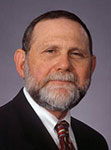
Paul Kasriel is the chief economist at Northern Trust. Paul is a recipient of the annual Lawrence R. Klein Award for having the most accurate economic forecast over a four-year period among the Blue Chip survey participants. In January 2009, The Wall Street Journal and Forbes cited Paul as one of the few who identified early on the formation of the housing bubble and foresaw the economic and financial market havoc that would ensue after the bubble inevitably burst. He will retire at the end of this month.
I spoke with Paul on April 2.
At the end of last year Northern Trust's forecast for real GDP growth in the US for 2012 was approximately 2.5%. Has anything changed regarding that outlook?
Not significantly. The forecast may be a touch higher than that, but basically I see the economy gaining some stronger momentum this year versus last year. I would be even more positive on the economy if it weren't for the recession in Europe. That is going to be a headwind for the US economy this year, but not a hurricane.
I will come back to Europe in a bit, but one of the factors that you have written about, which was covered in a Joe Nocera column in the New York Times, is the lack of bank credit, which you contended is holding back recovery. Can you elaborate?
First, let me say that we are seeing so-called “green shoots” now in the US economy, but this isn’t the first time since this recovery commenced in mid-2009 that we have seen green shoots. The economy appears to be gaining some momentum, only to see that momentum dampened. What is different this time is that we are also starting to see banks lend again. That has been a missing ingredient in this recovery until recently.
Bank loans and bank credit are different than other kinds of credit. This credit is figuratively created “out of thin air.” What that means is that the banking system extends net new credit. The recipients of that credit, of course, can go out and spend. There is nothing unique about that. But what is unique about bank credit is that while the recipients are increasing their spending, the borrowers are increasing their spending too, and no one else in the economy has cut back on his or her current spending. We cannot categorically make that statement about other kinds of credit.
Now to the borrower, it doesn't matter where the credit comes from. All the borrower cares about are the lowest rates and best terms. But in terms of the short-run behavior and spending in the economy it does matter.
Households can extend net new credit to governments, but they can't create that credit out of thin air. Typically, where households create that credit is by decreasing their current spending – that is, they increase their savings. As households do that, they transfer that spending power to businesses, government, or maybe to another household, so those entities can increase their spending. So there is no net change in spending under those circumstances. But there is when there is a net increase in bank credit.
That's why I pay so much attention to trends in bank credit. Starting around midyear 2011, we began to see bank credit grow again. It had been dormant for a couple years, after we saw a postwar-record contraction in bank credit immediately after the financial crisis. This growth now is having a positive effect on the economy. While I can't guarantee it will continue to grow, I think it will.
That is the principal reason I am somewhat more optimistic about economic growth this year and next than would be the consensus.
How would that affect consumer spending?
I am not really that concerned about whether spending comes from consumers, households, or governments. I am concerned about the net change in total spending. But we have seen a pickup in household spending. We've seen a pickup in home sales, and we are starting to see increases in bank mortgage-related credit. Mortgage-backed securities and first mortgages on the books of banks are starting to grow faster.
We have seen a definite acceleration in car and truck sales starting in the fourth quarter of last year through the first two months of this year. We are also starting to see a modest increase in consumer loans on the books of banks. Indirectly we may be seeing banks contributing to a better credit flow to households for purchases of automobiles through lending to finance companies and purchases of asset backed securities.
What is the monetary policy that would stimulate the credit creation “out of thin air” that you discussed?
That's been the problem in this recovery. The monetary policy transmission mechanism has been broken.
In the aftermath of a financial crisis, the financial system is crippled. It has incurred large losses. Its net worth has declined. Its capital has declined. As a result, banks are not able to create additional credit. In fact, they may have to call loans and sell securities that they already have on their books because of capital inadequacy.
A typical Fed policy mechanism of lower interest rates doesn't have much positive impact on the bank credit creation process. It's better than raising interest rates, but it just means that the standard monetary policy transmission mechanism is broken. The Fed can push interest rates to zero, but if banks don't have the capital to extend new credit, then it is like an engine that is racing and is revved up to many RPMs, but the power is not being transmitted to the wheels of the economy. That is the problem that we had.
There's not really much the Feds can do to induce banks to lend more. They would be lending more if they had capital. Well, they are starting to lend more of it now. The low interest rate environment means that bank loan rates are relatively low, and that means that there is demand for bank credit. Now, though, banks are in a position to accommodate that credit.
Of course, there is something the Fed can do in the interim – not necessarily to foster bank lending, but to facilitate “thin air” credit creation to the rest of the economy – and that is what quantitative easing is all about. If banks are unable to create more credit, the Fed can step in and act as a substitute for the banking system and create credit on its own, through quantitative easing. That is what it did, and that is why the recession wasn't as bad as the 1930s. That is why the economy did start to turn around in mid-2009 and has done a little bit better since then, even in the absence of bank credit creation.
There's not much monetary policy per se can do to induce banks to lend more, but there is something monetary policy can do to substitute for the lack of bank lending.
What does that say about the implications for monetary policy in the future?
This has implications not just in periods of capital inadequacy in the banking system, but in all periods. It gives the Fed guidance for an exit strategy, and that would be for the Fed to abandon its traditional policy mechanism of interest rates, and pursue a quantitative policy at all times. That policy would be to target a rate of growth in the sum of Fed credit and bank credit.
For illustrative purposes – and this is not necessarily the right number – let's say that the Fed determined that a 4% annual rate of growth in the sum of Fed credit and bank credit is proper. If banks are unable to create credit such that that sum grows at 4%, then that is a signal to the Fed to step in, increase its balance sheet, and engage in quantitative easing until the sum of Fed credit and bank credit reaches 4%.
After the banking system is in a position to start creating more credit, and that sum starts to grow above 4%, then that the signal for the exit strategy for the Fed to start to reduce its balance sheets such that that sum slows back down to 4%.
This is really something that Milton Friedman suggested about 60 years ago – not exactly this, but something very similar to this. While it sounds radical today, it is just an example of the more things change, the more they stay the same.
Given the rate of growth today in Fed and bank credit, would you advocate for more quantitative easing at this point?
I would not advocate more quantitative easing now. That doesn't mean it won't happen, but I don’t necessarily see the need for it now.
The risks – not today, but two years from now – would be higher inflation, rather than deflation. I don't believe it's inevitable. A lot depends on the Fed’s exit strategy. But the Fed has forecasted – not promised – that it does not believe that short-term interest rates or an exit strategy will be necessary until late 2014. If in fact bank credit continues to grow and accelerates, which there is a good chance it will this year and into 2013, then I believe the Fed is going to have to begin its exit strategy sooner than it currently anticipates. If it does hold to its current projected schedule of late 2014, then there is a risk of uncomfortably high inflation in late 2014 or 2015. But it's not inevitable.
I want to emphasize that the Fed has made a forecast, and just like all forecasters the Fed will revisit that forecast periodically. I have a strong suspicion that come mid-2013, the Fed is going to have a different view on when to begin its exit strategy. It will think that it needs to do it sooner rather than late 2014.
I would like to turn to a few of the supposed headwinds that have been posited that might affect the economy. At the end of 2012, a number of the fiscal stimulus measures will expire, such as the Bush tax cuts, the payroll tax reduction, and portions of the $787 billion stimulus measure. Some people have contended that this represents a 3% potential drag on real growth. What do you believe will be the implications?
The implications will be minimal.
Let me just give you a couple of counterexamples. In the fourth quarter of last year, in real terms, federal government spending on goods and services – this isn't total government spending, and it doesn't include things like Social Security and Medicare – contracted at an annualized rate of 7%. The economy grew at an annualized rate of 3%. Here we had a case where government spending was quite weak and yet the economy grew at its fastest rate since the first half of 2010.
In 1993, President Clinton raised tax rates. As I recall, there were a lot of GDP forecasts being marked down because the fiscal drag caused by the tax increase. In fact, the economy did fine. The unemployment rate continued to come down. The economy grew. The stock market soared and business capital spending was quite strong.
There are many examples where fiscal policy was tightened, but the overall economy continued to perform quite well. This will be another one.
Those are empirical or anecdotal examples, but there is theory behind this. The government’s borrowing requirements will fall as a result of this tightening in fiscal policy, but when you change the tax rates, the revenues conform to that. If you raise the tax rate, the revenues increase, and vice versa. That is what the data clearly show. The cut in government spending that we are going to see means government borrowing is going to be less.
The entities that have been lending to the government are now going to find themselves with excess funds, because the government is not going to demand those funds any more. They will have three choices of what to do with those funds. One choice will be to lend the funds to some other entity – a household or business that desires to spend. If that happens, the fall in spending by people who are paying higher taxes will be offset by increased spending by some other entity.
Another option for those potential lenders is to spend the money themselves. That might be the option they take if interest rates are too low, in their estimation, for them to lend.
The third option would be simply to hold on to cash. That is the only option that would lead to a decline in total spending in the economy.
I have looked at the historical relationship between changes in fiscal policy and changes in GDP, and I have been unable to come up with either a consistent or a meaningful relationship between the two. I have also looked at what happens to the change in saving by households, non-financial businesses, state and local governments, and the rest of the world in relation to the change in borrowing by the federal government. It is remarkable. When the federal government borrows more, we tend to save more, and we spend less. When the federal government borrows less, we spend more. It is just going to change the distribution of spending in the economy, not the total spending.
The Congressional Budget Office has a forecast of GDP slowing considerably in 2013, primarily because of this tightening fiscal policy. I believe that if bank credit growth continues and accelerates, then we won't see slowing anywhere near that magnitude.
Let's turn to oil. How will a sustained increase in the price of oil effect economic growth? Looking at it through the same historical lens that you applied to fiscal measures, did you see the price of oil as a primary cause, or something that made more severe past recessions, such as in 1973, 1990 or 2008?
Not in 1990; that was actually a dress rehearsal for 2008 and 2009. In 1990 we had a financial system that was unable to create credit. That was the primary factor that led to the recession of 1990, and it led to the initial very weak recovery that commenced in the spring of 1991. That was another case where the Fed was cutting interest rates and nothing was happening to the economy in a positive sense. That was because the monetary policy transmission back then was broken.
But I certainly believe that the recession of 1973 was a result of the reduction in the supply of oil. In fact, the recession of 1980 was also related to that.
It really matters why oil prices are going up. Because there is a cutback in the supply of oil? Or because there is increased demand for oil and everything else? We need oil in order to produce goods and services. We need people in order to produce goods and services. We need precipitation in order to grow crops. If there were a pandemic in the United States and 10% of the labor force was eliminated, we would have a recession. If there was an interruption in the supply of Persian Gulf oil for, let's say, six months, we would have a recession.
Right now, what we've seen is mainly a reduction in the supply of oil. That is why oil prices have moved up in recent months. If that were to continue, and prices were to go higher, then that would be a significant negative for growth.
But I don't think prices will continue to increase. The Saudis have indicated that they are going to pump, because they like these prices. They can raise oil at $3-$5 a barrel and sell at $100. They will do that as long as they can. The Saudis have no love for the Iranians. To the degree that they have the excess capacity, the Saudis are going to produce more oil.
But the real issue is why oil prices are going up. If they are going up because of strong demand, then presumably global economic growth is picking up, and I would factor that into my forecast.
But the principal reason oil prices are going up is because of an outright reduction in the supply of oil coming from areas like the North Sea, south Sudan, Yemen, Nigeria, and an expectation or concern that there might be some cut off or interruption in Persian Gulf oil.
Where do you believe the housing market stands now relative to recovery in prices? To what extent will it remain a drag on economic growth?
Actually, housing has turned into a tailwind for economic growth. We are starting to see net positive contributions from the residential real estate sector in GDP. We are not on the eve of a new housing boom, but in terms of sales and or construction, we have bottomed out, and the trend is up. Housing is incredibly attractive as a purchase today. It was incredibly unattractive in 2004 and 2005. But in 2012, housing is more attractive as a purchase then it has been in over 50 years.
The reason housing didn’t respond earlier was the lack of credit availability to potential home buyers. That comes back to my bank-credit hypothesis, and that is starting to increase. We are starting to see a pickup in home sales.
With regard to construction, the inventory of new homes for sale today is the lowest it has been in absolute terms since we began measuring it, which was in the early 1960s. In absolute terms, we have fewer new homes for sale today and then we had in 1961. We have more households today than we had then. We are starting to see an increase in construction activity. It won't be a straight line, but we are going to see an upward trend there.
We still have a lot of existing homes for sale, and we are not finished with foreclosures. There is a “shadow inventory” from aging empty-nester baby boomers who don't have to, but would like to sell their house, either to downsize or to retire to Arizona and buy a place there. As the market improves, you are going to see more of these houses coming on the market.
That is one of the reasons we are not going to see a surge in new construction. It is also one of the reasons we are not going to see a surge in house prices.
You mentioned earlier that Europe stands as a potential headwind that worries you. What do you see as a likely scenario? Is that built into your forecast of 2.5% or even slightly greater growth for the US economy?
Yes, it is built into my forecast, because until recently one of the strongest performing sectors of the economy has been our exports. Our exports are now growing more slowly, primarily because of Europe's recession directly, and indirectly because of exports to developing economies – China, India and Brazil. Those economies have slowed down in part – not in large part – because of the European slowdown. Our exports to those developing economies have slowed as well.
Europe is not going to implode. But Europe will be mired in a mild recession throughout 2012. I know I sound like a broken record, but I come back to bank credit – this time bank credit in Europe. We've seen a real slowdown in the rate of growth in bank credit in Europe. It has ground to a halt. It is likely to contract throughout most of 2012, because the European banks have a capital shortage. They have to write down some of their government securities that they hold on their books, because those governments are having fiscal problems. At the same time their capital requirements are going up. European banks are going to be unable to create new credit this year, and that is going to be a major headwind for the European economies.
What is not factored into my forecast would be a very deep recession for Europe as a whole. So that is the risk that I don't think is going to happen. Since we had new leadership at the European Central Bank, it has come to the aid of the banking system more aggressively. That is going to prevent an implosion of European banks and an implosion in the European economy as a whole.
I would like to turn to a broader issue. From a strictly economic point of view, how concerned should we be about wealth inequality? Separately, from a broader social perspective, how much does inequality concern you as an economist?
From an economic point of view, it usually doesn't bother me. It doesn’t have a major impact.
As an economist, my concern is the implementation of well-intended programs to help reduce income inequality, but that end up reducing the size of the total economic pie. Policies that would be designed simply to redistribute income could conceivably end up reducing income in the aggregate, or having it grow more slowly. That would primarily come about by increasing tax rates on certain income groups to confiscatory levels so that in fact, you would induce entrepreneurs to retreat from those kinds of activities.
Now we are not even close to that.
Are you referring to the so-called “Buffett tax” on the wealthy?
Entrepreneurs aren't going to give up because of the proposed Buffett tax increase. The most long-lasting and least-disruptive way to decrease income inequality is to increase revenues somewhat on upper-income households and get more revenue from them, preferably not by raising tax rates, but by closing tax expenditure loopholes.
I call them loopholes, but they are things like capping the interest reduction on mortgages, capping or taxing the health-insurance subsidies from one's employer, and using those funds for programs that would increase the chances for lower-income households. It would equip them with the tools to enable them to become higher-income households. To me, those things would revolve around education subsidies, but there might be other programs as well.
But again, not as an economist, but just as a casual observer of history, when you get wide income inequality, it creates social unrest, and that can lead to well-intentioned but bad economic policy that can again retard future growth. We want the pie to get bigger. We want it to get bigger at a faster rate so that everyone can have more.
Read more articles by Robert Huebscher