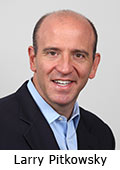
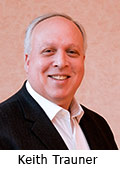
The GoodHaven Fund (GOODX) is managed by Larry Pitkowsky and Keith Trauner of GoodHaven Capital Management, LLC, a new firm from some not-so-new investors. For most of the previous decade, Larry and Keith held research, portfolio management, and executive positions with Fairholme Capital Management, LLC and its affiliated Fairholme Fund.
We spoke with Larry and Keith on September 14.
Let’s start with a little background on yourselves and what led you to create GoodHaven.

Pitkowsky: We had a very nice nine- or ten-year run at Fairholme along with Bruce Berkowitz. We were proud of what we accomplished when we were together there, and when we wound up our involvement we looked at ourselves and said, “Well, would we like to just run a friends-and-family hedge fund out of our den, or would we really like to do it again?”
Managing assets is what we would do every day if there were no clients or shareholders, and so we decided that we like having a public fund and having people invested alongside us. We don’t have any hobbies; this is what we like to do, and we decided we’d like to do it again.
Trauner: I have been in the business for 30 years and Larry more than 25. We’ve seen an awful lot. At this point in our careers, having been involved in a very successful venture before, it’s not a question of knowing what we want to do when we grow up. We know what we want to do; it’s really just a question of execution.
We’re value-oriented and conservative because our net worth is invested alongside that of our investors. We want to earn the highest returns we can without taking a lot of risk, and that’s how we behave.
For us, it’s about executing, it’s not about figuring out the right strategy. We have a strategy that we think makes a lot of sense and which has proven over time to be worthwhile.
Let’s talk about your strategy. In your latest semiannual report, you quote Ben Graham as saying, “Price is what you pay; value is what you get.” Do you consider yourselves Graham and Dodd value investors? In what ways might you differ from their textbook style?
Trauner: Our strategy owes some debt to Graham, but it also owes to Buffett in the way he expanded on Graham. We are investors in pro rata ownership of businesses. That’s all a common stock is, and we look at everything as though we were buying the business, or a security that’s issued by the business. We don’t care if the market is up or down, today or tomorrow. We’re not trying to make wonderful macro predictions about what’s going to happen in the world. We focus on what we think the value of a business is, and, if we can, we buy a decent business with good operators and capital allocators running the show, at a bargain price.
That’s our preferred strategy. Sometimes it’s easy to find a good business, but it’s not easy to find the right price, so we have to be patient and disciplined and wait for the right confluence of circumstances.
Pitkowsky: We understand the two most critical things to take from Graham’s teaching. First, you need to buy something with a margin of safety. To us, either that naturally grabs you as a concept or it doesn’t. Secondly, the concept is that the market is there to provide you with opportunities and not to guide you in deciding what to do.
We’ve chosen to try and put together a concentrated portfolio of better-quality companies run by strong management teams. There are multiple ways to get to heaven with those two important tenets. You can have a Tweedy Browne portfolio of, say, 150 companies, or you can be much more concentrated and try and buy better-quality companies, but the central tenets underlying it are similar.
You mentioned macro trends. I noticed that one of the things you said in your report was that you spend no time trying to select investments based on macro trends. But, you also devote a considerable amount of space in your semiannual letter to a discussion of “these stormy times.” How can you reconcile that?
Trauner: It’s not that we’re oblivious to the world; it’s just that it very rarely makes sense to assume that the world is going to be hugely better or worse than what you’re looking at now. What you want to try to do is appraise the business given what you know at the time and not assume wonderful things or horrible things, and then maximize the margin of safety. So if we can buy a good business at a big discount during troubled times, and it turns out that times get better, it’s a wonderful situation, we’ll do better than we imagined. If times get worse, we bought with a margin of safety that should help protect the downside. It’s not going to eliminate it, but it helps protect against it.
Our primary concern is whether we are buying something we understand at a price that is going to give us good returns over time. On the macro side, the only thing that we spend time on is trying to understand our risks. We don’t want to assume large risks, whether they’re company-specific or macro that relates to the company.
A good example of that would be that we don’t want to assume that zero interest rates are a permanent condition, because when you do that it leads to a lot of bad thinking – whether it’s using discount rates that are too low or whether it’s assuming that companies that are financing themselves cheaply will always have cheap sources of capital, or whether it’s assuming, for example, that a company that’s holding big cash balances will never earn a dime on those cash balances. We’re focused only to the extent that it helps us identify risk, because, at the end of the day, you really make your money by avoiding large losses.
Pitkowsky: The last couple years have been a time of such volatility and dramatic economic events. We felt that it was easy for people to get preoccupied by the never-ending stream of headlines about Europe. We’re not investing any differently than we have in the past despite the headlines.
Trauner: When we started up the fund it was important to understand, for example, that just because European banks were way down in price doesn’t mean that we’re going to run out and buy them. There was a leverage problem that we knew was risky. You can’t be completely divorced from the world. On the other hand, if you were privy to our conversations in the middle of every day about how we talk about business, you would hear almost nothing with respect to how we thought the economy was going to be over the next six months, one year or five years.
Pitkowsky: It would be really great if we knew GDP growth rates or what interest rates were going to be in six months or a year. But we don’t think it can be done.
I’ve noticed that you don’t have any marketing employees and that you have an investment philosophy that emphasizes a long-term investment horizon. How will you attract investors into the fund who have the requisite amount of patience?
Trauner: Build it and they will come. It’s the Field of Dreams approach in a lot of ways, and it’s not so crazy. Our belief is that if we focus all of our energy on doing sensible things with the portfolio – which we should, because it’s our own money after all – that people will find us. We do not want to spend our time constantly on the road trying to raise money. Our time is best spent trying to earn good returns for our shareholders.
Pitkowsky: Over time we will, by doing it slowly, develop a more long-term-oriented shareholder base.
Trauner: If you’ve seen our semiannual report, part of what we’re trying to do there is to reinforce the way we behave under stress and how we believe our shareholders should behave under stress. There’s an old saying on Wall Street that as a broker you end up with the clients that you deserve. If you’re trading constantly, you’re going to end up with a bunch of short-term-oriented clients. If you’re long-term-oriented, you’ll end up with sensible people who won’t panic at the first sign of a market decline.
Let’s turn to some of your holdings. In the semiannual report you state that real estate and intellectual property at Hewlett Packard are understated on its balance sheet. Can you quantify those hidden assets?
Trauner: I don’t want to get into deep specifics, but I would just say that, given the current market value of Hewlett, and given that it’s one of the most prolific patent developers and holders of the last 20 years, and given that it owns a big chunk of its real estate portfolio, those assets have started to become meaningful in proportion to the market value of the company. Yet, I’ve never seen anybody even talk about that.
Pitkowsky: The market cap of Hewlett’s equity is $36 to $37 billion dollars. It has a chunk of debt, but there are significant assets there that are starting to really become a factor in valuation.
Trauner: For example, Hewlett Packard owns real estate all over the tech areas of California where property values have skyrocketed in the last 30 years. That real estate is recorded on the books of the company at far, far below its true market value. That doesn’t mean they have to do anything with it, but it’s a hidden asset, and it’s not something that people tend to think about.
Hewlett Packard is more interesting because the stock price has absolutely gotten destroyed, and it’s just fascinating that most of the sell side analysts have sharply reduced their price targets, but they have not cut earnings estimates. So there has just been a massive loss of confidence. We’ve been more conservative than most of Wall Street in what we think the real free cash flow numbers are – our numbers are lower than most. And in our mind there are clearly some issues – significant issues – in certain areas of its business. But this is a company with a lot of resources and assets, and it’s still generating a lot of cash relative to its market value. We’re focused on the cash generation and the asset values.
I might add one more thing, which is that it’s universally despised. In our view it may not be a sufficient condition, but it’s a good start.
You clearly bought your position in Jefferies Group at distressed prices – congratulations on that – and you assert that you expect them to average double digit return-on-equity (ROE). What, specifically, is Jefferies Group doing that will drive up its ROE?
Trauner: Actually, it’s earning close to a double-digit ROE right now, even in depressed times. Even under times that have been pretty brutal for Wall Street, with a limited number of underwritings, financings and M&A, they’re still earning close to a 10% ROE on tangible equity.
Pitkowsky: They beefed up hiring and are not obviously getting the full revenue they expect from those new teams. They’ve stepped up ahead of what they hope will be a gradual gain in market share, so there’s leverage on the expense line.
Trauner: Jefferies looks much more like the Wall Street firms of 30 years ago than the big firms of five years ago. It has a fairly transparent balance sheet. Most of its income is produced by fee- or spread-type business. It does not have a big derivatives business. It does not have a lot of level-three assets. The guys running the show are cautious, conservative people who will never bet the company investments.
It’s a very sensible culture; when conditions improve down the road, they should be able to gin money.
In your semiannual report you include Berkshire Hathaway in your discussion of property casualty companies. In the schedule of investments you list it under conglomerates. How should investors think about Berkshire Hathaway? You own the B shares. Why do you favor them over the A shares?
Trauner: As far as the A versus B, we’re agnostic. We don’t believe at Berkshire there’s any real advantage or disadvantage.
Pitkowsky: We buy whatever is cheaper and fits at the time.
Trauner: That may not be the case in all companies. In many instances a dual share class can put non-control shareholders at a real disadvantage. However, with Berkshire we have no worries about corporate governance. Since the economic interests of the A and B shares are the same, we’ll just buy whatever is cheaper and fits for the account size.
Berkshire is one of the largest property casualty companies in the world, particularly on the reinsurance side. It’s also a large industrial company in its own right, so it really does have a wide variety of businesses. But I would say that, of all of those businesses, property casualty is the most important.
Your investment case for Federated Investors is predicated in part on your belief that interest rates must rise, thereby returning assets in their money market funds to profitability. You also argue that the earnings and net worth of your property casualty company investments are likely to rise as interest rates rise. Aren’t these investments based in part on your macro view?
Trauner: It’s not so much based on the macro view as that we think we’ve gotten that aspect of the business without paying for it.
Pitkowsky: It’s like the Herbert Stein quote, “Something that can’t go on forever, won’t.”
Trauner: We paid a reasonable price relative to the business without a big chunk of assumed earnings from the money market business. It’s an interesting business, with a built-in option because interest rates don’t have to go up 300, 400, or 500 basis points for Federated to recover all of the fee waivers that it’s currently granting. They have to go up maybe 40 or 50 basis points, which is a relatively small move. Right now, nobody is willing to look over the hill, because you’ve got a Federal Reserve that’s saying, “We’re going to keep interest rates low forever.”
The Fed conditioned people to say, “Well, this is never going to change.” By the time rates start to rise, you will not be able to buy some of these companies at anywhere near the current price.
It’s not a short-term bet. It’s a belief that over time there has to be a reversion to the mean with respect to short-term interest rates.
Your thinking on this didn’t change at all as a result of yesterday’s announcement of QE3 from the Fed?
Pitkowsky: It keeps coiling the spring a little. Eventually that has to change.
Trauner: Would the stock have been up sharply if they had said they were going to end the extraordinarily low interest rates in the next six months? Yes, it would’ve. But the fact that they lengthened quantitative easing and stock didn’t go down tells you something also.
Pitkowsky: We paid an attractive price for Federated, irrespective of any change in its money market business. On the upside, it is a company run by sensible people that allocate capital well. We got all that possible change and upside for free.
You refer to your investments in Sears and Sprint as mispriced lottery tickets. How do lottery tickets meet Ben Graham’s definition of an investment, which is, “one which, upon thorough analysis, promises safety of principal and an adequate return?”
Trauner: The short answer is they don’t. There is a speculative element to both of those positions, but in our view the potential payoff makes it worthwhile to have a modest-sized speculation.
For example, in Sprint you have a company that really has too much debt. It also sells a device that people view as essential to modern life. If it is a choice between eating dinner or keeping your cell phone, people will keep their cell phone.
Sprint is spending a lot of money right now on a cap-ex project to upgrade their network. Once that project is done, there will be a cascade of free cash flow, assuming that they make it through to the other side. We paid very little for an option. Their quality rankings in customer reviews continue to improve. If our research is right and they can get through this period, then we will make multiples on our investment. The importance in these things is to make sure that we sized them correctly. They’re never going to be large investments.
What other advice would you offer to financial advisors in the current environment?
Trauner: So many people are focused on the truly short term. They’re focused on today’s headlines and whatever fears are present. Having a truly long term view is a competitive advantage. It gives us an opportunity to make money over time, because we can take advantage of the constant volatility.
As far as our approach to the world with the fund, we’ve tried to make it simple for people: a flat expense ratio, no 12(b)1 fees, and no multiple share classes. We have a chunk of our money invested on the same basis as our shareholders, and that’s important to us.
Pitkowsky: The other thing people ask us is, “How are you different from a lot of other people who say somewhat similar things?”
First, a lot of people talk about being patient and waiting to buy things at a cheap price. They talk about how they’re trying to focus on the downside. But not as many people do it as say it, and we’re very focused on that. We are trying to be – and I think we have been to date – very picky about the prices we pay for things. We’re looking for things that don’t have a lot of downside and have a lot of upside. We’ve been very disciplined to date, and I think we always will be.
One of the benefits of having done this a couple of times before is we are not focused on maximizing assets under management growth over time. That is not the game plan here. Our goals are pretty simple: achieve strong absolute and relative returns over the long-term, for us and for those people invested alongside us, while not taking big risks.
Read more articles by Robert Huebscher