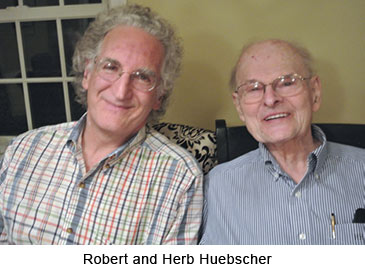
My dad passed away on July 8. My eulogy is below.
In the Jewish religion, it is traditional that a boy becomes a man when he turns 13 and becomes a Bar Mitzvah. But someone once said that you don’t truly become a man until you lose your father, and I think that is the more accurate definition.
I could have used a few more years of childhood. My dad was 87, but he was far too young to die.
My childhood was exceptional. My brother, my sister and I grew up in a household with two loving parents who gave every ounce of their energy to provide a nurturing environment that ensured we grew up to be responsible and self-confident adults, with a proper set of values and priorities. We had dinner together virtually every night at six PM, where we discussed our day’s activities, our accomplishments and sometimes our problems. Our vacations were always taken as a family, to places like Deer Park Farm or Lake George. Our weekends were often spent visiting my grandparents, in Brooklyn or the Bronx. Whatever we did, it was as a family.

My dad’s childhood was lived under very different circumstances. He was born in Vienna in 1926, a city in a country with a rich tradition of tolerance and where Jews thrived. But he never celebrated a Bar Mitzvah. By the time he was 12, the Germans had annexed Austria in an event known as the Anschluss. In March, I asked dad about his memories of that day, while we were waiting for an appointment at the Dana Farber. It was the 75th anniversary of that event, and he said he remembered seeing the German Luftwaffe planes, with swastikas on their wings, from the window of this apartment. He saw the German storm troopers march down his street and, as he once told me, he got “a full dose of the Nazis.”
If you have trouble imagining what this must have been like for a 12-year old, you can look at my nephew Harry, who is roughly the same age as my dad was when he was forced to leave Vienna. Harry spends his days playing sports, attending school, going to summer camp and living in a community where no form of discrimination is tolerated. When my dad was 12, he lived under the constant threat of a knock on the door that could mean an arrest and a trip to a death camp.
My dad’s father was in the toy business and had traveled frequently to Germany, seeing firsthand the injustices that were inflicted upon the Jews. Fortunately, immediately after the Anschluss, my grandfather applied for visas to emigrate to the United States, a decision which saved the lives of his family. My dad and his brother left Vienna in 1938, traveling on their own, first in a harrowing train ride across Europe and then by boat to New York.
A year later my dad’s parents arrived in New York, but not before my grandfather was imprisoned and tortured by the Germans following the infamous Kristallnacht in November 1938.
Initially, my dad’s family struggled terribly to make a living. They came to the U.S. almost penniless. My grandfather was able to build a practice as an accountant, based on his knowledge of running a toy business. My grandmother did some sewing, having attended seamstress school in Vienna. My father knew a small amount of English, but quickly learned the language and enrolled in school here. Before the war was over, he served two years in the Navy. He graduated from the City College of New York and then earned a masters degree in electrical engineering.
My dad’s greatest joy in life was, of course, my mom. They married in 1951 and, after I was born in 1954, bought the house in New Hyde Park where I grew up. They lived in that house until they moved to Wellesley at the end of last year.
My dad had a very successful career in the electronics industry, eventually running the strategic planning for Hazeltine, a public company that was based on Long Island. I remember he was especially proud when he became a vice president, mostly because he was the first Jewish person to achieve that distinction in his firm. He went on earn another masters degree, in business administration, and taught business strategy at two different institutions after leaving Hazeltine.
My dad never really retired. As his professional commitments wound down, he took up photography, and won many awards for his pictures. He found his real passion about a decade ago: tracing our family’s ancestry. He began in the traditional way - by collecting information from our relatives and by searching through archives and whatever documents he could find. He uncovered several new relatives with whom we have established friendships.
When he had exhausted the conventional genealogical sources, he turned to DNA-based research. By comparing his DNA to those who had joined a large database, he found individuals to whom we were related, but for which no paper record existed. Initially, he identified five such families, including our own, which he dubbed the WIRTH group – the “H” stands for Huebscher. That group has since grown to over 100 families, making it the largest such group of Jewish ancestry. My dad gave presentations about the research he did to uncover and document new members. His papers have been published in academic journals and he was widely recognized as a leading authority in this field. He took a special delight when he learned that we are all Levites.
His ultimate goal was to find the progenitor of the Huebscher family. He search took him to genealogical conferences throughout the world, to searches through countless databases, and to DNA testing of rabbinical families and residents of – unlikely as this may seem – Puerto Rico who might have held clues to his quest. That search will need to be taken up by future generations of Huebschers, Golens and Meyers.
My dad’s love of genealogy and our family took a new direction about a year ago. We commissioned an artist to create a mural containing pictures of our relatives and ancestors, going back several generations. This turned out to be my dad’s last major undertaking, and it was one in which he took immense pride. If you have a chance to visit our house or my sister’s house for the shiva we will be hosting, you will see it proudly displayed. Click on the image to see a larger version.
My mom and dad traveled extensively, throughout Europe and Asia, indeed all over the world, and often to favorite destinations, like Hawaii, where he went an incredible 17 times. But there were two destinations that stood out for him.
One was Vienna. About 15 years ago, my dad decided that he would take each of his grandchildren – individually – to Vienna to revisit the places he knew as a child. He was able to complete that task, although Harry and Sadie had to take their trip together, in 2011, in what would be my dad’s last trip to Vienna. One of the many fun activities he did was to take his grandchildren to various places to rate the apple strudel – a Viennese tradition and delicacy – and to declare a winner by the end of their trip. I will come back to the topic of apple strudel in a moment.
He made one other stop in Vienna, to tend to the grave of his paternal grandmother, the only known resting place of that generation or prior generations of Huebschers. The task of tending to that grave will also fall upon future generations of Huebscher, Golens and Meyers.
His other favorite destination was Israel, which he visited on three occasions. The first was a family trip in 1978. The other two trips were in 2005 and 2006, when he and I traveled as part of missions organized by the Friends of the Israeli Defense Forces. We toured army bases, met with political leaders, discussed strategy with military commanders, and saw things that few visitors ever experience. He said many times that those two missions were the most exciting trips he ever took. I think that was because of the countless young Israeli soldiers he met and the love and commitment they shared with him for the state of Israel as a homeland for the Jewish people.
There is one trip which I know he wished he could have taken, and that is the one we will take to Israel as a family next year for Harry and Sadie’s Bar and Bat Mitzvah. We will take that trip without him, and we will have a great time, recognizing that he was the reason that trip will carry a special meaning.
I am humbled by the many people who are gathered here today, by the many visitors my dad had over the last several months and by the many calls from those who wished him well. The question I would like to ask – and which I hope we will each reflect on – is why my dad was so dearly loved by so many people.
Maybe it was because of the way he expressed his love for his children – generously and equally, and with constant reminders to all of us of how much we meant to him.
Maybe it was because of the way he expressed his love for his grandchildren – generously and equally, with great admiration and pride for everything they did.
Maybe it was because of the love that he had for my mom, to whom he devoted his life during their 61 years of marriage.
Maybe it was because of the value he placed on things that many of us take for granted, but which were important to him. Someone asked him recently why he enjoyed going to Hawaii so often. He paused for a second, and answered that it was because “the people are so nice.”
Maybe it was because of his relentless positive spirit, even over the last months. We were sitting at the kitchen table a few months ago and he looked up from his iPad and said that he had just received the nicest email he had ever read. It was from his physical therapist who helped him recover from his hospitalization. I’ll read some of it: “Herb, you were such a joy to work with every day. I loved entering your room to your warm smile and you kindly asking me how I was doing. You progressed so quickly and graciously. I looked forward to seeing what new challenge you would conquer on a daily basis! Now that you are home, I hope you are enjoying your wonderful family and this weather that is slowly warming up!”
Maybe it was because he never complained, even when he got his diagnosis, which he knew from the outset was a death sentence.
Maybe it was because of the example he set for everyone, staying engaged intellectually, eating a healthy diet and exercising regularly throughout his life.
Maybe it was because of the value he placed on being together with his family. When he got his diagnosis, his life was uprooted – like it was when he left Vienna 75 years earlier. He and my mom left the home that they had lived in for almost 60 years. He never returned there. But he said that the last seven months, when he got to see his family every day, was the happiest time of his life.
I remember at my 40th birthday, my dad told me that neither of his parents lived to see his 40th birthday. He went on to celebrate my 50th birthday with me and didn’t miss my 60th by very much. I was truly blessed to have been able to spend so many happy moments with him.
I know that over the coming months and years there will be many times – birthdays, weddings, celebrations, family meals, or even just sitting outside on a nice day – when I will want to say the simple sentence, “Daddy would have loved it here.” It will be difficult for me to say that, especially since it will happen very often. I would like to propose to my family that instead of saying that sentence, we simply say “apple strudel,” as a reminder of simple pleasures and good things in life that daddy treasured so dearly.
I will close with a story about my dad, one which I have never told before. Although this happened over 50 years ago, I remember it clearly. It illustrates the values and priorities that daddy held and which he instilled on his children and grandchildren. My dad had taken me to the hospital because I had broken my arm. We were waiting to be seen and were sitting in a hallway. From opposite directions, two elderly patients – a husband and a wife – were being wheeled down the hall on stretchers. They met in front of us and the orderlies paused so that they could exchange a few words. It was apparent that they had been in a serious car accident. They asked each other whether they would be all right. Once they determined that was the case, the husband said to the wife, “That is all that matters.” My dad said to me that I should remember that moment and take that lesson with me for the rest of my life.
Dad, I love you more than anything. We will miss you.
To honor Mr. Huebscher, donations to support the continuation of his genealogical research may be made by check, made out to "Herbert Huebscher WIRTH Research Project" and sent to Judy Simon, 200 San Bernabe Dr., Monterey, CA 93940.
Read more articles by Robert Huebscher