Since the Fed began its post-crisis monetary easing, a cult of second-guessers has emerged. The most extreme cry of “dollar debasement” or admonish that markets are doomed for hyperinflation. The more reasonable view, articulated by Michael Aronstein at a recent conference for financial advisors, is that near-zero interest rates and quantitative easing (QE) have distorted markets, but it is unclear when or how that will impact investors.
Aronstein identified his best candidate for a bubble that is due to collapse: corporate bond issuance.
“When I look around and ask what is the most gigantic excess that we’ve had since the Fed has embarked on QE and what’s really, really unusual? I can’t come up with anything other than the breadth and price of issuance of fixed-income securities,” he said.
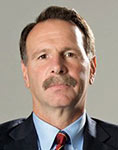
Aronstein is president and chief executive officer of Marketfield Asset Management LLC and portfolio manager of the Marketfield Fund (MFLDX). He spoke Sept. 10 at Bob Veres’ Insider Forum.
The title of his talk was “The Fed’s Latest Mistake.” Indeed, Aronstein has been second-guessing the Fed for a while. He spoke at this conference two years ago, warning that risk-seeking by mutual funds – due to Fed-induced low interest rates – would turn into a liquidity crisis.
That crisis has yet to unfold, in part because bond-buying by the Fed and other central banks has meant that mutual funds own a very small slice of the overall fixed-income markets.
Aronstein is worried, though, because the Fed has a history of overdoing its application of monetary policy. Its latest mistake, he said, was to embark on a third round of QE in the summer of 2012 – and to continue that policy as long as it has.
“QE3 never should’ve happened,” Aronstein said. “And the fact that it happened is going to have consequences.”
Let’s look at Aronstein’s rationale for those claims.
The lessons of history
Aronstein began his talk by asking, “What are the consequences of a monetary policy that’s ventured so far into the realm of experiment that there’s really nothing to compare it to?”
History, he said, provides answers.
Following its creation 101 years ago, the Fed’s first mistake, according to Aronstein, was in the lead-up to the Great Depression. It allowed investors to borrow against equities – sometimes with margin rates of 90-100%. Following the market crash, the Fed compounded its error by raising interest rates in mid-1931, he said, accelerating the Depression.
Its next mistake was a generation later, in the late 1960s and 1970s, when it expanded the money supply in a misguided effort to keep pace with the rising price of oil, Aronstein said. That move fueled inflation that crippled the economy until Chairman Paul Volcker reversed course in the late 1970s.
Its third mistake was familiar to all those in the audience. The Fed “stepped on the gas” following the recession in 2002, Aronstein said, and loose regulatory policy pushed up housing prices, which precipitated the crash of 2008.
“History has been that in every one of these cycles, whatever position they’ve been in, they stayed in long time past of the point of propriety,” Aronstein said of the Fed. “They keep running in this direction kind of like the wily coyote — when the ground ended … they were just running in the air.”
Today’s problem is that monetary policy remains as easy as it was in 2009, yet the economy is stronger than at any time in the last five years, according to Aronstein. He cited wage increases and less slack in the industrial sector. The week he spoke, the Institute for Supply Management’s nonmanufacturing purchasing managers index hit its highest level since the survey was revised in January 2008.
Is it out of control?
Can the Fed avoid a crisis like what ensued in 2008? Aronstein doesn’t think so.
“The error that the Fed has made over time was not looking at things that its policies can actually affect,” he said.
Prices of interest-rate-sensitive assets – principally bonds – are what worries Aronstein.
The Fed chose the bond market as its vehicle for injecting money into the economy and supporting the banking system. Investors are numb to the level to which bond prices have increased, he said. It is as if stock prices had increased to a price-to-earnings multiple of 40, Aronstein said, yet investors still favored the asset class.
Moreover, QE isn’t delivering the result that the Fed wants: increasing bank lending. Aronstein said the banks have ample liquidity but are unwilling to satisfy the demand for credit because of regulatory pressure.
“The idea of taking any risks in the real economy and doing things that might draw attention of the regulators or that somebody might look at as a scam is out of the question,” Aronstein said. “Banks have gotten the message.”
“The Fed’s actions have created enough liquidity within the banks so that the risk to the system from the banks is zero,” he said. “Something else might fail, but it’s not going to be Citigroup.”
It’s as if the Fed is trying to regulate the economy like a nuclear reactor, he said, with ineffectual control rods.
The Fed will have two choices, Aronstein said. It can constrict credit and increase rates, but that would “undermine the functioning of the economy.” Or it can sell some of its bond holdings – which Aronstein said would be impossible, because the bond market would anticipate that action, driving bond prices down and interest rates up.
He said the market had a taste of that in the spring of 2013, when the Fed’s “taper talk” drove rates up.
Advice to investors
Aronstein is deeply concerned about the fragility of the fixed-income market. Bond durations are so high – in part, because coupons are so low – that “there’s no room for error,” he said.
He did not say when an error was likely to occur, but he did offer some advice.
One was to choose funds that are capable of taking short bets (as is the case with his Marketfield fund).
Another is to do something that most advisors would shun: Encourage clients to take on more debt. “The best thing your customers can do basically is borrow money,” he said. “If they have a business or a house, go ahead and take out a 30-year mortgage.”
Even bank certificates of deposit are advisable, he said, especially if you can lock in an attractive five-year rate.
Floating-rate bonds “might be okay,” Aronstein said. But the trouble is that if rates increase, the credit worthiness of an issuer declines, he said, because of the difficult of servicing rising interest payments.
Dividend-paying stocks or master-limited partnerships would be “all right,” Aronstein said, but investors should be careful to ensure that such investments have sufficient liquidity.
Aronstein may be proven right, but Fed second-guessers like him have been admonishing investors to de-risk their portfolios for the last several years. Following such advice would have caused one to miss strong rallies in the bond and equity markets.
Few deny that monetary easing has distorted markets and prevented price discovery. Those policies may have forestalled what would have been a stronger recovery. It may be bad policy, as Aronstein claims.
But if the Fed continues to keep short-term rates low, as the notes from its last meeting indicated, investors must also ask whether longer-term rates might trend even lower (as they have in Japan) and whether stock valuations could keep rising.
“There has to be a consequence to throwing money around,” Aronstein said. When and where those consequences are felt remains in question.
Read more articles by Robert Huebscher