You should never ask summer insects about ice, according to the Chinese philosopher Chuang Zhu1, because
they are bound by a single season. In the same way, many investors have never experienced a period of increasing
rates. One who has, however, is Jeffrey Gundlach, who offered his forecast for rates and the one sector of the bond
market that is most vulnerable.
You should never ask summer insects about ice, according to the Chinese philosopher Chuang Zhu1, because
they are bound by a single season. In the same way, many investors have never experienced a period of increasing
rates. One who has, however, is Jeffrey Gundlach, who offered his forecast for rates and the one sector of the bond
market that is most vulnerable.
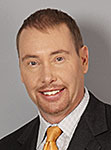
Gundlach is the founder and chief investment officer of Los Angeles-based DoubleLine Capital. He spoke to investors
via a conference call on June 9. Copies of the slides from his presentation can be found here.
The last Fed tightening cycle was more than 10 years ago, longer than the tenure of many who run hedge funds,
according to Gundlach. “A great many senior people in this business have never seen anything other than
secularly declining interest rates,” he said.
Gundlach said that rates will head up, although he predicted the Fed will take longer to tighten than the consensus
believes.
That may be a new experience for some, but the high-yield bond market epitomizes the summer insects, he said. That
sector’s existence has coincided entirely with secularly declining rates.
Gundlach had some special words of caution for those who think junk bonds will perform well when yields increase. I’ll
review those, but let’s start with his forecast for Fed policy and interest rates.
How long does the Fed stay at zero?
In a conference call earlier this year, Gundlach said that the Fed would be a “blockhead” if it were to
raise rates three times this year. Everyone – including Gundlach – now agrees that won’t happen.
The consensus now is that there is a 30% chance of a hike in September and a 60% chance in December, he said. Both
of those probabilities are too high, according to Gundlach, who thinks the Fed will be slow to raise rates.
“The market is pricing in a virtual certainty of a rate rise by Halloween next year, which of course will come
sooner than any of us can possibly imagine,” he said.
One reason for Gundlach’s thinking is economic precedent. He cited data from Bianco Research covering eight
instances when the Fed raised rates at least three times. Nominal GDP growth was never lower than 4.9% when the Fed
started raising rates; it is 3.9% now. The CPI was 3% or higher; now core CPI is 1.8%. The output gap (a measure of
manufacturing excess capacity) is a lot larger than it has been in the past.
Hourly earnings have been highly correlated with Fed increases, Gundlach said. “The movement up in hourly
earnings is what one should be looking for to signal a green light for the Fed to raise interest rates,” he
said. But growth in hourly earnings has been steady at approximately 1.5% since 2012. He said the odds of a Fed
increase will be “much more meaningful” if that 1.5% level is exceeded.
“The Fed wants to see more permanent traction from economic data rather than this on-again off-again type of
data that we have been getting,” he said.
“I’m wondering why the Fed is so interested in talking about raising interest rates,” he
said. “My conclusion is they just don’t want to be at zero. When the next economic weakness comes, it’s
a real problem if the Fed is at zero.”
Gradually then suddenly
The yield on the 10-year Treasury closed at 2.45% on the day Gundlach spoke, up about 25 basis points since the
beginning of the year. But Gundlach reiterated the forecast he has made on previous calls, which is that the yield
on the 10-year bond will end 2015 close to where it began.
He cautioned, however, that those who fear rising rates would be justified if the 10-year Treasury were to increase
above 2.60%. “I don’t think it’s going to happen but that is the thing to be watching for,”
he said.
If the Fed raises rates, Gundlach said the yield curve would flatten, contrary to what many believe and to what has
happened historically. All three times over the past 20-plus years that the Fed has raised rates “substantially,”
the yield curve has flattened or inverted, Gundlach said.
A cautionary sign for bonds can be found in retail flows, according to Gundlach. That money, he said, is “generally
uninformed” and moves in and out of markets at the wrong time. In the fourth quarter of 2014 and the first
quarter of this year, he said there were “incredible” moves into intermediate-term bond funds.
Nominal GDP has provided a reliable forecast for 10-year rates, Gundlach said. He showed data for the seven-year
moving average of nominal GDP, which bottomed in the 1950s. When rates started to rise, that indicator went with it,
and then it fell along with rates staring in the early 1980s. The bad news for the 10-year now is that the
seven-year moving average of nominal GDP is poised to increase, as the data from 2008 and 2009 drops out of the
calculation.
Citing an Earnest Hemmingway quote about how people often lose money, Gundlach said that rates are likely to rise
gradually and then suddenly. “We are not in the ‘suddenly’ phase now and I don’t think we
are going to be in it for at least two, or maybe even four more years,” he said. “These things can
develop over a very long time frame.”
Gundlach expressed skepticism about the persistence of negative nominal rates elsewhere in the world. “It is
remarkably easy to now own negative yielding bonds,” he said.
Many ECB countries have negative rates out to maturities of three years. Gundlach said he would borrow as much money
as he could at negative rates, but admitted that such a strategy is a practical impossibility.
He predicted that the German 10-year bund, the yield of which was briefly negative, would go to between 1% and
1.25%.
Where to find – and not find – high yields
Don’t own junk bonds when the Fed is raising rates, Gundlach said. Some may believe junk bonds provide an
extra “yield cushion” to protect investors, but that is a false promise, according to Gundlach.
Gundlach looked at prior tightening cycles in 1994, 1998, 1999, 2004 and 2007-2008, as well as three “mini”
tightening cycles marked by the end of the various phases of quantitative easing. In all eight instances, he
said “you don’t want to own high-yield bonds when the Fed is tightening.”
“The sell signal is the day the Fed tightens. Sell high-yield and buy Treasuries,” Gundlach advised.
That was during periods of declining rates. For those who think things might be different during rising rates,
Gundlach warned that credit quality would be under pressure. The percentage of “covenant lite” bonds,
with minimal investor protections, is now approximately 70%, considerably higher than it was in 2007.
Gundlach was careful to note that he does not see an imminent danger in junk bonds. “I am not afraid of the
high-yield bond market this year, and I may not even be that concerned about it next year,” he said. “What
I am talking about is long-term.”
The danger may come, he said, in 2019 and 2020 when far more bonds mature than will over the next several years.
That may also coincide with a period when federal deficit pressures increase, he said.
If junk bonds don’t offer high yields, then what does?
High yields can be found among Greek bonds, which yield 11% or 12%. But Gundlach said investors would be rightly
justified in fears that those bonds might default.
High returns could be found in a long-term play on the Indian stock market, he said, which has a “really
powerful positive demographics and potential reforms that might mean a 10-x performance in its equities.” But,
he said, investors would be rightly justified in fears that India faces a morass of legal problems, cronyism and
excessive regulation.
Puerto Rican bonds offer 10% fully tax-free yields, and Gundlach has recommended them in previous calls. But
investors would be rightly justified, he said, in fearing that “there is nothing but trouble in Puerto Rico.”
“At this point I give up on this exercise of recommending yields in interesting markets,” he
said. “I say, I get it now. What you want is the 15% yield that has no risk. Well, please give me a call when
you find it because I’ve got $76 billion to go for that 15% no-risk concept.”
“Unfortunately,” he said, “we all know it doesn’t exist.”
Read more articles by Robert Huebscher
 You should never ask summer insects about ice, according to the Chinese philosopher Chuang Zhu1, because
they are bound by a single season. In the same way, many investors have never experienced a period of increasing
rates. One who has, however, is Jeffrey Gundlach, who offered his forecast for rates and the one sector of the bond
market that is most vulnerable.
You should never ask summer insects about ice, according to the Chinese philosopher Chuang Zhu1, because
they are bound by a single season. In the same way, many investors have never experienced a period of increasing
rates. One who has, however, is Jeffrey Gundlach, who offered his forecast for rates and the one sector of the bond
market that is most vulnerable.