Lack of bond-market liquidity has been the focus of recent reporting in the financial media. But one of the first to warn about that danger was Michael Aronstein, who said last week that the risks are clearer than ever. Mutual fund investors face the greatest peril.
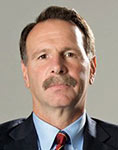
Aronstein is president and chief executive officer of Marketfield Asset Management LLC and portfolio manager of the Marketfield Fund (MFLDX). He spoke September 29 at Bob Veres’ Insider Forum.
The crisis to unfold is driven by a liquidity mismatch, according to Aronstein. Mutual fund investors expect and demand daily liquidity on their holdings. Yet, in many cases, particularly in sectors of the bond market other than ultra-safe government assets, the underlying securities in those funds do not offer the same degree of liquidity.
“The beauty of the open-end mutual fund is daily liquidity,” he said. “The temptation is to enhance returns with underlying assets that don’t have day-to-day liquidity.”
“Every crisis since 1974, when my career began, has resulted from a mismatch of liquidity,” Aronstein said. “Assets for sale overwhelm their liquidity.”
Worse yet, Aronstein said the mutual fund market is a part of the financial system that “has never been tested.”
“The risks you have to worry about in this business are the ones without precedent,” he said.
The cause of the crisis
Excess monetary creation and “laxity” are the root of the problem, Aronstein said. The culprits include not only the quantitative easing (QE) policies of the Fed, but similar actions by the People’s Bank of China and the European Central Bank.
The result of those policies will be similar to the outcome of the housing market crisis, according to Aronstein. “Inappropriate access to credit across the globe has been used mainly for financial engineering, such as acquisitions and expansion of capacity,” he said.
The best example has been in energy sector, where companies have been able to raise unlimited amounts of money to drill for hydrocarbons, Aronstein said. Now that activity is “unsupportable.” Companies can no longer convert non-producing enterprises into income-generating businesses.
The fundamentals have been driven by an oversupply of generative assets, according to Aronstein, catalyzed by low interest rates. “There is nothing you can’t build out now,” he said. This oversupply happened in housing in 2005 and now the same situation exists in a “dozen industries,” he said.
In pharmaceuticals, he said, it has become easier to innovate due to availability of genetic information. Those new drugs may work and the consumer demand may be there, according to Aronstein, but there is “a limit to what society will pay in the aggregate.” Eventually what will give is the price, and this will lead to margin depression, he predicted, followed by problems in speculative, debt-based financing.
He cited Mongolia’s issuance in May of $500 million of 10-year notes. Investors, he said, will enjoy returns only if Mongolia “finds it convenient” to pay its obligations. He noted that emerging-market funds were down 16% the prior day.
That bond was a small slice of the $2 trillion in high-yield issuance over the past three and a half years. A multiple of that has been issued in investment-grade credit, supplanted by lending from private equity and private placement funds. Aronstein told his audience of financial advisors that this has created an “enormous overhang” in supply in the fixed-income market, funded by “your clients through the agency of mutual funds.”
Aronstein related what bond-market traders have been telling him. Things have “started to happen in the last six weeks,” he said, adding that price of the VIX – a measure of equity-market volatility – is twice what it averaged over the prior several years. In the prior two days, he said, there had been the “largest
Trading dislocation” in the high-yield market in the last several years. “There is necessary liquidation and it is getting disorderly,” he said. Aronstein did not say what caused this dislocation, but presumably it was at least in part due to Glencore and its problems.
Implications for advisors
Despite these recent signals – and the warnings by Aronstein and others over the last several years – he said most advisors have not acted to reduce equity or bond-market exposure. After six years of good equity performance, he said that people are attributing the dislocation in the markets to “transitory” factors, and not to the structural or fundamental forces that they should.
“Market liquidity in areas presumed to be safe will be called into question in the next six months,” Aronstein said.
“There are times when it is appropriate to really, really reduce risk,” he said. “For the income trade, the upside compared to the downside makes it a really poor bet.”
Aronstein doubts if the Fed or anyone else will “liquefy” the investment-grade and high-yield markets.” He said that markets may experience periods of calm and respite, punctuated by “ugliness” that will force central banks to respond by cutting rates. Such actions, he said, will not cure the structural problem.
“You never want to time the markets in response to an emotional appeal from clients,” he said. Instead, he advised his audience to try to “unearth the liquidity” of the bonds in the funds they own. He did not say how one should do this, but presumably advisors should focus on corporate-bond funds and measure how much the fund owns of each bond relative to the size of its issuance and its daily trading volume. The higher the percentages, the greater the liquidity risk.
Master-limited partnerships (MLPs) are an example of an illiquid market, according to Aronstein. He said that 10 funds own 75% of the top issues and “everyone knows who they are.”
ETFs are not as exposed as mutual funds, according to Aronstein. They can trade at a discount to their NAVs. Separately-managed accounts and individual bond holdings are not exposed, Aronstein said, as long as investors are not disturbed by day-to-day fluctuations in prices. Hedge funds are also somewhat insulated, he said, because managers can sell equities or other securities that are not distressed if they are forced to raise cash.
“Everything will be fine as long as investors sit in the funds they own,” Aronstein said. “Outflows will force people’s hands.”
“You are at a point where the amplitude of displacement should give the retail investor and advisor a lot of concern,” Aronstein said. “But a crisis hasn’t happened yet. People have been very calm.”
Read more articles by Robert Huebscher
 Lack of bond-market liquidity has been the focus of recent reporting in the financial media. But one of the first to warn about that danger was Michael Aronstein, who said last week that the risks are clearer than ever. Mutual fund investors face the greatest peril.