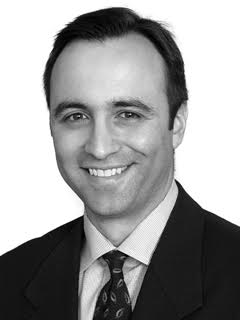
Bob Zenouzi is the lead manager of the real estate securities and income solutions (RESIS) group at Delaware Investments, which includes the team, its process and its institutional and retail products, which he created during his prior time with the firm. In addition to being the manager of the Delaware Dividend Income Fund (DDIAX), he is a member of the firm’s asset allocation committee, which is responsible for building and managing multi-asset class portfolios. He rejoined Delaware Investments in May 2006 as senior portfolio manager and head of real estate securities. In his first term with the firm, he spent seven years as an analyst and portfolio manager, leaving in 1999 to work at Chartwell Investment Partners.
According to the most recent Morningstar data, DDIAX has approximately $749 million under management as of October 8, 2015. It has a 2.52% trailing 12-month yield. Over the prior 10 years, its average annual return was 6.07% and its expense ratio is 1.10%.
I spoke with Bob on October 8.
What was the background behind this fund, and what are its goals?
The strategy is about 20 years old. It was launched at the end of 1996, and the strategy is to provide investors with a yield that is competitive with fixed income, while achieving a premium yield to equities with better downside protection. We are trying to provide investors a diversified portfolio of multi-asset income classes that will provide great total return with both income and price. We provide low volatility, diversification and potential for upside over a long period of time.
The key differentiator between our fund and other funds is that we are not just focused on the yield. The formula for investing is the change in price plus income equals total return. Because of low rates, investors are now just focused on one number – and that is yield. Essentially they are putting all their eggs in one basket. The financial crisis spooked everyone because of price drop. But in order to have balance – and that’s what multi-asset investing is about – you need to have a balance of price and income to achieve total return.
That’s what our fund provides investors – a balanced fund of diversified asset classes up and down the capital structure across geographies that provides both income and growth through change in price to achieve long-term attractive total returns.
You said that investors should focus on funds that offer competitive yields to bonds with better upside potential while also offering a higher yield than provided by equities with better downside protection. How does DDIAX stand with respect to achieving those goals?
Without providing actual numbers, over time we have achieved about 70% of the upside of the market and about half the downside, as measured against the S&P 500. We have done that through prudent asset allocation and geographical allocation, as well as with very solid and smart stock selection.
How does the fund differ from so-called “income-builder” funds, most of which have higher non-U.S. allocations and higher yields than your fund?
Without knowing those funds too well but just looking at the end result, their primary focus is providing a much higher up-front yield.
We are focused on those companies that deliver competitive yield; if maybe not as high, but will grow over time. The primary difference is that we are trying to build a portfolio that doesn’t just provide you income in declining-rate environments. What if rates go up? What if credit spreads go up like this year? How is that portfolio going to react? When you put all your eggs in one basket, i.e. the highest absolute yield, you are more sensitive to changes in interest rates and credit spreads. You are also narrowing the types of industries in which you can invest because not every industry provides the highest absolute yield.
The focus on total return like we have – competitive yield and growth on the upside – provides more balance for income investors.
Is it possible to find higher yielding securities without taking on additional risk? Some people would argue that high-yield is a “factor” that provides superior return over time. Delaware’s flagship equity income strategy used to be based on this factor, investing in the second-highest quintile of highest yielding stocks.
Yes, the second highest, not the highest. That meant they were in the fourth quintile, but they can also be in the third quintile. When you are investing, whether in biotech, consumer stocks, Chinese stocks or income stocks, they can all become very expensive or very cheap. Income securities -- whether they are high-yield equities, REITs, MLPs, utilities, convertibles or preferred stocks -- can become expensive. They will always have a higher yield in the market because that’s the nature of these stocks.
But relative to their own history, they can become very expensive. When they do, they are like any other sector. They fail to provide what investors believe they should provide, which is downside support. That’s what happened with utilities in 2015. It happened to REITs in 2013. It happened to MLPs over the past year. Those securities, even though they have a higher yield than equities and fixed income, can also become very expensive and therefore lose their defensiveness.
What have advisors been telling you about your fund?
I often walk into an advisor’s office and the advisor says, “You have a 2.5% yield. This fund over here has 5%. I can’t sell yours.” I say, “Well look at the total return.” But they tell me they can’t sell that number. It’s come to that level.
Let’s say an advisor has a 69-year-old client today, which is the oldest baby boomer in the U.S. He or she has a 70% chance of living to be 80. If the client has a spouse, one of them has a 50% chance of living to be 90. This couple could live another decade or more. You cannot live on income alone. You will deplete your capital and run out of money. You need to grow your capital prudently with competitive yield and some growth. Yield might be able to meet the essentials, but won’t ensure a desired or accustomed to lifestyle and won’t prepare you for the unexpected.
What is your personal role in managing the portfolio?
We are buying across different asset classes and regions, domestic and international, fixed income and equity.
We have different teams. My job is to manage the asset classes that are at our disposal. I meet with each portfolio manager on a biweekly basis and review each portfolio. Based on the information I receive from them, I balance the fund where I believe we have the best risk-reward going forward. Each team has its own process, and I don’t get involved in each one of their processes.
My job is to take the information and balance the portfolio to achieve the best risk-adjusted total return.
On the bond side you have a substantial allocation to high-yield issuers that are rated single-B or lower. What is your approach to that asset class?
The strategy is to diversify the average position in the high-yield bond portfolio so that we can rely on coupons. Our philosophy there has always been to capture the yield and not take on additional risk. In high-yield bonds, historically you earn your yield and then you lose some capital over time because bonds get called away. We are trying to be as conservative as we can, given where high-yield sits in the capital structure, and that it is issued by riskier companies. It’s why it’s called high-yield bonds.
There has been a fair amount of talk in the financial media recently about fixed-income mutual funds, in that they are threatened by lack of liquidity in the bond market. I’ve read that the capital supporting broker-dealer desks has decreased from $60 billion to $15 billion since 2007. What risks does liquidity pose for your fund?
No doubt, every fixed income investor – in high-yield bonds, investment-grade bonds, commercial mortgage-backed securities and in the asset backed markets – has the risk of liquidity. Volatility occurred during times like this past summer, in 2010 and in 2011, when Dodd Frank caused many investment banks and trading desks to de-lever and de-risk.
By de-risking, they employ less capital. They used to make markets in many different securities, so today they make fewer markets. For example, in the bank-loan market, we had 10 different market makers and as spreads widened out and became more volatile back in August and September, our desks found there were only three firms making markets. That happened during a six-week period.
Liquidity is clearly affecting fixed-income securities due to regulations, de-risking and lower appetite for risk among the major market makers.
Given that interest rates are so low, many advisors wonder what the role of fixed income should be in their clients’ funds. Traditionally it has been to diversify equity returns and to provide steady income. Are both of those premises still correct?
I think they are. But it is a matter of what your goals are. Clearly, for that 69-year-old, he or she cannot be solely in fixed-income securities any longer because they won’t meet his or her needs. It’s not just capital needs; they won’t meet income needs. As investors we have to become more creative. Unfortunately, part of what has happened here with low rates is that we are taking on more risk to get the same returns due to financial repression brought on by quantitative easing.
Our approach – and it’s proved the test of time – is to be diversified up and down the capital structure and across different geographies. We have different asset classes in different locations where we can find particular income securities that can meet those needs. There is no magic bullet here. It’s not chasing the highest yield. It’s just tried-and-true asset allocation and stock selection and trying to manage your downside. It’s as simple as that.
Currently, your fund’s allocation is approximately 50% in U.S. stocks, 8% non-U.S. stocks, 18% bonds, 9% in cash and the remaining 15% in other categories. What is driving the allocation today in the portfolio? Are there particular asset classes or geographies where you are more heavily over-weighted or that look particularly attractive?
For five years – going on six now – we have favored the U.S. over other developed markets. We have had no weighting in emerging markets for five years. We very much went against the consensus believing that growth would slow in China and that would affect the emerging markets and that relative to other developed markets – Europe and Japan – the U.S. was more favored. This year again we’ve seen a lot of volatility across the board and a real sharp selloff now in the emerging markets. Clearly, China has slowed.
Our approach is to continue where we are, which is favoring the U.S. We have small allocations in non-U.S. securities in large-cap international value. But we are finding good opportunities in U.S. REITs. We are finding interesting opportunities now in MLPs. A year and a half ago, I didn’t like MLPs. Now that they are down 35%-45%, we are finding some opportunities there. Convertible securities have cheapened, given spread widening. High-yield bonds look more attractive now than they did six months ago.
For a yield investor, there are some good opportunities. The Merrill Lynch high-yield index is hovering just under an 8% yield. You can buy attractive MLPs now in the 6.5% to 7% yield range. A year ago the market was just too expensive. We are finding opportunities there, but we still favor a U.S.-centric portfolio.
What is the appropriate benchmark against which to compare your fund’s performance?
Historically, we have been approximately 60% equity and 40% bonds. So 60% S&P 500, 40% Barclays investment-grade aggregate Index.
Obviously yours is an actively managed fund, with turnover approximately 50%. How would you suggest that someone answer the question, “What value do you add as an active fund manager?”
The value we add is the ability to save an advisor or a client time and money because we have the resources, and the experience to allocate among different asset classes and geographies. And we have shown that we have the ability to over time provide a total return with competitive yield and upside that will be better than bonds and not quite as strong as stocks but with less risk.
What role should the fund play within a client’s overall asset allocation?
Obviously every client is different, but we can be a core holding. It’s a core holding around which satellites of different types of exposures can be added. One can look at the exposures we have and build around our fund because over time we’ve been able to provide a very competitive yield and strong total return.
We are providing a ballast in the storm. The fund offers great competitive income with upside potential through growth that has a 20-year track record through up markets, down markets, credit markets that were strong, credit-market implosions, housing busts and housing booms.
Read more articles by Robert Huebscher
 Bob Zenouzi is the lead manager of the real estate securities and income solutions (RESIS) group at Delaware Investments, which includes the team, its process and its institutional and retail products, which he created during his prior time with the firm. In addition to being the manager of the Delaware Dividend Income Fund (DDIAX), he is a member of the firm’s asset allocation committee, which is responsible for building and managing multi-asset class portfolios. He rejoined Delaware Investments in May 2006 as senior portfolio manager and head of real estate securities. In his first term with the firm, he spent seven years as an analyst and portfolio manager, leaving in 1999 to work at Chartwell Investment Partners.