Thornburg Investment Management is based in Santa Fe, NM, and manages $55 billion in assets as of December 31, 2015. Its funds span the range of asset classes, offering both U.S. and non-U.S. exposure. Its first equity fund, the Thornburg Value Fund (TVIFX), has returned 10.12% since its inception in 1995, versus 8.42% for the S&P 500. (as of 1/31/16).
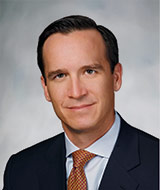
On February 8, I spoke with Bill Fries, who is in the process of transitioning to senior advisor this year, Connor Browne, the co-manager of the Value Fund and who was mentored by Bill when he managed that fund and Jason Brady, president, CEO and the head of global fixed income.
Bill Fries
As a firm, Thornburg has a consistent long-term record of success in having all of its equity funds beat their respective benchmarks, since inception. The Thornburg Value Fund (TVIFX) outperformed the S&P 500 by 162 basis points since its inception in 1995. Has the process you’ve used to manage that fund remained constant over that period? How has that process been transferred to your other equity funds?
Bill: Yes, absolutely. The process has remained consistent since we launched in 1995. To give you a little bit of history, I came here in 1995 when Thornburg was primarily a fixed-income shop. I came to start the equity product. As with most fixed-income shops, Thornburg was pretty conservative. But the management had run an internal equity portfolio since 1990 with what I would consider great success. It was a focused portfolio. It was global in nature. There was a little bit of flexibility, but it was primarily a deep value portfolio.
We decided to have a more comprehensive approach to value investing with the launch of the Value Fund. We established three categories of value. First is Basic Value, including investments familiar to most value managers. Many of those companies are cyclical in nature and can have periods when they provide investors with a great opportunity.
The second category is high-quality companies that we identify as Consistent Earners. The predominant part of the portfolio is in those two categories. We would never swing to all basic value or all consistent earners. We typically own 40% in each of those, but not in a pedantic way. There’s lots of room for flexibility. We want to go where there is value.
The third category we consider is Emerging Franchises. That’s not necessarily emerging markets, but emerging-franchise stocks. Others might look at them and say, “Well, they have growth characteristics,” but they get out of favor too, as we see in today’s market. We have a limited portion of the portfolio in those names.
Connor Browne
We end up with three different categories of value. That has worked pretty well for the firm in terms of developing consistent performance over time by being able to go where we can identify opportunity.
Connor: The flexible perspective that we use with the Value Fund has continued in all of our subsequent equity-fund launches and is part of our fixed-income investment process as well. Because of their flexibility, sometimes our funds are very hard to fit in to a traditional asset-allocation grid. We believe that flexibility allows us to find underlying investments that can outperform over the long term.
What do you consider to be unique about your investment style? How do you maintain consistency over the course of changing market conditions? Along with that, what steps have you taken to develop and maintain collegiality among managers and analysts? What has been the most difficult challenge in establishing the enduring style that you just described?
Jason: Let me answer that at the firm level, and then my colleagues can focus on what it has meant specifically to the Value Fund with some examples.
Jason Brady
As Connor mentioned, our investment style has a flexible perspective. But that is not just at the portfolio level; that is actually at the analyst and portfolio-manager level. All portfolio managers are also analysts, and everyone is looking all over the world for good ideas. When you combine that with a very collaborative, collegial environment, it makes for a very powerful combination.
When we are looking all over the globe across asset classes, we are actually here in Santa Fe comparing notes, describing what we’re seeing, with each individual analyst and portfolio manager adding value, so that all the portfolios here can benefit.
That certainly has not resulted in our portfolios looking the same. As a matter of fact, each portfolio that we have has very different goals. But, for example, the fact that we started as a fixed-income shop and Bill came along and launched our now very successful equity portfolios has been an example of how we can come together into asset classes that are often considered to be very different with very different disciplines.
That’s a very different approach than a number of folks who might start with a benchmark. Rather than looking for pluses and minuses against a benchmark, we start with portfolio goals and then work to drive value for our clients with active management.
Connor: Another important part of our investment culture at Thornburg is collaboration. We’re far from the herd in Santa Fe, New Mexico. In order for us to benefit from all of the knowledge and experience sitting around our trading desk, we need to respect each other. Bill would hopefully agree that that is one of his core beliefs in life in general, but also in investment management – believing in and trusting those around you, treating each other respectfully, which allows us to work together, to collaborate.
For example, we just worked very closely in the Thornburg Value Fund on a new basic-value stock idea. It’s a municipal bond insurer, Assured Guaranty (AGO). It was a huge benefit for us to be able to get access to the experts on our municipal-debt portfolio management team. We were thinking about exposure to Puerto Rico and to some states and municipalities that may be under pressure. We worked very closely on that idea, which I don’t think is something that happens as often at other shops.
Bill: I would add that recruiting and building our team over time is important. We have a process to the way we recruit people, which we are all involved in, where everybody that’s on any of the teams has a shot at talking to new recruits. Generally speaking, potential hires talk to a lot of the people on the team. We are looking for personalities that fit our collegial environment and people who treat their peers with respect and dignity.
As has been the case with most value funds, your Value Fund has had a hard time since the financial crisis and underperformed its peers over the last five years, although it outperformed over the last one and three years. Why has it been more difficult to add value over those five years?
Connor: For us it has been a tale of two timeframes. We had a very tough performance period in 2011 and the first half of 2012. We were finding really exciting basic value opportunities in the risk on-risk off world around the U.S. debt downgrade and European debt crisis. These were cyclical companies whose stocks traded with high beta and had economic exposure. They looked very, very cheap relative to other things in the world, and even relative to 80 or 90 years’ of history. We ended up adding too much of that exposure in the portfolio and that hurt performance.
Since mid-2012, we’ve worked hard to bolster the consistent-earning aspects of the portfolio to make sure that that the consistent earner basket is really acting as a ballast for the portfolio in a tougher market environment. In the three-and-a-half years since mid-2012 we’ve been quite satisfied with results. Over those 3.5 years through the end of 2015, we outperformed the S&P by approximately 300 basis points a year. But even more importantly, we’ve done it with good downside risk-capture characteristics – a beta less than one against the market. We’ve tended to go down a bit less in down months for the market over those 3.5 years.
More broadly, something that we are running into – as are other fundamental bottom-up investment managers – is that there is a whole group of stocks in the U.S. that look expensive to us, except for the fact that they pay a big dividend and the 10-year interest rate is low. We have less exposure to high dividend paying stocks in our portfolio, as is the case with a lot of other active managers.
That can mean that a declining interest-rate environment tends to be a bit tougher for us. A rising interest-rate environment is better for us. Who knows where we go from here? I’ve heard great cases either way. But that is a trend that I’ve noticed for us and for other active equity managers.
The Value Fund targets large-cap U.S. equities, and that is obviously a very competitive space. What about your investment approach gives you confidence that you can continue to deliver alpha going forward?
Connor: Our philosophy and approach at Thornburg has worked across many different asset classes, geographies, different types of equity funds and different fixed-income funds. The investment culture over time has been supportive of success in investing, and we don’t expect that to change.
One of the biggest issues that large-cap U.S. stock pickers face these days is flows into passive or index funds. You hear about this in the news all the time. It is impacting stocks somewhat. We’re noticing that stocks are being moved a bit by passive or index flows. Over the short term that might make it tougher for an active manager who doesn’t just own what is in the Index. The only way we can outperform is by looking different than the Index. But that should create really exciting valuation opportunities that might even enhance returns over time.
Does institutional dominance in the financial markets and the popularity of indexing make finding value more or less difficult?
Jason: Connor addressed some of that in the previous question, around time horizons. If it’s true that indexing is driven by flows and those flows come in and out, then there is going to be some significant technical pressure in the short term on any number of asset classes. From my perch as head of our global fixed-income group, I see flows in some markets like high yield being extremely determinant of short-term prices. The growing dominance of flows to passive products is taking what is already a market that is very affected by flows and making it more so.
In fixed income, you have a binary outcome to each investment at maturity, which is to say, it either pays you back or it doesn’t. In that sense, the long-term value is a binary outcome if you buy something that is low in price with perhaps a high yield or a potential for total return over time. You will be rewarded if it works out.
It becomes a little less black-and-white in equities, but actually, no less true. It’s about time horizons and our approach of not following an index, but rather trying to drive good outcomes for our investor base.
Bill: Most of our portfolios have a small fraction of what the index might hold, such as the S&P 500 with 500 stocks. We have 50 individual holdings in the Value Fund. Stock selection becomes the important part of the game. That’s what we spend most of our time doing, trying to understand the companies that are not going to be influenced by the day-to-day movement of the market, and to understand the opportunity, the leadership and the quality of the company and its management. That is not necessarily an easy job. It is not necessarily accomplished by paying attention just to what Wall Street’s doing. We do get very good research from Wall Street, but we also need to dig deeper. Wall Street research is a productivity tool for us to get up to a certain level of knowledge on a company. But our own independent judgment and understanding of the companies and ferreting out additional information and insight are the keys to the success that we’ve had.
Connor: The average fund in our peer group has about 250 holdings, far more than the 50 securities we hold in the Value Fund.
I want to turn to the bond side. Thornburg’s fixed-income funds, using your bond-ladder approach have almost always excelled since the Thornburg Limited Term Muni Fund (LTMIX) started in 1984. How is that still working? Are those such different disciplines that advisors should mostly focus on Thornburg’s fixed-income offerings?
Jason: I’d say that advisors should equally consider our equity and fixed income funds, and for good reason. You’ve just mentioned how all of our bond funds have excelled over time, and you began by highlighting the fact that all of our equity funds have outperformed their respective benchmarks since inception. So, based on our record, we clearly merit both fixed income and equity consideration. More to your question, the disciplines around asset classes or individual strategies and the way that our investment process works in those disciplines are not different at all. The way that we run fixed income is with our flexible perspective and our collaborative approach. I hope we’ve been able to illustrate some clear examples of that. Connor mentioned Puerto Rico and context of consulting with our municipal bond team. Chris Ryon and Nick Venditti in that group have been pretty adamant about the challenges facing Puerto Rico for some time. That was a difficult stand to take because those bonds were yielding a lot and had held up for quite some time. It certainly feels good now that we don’t have any investments there. But our longer-term time horizon and thought process ultimately yielded incredible benefits for our shareholders.
For the Thornburg Investment Income Builder product, on which I am fortunate enough to be a co-portfolio manager, the reality is our collaboration across very different disciplines – fixed income and equity investments – really shows that it’s not so different after all. We are trying to provide income for our clients. It has been successful since inception and for a long period of time. The opportunities come and go with the market’s desire for dividend-paying stocks or other sectors of the fixed-income market. But over time the combination of those asset classes has been very valuable.
As an example, in 2008 and 2009 we bought a large number of fixed-income securities, not Treasury bonds, but riskier fixed-income securities that were able to drive the portfolio’s performance and income for a long period of time. That rolled off from 2012 to 2015, when we focused much more on values that we could find in equities. But it was not a top-down decision. It was very much a decision based on that portfolio construction where we had conviction and where we saw value down to the individual security level. This goes back to what Bill mentioned as a comprehensive view of what value looks like, but in this case in the context of the portfolio designed to provide income.
The process is the same. Our investment professionals are all in the same room, which I am looking at right now. Overall, long-term performance is what matters most to advisors and investors, and Thornburg’s has been excellent across the board due to our differentiated investment process, so we sincerely believe that advisors should consider us for the equity and fixed-income needs of their clients.
One of the more dramatic recent moves in the bond market has been the spike in junk-bond yields and to a lesser extent in investment-grade yields. Some people have argued that this was the result of emerging-market countries, particularly China, selling their dollar reserves to prop up their currencies, and in turn the buyers of those Treasury bonds have been the sellers of corporate debt. What is your take on what’s going on with junk-bond and investment-grade bond yields?
Jason: Most reserve holdings are in higher-quality securities that include Treasury bonds. The idea that we would see Treasury bonds have a much, much lower yield and higher price in the context of China selling doesn’t make a tremendous amount of sense to me.
Actually, a number of different banks have done different studies around what the Treasury yields might have been, had that selling not occurred. It seems that it would have been about 20 basis points lower. So there was some effect, but the overwhelming move was actually towards lower Treasury yields despite any sales from China.
There is no one player in the market that is bigger than the market as a whole. That includes central banks. That includes large sovereign wealth funds and reserve-currency managers. What we are seeing in the junk-bond market is a huge effect of the changing price of energy, which I would view as significantly affected by China.
Generally, commodity prices are a lot lower. When you have a big portion of the junk-bond market financing extractive industries, then that’s not going to look so great from a leverage perspective as the income from those industries goes down a lot, and the debt does not go down a lot at least from a nominal standpoint.
So that’s really moving into the rest of the marketplace. I think the other piece is a delayed reaction or realization to the idea that corporate leverage across a number of different industries – beyond extractive industries – has gone up quite a lot in the pursuit of changes in balance sheets, be it stock buybacks or significant growth cutbacks, which hasn’t resulted in as much earnings as folks expected.
So look, it’s much more fundamental to the individual issuers, although certainly the fundamental performance of China as an economy is a big input, less so the impact of China as a buyer or seller of securities.
Bill: One of the things that investors have had to get used to is that China’s on the world stage and an important economy, much bigger than it was say 10 or 15 years ago. I look at China as a permanent part of the landscape; it has been growing 7% until recently. The concern in the marketplace today is whether it grows at more like 3% or 5%, and what that might mean to the rest of the global economy, especially European and some U.S. companies that export to China. If you layer on that the possibility that China’s currency gets devalued some, it leads to an exaggerated fear about the influence China will have on the global market.
But there’s no question that China is slowing. It’s a question of how much. We are still in the camp that China will continue to grow at above-average rates. That is globally a positive.
Connor: In the U.S., on the equity side when you talk about high-yield debt, one of the focuses has been in the energy patch, with oil prices off as much as they are. But we’ve been pretty fascinated by the move in equities in U.S. companies that have some debt on their balance sheet but are not in energy. We have found a few companies that look like they have consistent businesses that can support their debt load and will do really well, unless we hit a recession in the U.S. Many of the stocks with some debt on their balance sheet are trading at levels that would be consistent with the U.S. heading into a recession.
Most of the time when the market does the sort of thing it’s doing right now, it is not a recession. It’s a great buying opportunity. Some of the time it is a recession. Our job is to put together a portfolio that can work and keep us in the game in either environment, and allow our stock picking to tell the story. If this isn’t recession, we are seeing some really spectacular opportunities in some stocks that we own in the fund.
Jason: Perhaps just to put a cap on that, as you can see, the interplay of valuations for equity securities and the state of the junk bond market or the broader corporate bond market are very important. So understanding what financing costs look like, understanding how those are changing and understanding, therefore, what the effect might be has to be part of any equity analysis; Connor is exactly right. Both equity valuations and fixed income valuations for a number of these companies are pricing in a recession or at least something approaching a recession. Having an investment process that really allows us to collaborate across asset classes can add a lot of value in all of our portfolios. The value is created in the interplay of the discussion of different teams and different investment professionals here at Thornburg.
Two forces seem to be working in the bond market. On the one side, we have the Fed, which has begun a process of raising interest rates. On the other side, we have the global economy, which seems to be slowing, although you seem to think China is going to grow a little faster than the consensus. But if the global economy is slowing, that is creating a deflationary trend. What do you see as the overall direction for U.S. interest rates, at least for the coming year? How is that reflected in your portfolio construction?
Jason: China will be a very important global player for a very long time. But if growth looks more like low single digits versus high single digits, it’s just a different environment. Growth of 3% would be notably below consensus, but still above the average of the rest of the world.
In the U.S., a stronger dollar has meant lower everyday prices for consumers and lower commodity prices. A slowing global picture versus the backdrop where the U.S. is also slowing but less so, certainly on a nominal basis, is not pointing to dramatically higher U.S. interest rates in the short to medium term, say for this coming year.
I would watch out for very, very accommodative monetary policy in the U.S. in the context of an unemployment rate which is very low. The Fed would like to see wage inflation on a real basis, but it has been very sluggish for some time. That is a big part of the political rhetoric we are hearing and will hear over the course of this year. But we haven’t seen higher real wages yet. The Fed knows that there is some potential inflation in the pipeline, particularly based on commodity moves relative to dollar movement. Looking at that and understanding that pressure is a real challenge for the Fed in the context of a slowing economy.
There is a lot of talk these days about wealth inequality. You are very active in the municipal bond market. Should municipal bond investors be concerned that the political environment might eventually lead to municipal bonds losing at least some of their tax exempt status?
Jason: If that occurs, current bonds are extremely likely to be grandfathered. So that wouldn’t change the effect on current owners of municipal bonds. When the U.S. started the Build America bond program, what they created was effectively a taxable-equivalent market to access a broader investor base, say non-U.S. and institutional investors, who don’t care about the tax exemption.
But they discontinued that program. That could have been a platform for the actions that you describe. But they have gone back to business as usual in the muni market. The states and municipalities that issue municipal bonds really need lower rates. They are not in bad financial straits but certainly not in wonderful financial condition either. There are definitely some headline names – we already mentioned Puerto Rico – that are going to need to be restructured. Dramatically raising interest rates on municipalities seems like something that no one is going to stomach in this environment. I wouldn’t be worried about it in the near term.
I was actually somewhat surprised that the U.S. killed the Build America bond program. That would indicate that the actions you described are a little further away than they might otherwise be.
What overall advice would you offer to financial advisors, particularly those who are fearful that we are on the brink of a bear market on equities or have adopted a more passive approach to their investment management?
Connor: My dad is an advisor. He started an RIA in the early 1970s. He and his partners have had some success building a high net-worth advisory business. He always focuses on the long-term. He and I talk about the markets and investing. In his conversations with his clients he wants to set an asset allocation that the client and he are comfortable with in any bad scenario that you could imagine over the next 12 months. You get there, keep it there and remember that over a 10-, or 20- or 30-year horizon sticking to that asset allocation and not trying to time the market is really the key.
The same is true when you think about active managers. We believe in flexibility as a key component in our ability to outperform over time. That means that we have high active share in our funds, and we look different than the indices to which we are compared. That also means that we can underperform at times. The worst thing that our investors can do is buy after good times only to sell after a bad period
We invest in our funds for the very long term.
If we can partner on a very long-term basis, particularly given what’s going on with flows into passive, then now is a good time to be invested in active strategies such as our funds and to keep a long-term time horizon when you are evaluating or thinking about your investment exposure.
Jason: One of the things that Bill has been very effective at delivering in the Thornburg Value Fund since inception, and now the International Value Fund that he has been running and to the firm’s process as a whole, is that as professional investors we really need to know what we own. That is part of why we have more focused portfolios, like the 50 stocks in the Value Fund. But it’s also important for financial advisors and for individual investors to understand what they own.
A passive approach to investing can work for some folks. Certainly there is a place for that in the overall landscape. But it removes the responsibility to know why and what you are investing in. We have a highly differentiated investment process, and we end up with differentiated portfolios to reach very specific goals.
Saying, “Well, equities are going to get me their return over the long term,” or, “bonds are always going to do this, and therefore I don’t really need to think about that,” is not likely to be as successful longer-term as understanding what risks you are willing to take. Connor described that well from a time-horizon standpoint, but it’s really also from an individual investment-knowledge standpoint.
I believe very strongly that the rigorous research process we employ, which is more about a solution than a conventional look at a benchmark, provides what individual investors and financial advisors need. The market landscape is different, with zero-interest rates for some time versus 10, 20 or 30 years ago. We face different portfolio challenges. Whether or not you use an active manager, whether or not you are an asset allocator, as a financial advisor you must take into account those broad differences and know what you own and what you are trying to do with each individual investment.