 Randy Swan is president and CEO of Swan Global Investments and its portfolio manager.
Randy developed the Defined Risk Strategy in 1997 to help protect clients from large losses. Before founding Swan Global Investments, Randy was a CPA and senior manager for KPMG’s Financial Services Group, primarily working with insurance companies and risk managers. His experience at KPMG helped him design the DRS, as he was able to see firsthand how insurance companies manage risk. The DRS seeks to use options strategically and tactically to structure particular risk/reward parameters in portfolio management.
Randy is a frequent speaker at industry conferences such as the Options Industry Council’s Wealth Summit and the Alternative Investment Summit, among others. Additionally, he serves on the Advisory Leadership Council of the Options Industry Council (OIC). The initiative is designed to support education within the financial advisor channel and is specifically focused on advancing the awareness and use of options in building a superior portfolio.
Randy is a 1990 graduate of the University of Texas with a master’s degree in professional accounting.
I spoke to Randy on March 7.
Some of our readers may not be familiar with you or your firm. What led you to start Swan Investments, and what is your core mission as an asset manager?
I started Swan Global Investments in 1997. It was based on the concept that the investment industry has tried to solve the risk problem through diversification and asset allocation. Modern Portfolio Theory says that if you combine different non-correlated assets, you end up with a diversified portfolio that lowers your risk.
I think there’s a fundamental flaw in that logic. When you go through periods of market distress like 2007-2009, asset correlation coefficients aren’t necessarily going to work the way you want. That proved to be true in that last bear market.
We believe that market risk cannot be solved by Modern Portfolio Theory and that diversification is only part of the solution. Using options to hedge your underlying equity exposure is a better, more direct way to manage market risk. Our philosophy as a firm is that market timing and stock selection are a difficult way to outperform the market over an entire investment cycle, which is defined as including both a bull and a bear market. Our mission as a firm is to apply the same hedging strategy to various underlying assets in which our different products are invested, whether it is the S&P 500, emerging markets, foreign developed markets, or small-cap stocks. We generally use ETFs to get this stock exposure and we are always invested and always hedged.
Your firm has been around since 1997, but you didn’t launch your first open-end fund until 2012. What products did you offer prior to 2012, and what led you to create your four mutual funds?
Prior to the launch of our four mutual funds, we offered the same strategy on a separately managed account (SMA) level, with the S&P 500 as the underlying asset. We also allowed individuals to access our strategy on multiple different assets, such as emerging markets, and as an overlay program. An overlay program is where someone comes to us with an existing portfolio, which could be low cost basis stocks or a concentrated position, and we are able to create a customized hedge and then apply our option hedging strategy on top of that.
Those vehicles have a relatively high minimum, for example $100,000 for our SMAs. To greatly expand the universe of investors who could benefit from our strategy, we decided to offer mutual funds with a much more modest minimum of $2,500.
My understanding is that your Defined Risk Strategy, whether in regard to separate accounts or mutual funds, offers exposure to broad asset classes, such as the S&P 500, with hedged downside protection. Can you elaborate on the strategy and how you execute the hedges?
We take a distinct asset class -- for example, the S&P 500 -- and then we find a corresponding put option. We invest 10% of the value of the portfolio in that put option, and we buy long-dated put options. We are able to quantify our risk on an annual basis.
Let’s say that we have a 7% downside exposure during that year. That means if the market drops 20%, 30% or 40% during the year, the maximum the client would be exposed to would be around 7% per year.
Going back to our philosophy, the key objective is to quantify risk. We want to be able to invest in an asset that is inversely correlated to an underlying asset like the S&P 500. You are not relying on assets that are different or theoretically uncorrelated to offset that risk. We are actually buying a put option that is very predictable in how it’s going to perform if the market goes down substantially.
Since its inception in 1997 through February 29, 2016, the return for your SMA strategy has been 8.38%, versus 6.23% for the S&P 500, and 6.26% for a balanced index of 60% S&P 500 and 40% Barclays US Aggregate Bond. What is the appropriate way to adjust for risk and evaluate this performance? How volatile have the returns been, including relative to the just mentioned benchmarks?
Conceptually, our stated goal is to outperform the underlying benchmark over a full market cycle. After a bear and bull market, we think we will outperform on an absolute and risk-adjusted basis. And our nearly 19-year track record shows that we clearly and convincingly have, with an average annualized return more than 2% greater than the S&P 500.
In terms of measuring risk, one obvious metric that advisors are familiar with is standard deviation. We have a much lower standard deviation than the underlying assets in which we’re invested, less than 2/3 that of the S&P 500 in our large cap strategy.
But we think a better way to understand risk is to look at what happened during some of the worst years for the markets, for example 2008; it was the biggest negative year since the Great Depression, with the S&P 500 down 37%. The good news is that we were only down about 4.5% after fees and expenses in our SMA.
We were able to confine our downside risk to around 7%. Furthermore, we were able to generate additional return with the income component of our strategy to reduce the loss to about 4.5% that year.
We’re frequently asked what type of exposure we have in our portfolio. We have been very successful at keeping our losses down in any given year to the low single digits. We look at a range of 4% to 10% as the risk in the portfolio we try to quantify on an annual basis. That’s a better way to look at it than saying, for example, the 60/40 portfolio was down around 27% in 2008. That’s not quantifying risk. Normally, in a year like that you would expect bonds to actually go up, but there is no real guarantee that they will.
Can you talk about how successful you’ve been in minimizing downside risk during other stressful periods such as the dot-com crash in 2000-2002?
In each one of those three years we actually made money. Our combined downside capture ratio since inception, including all the down years, is negative, which means that on average we’ve made money during negative years. We’re using the same strategy and allocation in our mutual funds today. The only real difference is that in some of those earlier years during the dot-com crash, we were able to successfully re-hedge during the year. That means selling the original, deep in-the-money put, re-hedging at a lower level and a lower strike price, and then reinvesting the excess cash into additional shares. In three of the four down years, the market subsequently rebounded from the re-hedge. In 2008, it actually rose an additional 10%.
We have had very strong performance during down years. Of course, we are not shorting the market, so we are not actively trying to time the market or outperform the market. We relied on the mechanics of the strategy of re-hedging the portfolio after market weakness and taking advantage of the selloffs in the market. Again, a key point is that we are always invested and always hedged.
Let’s talk about your core mutual fund product, the Swan Defined Risk Fund (Class I Shares SDRIX). My understanding is that it has about $1.5 billion in assets. Does it differ in any way from the separate account on which it is based? And, is its main use as a means to protect against bear markets or significant corrections?
As I noted earlier, there’s no real difference in how we manage our strategy in the mutual fund versus the SMA. It’s essentially the exact same strategy. Having said that, typically there are flows in or out of mutual funds, so they need to be managed with that in mind, for example being able to meet any redemption requests. Fortunately for us, since we launched the inception of our S&P 500 based fund, the flows have always been positive. If we do have net negatives in the future, it will not be an issue as we invest in some of the most liquid securities in the world.
As for its main purpose, while I designed this strategy to replace a 60/40 portfolio, it does indeed seek to provide protection against bear markets.
The inception date for the fund is July 30, 2012. Recognizing that we don’t yet have a full market cycle of performance history for evaluation purposes, on what basis should advisors decide whether it’s an appropriate investment for their clients?
There are a couple of ways. First, we have an almost 19-year track record in our SMA that we have already stated is the same strategy contained in our mutual fund. In fact, that precise track record is listed in the prospectus of our mutual fund. But, more importantly, as no one can project future results from past results, we have a targeted return band that shows we have been in that band or above it (above is good) every single year but one. This is because the strategy is designed to produce consistent returns and achieve more predictable outcomes. Especially compared to the inconsistency of traditional equity investments, the fund is a good fit for advisors wanting to build portfolios that help clients stay the course.
Our readers’ clients fall into two general categories – those in the accumulation phase and those in the de-accumulation or income phase of retirement. What role should your strategy fill in the portfolios of those two categories of clients?
Keep in mind the central premise of the strategy is that market timing and stock selection are difficult, if not impossible, over long periods of time. One of the biggest problems that clients face when their portfolios suffer due to market drawdowns is taking themselves out of the equation. Emotion unfortunately plays a major role in how clients respond in a market selloff. And, as advisors know all too well, clients nearing or in retirement who panic and insist on selling when prices are low, suffer greatly given the shorter number of years they have to recoup losses and the lesser amount of money they’ll be left with to rely on for income in retirement. The likelihood that they’ll outlive their assets significantly rises. We’ve designed a strategy that actually works well in most market environments and takes the individual emotion out of it.
We hear from a lot of advisors that they put us in their defensive bucket, which is great. But we believe we should be considered as a core equity component as well since we provide lower volatility exposure to equities and seek to protect in down markets. It is by not losing that our investors win. When you add in investors withdrawing money to live on, it is even more critical not to lose big during market drawdowns as this compounds the effects of the drawdown.
For those in the accumulation phase, it is still better for them to seek to avoid large losses and find a strategy such as ours that has steadier, more consistent returns than other equity investments. As we’ve been able to show over full market cycles, the strategy has outperformed the S&P 500 by over 200 basis points on an annualized basis. So we believe this is a great strategy for both those in the accumulation phase and those in the income phase of retirement.
We have several studies related to this on our website. They clearly show that our strategy can help put investors in a more desirable position for outliving their assets.
You have several mutual fund variations on your core strategy – the Swan Defined Risk Emerging Markets Fund (Class I Shares SDFIX), the Swan Defined Risk Foreign Developed Fund (Class I Shares SDJIX) and the Swan Defined Risk U.S. Small Cap Fund (Class I Shares SDCIX). How do you recommend advisors include those in their clients’ asset allocations?
Understanding that most advisors allocate to style boxes, we wanted them and their clients to have access to the Defined Risk Strategy (DRS) across various asset classes. We do correlation analysis and optimization of our DRS products. Fundamentally, we expect an advisor who allocates a larger percentage to, let’s say, the S&P 500 or large-cap U.S. stocks, to do the same when allocating among our mutual funds. Ultimately, we let the individual advisor – the cook in the kitchen – decide how to build their clients’ portfolios. Because we believe that every asset will be better off in the long run from having defined risk and being hedged, we believe each strategy also stands on its own as a better option for equity exposure than the corresponding asset classes. But at the end of the day, if we were picking, we would pick three or four different DRS assets to get some benefits from diversification and then rebalance those on a periodic basis, probably every one to two years to take advantage of market cycles.
What do you foresee as the potential of challenges and risks in executing your strategy going forward?
Our strategy thrives in bear market environments. Therefore, our biggest concern is always infrequency of bear markets compared to the historic average of one every 3.4 years. We may go through a very long extended period without one, like we have since 2009. We are always going to underperform the market over such periods. That type of market environment is the least conducive to our strategy. We would rather have large selloffs than minor ones since we can re-hedge during bear markets and obtain more shares using the profits from the sale of puts.
The best market environment for our strategy is a lot of volatility over long periods of time. The worst market condition is very high volatility over a very short period of time. By that I mean the market going up 5% to 10% or down 5% to 10% on a sequential month-to-month basis over an extended period of time, let’s say six months. That’s going to be the most difficult time for our strategy, mostly because the option income component of our strategy suffers amid that kind of short-term volatility.
Why is your strategy compelling right now in 2016 regarding the mutual funds tied to domestic stocks?
Look at the low interest fixed-income environment that we are in right now. The perceived risk that I see in the markets is from the Federal Reserve and other central banks. They have teamed up to try to save the world from the buildup of the debt with the quantitative easing strategies that we’ve used over the last six or seven years. But eventually, they will not be able to prop up the economy. We would come back and say there’s a lot of risk in the markets. Using options to hedge is the best way to manage that market risk. And, while we don’t predict markets, based on history, we’re long overdue for a bear market, and we’re glad that we are always hedged. Advisors and investors need to be fully prepared when the bear awakes from its long hibernation. Our mutual funds are designed to provide precisely the type of protection needed.
Read more articles by Robert Huebscher
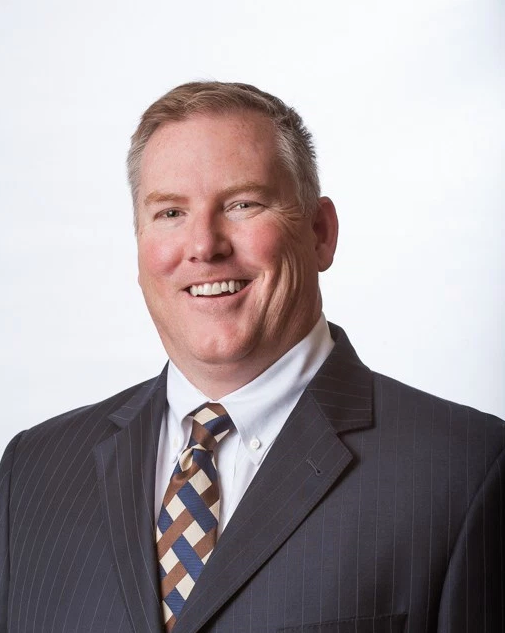 Randy Swan is president and CEO of Swan Global Investments and its portfolio manager.












