Northern Trust’s FlexShares® offer investor-centric ETFs specifically designed with real-world goals in mind. Each pursues a primary and sometimes also a secondary investment outcome to help meet a variety of investment needs such as capital appreciation, risk management, income generation and liquidity management.
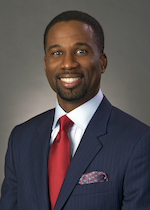
As executive vice president and head of Northern Trust’s funds and managed accounts business, Shundrawn Thomas oversees the development, management and distribution of Northern Funds, Northern Institutional Funds, FlexShares Exchange Traded Funds and its proprietary managed account solutions. His executive responsibilities include developing strategy, executing operating plans, managing client and vendor relationships and inspiring and developing professionals. He serves on the seven-member executive leadership team of Northern Trust Asset Management.
I spoke with Shundrawn on July 22.
As the head of Northern Trust’s funds and managed-account business, what is your core mission?
Our core mission is to deliver value-added products, solutions and insights to long-term investors. It’s that simple.
One of the areas you oversee is the ETFs under the brand name FlexShares, which are developed through your proprietary “Flexible Indexing” process. Can you provide an overview of those products and the principles behind their construction?
With FlexShares, the first building block is the focus on what we call the core fundamental needs of long-term investors. First is capital appreciation; clients are looking to grow assets. Second is risk management; either you are managing portfolio risk, composite risk or specific risk. Third, clients are looking to generate income to meet liabilities or obligations. Finally they need liquidity for unanticipated needs or opportunities.
Our primary distinction is that we are focusing on those objectives as opposed to being more product-centric, trying to find where the next hot fund category is.
The second tenet of Flexible Indexing is that we prefer, whenever appropriate, to use an indexed- or rules-based approach. The indexes or index strategies we pursue are nontraditional or alternatively weighted indexes. This is true of every single one of our index-managed ETFs – of our 24 ETFs, 23 are index-managed strategies.
All of them started with the FlexShares intellectual property. We came up with the initial concept. After we work on and test a concept to see if there is persistence, we then go about the process of determining whom best to partner with from an index standpoint. The Flexible Indexing process spans the entire range of stages, from coming up with the concept through managing the fund.
What differentiates your funds from those of other ETF providers who offer smart-beta products?
There are four things, two of which I have alluded to. First is the investor-centric approach that focuses on the fundamental objectives I mentioned in response to your previous question. It differentiates us because investment management firms generally pursue product centric approaches, as opposed to focusing on what the advisor needs to deliver for the client. The client has real-world goals that the advisor is seeking to meet. Many firms are just saying, “How can I find the product opportunity that sells well?”
Second is the intellectual capital that we bring. Being that Northern Trust is the fourth largest index provider with over two decades of experience in areas like quantitative-research or factor-based investing, we are able to start with the genesis of an idea. Unlike a lot of ETFs, where someone is taking an index off-the-shelf, we are starting with an investment objective that we want to deliver.
That ties to the last two. The third of which is the empirical analysis that supports every part of the process, everything from considering ideas to looking at demographic trends to the hard disciplined work that we do on the investment strategy itself.
Last is our collaborative development process. We are not starting with an off-the-shelf index. We are collaborating with an index provider, working toward an investment solution for clients. That distinguishes us because we are involved along every step of the way.
You make it a point to say that Northern Trust is more collaborative in sharing insights regarding product development and practice management with advisors. How so? And why is this important to advisors?
The reason being more collaborative is relevant is because we approach it as an iterative process, where we do a couple of things. One is we are not just going out and selling products. Part of our value proposition is offering insights and other value-add. The things that we do include hosting targeted forums for RIAs where we will not only focus on things like portfolio construction or product ideas, but also practice management issues like how they retain and recruit a strong advisor force or how they deal with budding trends like digital investment advisory.
That collaborative approach says we care and are thoughtful about your entire business. It does two things: It opens up a deeper and a broader level of engagement with advisors and their clients, and it provides us insights into everything we do, including what kind of products clients need and how we can make them better, or how we can work with advisors to serve them better.
While I’m focused on the advisors that we work with, that extends to all parts of our ecosystem. We are able to do that well when we work with the exchanges, market makers and custodians. By taking that knowledge -- whether it is in capital markets, investment acumen or in sales and distribution -- and bringing together those stakeholders, we give us ourselves a better innovation and development process.
In designing the FlexShares funds, you rely on an empirical analysis. Exactly what does that include?
It includes several things. First, if we are starting with a concept, we may begin by looking at trends in the marketplace. For instance, when we looked at income generation, while we already had fixed income funds, the first fund that we offered was a quality-dividend one. We were looking at certain demographic trends, the increasing need for people to have income and what was going on with retirement. We were looking at persistently low interest rates and how that might project into the future. We looked historically at the reliable stream of income that was generated by stock dividends. That is an example of where we used empirical analysis.
We also used empirical analysis when we were developing the investment strategy to look at the risk factor known as “quality” -- how it plays out in the portfolio in terms of the impact on risk-adjusted returns.
The last example I would give is when you construct a portfolio, you may look at a global or international outlook to determine what exposure you are going to have to a market and how much contribution it makes to the investment return. You may decide it makes sense when you are constructing an index to exclude a very tiny market that has hard-to-justify costs for holding certain securities, because empirically it doesn’t add meaningful value in terms of the investment return.
Those are three examples of how the empirical analysis is impacting every part of the process.
All investors have goals that advisors try to meet through the funds that they choose. FlexShares has been described as an outcome-oriented fund suite. How does that relate to investors’ goals?
If we are engaged with an advisor, we are usually presented with one of two things: an opportunity he or she is looking at or a problem. Recently, we were hearing a lot from advisors of on the significant challenge they were having with clients who were either in or approaching retirement and were looking to be comfortable and receive a predictable income stream. If the goal of that client is generating a reliable source of income, how do we translate that into an investment objective, and then how do we create the product?
Here’s another example. As we think about clients who have long-term objectives, whether it is planning for college education for a child or retirement, we say, “Okay, how are you going to deal with problems that arise over time?” Maybe one of the things is managing the risk of inflation and how that might diminish the real value of the assets when we are moving toward that goal. We take those real-world goals that clients have and translate them into the four categories of investment outcomes. Then we think about solutions in terms of development of new products or existing products to construct a portfolio.
What if an investor has a combination of needs and problems?
Say that an investor has a primary objective of generating income. Our quality-dividend fund, ticker QDF, has an incredibly attractive total return generated from the high-quality performance of the stocks in the portfolio. This secondary benefit of long-term appreciation complements the better-than-comparable income yield, which serves the primary objective.
Can you give an example of how a specific fund is designed to meet one of those objectives?
Let’s consider risk management. One of the risks that people traditionally and almost invariably have with a portfolio is that of inflation. Even in an environment like today’s, where inflation is low, it is still negatively impacting the portfolio. What we find is many portfolios don’t necessarily have a good way of mitigating the risk of inflation over time.
One example of how we came up with a targeted solution was our target-duration TIPS funds (TDTT and TDTF). They effectively allow the investor to target a duration of three or five years. Now you might say, “Why do you care about that?” Well, TIPS theoretically are a good source for hedging inflation, but as the duration extends, the interest-rate sensitivity overwhelms the inflation-hedging component. As you extend beyond five years, TIPs portfolios are less effective hedges for inflation.
The other thing we found is that if you can manage out the volatility, you can improve the utility of it in a portfolio. Being able to have a structure that targets a certain duration, where you, in a sense, manage that volatility, really helps. We have given investors a better tool to use with respect to a TIPS portfolio if they are looking to hedge out near- and intermediate-term inflation.
How does risk come into play in the design of FlexShare funds?
We have a category that we think about in terms of risk management. I gave an example with the target duration TIPS. We look at two categories of risk. One is what we refer to as composite risk – something that is affecting your portfolio and is hard to manage or predict over time. Think about things like inflation or tail risk. You are looking to either hedge or mitigate those kinds of risks.
Another type of risk that we have are specific risks, like credit or duration risk. If its equity or credit or duration risk, those are the risks you get compensated for. So the question is not whether you should take those risks. You are taking them. The question is whether you are getting appropriately compensated for them.
For example, we have introduced two fixed-income products. One is an intermediate-credit product, and one is a longer-term credit product. The tickers are SKOR and LKOR. But the point of those products is that if you looked historically, credit ratings have not been a great leading indicator for credit quality. They tend to be a lagging indicator. Those funds have a scoring methodology that is giving you more of a forward-looking measure to think about that credit quality in a portfolio. We believe those funds are a better way to make sure you are getting appropriately compensated for the credit risk that you are taking
In aiming to meet objectives and manage risk, are you purely focused on absolute returns with relative performance not being important?
No. It is somewhat shortsighted to look at only absolute returns because they do not tell you the risks that you are taking. In a very basic sense, investing is getting paid for taking risk. We feel very strongly that you should always be thinking in the context of risk-adjusted return, i.e. the amount of return you are getting for the element of risk that you are taking. If you are going to take more risk, you want to make sure you are getting paid for that, and you can’t identify that by purely looking at an absolute return.
From a relative-performance standpoint, it’s important to think about the choices you have in a particular category. Certainly, beyond risk-adjusted return, you have to think about how a particular investment fund performed in its category on a risk adjusted return basis.
In your literature and on your website, there is a definite emphasis on FlexShares being designed for long-term investors. However, one of the criticisms of ETFs as opposed to mutual funds is that they are used as short-term trading vehicles. How would you recommend advisors use FlexShares ETFs?
We are not in control of how every advisor or investor decides to pursue his or her trading strategy. But we feel very strongly in the value that ETFs can provide a long-term investor. We design our products with long-term investors in mind. If you look at some of the benefits of ETFs, such as transparency, they are well suited for long-term investing. The majority of ETFs use an indexed strategy resulting in low relative turnover. If they are equity ETFs, they benefit from in-kind transactions, so there is some tax efficiency there. There are so many reasons that ETFs are really good core holding blocks.
Add to that the fact that, while many people think ETFs are traded a lot, if you remove the large trading by hedge funds, you will find that the typical investor holds an ETF for quite a long period of time – in the neighborhood of three-and-a-half years. Even institutions hold them on average for over two years. It’s a bit of a falsehood that people aren’t using them for a long-term basis.
The last thing I would say is that specific to FlexShares, we are focused on long-term investors. We are not launching funds and seeing what sticks. We are very focused on introducing a handful of products over a given period of time that we expect to exist indefinitely. With FlexShares, over our nearly five-year history, we have never closed a fund. That is because of the belief that we have in the long-term value of those strategies.
Smart-beta funds have come under a lot of scrutiny from academic research. One of the common refrains is that those funds rely on so-called factors that have been mined from historical data and that investors should not rely on historical data as being predictive of future performance. How do you respond to that concern?
First, there is not really a strict definition for smart beta. But smart beta generally involves an alternative weighting scheme, which means it’s not a traditional market-cap-weighted Index portfolio. That weighting scheme could be based on a variety of factors or what’s called risk factors. Things like small cap, value, quality or volatility. The weighting scheme could also be based on industry sectors or key performance indicators.
The practical reality is that for any investment, people are going to look to the extended historical performance. If someone were evaluating an actively managed fund, he or she would look at the history of the performance of that fund. Many of the things that we use, in terms of sources that evaluate funds and give them ratings, quite naturally are looking at the historical performance.
However, you don’t rely solely on historical performance or back-tested data. You want to look at the robustness and the quality of the investment process. You want to understand whether the investment advisor or manager actually has a proven expertise in those areas that can be replicated or demonstrated over time.
That is in part why we lay bare and are very transparent about our Flexible Indexing process. We want people to pull back the covers because, to the point you made, while there are facts we can put in place about the historical performance of the factors of those strategies, people certainly should be scrutinizing our approach, all the components of it and the competency we bring to bear to see if we can deliver what we say we will in the future.
Lastly, how would you define your value proposition for advisors and their clients?
We think about our value proposition in term of three legs. It starts with the deep investment expertise that we have at Northern Trust and deliver through our FlexShares funds. I spoke to the expertise around fixed-income investing across the board and our expertise over several decades with factor-based investing and quantitative strategies. Being the fourth largest index provider in the world, we are able to bring our expertise together under one roof to allow us a lot of flexibility in terms of the innovation we offer.
The second leg is the collaborative relationships we form. If you look at who we are and how we work in the marketplace, we are able to bring a lot of those insights to bear, not just in terms of the products that we have, but in the solutions and the insights that we offer to clients.
The third leg of that value-proposition stool is our rich fiduciary heritage. Coming from Northern Trust, a firm that has been around for well over a century during which time it has always worked with investing clients as a fiduciary, it informs what we do. It is a vantage point that we have. We are not sitting across the table from our investing clients; we are sitting on the same side of the table. We know that intimately because it’s who we are.
Read more articles by Robert Huebscher