 The Calamos Phineus Long/Short Fund (CPLSX) seeks strong risk-adjusted and absolute returns across the global equity universe. It has outperformed its S&P 500 benchmark by over 300 basis points annually over the last decade.
The fund uses a global long-short strategy to invest in publicly listed equity securities. It uses a fundamental global approach to blend top-down and bottom-up considerations. It employs flexible asset allocation that allows for all investment styles, market caps and geographic regions depending on the market environment. Its comprehensive approach assesses stock, industry, style, country and market factors.
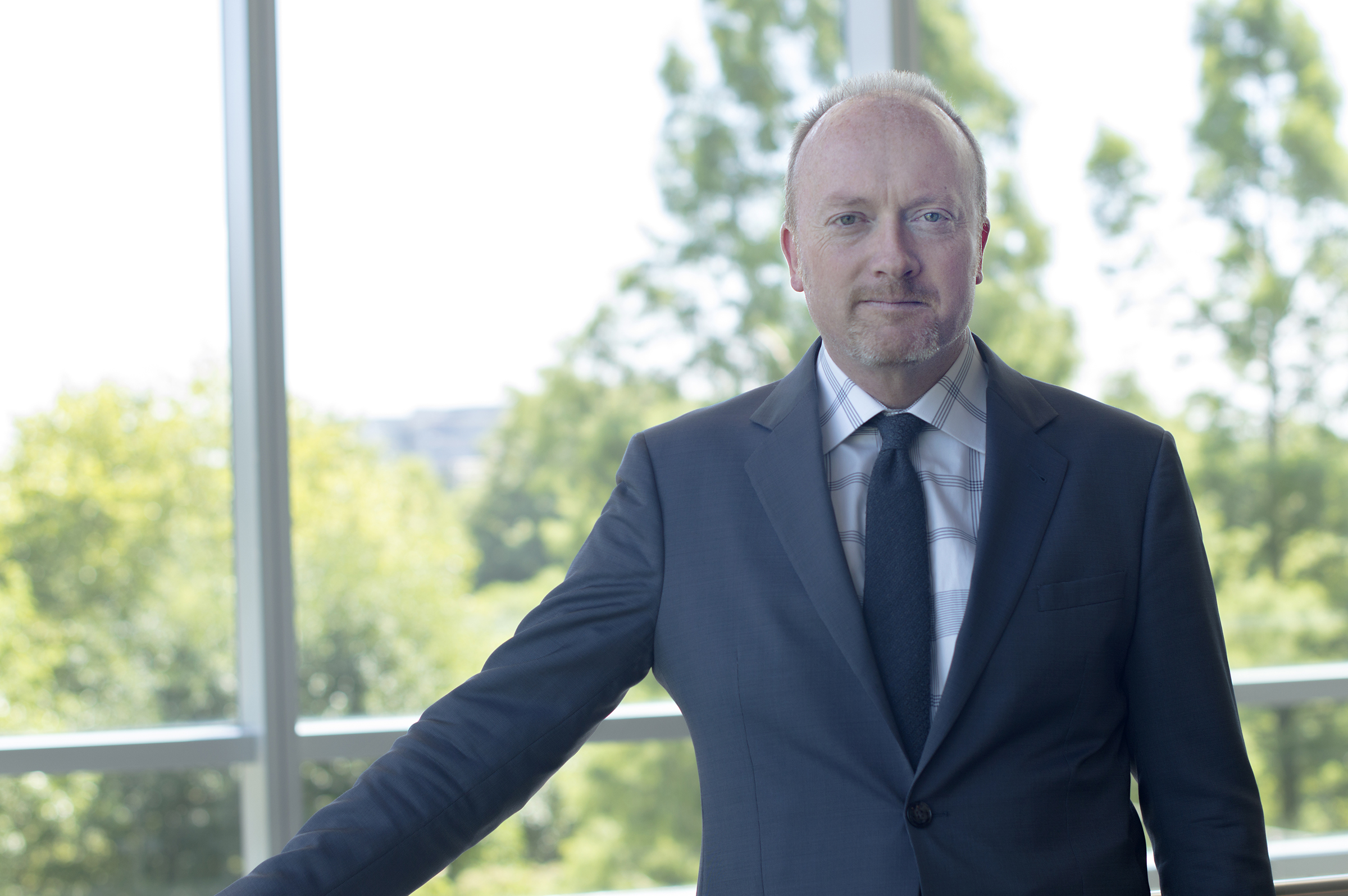
Michael Grant is a senior vice president and senior co-portfolio manager at Calamos. He has final responsibility for portfolio management and investment research for the Calamos Phineus strategy.
I spoke with Michael on July 29 in London.
You are fairly new to Calamos having joined in 2015. What was your background in the investment industry and what led you to join Calamos?
I entered the money management industry in the mid-1980s and have been managing institutional equity portfolios for more than 30 years. I was primarily with Schroders, where I worked in Asia as a portfolio manager for five years. Then I worked for Schroders in London for eight years before coming to the U.S. in 2001.
Until 2002, when I launched the Calamos Phineus Long/Short Fund, my background was entirely long-only. I transitioned to long/short in 2002 when I launched this strategy. I viewed long/short as a more attractive structure for delivering risk-adjusted returns.
The reason I joined Calamos, first and most obviously, is that it has a depth of resources that’s really impressive and particularly strong on the client-facing side.
But Calamos also gets what I do. The bulk of Calamos’ other products are centered on the idea of risk-adjusted alpha. The history of Calamos is heavily focused on convertibles. A convertible is a bond with an equity option and thus, has a similar profile as hedged equity.
As you mentioned, you manage the Calamos Phineus Long/Short Fund (CPLAX). What is the mandate of that fund?
Its mandate is to generate the long-term upside that is available from equities but with less downside risk. Without question, equities deliver a superior return over the long term because ultimately you are taking risk and you are paid for that risk.
But at the same time, many clients are unable to hold their nerve, so to speak, through periods of volatility. An equal part of our mandate is minimizing the downside through those extreme moments in equity markets. In effect, our mandate is to get the bulk of the upside during bull markets, but less of the downside during bear markets.
Over the last 10 years, data from Morningstar shows that your fund’s annualized return was 10.94%, versus 7.83% for the S&P 500 total-return index. What have been the key contributors to the fund’s outperformance?
An important part of our process is our understanding of the risk regime in which we operate. If we understand the risk regime, it gives us a strong sense of whether we are properly paid to engage risk. Pre-2008 for example, investors were rarely paid to take risk in the sense that one unit of risk did not necessarily produce one unit of return. Post-2008 of course, the reverse became apparent. If we took a unit of risk we generated more than one unit of return.
One feature of our track record over 15 years has been our ability to generate those returns through some very different market environments both in terms of the bull and bear moves.
You mentioned earlier that your fund has captured most of the upside from the market while avoiding most of the downside. What are the specific ways in which your management process allows that to happen?
One aspect of this is what we refer to as flexibility, and we mean this in two ways.
The first is flexibility in terms of style. Many managers still define what they do as an investment style. For example, they are focused on growth, value, large-cap or small-cap or perhaps global versus U.S. stocks. In contrast, we look at style as something that should be managed through the course of the business cycle just as one might manage industry or country exposure, for example. That is important because style trends rarely persist for more than a full-market cycle. And if you don’t have the ability to manage those style risks, you are less likely to adapt through new environments.
The second meaning of flexibility is taking responsibility for the complete equity mandate. We describe ourselves as absolute-return investors because ultimately we are not benchmarking ourselves to one market or one style. In order to do that we have to allocate capital across the entire equity universe whether that is geography, style or industry.
Flexible asset allocation is the secret sauce of our business. It is one part of the equity mandate that you cannot benchmark or capture through an ETF or Index fund.
You mentioned that your process is tied into risk regimes in the market. Where is the risk now based on the state of the U.S. and European economies?
The world has experienced a long deleveraging cycle, a series of debt crises since 2008 when the U.S. was first-in, first-out of its crisis, followed by Europe in 2012. Europe is about 3 years behind the US in addressing its debt problems. Now that deleveraging cycle is playing out inthe emerging economies.
Fortuitously, we are near the end of that process. The underlying risk in the global economy today is less than commonly perceived. The U.S. expansion has several more years to run. Europe, surprising to many, is entering its own cyclical upturn as we speak. For these reaons, the bulk of our exposure is here in the U.S. but we’ve been adding to Europe incrementally, especially post Brexit.
What do you view as the upside for the S&P 500 this year?
If the U.S. avoids recession, as I think it will until at least 2018, I suspect the S&P has 10% to 20% upside between now and 2018.
What is the likelihood that the U.S. enters a recession and how would that affect your outlook for your fund’s performance?
Avoiding U.S. recession is a key variable. We don’t see any of the traditional signs of recession risk through much of next year. We monitor a range of economic and financial variables relating to economic vulnerability. Although the expansion is old in terms of time, the actual progress of fundamentals is more typical of an expansion that is in its fourth year, not eighth year of recovery.
It is possible that the central authorities make a policy mistake. One of the reasons why the equity market has returned to new highs is the U-turn by the Federal Reserve in March with respect to its rate-tightening policy. Absent a policy mistake here in the U.S., the likelihood of recession over the next 18 months is low.
On a geographical level, where is the bulk of your fund’s long exposure now?
The bulk of the exposure is still here in the U.S. That is the economy that’s working. That is where we find the most dynamic growth opportunities. But if our assumption that the U.S. expansion is sustained is correct, it makes sense to add incremental monies to Europe. In Europe, the cyclical expansion is much less discounted than it is here in the U.S.
What is your view of opportunities in emerging markets in the context of the deleveraging cycle you just mentioned?
The emerging markets have only just begun their deleveraging cycle. Although many of these economies are past their worst, they still face several years of workout.
We are selective with respect to the emerging markets. China is the elephant in the room and it has a range of issues which it needs to address in the coming years. The good news is that China is largely a closed economy and I don’t think it will impact global financial markets, certainly not this year, and perhaps not until the autumn of 2017. Even in the case of China, we don’t see a hard landing. The risk in China is a very persistent deceleration of its growth rate in the coming decade.
The opportunities in emerging markets include India and those economies that have become more competitive vis-à-vis China, as China’s policy is increasingly one of raising income standards. China needs higher incomes if it is to transition to a consumer-led growth model. For example, we have some exposure to Vietnam and we are positive on Mexico as well. We are avoiding those markets that dependent upon a sustained recovery in the commodity cycle, such as Brazil.
Which risks are you most concerned about? What would be the impact specifically of presidential politics on market performance?
The biggest risk is that most clients have not been properly positioned in equities post-2008, yet they were able to meet client expectations because of the remarkable gains in fixed income. The fixed-income bull market is over. Investors have to generate returns in equities if they have any hope of satisfying their clients’ mandates.
This bubble in fixed income needs to be closely monitored. It’s not a risk today to global financial markets. But perhaps by 2017 and beyond, I suspect it will.
The impact of presidential politics could create some volatility into autumn. Ultimately, the keys are who can break the legislative gridlock in Washington, and which party will embrace fiscal spending as an alternative to monetary policy. Since 2008, monetary policy has done the bulk of heavy lifting for the economy and that stimulus run its course. The Fed can no longer lower interest rates. And every time it tries to raise interest rates, markets become unsettled.
The obvious answer is that there is considerable scope for fiscal spending to pick up the baton and drive a long period of expansion. The candidate or party that understands and implements that has a good chance of being looked upon favorably by equity markets.
All of this implies more aggressive fiscal expansion and thus, a possible re-acceleration of economic growth. This should ultimately have negative implications for the fixed income market.
You mentioned that there is a bubble in fixed income. Do you see any sectors of the equity market that are in bubble territory, either because of exceptionally low or high valuations? Morningstar shows that you have a large allocation to financial services. Why do you find that sector attractive?
The bubble in equities is concentrated in what I call the “safety” stocks. These are a mix of consumer staples, utilities and telecom stocks where investors have purchased those equities for the perceived stability of their business model rather than their earning potential over the long term. Not only have these stocks reached extremes in terms of valuation, but I simply don’t believe the economic system is as fragile as many think. We are underweight and short those sectors.
Financial services is an area we find attractive, partly because the math is compelling for the long term investor. When we put together the valuations, dividend yields and capital return streams, these equities are highly attractive. Many of these businesses have been under-earning for the past eight years, which implies the potential for earnings upside is considerable as well.
How are advisors typically using your fund in their client’s asset allocations?
Our fund is seen as an equity alternative for client portfolios. Many of our clients understand the long-term upside in equities, but their experience of the last decade has left them gun-shy. A product that aims for similar upside as the equity market, but has shown the ability to minimize the downside should be attractive.
The key is that we are not afraid to engage risk when appropriate. Equities generate a superior return because shareholders take risk. There are many competing products that have lost sight of that and have stopped taking risk. And that explains their dull return outcome.
What is the key differentiator between your fund and others like it, particularly other long-short funds?
The first is the fact that we have GIPS-compliant results that extend back 15 years. Those 15 years encompass some very different market environments. Ultimately the ability to generate returns over time and through varied markets says something about the robustness of the investment process.
The second differentiator is that we combine strong stock-picking skills with macro convictions. Many long-short managers tend to be heavy skilled on the stock side, and that is true in our case as well. But the strength of our macro focus gives us an edge in difficult or unusual markets. Thatis an important quality in the minds of our clients.
The third point is our commitment to what we do. I’ve always had the bulk of my own capital in the fund. I am willing to take a long-term perspective of the equity business. I am struck today by how few managers are willing to look beyond the very short-term. That short-term focus significantly limits their ability to generate value for their clients.
Read more articles by Robert Huebscher
 The Calamos Phineus Long/Short Fund (CPLSX) seeks strong risk-adjusted and absolute returns across the global equity universe. It has outperformed its S&P 500 benchmark by over 300 basis points annually over the last decade.












