 Evermore Global Advisors was established in 2009 by David Marcus and Eric LeGoff. David and Eric bring the methods of their mentor, renowned value investor Michael F. Price, together with their 50+ years of collective experience as entrepreneurs, business operators, and asset managers to provide investment management services to investors.
David, Evermore’s Portfolio Manager, began his investment management career in the late 1980s at Mutual Series Fund, and later founded two European special situations hedge funds and a family office for a wealthy Swedish family. While managing these organizations, David gained significant operating experience as a board member of public and private companies where he led strategic initiatives like operational and financial restructurings, management changes, recapitalizations, and business and asset sale efforts.
As of August 11, the Evermore Global Value Fund (institutional share class, EVGIX) had a five-year annualized return of 8.14%, versus 4.62% for its benchmark, the MSCI All Country World ex-US index (ACWI ex-US).
I spoke with David on August 12.
You come from a distinguished background. You went to work at Mutual Series the year before Max Heine passed. I’m sure working for Michael Price must have been great training. What are some of the most important lessons you learned from Mr. Price?
I am a disciple of Michael Price, and yes, my path started at Mutual Series while in college as an intern. I answered the phones and just tried to be a sponge and absorb everything I could about trading, stock picking, idea vetting. All of the research and trading worked in one big room with Michael in the center. Basically everyone worked for him. After graduation, I came back and began to work for Michael, first on the trading desk, and then as an analyst.
I would say one of the most important lessons learned from Michael was the notion that, when you buy an investment for a particular reason, if that reason does not pan out as expected, do not find a new reason. This is usually when you will end up with bigger losses, or, fighting to get out of a position without a gain or a loss.
It sounds so simple, but it is a key component to nearly all that we do. We are very focused on types of strategic changes at companies that have historically been value creative in similar situations. We buy businesses going through change and where change will ultimately benefit the shareholder. Sometimes, things do not work out as planned, and many investors will justify continuing to own a business citing a wider price discount. We have no problem admitting we were wrong in any instance, and will move on. We are here to make money for clients not excuses which frankly is another key lesson I learned from Michael.
You founded two hedge funds before founding Evermore in 2009. What were the lessons you learned in that part of your career?
I left Mutual Series after 14 years and launched a hedge fund in 2000. I closed that first fund because my partner suddenly died only two years in. He was a billionaire industrialist from Sweden who controlled many businesses around the world. Remarkably, he ran his empire from his phone. His passing left a void for his family and companies. I suggested we set up a family office to help his kids, the eldest of whom was 24 at the time, to organize and consolidate all their investments. This transition from business analyst to business operator was invaluable. The extensive operating experience I gained by helping them restructure their many private and public companies allowed me to become much more well-rounded as an investor. By taking board seats, I learned about businesses from the inside out, I built a vast network of capitalists around the world, and importantly, I believe I became a better judge of restructuring plans in general and their overall viability.
These experiences help us here at Evermore tremendously on a daily basis. They are additive to what we believe are our investment edges, which can be informational, analytical, behavioral or even structural perspectives on businesses
What led you to start a mutual fund?
Evermore is the culmination of all of our professional careers. The foundation of what we do includes everything we have discussed so far, what I learned working for Michael Price, the hedge fund and private equity experience, the operating experience, and our extensive network. When Eric and I got together in 2008 with the idea for what became Evermore it became clear to us that there were very few mutual funds out there doing the kind of investing that we seek to do. This differentiation was key, because with over 20,000 mutual funds out there, you can’t just be another fund. That would be a waste of time.
Today, this differentiation is even more important because in a world where there is a stampede to low cost passive investments, many investors are going to soon realize that they have no means of capturing any real alpha in their benchmark-like exposures.
We envisioned Evermore’s strategy as being a strong complement to most any asset allocation plan, be it Global, European, International or Alternative allocations. Today, that has absolutely borne out, and we play an important role for our clients and provide exposures that cannot be easily replicated by passive investments.
In a way, our sweet spot has gotten sweeter.
What is the mandate of the Evermore Global Value Fund (institutional share class, EVGIX)?
Our mandate is to seek special situations around the world that are undergoing strategic changes - catalysts - whose securities trade at a substantial discount to our assessment of their intrinsic values. By maintaining a narrow focus on catalyst-driven ideas, we’ve developed a systematic and repeatable investment process.
Our Fund has a nimble and flexible investment approach that enables us to invest in any asset class, geography or capitalization, though we tend to have a small- and mid-cap equity bias.
While we aim to create compelling compounded returns for investors over time, we are also very mindful of risks associated with our exposures. We spend a lot of time focusing on our margin of safety and seek a deep understanding of the finer nuances of what we own, and, what our true exposures to any one market or sector may be hiding below the surface.
Lastly, to ensure that we can continue to manage our strategy optimally in the years ahead, we intend to limit our capacity while maintaining a concentrated portfolio of our best ideas. We cap our Fund at 40 investments, and today we have about 35 positions.
As of August 11, the fund had a five-year annualized return of 8.14%, versus 4.62% for its benchmark, the MSCI All Country World ex-US index (ACWI ex-US). What were the key contributors to your performance over that period?
Yes, it has been a decent run, and many of our key contributors were in special situations outside the U.S., especially in Europe.
The contributors were not the usual suspects you would expect, but instead were in businesses that some investors would have considered to be out of favor only a few years ago, European small- and mid-caps. Generally, under-researched and mispriced small- and mid-cap companies are a less crowded opportunity set, especially those that are going through change. This is because a lot of investors willfully choose to ignore these companies until after the restructuring or turn-around is complete. They cite uncertainty about the future when declining to invest, but then wake up to the attractive nature of say, a freshly right-sized business only after the cleanup begins to show in their financial statements. For us, finding them in the midst of the change gets us the most compelling discount. Over the years, it was companies like Sky Deutschland in Germany and Bolloré in France, which have been excellent investments for us.
We don’t have to cover every stock. We are looking for key characteristics. If it doesn’t have the characteristics that we are looking for, we are not interested. We have a very tight investment process. We throw a lot of ideas into our filter, but very few come out the other end. That helps develop longer-term returns. That said, returns are not going to be smooth over time because everything we do is a special situation. Special situations have their own market independent timelines, and that means that our performance will not end up being highly correlated to the market returns.
We want to beat the index over time, but we couldn’t care less what is in the index. I don’t know what weightings are in the index. I focus on where we can find the best risk-adjusted investments, and really, since the start of Evermore, that has been in Europe.
I want to ask about your investment process, the catalysts and some of your specific holdings. But first I want to set the background in Europe and the macro landscape there. We last interviewed you a little over four years ago, in May 2012. That was a time when markets were obsessed with the Greek debt crisis and you made the case that there were exceptional values in Europe. Over that time period, the DAX is up approximately 63% on a cumulative basis, so that was a good call. Are European stocks still undervalued?
They are. U.S. markets are hitting all-time highs almost every day. That is not the case in Europe. Even though the headline multiples and financial ratios on some European names looks somewhat similar to the U.S., in most cases they are still cheaper.
Why? Because European companies have historically had much lower operating margins than the U.S. because of unions, government restrictions and somewhat Socialist policies, and, the nature of how employment works there. If a US company has a 14% operating margin, and a similar company in Europe has 7%, I’m not betting that the European guy is going to get to 14%. But with a new management team in place focused on value creation, cost reductions, and operational efficiencies, can that same business get to 9%? Probably. Can it get to 10%? That would be nice.
Since their financial crisis, European businesses and governments have come to understand that they are no longer competing with a business the next town over, but instead, they have to be much more competitive globally, and so the rules and regulations have changed. But, not every company is taking advantage of these changes. The smartest are accelerating the restructuring of their businesses. They are focusing on what they now deem to be core. They are selling off non-core assets and becoming more focused businesses. This phenomenon is happening globally. Slowly but surely, the rest of the pack will follow, but the Continent is still ripe for restructuring. Note though, we are not investing in Europe as much as we are investing in companies that happen to be based in Europe. We are investment nomads and when the opportunity has passed, we will move elsewhere.
It seems like the fears over the Brexit vote were over-hyped and European market performance has been strong since June. Do you think that reflects a view that the Brexit vote may not go through?
Brexit will happen. The people have spoken. They want it. It doesn’t matter how close the vote was. They set it up so that the majority wins. Well, the majority wanted out. In a way, they were never fully in the EU, having remained separate from the Euro currency block, they were only partial members.
The question is, what is the format? Brexit is not over; in fact, it hasn’t yet begun. They haven’t negotiated the terms of the exit. That will happen over a couple of years and I would expect a few more bumps in the road.
Why has the market bounced? It’s not going to be the worst thing for Europe. We were buying the day after Brexit, nibbling on a whole bunch of positions. We saw that as a decent opportunity to own more at a cheaper price.
It is a wake-up call for the U.K., and in the short run, I think it does hurt the British economy. In the longer run, depending on how they adjust, and what the terms of future trade agreements are, it may not be a big deal.
For the rest of Europe, this is the ultimate wake up call. A lot of the talk that Germany and France have had over the years was that the next level for the EU will be tighter banking regulations and rules. It has always been tomorrow. They didn’t want to deal with these issues. This is going to force everything to a sooner than later scenario. I believe that in the end, the Brexit will make the rest of the EU stronger.
As an aside, Norway is quasi-in the EU and it does absolutely fine. They are much smaller than the U.K. I’d find it hard to believe that the U.K can’t negotiate at least the same deal that Norway has, which would be absolutely fine.
By the way, when they start negotiating and the headlines flare up again, that uncertainty will again create more volatility. When it does, we plan to stand up and will be ready to take advantage.
Let’s talk about your process. You look for what you call “corporate catalysts.” What are those?
A catalyst can be a restructuring, such as when a company is breaking up non-core assets; a spin-off; an IPO of non-core divisions; or a management change. Europe’s chock-full of companies that have all kinds of management, some great, many decent, and many more that are poor – and it’s not just Europe. When you can replace what I would call a C-quality manager with an A-quality manager, amazing things happen in a business. You have a higher caliber team leading. You get better results.
That is what we look for. We start with a simple question: Is this a cheap stock? If the answer is “yes,” then everything we do is a set of decision trees. If the answer is “no,” we stop looking. If the answer is “yes, it’s cheap,” the next question is why is it cheap? Maybe it is a drug company with drugs coming off patent. It could be that it is not cheap enough. We have to understand what has made it cheap.
The next question after that is what is going to make it less cheap. I am paraphrasing, but Michael Price used to say, “I can see it is cheap, what is going to make it go up?” We then ask how long will that take? What are the risks associated with getting there? What do we think, if they do all those things, it is actually worth?
Then we start adding in our margin of safety. If we think it is going to take two years, we assume three. If we think they are going to sell assets and get $300 million, we may assume they get only half of that. We triangulate and ask, how wrong can we be from our best outcome? Is it still a compelling situation? That builds in the cushion that we have to have, because we are not going to get it right 100% of the time.
If you tee it up properly, you will set yourself up to be surprised positively, not negatively.
We want to build a very conservative model for what we think a business can achieve so that we are set up for pleasant surprises rather than horrible disappointments. But timing is the big issue. That is why assuming things will take longer is absolutely critical, as is having the patience to stick with it.
As I mentioned before, that Michael Price lesson is one you have to learn over and over until it finally sinks in; when you buy something for a reason and the reason is not panning out, don’t come up with a new reason.
For example, a company may say, “Listen, we are going to restructure. We’re selling assets. We are going to buy back stock. We’re going to pay out a bonus dividend.” Then they start doing some of those actions but then they say, “Well, instead of paying out the cash, we are actually going to make new investments.” Well, that’s what got them into trouble. That’s when you have to say, “They are not sticking to the thesis that we had for this investment. We are going to move on.” Because, when you start saying to yourself this simple phrase, “Yeah, but,” that is code word for “you are just about to make a big mistake,” because you start to say, “Yeah, but, it’s cheap anyway.” Yeah, but – it doesn’t matter what you say after the “yeah, but.” You are making an excuse.
There is one more thing to our process that is so important and critical. I take my entire investment team and I do a quarterly off-site where I take their phones away. We spend three days not only reviewing the portfolio, but we go through lessons learned and mistakes made. We want to take lessons learned from both success and failure. We look at missed opportunities.
We start each one of those meetings with a preamble of lessons from prior meetings so we never forget our hard-won lessons. That has helped us become an even more tightly-focused team. It’s critical to admit when there is an issue or a mistake. We are not going to get them all right. The key is to understand that just because a stock is down, it doesn’t mean you are wrong. In certain cases it means back up the truck, load up, double or triple the position, you might have just been early.
Your biggest position is in Enzo Biochem (ENZ), a U.S.-based healthcare company. It has been involved in a number of patent disputes. How does its investment thesis fit within your firm’s overall mandate, and what is the case for it now as a value investor?
Enzo, because of its good performance this year, has jumped up to be one our largest holdings and it happens to be in the U.S. We have only about 20% of our Fund in the U.S.
Enzo has many of the things we talk about. When we first bought it about a year and a half ago, it was a company that was embarking on a monstrous amount of litigation. The core business revolves around the company’s clinical lab business which does very specialized testing. The company was previously run more by the scientists, but now they have business minded management at the helm. Their operations have been improved, and their leadership in the space has grown. At the onset, our view was the labs alone are worth well more than the stock price.
What else did we have? Well, we have the litigation. Enzo had a host of patents, but many large companies had basically taken its products and not paid any royalty. Enzo decided to sue all these companies. Of the first 11 cases they filed, they won the first six, and all have settled. They have another five pending, including some of the largest likely settlements.
Enzo today has 20% of its market cap in net cash. Its worst-case in the litigation is that it gets nothing. So they either lose and get nothing or win and get tens of millions. The first half-dozen cases brought in a ton of net cash. These settlements are not insignificant as the company has about a $300 million market cap. What is left remains a compelling number.
Why do we like it today? Why is it still compelling? It has launched new products. We get all that for free. It has highly specialized new products that are going to bring huge cost savings to their testing oriented clients. The cost savings should be extremely attractive to customers and will add substantially to Enzo’s bottom line as these new products are sold and licenced. so big, that using this new system will bring the testing cost down so much that as they license these new products, almost all sales will be profitable. They are not selling it today, but it is something that will bring down the cost to all health-care providers very dramatically. We budgeted zero in our initial models for that line of business, so that is all upside as these business lines come online.
Is there another example that illustrates other aspects of the corporate catalyst process that you are pursuing?
We own a company called Bolloré. Bolloré is a 194-year old French conglomerate. We love conglomerates, as they are generally not followed well in the marketplace. We also love family-controlled businesses. Bolloré is both. It’s a family and it’s a conglomerate.
It is run by Vincent Bolloré. He’s one of the most aggressive, even ruthless, value creators we’ve ever met. Bolloré is a holding company that owns more ports in Africa than any other company. They own transportation businesses and logistics in Africa. If you think Africa is truly one of the last of the untapped emerging markets, you are getting it here for a cheap European price.
Mr. Bolloré and his team are aggressive value investors. They now own 15% of Vivendi, which in turn owns Universal Music, the largest music company in the world. Mr. Bolloré is the chairman of Vivendi. He forced himself in. He spearheaded Vivendi’s transition from having net debt to net cash, more than a 20 billion Euro turnaround in the last two years. To do this, he sold assets, he refocused on their core businesses, and he restructured several of them. In owning Bolloré, we get to ride his coattails. Mr. Bolloré has compounded the net asset value of his holding company in the high teens for over 25 years, and yet the stock trades at about a 50% discount.
It’s a remarkable situation.
We have restructuring upon restructuring. For me, that is code-word for discount on discount on discount. As these layers of discounts are eliminated real shareholder value is created. Now, nearly across the board, you have aggressive management in all remaining lines of business. He has brought in new management beneath him in each and every one. New management, asset sales, stock buybacks, refocusing of businesses: You have almost everything that we look for.
It has been a good investment since the inception of our fund. It was a day-one purchase, and yet we still think it is worth double its current price. But when you have good value creators like Mr. Bolloré, its assets are growing anyway. It is trading at a discount on today’s hard value, and he is growing the businesses, so you are getting a compounding effect at the same time you are trying to close the discount.
In our Fund we have a strategy classification that we call “compounders.” For us, a compounder is a family-controlled conglomerate in the hands of a skilled capitalist. We have 23% of our Fund in these businesses and we love them. Yet a lot of investors stay away, saying that holding companies usually trade at a discount anyway. The secret is in the compounding.
We are in one of the great periods of time for special-situations investing. There are restructurings. There are breakups. Right here in the U.S., we don’t own GE, but it has just transformed itself in the last four years. It is getting out of all consumer businesses. You are seeing these big conglomerates transforming and that releases lots of the value for shareholders.
And as I said earlier, a lot of investors do not like to look at these businesses that are going through change until after it is done, but you generally get the cheaper valuation before not after. You want to buy crisis. You want to buy panic. You want to buy fear. That’s when you get discounts. You don’t want to buy your house when everybody is buying a house on your block. You want to buy your house when people are selling homes and they are scared. That’s when you get a bargain.
I want to ask about more generally about value investing in the post-crisis period. Many highly regarded value investors have suffered poor performance since 2008. What do you think has changed from the perspective of a classical Graham and Dodd value investor over that period?
If you ask 10 different value investors what their definition of value is, you are going to get at least 10 different answers.
A lot of value investors will say, “If I focus on the downside, the upside takes care of itself.” I do not subscribe to that view. My view is you must focus on both, the downside and the upside, because you don’t want investments where you buy something at 5, you sell it at 8, but to get there, your holding period is something crazy like 15 years.
Our view is you have to have catalysts. The classical Graham and Dodd practice is to pay $.50 for a dollar and wait for the market to realize that and the gap is going to close and it will be a dollar again. I think the world has changed. It is hard to have what I would call wishful thinking investing, “If the company would this, if the company would that.” I want to know those things are actually happening. I want to know that the company does have a plan to unlock value. That’s why I am so fixated on understanding if there is a catalyst, and better yet, a series of catalysts.
Cheap for cheap’s sake is a very tough business to be in, and the data has proven that over the last few years.
Further, some value investors are calling themselves value investors but they are really relative value. They are not true value; they are buying very high-multiple stocks because they’re in industries that competitors are trading at even higher multiples. That’s a different kind of value. You can call yourself whatever you want. For me, I go back to the roots of Michael Price and Max Heine, which is deep value.
Special situations are the only way you should look at value. That’s my view of course.
You mentioned flows to index funds. Over the last five-plus years, flows into passively managed Index funds have accelerated, and some have even labeled this trend “flowmageddon.” I’ve seen estimates that as much has a 40% of money is no longer actively managed. What guidance would you offer to advisors who are on the fence between active and passive management?
I am obviously a big believer in active management. But if you are looking for exposure to certain sectors or geographies, like for instance U.S. Large Cap Growth, and you can get a cheap way into it, I don’t see why there is a problem with that transition. The client wins in a reduced expense ratio, and the only real loser is the closet benchmarking “active” manager that was already highly replicable due to the sheer number of Funds out there that were largely carbon copies.
I think in the end, it all settles out and there will always be a demand for both; Passive for the core of an allocation plan, and, Active management that can generate alpha and has a high degree of investment freedom by the nature of the strategy. If you go all passive, the advisor is anointing themselves as the portfolio manager. You might call it passive, but the advisor is determining if they should own more of any one sector or an industry. That is what they are doing to justify their existence, because I’m assuming they will not just go all in to the S&P 500. He or She is doing a whole bunch of other things that are not passive
And when an advisor is going from picking managers to picking sectors, that’s a different game. You have to have a blend. Advisors still have to pick the right managers. So my view is that yes, the world is shifting to having more passive, but I think all passive doesn’t make sense.
Active can fit in almost any portfolio, and it should. The minute people go from active to passive, it is changing the advisor’s role and he is putting a bigger burden on themselves without realizing it. At that point, their only real value add comes from the other services they provide, like planning and tax planning, and some of that is likely to become more automated as time goes on.
I am excited that we are in a sweet spot that should be largely immune to the wave of passive, and our flows in recent years have shown this assumption to be fairly accurate.
If every market crash has taught us anything it was that it's never a good idea to invest in what's popular when it's most popular.
We are in a time of disruption. We see it in so many industries. Financial services is just at the beginning of significant changes in our view. But there will always be a place for value added advisors. In fact, I believe that those advisors that take a long term approach to wealth creation for their clients will be able to grow and prosper.
Read more articles by Robert Huebscher
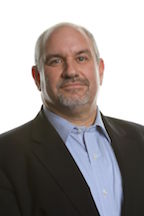 Evermore Global Advisors was established in 2009 by David Marcus and Eric LeGoff. David and Eric bring the methods of their mentor, renowned value investor Michael F. Price, together with their 50+ years of collective experience as entrepreneurs, business operators, and asset managers to provide investment management services to investors.












