Mark Travis is a co-founder of Intrepid Capital. He is also the lead portfolio manager of the Intrepid Capital Fund (ICMBX), the separately managed Intrepid Balanced portfolio and the Intrepid Capital, L.P. Mr. Travis is also a member of the investment teams responsible for the Intrepid Endurance Fund (ICMAX), Intrepid Disciplined Value Fund (ICMCX), Intrepid Income Fund (ICMUX), Intrepid Select Fund (ICMTX), Intrepid International Fund (ICMIX) and the Intrepid Small Cap, Intrepid Disciplined Value, Intrepid Income, Intrepid Select and Intrepid International portfolios. He has over 30 years of experience in asset management. Mark received his BA degree in Economics from the University of Georgia.
Over the last 10 years, the Intrepid Capital Fund has returned 7.59%, which is 172 basis points ahead of its benchmark, the Morningstar moderate-risk total-return index, and 221 basis points ahead of its Morningstar peer-group average, placing it in the top 3rd percentile of that peer group. It has also outperformed the S&P 500 and Russell 2000 over that time period.
I spoke to Mark on August 30.
You founded Intrepid in 1994 along with your father, Forrest, in Jacksonville Beach, Florida. What was your background, and what led you to locate the fund there?
I started as a 22-year-old rookie broker with my dad at E. F. Hutton. We spent a decade together selling investment management to hospitals, labor unions, municipalities and large defined-contribution plans. It was an institutional business along the eastern seaboard. But we went through a series of mergers at E. F. Hutton, culminating with Smith Barney in the early 1990s.
I had gone outside of the firm at that point, looking for managers I knew and trusted and with whom we could have a good dialogue. I was less enamored with the “wrap” business, which was a big, automated portfolio construction. I like a little more of a partnership with a portfolio manager. So, I found some firms that I brought business to and we had good relationships.
I got to see all sorts of asset managers, handling everything from short-term Treasury bills to aggressive growth equity, balanced and value. I saw the pros and cons of all sorts of different styles. I took what I learned in that period and started managing money in early 1995. We were in Jacksonville at the time, but we are in Jacksonville Beach today.
We managed separate accounts. Unfortunately, a lot of the big committee-driven, trustee-driven plans didn’t want to go with a startup firm like ours. We lost a lot of what had been our core business. Fortunately, being natives of this area, we were able to garner enough private client business to get over the hump. In early 2000, we were being distributed through what I would consider second-tier broker dealers. I used to say sarcastically, “We traded by smoke signal and settled by pony express.”
We had focused on small-cap-value equity and short-duration high-yield debt. Those things didn’t really work with those broker dealers. We like to use limits and patiently work our trades. We buy debt from all over the street, wherever we can find it. We weren’t buying only very liquid corporate debt. We were finding obscure illiquid corporate debt.
I made the decision in 2004 to start the Intrepid Capital Fund, ticker ICMBX. We had some smaller accounts that were too small to even be separate. I did some analysis for these customers and said, “Look, if you’ll go into this new mutual fund we’re starting in January of 2005, I think you’ll get a better outcome.”
We ended up converting a lot of our separate-account composites into funds. In the fall of 2005, we opened up the small-cap fund, ticker ICMAX. It’s now called the Intrepid Endurance Fund. In 2007, we had to overcome some regulatory issues with purchasing illiquid debt. I went back to some of our bigger customers and said, “Look, we like these illiquid pieces of paper, but you really need to own them through a fund. You’ll get daily liquidity, which you’re really not going to get necessarily with individual issues, and it will allow us to find that type of security for you.”
In 2007, we started our income fund, ICMUX. Later that fall, we started the Discipline Value Fund, ICMCX. We waited a long time, but we wanted to expand our reach. We spent about a year or more running a small-cap non-U.S. equity portfolio. We converted that to the Intrepid Capital International Fund, ticker ICMIX, on December 31, 2014.
We have had people complain about our cash. They say, “I understand what you’re doing. I appreciate the good risk-adjusted returns I’m getting. But I can’t go back to my customer and say, ‘Hey, you’ve got 50%-70% cash.’ I need something else.” With that as a backdrop, we stripped out the cash, and we opened a cash-constrained product, the Select Fund, ICMTX, last July. It too is off to a pretty good start.
Approximately 90% of our assets are in one of those six funds. We do have some legacy separate accounts.
The only advantage that I still see in a separate account is the possibility of controlling the tax bill and avoiding certain taxes. That happens in a fund when you have some cash outflows that may cause taxes to be prorated across numerous shareholders.
I understand you take a contrarian, risk-based, value-driven approach to investing. Tell me a little bit more about your investment philosophy.
If you’re going to outperform you’re going to have to do something different. If you do the same thing everybody else is doing, you’re going to get the same results.
With the help of my team, I apply what I call classical security analysis across the less efficient parts of the capital markets, be around the globe, the sub-$2 billion equity market cap or short-duration, high-yield debt. For us that’s typically double-B, single-B, five-year maturity-type paper.
If we can do the underwriting in a conservative fashion and determine the business value, we can buy that value in the market at a discount. We’re very patient. We practice what some might call “time arbitrage.”
Most of my peers are “di-worsified.” They own over 100 securities. That’s error number one in my view. Number two, they turn over their portfolio 100%. If they bought something January 1, it’s long gone by New Year’s Eve. As you and I know, a taxable individual is going to pay twice the tax rate on a short-term trade as on a long-term one.
We feel like we fish in a deeper pond. Most of my peers are very index-centric, both by sector and by name, and they tend to look at the S&P100 or S&P200 for investment possibilities. We don’t look at the index. I couldn’t tell you what the composition of the index is or its sector weights. If we find something that we like, either sector-wise or company-wise, we’ll tend to buy a lot of it. Then we’re patient and wait. My turnover over the last 20 years averaged approximately 30% a year, which implies a three-year-plus holding period.
We have a willingness to invest when there’s fear, which I’ve gotten to be pretty good at. It doesn’t happen that often. We have a stubbornness to hang on until that value is realized.
It’s easier to say than it is to do. I didn’t realize how contrarian I was until I got to this age and observed how I thought over a long period of time. The most telling year for me in the industry was 1999, when most people were partying like rock stars with something with a dot-com after it. I didn’t make any money that year. If anything, I probably lost a little bit. Then in 2008, I didn’t lose much money, and I made a lot of really good investments in the post-Lehman failure.
I’ve found myself on a little bit of an ice floe here the last couple of years. As prices reached our conservative estimates of value, we’ve been a seller. We still have high levels of cash in many of our funds. This year has worked out better than I would have guessed if you’d asked me in December. We’ve actually had net inflows into ICMBX this year. Collectively as a firm we’ve had slight inflows. I’m pleasantly surprised, as we roll into the more difficult month of September.
Focusing on the mutual funds, which are the bulk of your business, how are your firm and your investment team organized, and what is the process that you use for constructing the portfolio?
We have seven analysts. Two of them are focused on debt; the other five are focused on equity. We have a group process, but with individual portfolio management decisions. I’m the lead portfolio manager on Intrepid Capital Fund, whereas Jamie Wiggins, our chief investment officer, is the lead PM on both the Endurance Fund (which is our small-cap fund) and the Select Fund. We have a rigorous, repeatable process that creates a shopping list of ideas. I, along with other PMs, make decisions based on that information. We have initial write-up of a business we may want to make an investment in. Then we have quarterly updates and evaluation updates. We do the same thing on the debt.
A lot of times if a company is small-cap, they also have high-yield. So there are occasions where an analyst looks at an equity but doesn’t like the fact that there’s debt in the capital structure above the equity position. If we like the characteristics of the business, we’re willing to buy the debt.
Sometimes we see the free-cash-flow generation and the rapid repayment of the debt, and we know how that will improve the value of the equity. So there are occasions where, in the Intrepid Capital Fund, I may own both parts of the capital structure. Even though there are two dedicated income analysts, the five that are doing equity can also generate an income idea, and the two debt analysts can generate an equity idea.
You are the lead portfolio manager for the Intrepid Capital Fund. What’s the mandate of that fund?
Don’t lose money.
It goes back to when we started Intrepid. The private client and the advisor have a very different mindset than the world I used to live in. That world was the trustees for the largest hospital in Florida, and they were very benchmark-centric, cash-constrained and had a relativist mindset. My peers would say, “Well, I’m 100 basis points behind the index,” or, “I’m 120 basis points ahead of the index.” The private client has never been comfortable in years like 2001 or 2002, when the market was off 40%-50%, or a year like 2008, when it was off 35%-50%. Someone would say, “Well, you know, Mr. Smith, we outperformed the market.” But he says, “How did you outperform it?” My peer would say, “Well, we were 500 basis points ahead of the index.” Mr. Smith says, “What was the index?” “Well the index was off 47%, but we only lost 42%.”
My take is that passive management works in the more efficient parts of the market, but it doesn’t work very well in the less efficient parts. But the biggest problem is not whether people are paying 20 or 120 basis points; it’s the private clients’ or their advisor’s psychology. Most people buy high and sell low.
Louis Harvey at DALBAR Associates in Boston does a study he updates every year, and he looks at what investors actually earned in funds. It’s pretty abysmal. In the last 20 years, the average fund investor earned about 2.5%. But a balanced 60/40 fund earned about 8.5%, and equity-only, represented by the S&P, returned 9% to 10%. But people aren’t getting that, because they’re doing the wrong thing at the wrong time.
We’ve gone through a pretty benign period with historic low levels on the VIX. It looks cheap, easy and free to index, and it probably is. For most people who are paying 120 basis points for somebody that’s really hugging the index, why not buy a Vanguard index or ETF?
We haven’t discussed what I call return’s evil twin sister, risk. Most people think about risk posthumously. We think about it in advance. I’m trying to deliver to the private client a very steady ride that allows them to sleep at night, and generate some income for those who have to live off their assets. At the same time, I take no more risk than necessary so that they don’t buy high and sell low.
You invest in small-, mid- and large-cap stocks as well as fixed income. What is the common thread that you look for in the securities you own?
I want a high-quality business. In a perfect world, there won’t be many encumbrances in front of me in the form of debt. I want an unencumbered balance sheet and good free-cash-flow generation. In the simplest terms, I’m looking for a good business at a good price. I tend to be reticent to own S&P 100 components – not that I don’t now, and not that I won’t in the future – but there is an element of risk when the levee breaks and everybody runs for the door. I’m going to be swung around more by Verizon or Berkshire Hathaway than I will be by American Science and Engineering.
You fund has approximately $382 million in assets. Over the last 10 years, the fund has returned 7.59%, which is 172 basis points ahead of its benchmark, the Morningstar moderate risk total-return index, and 221 basis points ahead of its Morningstar peer group average, placing it in the top 3rd percentile of that peer group. What have been the key contributors to your outperformance over that period?
Through yesterday, it’s also outperformed the S&P and the Russell 2000 over the trailing 10-years.
We have an utter disregard for the composition of the index. We are brave enough to invest, as I like to say, when a lot of investors are under the sheets with a flashlight on. We are patient enough to wait until the value is realized.
With that said, my style is a tough sell for a lot of people. It’s a tough sell for that broker who doesn’t like to see cash. It’s tough for that fund trustee for that reason or because we don’t move and act like an index they’re used to tracking. We come up with ideas, but it’s not like there’s a constant change in new companies in the portfolio as would be the case for a fund with a 300-400% turnover rate.
We tend to be patient long-term holders, even when things move against us. Generally, when they move against us, we look at it as an opportunity to add to our position. I tell a lot of people, “You really don’t want to shadow us because more times than not after our initial purchase it goes down further.” Our short-term timing is a lot of times not very good, but if you can hang in there, we’ll generally make it work. It just may take a while.
Your largest holding are bonds that are issued by EZCORP. You’ve mentioned that firm previously. It’s a publicly traded pawn shop based in Texas. What’s the case for those bonds as a value investor?
That position is now in the mid $90s. We bought it at $60 to $65 early in 2016. I’ve lightened up my position somewhat. I still own some, but it’s not as big as it was even 45 days ago.
The new Consumer Financial Protection Bureau was running rough-shod over all things financial, whether it’s credit card swipe fees or late fees on a check. You name it, they seem to have an opinion about it. EZCORP got out of the payday loan business because they were exposed to those regulatory initiatives. It knocked down the stock pretty appreciably. So we started looking at the equity. There’s a pretty reliable secondhand market for a pawn shop. They tend to trade for $1 million, $1.1 million per store depending on the size of the receivables inventory.
The other problem with this particular business was that they had a Mexican sub called Grupo Finmart, and they were actually loaning money to Mexican government employees, getting paid back on a payroll basis. But they were having problems in that business, so they’ve agreed to sell it to a private equity firm. A couple of Harvard MBAs in Mexico are going to buy it. That’ll help stop some of the bleeding.
The other indirect play for us was that a pawn shop makes money melting down gold and selling it off. With gold touching five- or six-year lows late in 2015, we thought it was an indirect play on gold. We thought the equity was undervalued, but then we discovered that their only debt was a convertible. If you added up their store base, assigned a value to that, looked at their inventory, cash and did basically a liquidation, we felt like those bonds were covered 2:1. Total indebtedness was $325 to 350 million. When we added up all the assets, we came up with $775 million. We had a very attractive yield-to-maturity in the low-to-mid double digits. We had the possible kicker of a gold price improvement and of the Mexican sub being sold. That’s how we got there.
You have nearly 4% of the fund in Berkshire Hathaway. How do you go about determining the intrinsic value of its constituent holdings, and do you have concerns about succession once Mr. Buffett and Mr. Munger are no longer on the scene?
I don’t think about Berkshire the way a lot of people do in terms of how much Coke or P&G is worth. I think about it simply as a book value that is regularly updated and stated. I look at where the typical P&C insurance companies trade, knowing that Buffett has been pretty public about, if he gets to 110% of book, he will use its billions of dollars of cash and buy in some of the shares it doesn’t have. It doesn’t get there often, and it doesn’t get there long. That’s a backstop to its price.
As background, all my investments from my family, my kids, my retirement plan, after tax money, is in one or more of our funds. The only position that I have external to that, which I had before I started the firm, is some Berkshire A shares that I bought in the late 1980s with a cost basis of around $3,000. I actually used those shares to help capitalize this place to get it going. So I’ve been an owner and a follower of that business for a very long time.
Today, with a book value of $160,000 - $175,000, my guess is the valuation is more like $265,000 per A share. I own the Bs just because it’s a little more liquid than the As, and it’s a little easier to carve off a B share at a significantly lower price than $225,000 per A share.
As far as the contingency succession plan, Mr. Jain, the insurance guru would be a good pick. The world waits with baited breath to hear and see who that is. At this point, Berkshire is a great big money machine that’s not particularly overpriced. I’m content just to sit there.
Your third largest holding is in Royal Mail PLC (RMG LN), a postal-service provider in the U.K. and Europe. The volume of traditional mail is not growing very fast, given the advances in electronic delivery options. This company must face competitive pressure from global firms like Federal Express. How is this attractive as a value investor?
You’re absolutely right. Snail mail volumes are declining at a couple of percent a year. That’s true in the U.S., the U.K. and probably all over the world. Interestingly enough, the U.K. has privatized this business, whereas the U.S. is still pouring billions of dollars into ours. A first class letter in the U.S. is $.47. In the U.K. it’s double that.
But what is growing is the parcel business. Thank God for Amazon. They’ve got a number of contracts with retailers, where they deliver packages for them. It may not be a monopoly, but at the very worst, a duopoly or a very significant market share. The challenges are trying to take a unionized work force and make them as competitive and as productive as FedEx or some other global competitor. They’ve had a competitor pull out of that space, called Whistle.
It has undervalued real estate assets in the central business district. One’s called Nine Elms. The other one is called Mount Pleasant. They’re going to develop that space. It has an overfunded pension fund, and you almost never hear those words together. They’ve tried to do the right thing in trying to rationalize their staff. They’ve also given an equity stake to the employees. You couple that with a discounted cash flow valuation that trades at 516 pence; we think they’re worth 600-plus. As I like to say, I’m paid to wait with a 4.5% dividend.
It has real estate that is long held on their books and undervalued, an overvalued pension that they could liquidate and probably put cash on their books. Then you’ve got a balance sheet that is almost totally unencumbered. It has approximately 300 million pounds in net debt, so it’s got very little debt. I won’t say it’s a bond surrogate because it’s certainly not a bond, but it pays better than you can get in most corporate debt, certainly the U.S. government bond market, and you’ve got a discounted equity.
In your most recent fund commentary, you noted the growth of passive and indexed investing and wrote that many investors are making a “rational” choice to invest that way. Given the excellent performance of the overall market in the post-crisis period, what guidance do you offer to advisors who are on the fence about the choice between active and passive?
It’s not an either-or discussion. Advisors come to our shop once a year as a group or individually, and frequently I’ll meet with them. I can see they’re wrestling with this decision. Do they want to go to DFA funds, which requires them to be totally committed that way? Or do they want to give some money to us and some to Vanguard? Most advisors look at it as a choice among alternatives.
In Barron’s over the last four or five years, they’ve talked about active share. Our funds have a very high active share relative to the benchmark. That’s the type of fund people should go to and pay a non-index manager fee. For the S&P 100 or investment-grade debt, maybe they should use an ETF or some other type of index product.
Most people are not calling 1-800-VANGUARD directly. Most funds are through an RIA or a broker. Even though people like to talk about the low fee of an ETF or Vanguard, the person doing the disintermediation is putting an additional fee on top of it.
One of the best books I’ve read recently was by Spencer Jakab. He used to be at the Financial Times, and now he writes on the back of the Wall Street Journal and Heard It on the Street. He’s got a book called Heads I Win, Tails I Win.
He makes a great case for not buying high and selling low. He says, “Don’t send money to lake money-be-gone.” He talks about indexing and setting it and forgetting it, but he also talks about the need for an intermediary. As I say, our goal is, “to hold people’s hand at the bottom and hold their hand at the top to keep them from mortgaging their house and giving more money.” Then he also spends a fair amount of time talking about Buffett and the speech that he gave in the mid-1980s called “The Superinvestors of Graham-and-Doddsville.”
You have to be very patient to do what we do. A lot of people just don’t have the patience. Most individual investors are going to give you maybe three years. If the market has gone up a lot, and you’ve only gone up a moderate amount, you’re probably subject to being terminated.
Read more articles by Robert Huebscher
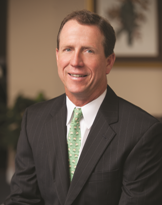 Mark Travis is a co-founder of Intrepid Capital. He is also the lead portfolio manager of the Intrepid Capital Fund (ICMBX), the separately managed Intrepid Balanced portfolio and the Intrepid Capital, L.P. Mr. Travis is also a member of the investment teams responsible for the Intrepid Endurance Fund (ICMAX), Intrepid Disciplined Value Fund (ICMCX), Intrepid Income Fund (ICMUX), Intrepid Select Fund (ICMTX), Intrepid International Fund (ICMIX) and the Intrepid Small Cap, Intrepid Disciplined Value, Intrepid Income, Intrepid Select and Intrepid International portfolios. He has over 30 years of experience in asset management. Mark received his BA degree in Economics from the University of Georgia.