The ASTON/Pictet International Fund builds a diversified portfolio of companies based outside of the U.S. through bottom up fundamental analysis. The focus is on growth in cash flow, and value creation with the aim of buying stocks at a price below a conservative estimate of intrinsic value.
As of June 30, 2016 the fund had an annualized return of -2.74%, which is 167 basis points ahead of its benchmark, the MSCI EAFE index, and 112 basis points ahead of the foreign large blend peer-group average. Year-to-date, as at 7/31/2016, the fund return has been 3.43%, 301 basis points ahead of the MSCI EAFE index and 236 basis points ahead of the foreign large-blend peer group average.
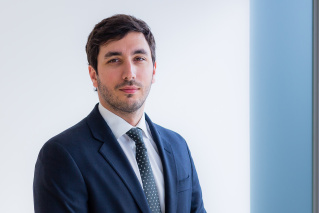
Benjamin Beneche is a senior investment manager at Pictet Asset Management, and has been a co-portfolio manager of the Fund since its April 2014 inception. He joined the firm in 2008 and is in the EAFE Equities team with a specific focus on Japanese Equities. Ben began his career as a graduate within Pictet Asset Management Equities then as a junior investment manager on the Global Equities fund with an emphasis on the energy sector.
I spoke with Ben on September 1.
You are a senior investment manager for the ASTON/Pictet International Fund (APCTX), which was started in April 2014. What is the mandate of your fund?
The mandate of the fund, in its simplest form, is to invest in 70 to 90 companies, primarily listed in developed markets outside of the United States, with the aim of outperforming the broader equity indices over the medium-to-long term, over the course of a market cycle.
Although macroeconomic factors can clearly impact the fundamentals of the businesses that we own, we believe it’s pretty difficult to forecast broader economic trends. We focus nearly all of our energy identifying the best individual investment opportunities. As a result of that approach, regional, sector or market-cap exposures are very much a byproduct of where we see value at any given point in time. Another byproduct of that approach is quite a high divergence from the benchmark. Our active share stands at around 87%. The turnover of new portfolio positions, in terms of new names, is around 25% or a four-year average holding period.
That last point is very important. It reflects our view that day-to-day market movements and gyrations have very little bearing on the intrinsic value of the businesses in which we invest. Although I don’t particularly like the classification, the approach that we have typically puts us in a “core” or “GARP” peer group. Those classifications tend to be backward-looking, consensus-based approaches to value and growth; instead, we have more of a modern perspective on value investing. We look for businesses that can create value and deliver sustainable and growing cash returns to shareholders over the longer term.
The fund uses bottom-up fundamental analysis. What is the process for determining the intrinsic value of the companies you own?
Our first step is always to understand the business model entirely: how a company generates revenues; how those revenues can grow predictably over the long-term; what’s the cost base and the operating leverage within the business; do they have a sustainable competitive advantage; do we trust the management who is in place?
Those are just some of the questions that we look to answer to determine if a business can create value, or stated otherwise, if it can deliver high returns on capital over time. Only once those questions are answered do we look into determining the intrinsic value of the business from a quantitative perspective. Although we don’t believe that there’s a panacea, when it comes to business valuation, our approach has one very significant defining feature – a clear focus on cash generation rather than earnings.
There are two main reasons we focus on cash flow. Cash is hard to manipulate from an accounting perspective, and secondly, it focuses our minds more acutely on any investment decisions made by management on working capital. Both of those things are very important in the day-to-day management of the economics of the business, and tend to be overlooked because of the primacy of the income statement in a lot of the analysis we see from the sell side, and more broadly as well.
There are various ways to distill that cash flow. Our approach is to think of what we call a normalized free-cash flow. That’s the amount of the cash that can be generated in the normal state of affairs, adjusting for cyclicality and any other temporary factors. On that we’re going to require a real cash-on-cash return in the range of 5%-10%. That depends on the quality of the business and the long-term growth rate of the business. It’s not a perfect science. There’s no magic formula when it comes to investing. But our approach does a good job of squaring the difference between attempting to forecast the future, which is inherently quite difficult to predict, and not ignoring the future prospects of the business.
There are exceptions to that approach. The only significant one is where we’re particularly sure about the future of a business, and we feel there’s a large degree of predictability in what the business is likely to achieve in the long-term. Then we’ll focus more on discounted cash flow-based (DCF) analysis.
But a very important caveat to that is that we don’t play around with terminal assumptions, such as discount rates and terminal growth rates. They tend to be relatively stable and don’t move a lot from business to business. We don’t want to compound the errors that we’ll inevitably make in very long-term forecasting and when we think of cost of capital, it’s certainly not driven by central bank policies. Though it would be great to borrow money at negative interest rates, it’s not something we can do. The hurdle rate we apply to our investments is the return that we expect to get from the existing portfolio – what we already earn.
How is your team organized, what is the overall investment process and what are the criteria for buying and selling securities?
Pictet Asset Management is a relatively large organization. We have over 300 investment professionals – analysts, strategists and portfolio managers who have various fields of expertise, and we can draw on those resources. In particular, we work very closely with our Japanese, European and Asian regional portfolio management teams. The most significant input, however, is a team of nine developed-equity analysts who are entirely dedicated to us and who specialize in certain sectors.
We encourage a conviction-based model as opposed to a coverage-based model from our team. But there’s no pressure to maintain models on market constituents, which don’t have a huge amount of value-add. Instead, we prefer them to have a handful of high-conviction ideas over the course of a year. By structuring things that way, we’re trying to minimize what Charlie Munger called “the man with a hammer syndrome.” Human nature tends to make us feel compelled to use the knowledge that we have; whereas, in investing, the correct thing to do most of the time is not to act; not to buy a business. That’s what we’re trying to accomplish.
Although we’re lucky to be able to draw on all of those resources I mentioned, ownership of the portfolio has to fit with the three-person management team. That is myself, Fabio Paolini and Swee-Kheng Lee. The bottom-up nature of our process means that every stock we own, whether the idea is sourced by ourselves, an analyst or by one of the regional teams, is thoroughly vetted by those three people.
What proportion of your time is spent on portfolio management versus stock analysis?
At least 95% of our time is clearly company analysis. Each of us has a regional specialization, which allows us to source investment ideas within that region but also work in a more dynamic, interactive manner with the resources available to us. Interesting opportunities are discussed at length within various forums, often on an ad-hoc basis. We all sit together. We’re all within shouting distance of one another.
When we discuss an idea, one of three outcomes can happen. The first is the company is just not understandable. We don’t get it. It doesn’t comply with our basic criteria of value creation and growth that I talked about. The second, which is more common, is that the business looks attractive, but it just doesn’t have the valuation hurdle rate that we require from an investment. The final outcome is that we buy the stock.
The decision to sell is driven by two factors. The good outcome is that it reaches our assessment of intrinsic value. The negative outcome is that we were simply wrong, and we have to be able to realize that. We don’t apply stop-losses on a price-movement basis, but we do look to follow, from the very outset of an investment, its investment pillars and we make them very clear. We are trying to avoid any confirmation bias or thesis creep that can happen over the life of an investment. We don’t want to hold onto an underperforming position just because we own it. If the investment pillars break, we cut the position and deploy our capital elsewhere.
Since its inception, the fund’s annualized return has been -2.74% (for the I shares as at 6/30/2016), which is 167 basis points ahead of its benchmark, the MSCI EAFE index, and 112 basis points ahead of the foreign large blend peer-group average. This year, the fund has returned 3.43% as at 7/31/2016, 301 basis points ahead of the MSCI EAFE index and 236 basis points ahead of the foreign large-blend peer group average. What were the key contributors to that performance?
More than 100% of our outperformance over the past year has been driven by stock selection versus allocation effects, which proves what I said earlier about knowing the hurdle rate when it comes to macro factors. What’s pleasing about the performance was that it was broad-based; eight out of 10 sectors outperformed. No single stock represented a huge amount of the outperformance. Nothing represented more than 80-85 basis points towards the total attribution.
What’s most interesting was that the top 10 stocks, in terms of positive attribution, contributed around 6.5% to our outperformance; whereas the bottom 10 detracted just over 4.5%. That’ a relatively significant delta, and it’s particularly pleasing because it meant that our inevitable misses were managed. We bought with a significantly large margin of safety, and it showed our ability to step away from a situation where the investment pillars were truly broken.
In your most recent quarterly fund report, you wrote, in regard to Europe, that “recent events will cause a deceleration in economic growth (with a possible recession in the UK), a longer period of very low interest rates, and a weaker GBP.” Has your outlook changed at all over the last two months? Is the UK heading for a recession?
While we avoid explicit macro forecasting, we do feel it necessary to be macro-aware. It’s really important to understand the structure of the British economy. It’s run a significant current-account deficit of around 5%. On top of that, household saving rates are at particularly low levels. Interest rates are arguably near what is a lower bound.
What that means in aggregate, is that Britain is heavily dependent on foreign capital flows. Mark Carney, who is the governor of the Bank of England, said that we’re “dependent on the kindness of strangers”. In such an environment, and with significant uncertainty as to what the actual terms of trade are going to be negotiated with the EU over the next few years, it’s pretty difficult to be particularly positive on the outlook for the British economy.
Some people are pointing towards more recent economic data actually proving to be rather supportive. We’ve seen that retail sales have been relatively strong in July, up 5.4% year-on-year, and there’s even been some significant M&A activity. One of our positions, SoftBank, paid a 40%-plus premium for a ship developer based in the U.K. shortly after Brexit was announced. That is well and good, but it’s quite short-term, and the true implications of Brexit will only manifest themselves over the next few years.
We tend to think about individual company revenue exposures rather than big macro trends. In some cases, they have very little to do with one another. One example I’d point to is GlaxoSmithKline, which is listed in the U.K., but actually only earns around 4% of its revenues domestically. Our investment thesis is predicated on the business being entirely reshaped through a deal with Novartis, one of its competitors, and now focuses on HIV vaccine and consumer health, which are areas that deliver robust growth over the long term. We see a business that is very attractively valued, and that’s the case independently of what happens to the domestic British economy.
You are overweight Europe. Approximately 63% of your portfolio was in Europe, as of July 31, versus about 50% for the benchmark. Three of the negative contributors to your portfolio in Q2 were in Europe: Obrascon Huarte Lain (OHL), Inmarsat and William Hill. Where are you finding attractive values in Europe?
I’d like to answer your question by flipping it on its head and pointing out where we’re not seeing opportunities first. In particular, we feel that the current interest rate environment has distorted equity values for income-bearing assets or dividends. That affects consumer staples and utilities, both of which are at significant underweight positions in the fund. Staples in general have a lot of the characteristics that we like to see in businesses, but the current valuations leave little room for error. Even in a favorable outcome, they don’t offer the types of returns that we’re hoping to achieve in the long-term.
Another sector that we’re currently avoiding is financials and, in particular, big banks. Although on average value investors think that they’re cheap on an asset-value basis, given the current shape of the yield curve and the current regulatory environment, we actually don’t expect them to earn an adequate return on equity.
With regard to where we see opportunity, it’s a thoroughly eclectic, broad range of businesses. If I were to generalize, I’d point to our largest sector overweight, which is industrials. What’s unique about that industrial exposure, is that there’s very little direct exposure to the capital goods side of the industry, which is highly cyclical, but more towards what we view as highly predictable and growing consumer-facing or long-duration assets.
A few examples there would be Fujitec in Japan, which is a small elevator manufacturer that generates most of its profit from maintenance contracts that last upwards of five years, with renewal rates of over 97%. In Europe an example would be Vinci, which is a vertically integrated construction and concession operator. The average life of those concessions, like toll roads and airports, is 28 years and in nearly all are inflation-linked. Those are all-cap businesses that have characteristics that we like, but mainly because of their industry classification, they trade at attractive values.
You have a personal focus on Japan, which is another region where the fund is overweight (24% versus 17% for the benchmark as of July 13). One of the perplexing moves in the market lately has been the strength of the yen, despite aggressively dovish policies by the Japanese central bank. How do you explain what has been happening recently in Japan and what is your longer term outlook for its economy? Will Abenomics succeed?
The Japanese yen has long been perceived as a safe-haven currency. That might appear counterintuitive, given the significant amounts of public debt and relatively weak economic growth that the country has demonstrated since 1990. But the fact is that Japan has run a consistent current-account surplus for a long period of time and has net foreign assets today of over $3 trillion, which makes it the world’s largest creditor. When markets turn risky, as they have recently, Japanese companies, insurers and investors with money abroad tend to bring it home, which drives up the value of the yen. On top of that, foreign investors will also move into Japanese currency because of the belief that they’re looking for a safe haven. So, it becomes self-fulfilling in that way.
Furthermore, there appears to be a roadblock when it comes to further QE in Japan. The rate of QE is very high, but liquidity is already ample and interest rates are already at rock bottom. One of our portfolio companies, which is highly levered – over five times net assets – recently raised five-year debt at 0.8%, which is amazing. Despite ample liquidity and record low interest rates Japanese companies continue to accumulate cash and consumer loan growth remains very low – the liquidity is still not flowing into the real economy. On top of that, Japan has a fiscal deficit, which today sits at 6.7%, and with around a quarter of government spending already directed towards servicing government debt, it’s not sure to me whether QE, incrementally, would actually affect the real economy from this point forward.
Whether or not Abenomics succeeds is still up for debate. The structural reform elements, which are the most important long-term, haven’t yet meaningfully addressed the issues of population decline, labor mobility or healthcare budgets, which need to be touched on longer-term.
One significant bright spot within the structural reforms of Abenomics is a clear improvement in corporate behavior, albeit from a very low base. Japanese corporates have focused on return-on-equity (ROE) much more so than they have in the past, and that’s manifested itself in higher shareholder returns, both through dividends and buy-backs. There are a few reasons for that. There is an element of the carrot-and-stick approach. The carrot is the creation of high-ROE indexes and corporate governance codes. The stick could be viewed as the proxy voting houses, like ISS, automatically voting against management teams that don’t deliver an adequate ROE of 5%.
There have been several portfolio holdings over the past few years which have been part of this ROE revolution, so to speak. A lot of them, perhaps unsurprisingly, have been heavily government-influenced businesses. The government-backed TelCo, NTT, Japan Sabatco and SMFG, one of the four megabanks in Japan, have all announced dramatically different approaches towards the use of cash flow and latent assets over the past three years. Even non-public companies, the most stunning of which has been Fanuc, which is a secretive robots manufacturer and has a large amount of cash on its balance sheet – one trillion yen – and is paying out 80% of its earnings through dividends and buy-backs. Those are very tangible examples that have directly impacted the portfolio, but it’s really been a broad-based change in approach from our perspective.
Three of the top Q2 performers in your fund were in Japan: SoftBank, Cyberagent and Bandai Namco. Where are the attractive values in Japan now?
Let me briefly set the scene, because there’s been some change over the past few years. The initial phases of Abenomics, in late 2012 and early 2013, were characterized by a dramatic depreciation in the yen, from sub 80 to the dollar to over 100 to the dollar, within the space of three or four months. But during that time, groupthink led most investors to look for foreign currency-exposed companies at all costs. To an extent, it was the more leverage to a weak yen, the better.
Our approach was a little different. We took the view that often some of the lower quality business, which got huge windfall profits due to the weakening yen, wouldn’t be able to sustain those profits. The competitive environment that they faced wouldn’t allow it over the long term. From early 2013 onwards, we had quite a large exposure towards the more domestic end of the spectrum, companies that we viewed as having astounding economics, but which were left behind because of their currency exposure.
That’s the bias that we kept up until very recently, but we have reverted quite dramatically over the past months. The recent yen strength and the weakness in certain cyclical-end markets have led to a quite substantial drop in valuations in those parts of the market. When it comes to cyclical businesses, it’s often hard to determine whether the business is commoditized or whether they have a long-term competitive advantage that is being masked by the economic cycle. We’ve tried to identify the latter.
One notable example would be NGK Spark Plug. It’s a business that has a 40% global market share in spark plugs and generates 70% of its sales from the aftermarket. That’s relatively steady. Its market position and relatively low unit cost of its products – a spark plug only costs around $2 at retail – means that it has the one thing that we love to see in all businesses, which is sustainable pricing power. That pricing power means the company has a 22% operating margin. Although the business is highly exposed to the yen, it generates over 80% of its sales overseas and nearly all of its assets are domestic. Long-term we think that the business is incredibly well positioned for anything but the most extreme currency environment. From a risk-return perspective, that makes a lot of sense to us.
Regarding the specific companies you mentioned, they all remain within the portfolio. They all offer substantial upsides, despite the relatively strong performance of the yen.
The one I’d point out is SoftBank. SoftBank is an $80 billion market-cap business. It’s been one of the larger positions in the fund over the past few years, and it has four key components. There’s a domestic TelCo business, which is part of a very tight oligopoly in Japan. There are three key players, and they’re very disciplined in terms of pricing. We are currently in a very favorable environment where its free-cash flow is almost 500 billion yen per year. Capex is likely to remain low, at least through 2018-2019, and that free-cash flow is allowing the company to reinvest into their business. Other holdings that it has include Alibaba. They spent a few tens of millions of dollars several years ago for a 30% or so economic stake in Alibaba. Even though now it slowed down slightly, the market cap of Alibaba is around $240 billion as we speak today.
It has an 85% or so stake in Sprint. Sprint is around a $25 billion market cap. It’s been a very difficult business for a long period of time. Sprint actually lost money for the past nine years, but for the first time in a long time, this year Sprint is going to be free-cash flow break-even. It is slowly starting to regain share of mind with U.S. consumers. They’re making net gains of subscriber contracts, and our view is that the business should, in the long term, generate around $4 billion of free-cash flow, which represents a very significant return. It represents almost 20% -cash flow yield on today’s market cap, in a positive scenario. In a negative scenario, it is a very highly levered business, but we think that the risk-reward makes a huge amount of sense.
This free-cash flow from its domestic business is being directed towards investments; the very significant one being ARM, where the founder and CEO, Masayoshi Son, who owns over 20% of SoftBank, just spent over $32 billion to buy this company, ARM, based in the U.K. We like the business a lot. It has 95% gross profit margins. It has a 95% share in the design of chips for mobile phones. It’s a wonderful business with a lot of characteristics that we like.
The price is the issue here. The premium paid was very significant, but we’re somewhat comforted by the track record of investments that the founder, Mr. Son, has made over a long period of time. This is a man who started the business, coming out of Berkley University, as a pocket translator, which he sold to Sharp. It’s been through several iterations, first as an IT distributor, second as a domestic TelCo and more recently as a holding company for one of the businesses that I mentioned, and more generally, a B-to-C-type business. If we look at the rate of return he’s delivered over time, it’s over 40% on the minority investments he’s made. Although that’s not enough in itself, it does give us a little bit of comfort that the man might know what he’s doing.
We have been faced with a strong US dollar, with the EU, the UK and China, among others, competitively devaluing against one another. Indeed, only Japan seems to have maintained a strong currency. What is your view toward currency movements and are you hedging any of your FX exposure?
For various reasons, we don’t hedge currency. First and foremost, we don’t feel that we have any specific edge when it comes to forecasting which way currencies will move. We do monitor currency carefully. We try to understand the economic exposure of each of our portfolio holdings and on an aggregate level, but it’s never the starting point of our analysis.
Secondly, although volatility does come from foreign currency fluctuations, my view is that volatility can be a good thing. In fact, I recently read that the correlation of U.S. equities to the dollar was relatively low – approximately 0.38 over the past 20 years. In other words, a lot of stocks are naturally hedged; their revenues and expenses have differing currency exposures that often neutralize the volatility of of stock market movements. Finally, there’s a cost to hedging, and we try to avoid any kind of friction costs to best benefit our clients.
Lastly, what distinguishes your process and investment style from that of your competitors? What is your investment edge?
Unfortunately, I can’t profess to possess any crystal ball or proprietary system which will guarantee our performance. However, there are a few things that we do quite differently from our competitors, which offer an advantage.
First and foremost, we invest over the long term. As I mentioned earlier, our average holding period is around four years, and that compares to an average holding period of less than one year for the bulk of institutional investors. If you include high-frequency trading, that number drops down to being measured more in weeks rather than in years. If anything, that trend is actually shortening, in terms of the time horizon. Interestingly, post-WWII, the average holding period was around seven years for institutional investors. It’s shortening and appears to be continuing to shorten. It is logical that there’s an opportunity to make money by focusing our analysis on the long term and holding onto companies for a little bit longer.
Secondly, our process, although not perfect, is always being refined. It focuses on the right things: cash generation and value creation. The reality is that income-statement-based analysis is still dominant, and although it is quite a good shorthand for the underlying economics of a business, I don’t think it lends itself sufficiently to thinking about reinvestment rates as well as being susceptible to accounting manipulation.
Value creation is also an incredibly important concept that sounds simple. It’s very central to what we do. At its core, it says that not all growth is created equal. History is full of fast-growing markets, prospering industries, which have destroyed value over the long term. Examples would include airlines and the semiconductor industry. That’s because of a lack of a sustainable competitive advantage and not being able to create shareholder value.
We hope to avoid rapidly growing and perhaps, very profitable business, but where the long-term returns are destined for commoditization. Simply avoiding those large mistakes where investors typically experience both multiple contraction and a rapid erosion of profits, will go a long way towards achieving very good long-term outperformance.
Finally, it’s the intangible. It’s our stable team that’s been around for a while. I’m the most recent addition to the team, in 2012, but I’ve worked closely with Fabio and Swee-Kheng and the others since 2008. Fabio has been dedicated to the fund since 2003. Swee has been dedicated to the fund since 2007, and we’re all passionate stock pickers. But we also all live and breathe the process that we have in place. Our faith has been tested in the past through inevitable periods of underperformance. The fund outperformed in 2008. The fund outperformed in 2014. In both of those periods we were able to stick to the process that we talked about, that we implemented, and that ultimately led to a quite pleasing performance over the longer term.
Read more articles by Robert Huebscher
 The ASTON/Pictet International Fund builds a diversified portfolio of companies based outside of the U.S. through bottom up fundamental analysis. The focus is on growth in cash flow, and value creation with the aim of buying stocks at a price below a conservative estimate of intrinsic value.