A Top-Performing Global Income Fund
Membership required
Membership is now required to use this feature. To learn more:
View Membership Benefits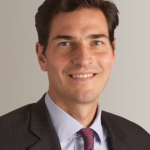 |
| Kimball Brooker |
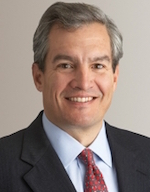 |
| Ed Meigs |
The First Eagle Global Income Builder Fund (FEBIX – I share class) seeks current income generation and long-term growth of capital. It has approximately $1.2 billion in assets and is a leading performer in its Morningstar peer group. Kimball Brooker and Edward Meigs are co-portfolio managers along with Sean Slein.
Kimball is deputy head of the global value team and joined First Eagle Investment Management as a senior research analyst in 2009 covering banks, commercial services, financial services and holding companies. He joined the global value portfolio management team in 2010. Kimball began his career in 1992 as a financial analyst at Lazard Frères & Co. From there, he joined J.P. Morgan as an associate in the Investment Banking Department's billion-dollar Corsair private equity funds. In 1998, Kimball returned to J.P. Morgan after finishing his MBA.
Ed is a portfolio manager for the First Eagle High Yield strategy with Sean Slein. He joined First Eagle Investment Management, LLC in October 2011. Prior to joining the firm, Ed was a portfolio manager of the Dwight High Yield strategy at Dwight Asset Management Company LLC from 2001-2011. Previously, he spent four years at Mount Washington Investment Group as a High Yield portfolio manager. Prior to that, he served as vice president at Falcon Asset Management. Ed began his career at Wheat First as a credit analyst.
I spoke to Kimball and Ed on November 18.
Please describe the genesis and the mandate of your fund. Why did you decide to create an income-oriented fund?
Kimball: In the wake of the financial crisis, when central banks around the world were beginning to implement various forms of monetary policies, you obviously saw a drop in interest rates to historically unprecedented low levels. That undermined more traditional approaches to generating income, whether it was via savings accounts, government bonds or even investment-grade debt.
Increasingly, we faced requests from existing clients to create a fund which could potentially provide them with some income in that low-income context. We began reviewing the fund. It was very important to us that if we went ahead and launched it, we could create a fund that could provide income but would adhere to our core investment philosophy of seeking loss avoidance and our core underwriting approach, which emphasizes a very long-term horizon and is based on fundamental research.
In 2010, we began incubating the fund and it officially launched in 2012. It is managed by three portfolio managers and we have a team of 22 analysts, covering equity and credit.
The fund has two investment mandates: current income and long-term growth of capital. It seeks to protect and grow the capital base in real terms while providing a meaningful and sustainable level of distributions.
Your fund has returned 2.70% over the last three years1, which is 184 basis points ahead of its Morningstar peer-group average (world allocation funds), placing it in the 13th percentile of that group. What have been the key contributors to that outperformance?
Ed: It is a bottom-up process and it all comes down to the underwriting discipline on both the fixed-income and the equity teams. We run a highly diversified portfolio, currently about 165 positions. We don’t have any huge concentrations and generally own fewer than 150 basis points in any given name. Obviously, with 165 positions it runs from seed positions of 10 to 20 basis points up to that 150 basis-point level. It would be unusual for individual securities to drive a significant amount of the performance. It’s going to come down to the cumulative impact of many, many good decisions after a great deal of hard work has gone into them. The top 10 names currently comprise less than 14% of the fund.
That said, we do go ahead and break down fund performance over time to see what the drivers have generally been. The absolute performance over this time period on the equity side has come from technology, industrials and materials. On the fixed-income side, performance being driven by basic industry and some of the consumer cyclical names.
As far as relative performance on the equity side, it came from financials, materials, technology; in fixed income, it came more from industrials and consumer cyclical names. On a country basis, because it is very much a global fund, the relative performance has come from Japan, Spain, Germany and Switzerland. We have been underweight U.S. equities during a period of pretty significant outperformance for U.S. stocks.
I’ve read that there are three tenets of your fund: the global range, asset-class flexibility and the focus on downside protection. Please talk about each one.
Kimball: I’ll take them in reverse order. The focus on downside protection or loss avoidance is the most important tenet of the fund. All of the key elements to our underwriting process are centered on attempting to avoid permanent losses to capital.
As the most important example, when we seek to invest, we will only deploy capital when we believe we have enough of a discount between what we are paying for a security and what we think the security is worth, which we refer to as the "margin of safety". That’s one of the most important things that we focus on and we believe it is critical in seeking to reduce the risk of capital loss.
Flexibility is also very important. With respect to asset classes, it’s a matter of not being forced into any artificial constraints, such as only being able to look at one asset class or having predetermined weights by an asset class. As Ed mentioned, we follow a bottom-up investment approach and that allows us the flexibility to invest where we see value and to avoid any pockets of the markets that we feel the risk return is asymmetric to the downside.
We are able to migrate freely from one asset class to another, from equities to fixed income. We are able to migrate within an asset class, say from investment-grade to high-yield debt, or from corporate to sovereigns. We are able to accumulate cash in the fund if we are not finding investments that meet our criteria.
We also hold some gold bullion and some gold-mining stocks, which we think of as a potential hedge against extreme monetary, macroeconomic or geopolitical events. Having flexibility is very important to how we think about managing the fund and the returns over time.
The same comments hold true for geography. We have the flexibility to invest globally. We are not tied to any index or preset rules about investing in a country or region. We have no preset view or requirements as to the domicile of the companies in which we invest.
Please describe the portfolio construction process and how that ties into your risk management?
Ed: The key to the portfolio construction is the dual mandates under which we are operating – to provide a meaningful and sustainable level of income and grow purchasing power over time. Those are the key drivers of portfolio construction.
It’s not a top-down process, however. You’ve heard a fair amount already as to the importance of how we view the underwriting process and the bottom-up process that we utilize. It’s absolutely the case here that portfolio construction comes from the bottom up. But at the same time, because we are looking to satisfy these mandates, we recognize that we have to maintain a meaningful income stream. We look at the fixed-income allocation as being the potential ballast for providing income. We look at the equities in an effort to provide real growth relative to inflation.
We are only buying when we have this perceived "margin of safety," when we are comfortable with the quality of the business, and obviously the attractiveness of the price. If we are not seeing opportunities where we feel we are being properly compensated, then we will default to cash and cash equivalents. It’s the opportunity set that ends up driving the portfolio allocation.
As far as risk management, that comes from the bottom up. We view risk as permanent capital impairment, not volatility. The way we look to avoid impairment is by sticking to our underwriting discipline both on the equity and fixed-income side. We believe that the very broad diversification of the portfolio serves to help mitigate risk. The top position in the portfolio is approximately 1.5% of the fund at this point, so we are not going to see a great deal of concentration of risk in a single name. We also look at correlations across different sectors and across equity and fixed-income allocations to ensure that we don’t have any concentration that sneaks up on us.
But again, really the focus is managing risk on the front end through security selection and underwriting discipline.
It remains to be seen what the new administration will do to spur economic growth, but one of the items that has been discussed has been more aggressive fiscal policy, particularly in areas such as infrastructure that could potentially result in higher inflation. How is your fund positioned for higher inflation?
Ed: It remains to be seen what the new administration will do. You could drop it there with a big question mark. Inflation is a potential concern. Thinking of it more from the fixed-income side, we have maintained a pretty short duration of approximately 2.5 years. We are very concerned about potential risk in spread duration. If spreads widen then longer duration bonds are going to fall more in price. Thus far, we have been mostly focused in the upper portion of below-investment-grade and low-investment-grade securities. We are looking to maintain a reasonable yield in the portfolio without taking on too much interest rate risk.
Generally, a stronger economic environment is going to be positive for below-investment-grade spreads and spreads in general. If we do get slightly higher interest rates, then high-yield, having a shorter duration is a more equity-like instrument and generally has performed better in those environments relative to other fixed-income securities.
Kimball: In terms of the rest of the portfolio, we’ve got approximately 51% of the portfolio is in equities. One of the important elements of our underwriting criteria in our selection of equities is the persistency of the underlying businesses. We are looking for businesses that we believe are well positioned in whatever industry it operates. With that comes pricing power, which would help if there was a pickup in inflation.
There is a case to be made more broadly for equities as a potential inflation hedge in the sense that they represent claims on real assets and historically that hedge has held up pretty well.
We’ve got roughly 4% of the portfolio in gold-related investments, which is a mix of roughly half gold bullion and half mining companies. Although nobody knows whether not inflation will surface again, we believe the portfolio should be reasonably insulated.
What are the biggest areas of opportunity for income investors? What are the areas income-oriented investors should be avoiding? Specifically, how attractive are high-dividend stocks?
Kimball: Because of our flexibility, our portfolio reflects our views of what’s attractive and what is not, because we are able to fish in so many ponds. We’ve spoken about the equities and the credit quality of the portfolio. It is mainly corporate with a quite low duration. We have a very small weighting to international sovereign bonds as well.
What is not in the portfolio – and that you may see often represented in many other income-oriented funds – are things like mortgage REITs, which we feel carry too much interest rate risk and too much capital markets risk. What’s also not in the portfolio are instruments with negative yields or negative real yields, which we think are not a very good investment.
One of the other things we shy away from are complex derivative-type instruments like equity-linked notes, which monetize a stock’s volatility. You can call them a fixed income instrument but you’ve got huge exposure to the downside of a stock. We strive to keep it simple. We've generally avoided too much interest rate risk, too much leverage and complicated derivative-type instruments.
I’d like to discuss some of your holdings in the portfolio, and why those are typical of the securities you own, what has made them attractive to you and where you see the margin of safety coming from in them.
Ed: The first name is ACCO Brands. It’s an office products company. We own the 6.75% bonds that mature in 2020. It’s obviously a pretty boring sector of the economy. It’s shrinking gradually. In 2012 ACCO purchased a competitor, the MeadWestvaco office products division, so it levered up somewhat to do that.
But it is a business that has generated a great deal of free cash. Most importantly, we believe that management has been extraordinarily focused on reducing debt. So you have a company that has the ability to generate free cash and then also a management that has the willingness to pay down debt. In 2012, the company has paid down over $350 million in debt. That was on a starting point of about a little over about $1.1 billion. Free cash flow as a percentage of debt is running at about 20%, so, in our view, it is a very solid free-cash-flow generator.
The second one is Bi-Lo. It’s a southeastern U.S. supermarket chain with about 750 locations. We own the 9.25% bonds that are senior notes maturing in 2019. You can see that we are staying a little bit shorter with final maturities in 2019 and 2020. It’s a company with over $10 billion in sales. Obviously, it is operating in a very competitive industry. You see continued growth with supercenters, dollar stores and home delivery. It has been pressured by food deflation. It has seen decreases in the food stamp payments in the areas in which it operates. It’s been and remains a difficult environment.
It has been acquisitive. Originally it purchased Winn-Dixie and did a very good job of improving margins there. It made a couple of more acquisitions and also transitioned its distribution center all in one year, a couple of years ago. That transition caused a little bit of a hiccup, but we feel it has been improving operations. It just recently transitioned a number of its stores over to a single banner, recognizing what its customers were looking for and what its real competition was.
The equity sponsor is Lone Star. It has been a little more aggressive than we would’ve liked as far as taking out dividends, but in general, we remain comfortable with management.
This is also a bond where we believe we’ve determined that appropriate attachment point for the fund – the point in the capital structure where we like to invest. There will be certain cases where we are comfortable at a senior secured-bank level, or in other cases it might be a senior-secured bond, a senior bond or all the way down to a subordinate bond. In this case, we felt most comfortable at this senior note level where it is only a little over four-times levered. We’ve seen recent acquisitions in the industry of weaker competitors at higher multiples, so we feel that there is asset value and there is always that potential for an exit strategy if management determines it’s not appropriate to continue on their own.
Kimball: One good example of an equity holding is Mandarin Oriental. It’s a luxury hotel chain that is based in Hong Kong and there are two parts to the business. It owns three hotels in Hong Kong and a number of hotels in large cities like Paris and New York. The other side of the business is that it has management contracts on hotels and residences that aren’t owned, but we believe it is a high margin, very low-capital-intensive fee business that is growing and potentially well positioned to exploit the long-term trend in high-end tourism.
We believe the spread between the net asset value and the stock price provides a reasonably good "margin of safety." The company has very little debt and the dividend at the moment yields just under 4%. Mandarin has about a $2 billion market value so it’s pretty small.
The other one I want to discuss is Nestlé, which has a $200 billion market cap and is a well-known consumer goods company that operates in a number of different categories that range from candy to pet food to coffee and water. For the most part, it has leading positions in its categories. In addition to the food business, Nestlé also owns roughly one-quarter of L’Oreal, which is a French cosmetics company.
Over the years Nestlé has been a model of persistency in our view. It operates all around the world and is quite well managed. Like Mandarin, we feel the balance sheet is quite clean and the dividend is just over 3%.
How does your fund differ from other income-generating funds?
Ed: Kimball touched on how some of our peers look as far as equity-linked notes and REITs. We are also very cautious as far as investing in MLPs. In other times, it’s a matter of valuations for investing in areas like utilities. We also avoid what we think of as the “wasting trust” structure of some equities that have very, very high dividends but really it is a return of capital rather than a return on capital. We are not going to chase yield and thus there are various things that we will avoid.
We take on less credit risk than some of our peers. That’s not an absolute statement, but clearly we have a higher rated fixed-income portfolio than some of our peers; currently it is less than 6% in single-B and below bonds. We don’t currently have any CCC-rated bonds in the portfolio. We don’t have any prohibition against owning them, but it is one of those things where we are cognizant of the jump in default risk, which would also lead to income interruption. Our fixed-income portion is the potential ballast for generating income and we want to ensure that it’s not interrupted.
On the equity side, we are a little more internationally diversified than some of the large generic income funds.
Kimball: On the equity side we are skewed toward international stocks. They are about 36% of the portfolio. U.S. stocks are roughly 15%.
The mutual fund industry has seen significant flows from passive to active funds over the last five or so years, and that trend could accelerate once the DOL fiduciary rule goes into effect and advisors are required to perform more thorough due diligence on the funds they use for retirement accounts. What would you say to advisors who are choosing between a fund such as yours and an index fund or an ETF?
Kimball: The biggest problem with passive management is that it tends to ignore underlying valuations and fundamentals. In particular, if you have market-capitalization-weighted strategies, you are pulled into growth-based or thematic investing as capital flows into sectors and regions without discriminating about the underlying securities. There have been plenty of examples of unhappy endings as a result of that over the last 30 years. It seems to happen once a decade, whether it was Japan in the 1980s, tech in the 1990s, the banks in the 2000s or more recently in the BRICs.
People often forget that what’s not in your portfolio can also have a very important impact on returns. Sometimes it’s difficult to avoid sectors or regions by investing passively. An approach where your focus is on fundamentals and your portfolios are constructed one security at a time should help with those pitfalls.
That’s particularly important now because, despite the fact that we seem to be living in an environment of heightened risk, financial assets aren’t priced at much of a discount in our view. They are fairly, fully priced. Investing passively in an index may not be the right way to go. Passive investments will play a role in some portfolios, but investors should also have the flexibility to take advantage of markets as they evolve and have the ability to protect their capital from permanent impairments through the use of managers who are both patient and discriminating.
1 Represents the 3-year return as of 11/16/2016. Source: Morningstar
Membership required
Membership is now required to use this feature. To learn more:
View Membership BenefitsSponsored Content
Upcoming Virtual Events View All