Shundrawn Thomas on the State of the ETF Industry
Membership required
Membership is now required to use this feature. To learn more:
View Membership Benefits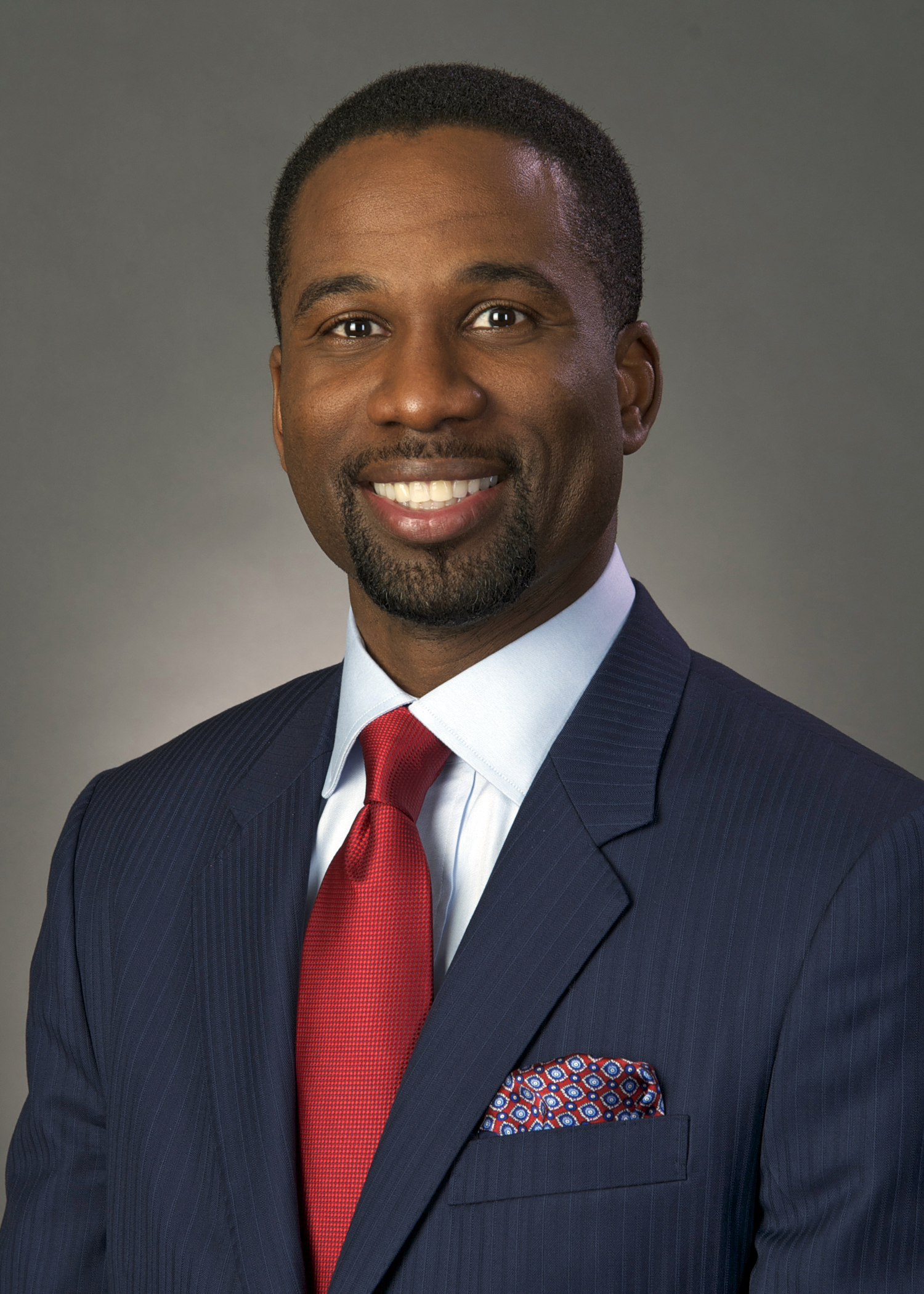 Shundrawn A. Thomas serves as executive vice president, head of funds and managed accounts group. He principally oversees the development, management and distribution of Northern Funds, Northern Institutional Funds and FlexShares Exchange Traded Funds as well as related business activities. He also oversees the managed accounts practice which provides investment advisory solutions to existing clients and financial intermediaries. His broad executive responsibilities involve developing long-term strategy, executing operating plans, managing client and vendor relationships and developing and retaining talented professionals.
Shundrawn received a B.S. degree in accounting from Florida A&M University and an MBA degree from the University of Chicago Booth School of Business.
Shundrawn’s annual president’s perspective on the ETF industry was just released. This year’s focus is on what he has identified as three key drivers -- regulation, institutional investors and efficiency – behind asset growth.
I spoke with Shundrawn on February 17.
I’ve read your report on the state of the ETF industry, and it documents the explosive growth of ETFs, particularly over the last several years. What were the underlying causes of that growth, and do you expect those causes to persist?
ETFs in recent years have gotten a fair amount of press, but this rapid growth has persisted for over a decade. It’s happened through various market cycles. There are three principal drivers of this growth.
The first is well-chronicled – a secular shift from actively managed strategies to so-called passive strategies, and more specifically, passive index-based strategies. You hear some people questioning whether it’s cyclical, but it’s clearly a secular shift. It’s largely driven by investor preferences for three things: more simplicity, more transparency and more cost efficiency.
The second driver that has pushed the growth in ETFs for more than the last decade is advisor adoption and utilization. In the late 1990s, there was the talk about the shift to the self-directed investor. In many respects, in the last decade we’ve actually seen a reversal on that. It’s not that you don’t have self-directed investors, but the trend we’ve seen is more interest in discretionary investment or advice mandates. Some of that has come through offerings such as target-date and target-risk products that are giving people all-in-one solutions. But, people are moving more towards advisors, and those advisors, for a variety of reasons, have very much embraced and adopted ETFs.
The last driver of the three-legged stool of this growth is the strategic use of ETF by institutions. You’re seeing that institutions have embraced the use of ETFs, and they’re using them in more strategic ways.
You’ve identified four phases of growth in the evolution of the ETF market. Can you discuss those and what you expect the next phase to be?
When I look at four distinctive phases, the fourth is what I’m pointing to as an emerging one, and I’ll get to that because that speaks to the question of what is the next stage and where we’re going.
The first, simply put, was a stage exclusively focused on funds that were tracking well-known, broad-based equity benchmark indices, like the S&P 500 or Russell 1000. Early on, institutions were the primary users of ETFs in tactical applications like hedging, cash “equitization” or transition management. Over time that usage migrated to advisors, certainly in the early 2000s. At the time, most of the strategies were largely those equity benchmark indices; what people call beta or traditional-beta strategies.
The second stage of innovation was distinguished by a move towards other asset classes. You saw interest in commodities and real estate. You saw the first instances of fixed-income strategies between 2004 and 2006. Advisors had a lot to do with that because as they started to use the equity-index ETFs, they were looking to build out more portfolio exposures. They needed access to these classes, and that democratized the use of ETFs.
The third leg of innovation, which we’re still in – and these overlap – is a move towards more sophisticated investment strategies. You see more alternative-weighted index schemes. ETFs are still predominantly index schemes, whether the nomenclature is factor-based or smart-beta. If you look at our FlexShares offering, we would be considered a leader in the alternatively weighted index strategies; it’s 23 of our 25 funds. But that characterizes a lot of the discussion today in terms of where innovation has happened.
The fourth stage is characterized by two things. We have a budding interest in actively managed ETFs. That’s been slow. The first active managed ETFs were launched in 2008. Even today you don’t see a lot of assets there on a relative basis, only about $30 billion. But part of what’s held that back is the need for movement on the regulatory side. There’s a big desire for people to have non-transparent ETFs. As that progresses, you’ll see more interest in certain actively managed strategies; already some spaces like short-duration fixed income have grown. The fourth phase will also be driven by a move towards multi-asset class solutions. People already use ETFs in model portfolios. In fact, I’ve seen different reports that suggest that if you look at a multi-asset class solution of any sort, 51% out of every dollar is being allocated to an ETF. The difference you’ll see is not just people managing multi-asset class solutions using ETFs, but products being launched that will in effect be ETFs of ETFs. They may even be other structures like a collective trust or a mutual fund, but only allocating to ETFs.
You’ve noted that approximately 90% of fund flows have gone to the three largest ETF providers, and you’ve also documented the fee compression in ETF expense ratios. This sounds like an industry that’s rapidly consolidating, heading towards commoditization and domination by a few large firms. Is that consistent with your view?
It’s different from my view. When we speak about that 90% of funds flows to top three, that’s happened in the last year. This can ebb and flow. If we went back two years, that number would have been two-thirds. That’s a big difference in different time periods.
While we’ve seen several acquisitions, the current facts don’t support rapid industry consolidation. For example, we saw a net increase of 40 new sponsors enter the ETF market in the U.S. in the past two years. At the end of last year there were 104 sponsors, versus 64 just two years prior. Clearly, we’re having lots of new entrants. It’s fair to suggest we have moved from the early developmental stage of an industry where people say, “If you build it, they will come.” The industry is moving to a more established growth phase and that absolutely means that you’re going to see more competition and more shakeout in the form of consolidations and even exits. But we’re still seeing net growth in terms of new sponsors entering.
We still have a lot of established asset management players on the sidelines that I expect to enter the ETF market. You’re going to see, like in other parts of asset management, some large players that will have considerable market share. That’s no different than what we see in mutual funds, hedge funds, or any other part of the business. But what you also see is players that have a focused strategy, an attractive value proposition and intellectual capital. They will get to the requisite scale, and they will carve out nice niches for themselves.
What future do you see for smaller or niche-type ETF providers?
That ties to your previous question. If you’re a player that, by virtue of your strategy, is not choosing to be a broad-based provider or more of a supermarket where you’re providing strategies across a wide spectrum, the key is going to be focus. Niche players will need strong brands and strong resonance.
You could have – and you’re seeing this today – large, established asset managers who already have strong brand in asset management, deciding to push into ETFs. To the extent they have a focused plan that resonates with their brand, and they’re able to bring their unique expertise, they will do well. On some level these are some of the things that have helped us at Northern Trust, as we built out our FlexShares offering. Over the last five years, among new entrants we’ve been the fastest growing sponsor based on assets. Some of the big, established players are seeing successes likewise. But it certainly helps that we have a strong, established overall brand and a focused strategy at Northern Trust. We’re focused in alternatively weighted index strategies.
Innovation, education, and thought leadership will be keys to success if you’re going to be a niche player.
Lack of liquidity in certain asset classes, such as corporate or municipal bonds, is one of the concerns frequently cited about ETFs, particularly those targeting less liquid asset classes. Should advisors be concerned with ETFs that offer intraday liquidity for asset classes that trade infrequently?
I would reframe your question. Advisors, by the virtue of what they do, often invest in asset classes that have low relative liquidity, such as those you cited in your question. It’s part of trying to build the best portfolios for their clients. Some of these asset classes offer an illiquidity premium, for example private equity.
The real issues regarding intraday liquidity are threefold. Certain opportunities, have to be captured over the long term. We are a strong advocate of long-term oriented investing, and we’re not an advocate of trying to time the market and/or time cycles with certain investment strategies.
The second aspect is determining the best vehicle for getting exposure to a certain asset class. You certainly have seen the rhetoric and even some of the regulatory concerns about some types of asset class exposures being in ETFs. That’s a legitimate question that you have to ask given the exposure you have. But all types of investments or asset classes may not comport themselves well to being in an exchange-traded vehicle.
Product design matters. If you have a well-designed product, and it’s designed, for instance, with a rules-based strategy like an index, you can actually build in certain protections that make sure you’re not overly exposed to illiquid securities or that you don’t have high concentrations in areas that you don’t want. A lot of people incorrectly assume that all ETFs of a similar type, are created equal. But all of them are not created equal. When you have a well-constructed, well-thought out investment strategy and a well-constructed product, that’s going to put you in a much better position when you’re affected by the relative liquidity of the underlying asset class.
The DOL fiduciary rule, if implemented, will place a greater burden on advisors to justify their selection of actively managed funds, and that clearly includes active ETFs and it may extend to smart-beta strategies. How will the ETF industry respond?
One thing that’s interesting is where ETFs are positioned vis-à-vis other parts of the industry. My responsibilities include overseeing our mutual fund business. With respect to actively managed ETFs, you’re talking about roughly 170 funds and $30 billion in assets. It’s a relatively small portion of the overall ETF industry. In the U.S., it is around 1%.
It puts the ETF industry, in many respects, in a better position to pivot when changes come down the pipeline, as we see the establishment of this rule. You’ll see that advisors are not just focused on low cost. That’s certainly a concern relative to the DOL rule, but it’s also about simplicity and efficiency. As sponsors roll out products, including actively managed products, they’re going to have to work to make sure they’re developing an investment strategy that is as simple and is accessible as it can be. They’re going to have to ramp up your education around products, because if there is a lack of understanding or concerns around a product, particularly when you overlay the regulatory concerns, that’s going to render that product less likely to be used. You have to be effective at doing that with respect to the total cost of ownership of that product.
The last thing presents more of an opportunity than a challenge. On a relative basis, ETFs, both the index products and the smart beta-type strategies, as well as some of the things that people are doing from an active standpoint, might be positioned well for the rule and its implementation.
Another trend that you’ve documented is the growth in multi-asset class solutions offered through ETFs. What do those ETFs look like and what are the implications for financial advisors?
When we think about multi-asset class solutions, what you principally see is a managed portfolio, such as an advisor who is doing the asset allocation. They may have a separate account that they’ve set up for the investor, and they are selecting the underlying components, and some of these are ETFs. In some cases, they’re fully ETFs. You also have firms that might be referred to as ETF strategists that are actually putting together models or portfolios of only ETFs that they sell to advisors.
What you’re seeing emerging is asset management firms delivering products that contain ETFs in multiple asset classes. They may have embedded a rules-based approach to how they allocate to those different ETFs. In the future what you will also see are actively managed products that are allocating to ETFs.
That’s the likely trend, and it could even mix both active and passive components. That’s where the market is moving towards, in part because it’s going to be more efficient for advisors, especially in being able to give a cost-effective, comprehensive solution to smaller clients.
Morningstar recently changed its methodology to consolidate mutual funds and ETFs into a common peer group. What impact will this have on the ETF industry, and what are the implications for advisors of that move?
It’s early to suggest what the impact will be. Advisors will increasingly value tools that enable them to assess both investment merit and efficiency of products that they use, which are arguably substitutes from an economic standpoint. You could look for a certain exposure that you might want in a portfolio you’re building, and you have options on the mutual fund side and the ETF side.
It is inefficient for the advisor to say, “I have one methodology for how I’m assessing mutual funds and an altogether different one for ETFs, but I’m putting them in the same portfolio.” I see some resonance with that. But the devil is always in the details. It’s early for this to have significant effect. You would have to see widespread adoption, and there will naturally be things that will have to be tweaked or sorted out to make it most effective to look across these complimentary type of vehicles.
FlexShares is among those that have introduced active ETFs, as you discussed earlier. Do you fear that active ETFs are at a disadvantage to actively managed mutual funds because those funds have to disclose their holdings only quarterly?
It depends on your approach. At FlexShares we promote certain values that we have, and one of those values is around transparency; we embrace that. We have a focus on index strategies, specifically alternatively weighted index strategies and select active products. We have two active products. One is a short-duration product which is a strategic cash alternative. We’ve just introduced an actively managed fixed-income product that allocates only to ETFs.
We’re fine with those being transparent. We don’t have the onset of nontransparent ETFs. We don’t feel we are disadvantaged by being transparent. Certainly there are others in the actively managed space who are interested in launching ETFs, and by virtue of how they approach the business and the nature of their strategies, they would want to have non-transparent strategies which they view not only a value-add, but in some places a necessity. We are not of that camp with respect to the strategies that we’ve introduced.
What are some of the other key innovations that FlexShares offers that advisors should note, and what do you consider most responsible for your 55% growth in assets last year, the second highest rate among the top 20 ETF sponsors in the U.S.?
We view ourselves as sitting on the same side of the table of an investor and advisor. Some of that has to do with our fiduciary heritage. Northern Trust has 127 years of managing assets and wealth for individuals and institutions. That fiduciary heritage is part of who we are. We bring it to everything that we do. We come at innovation from the standpoint of asking not, “What is the most attractive product opportunity in the near term?” That is what we sometimes refer to as the “hot dot.” We ask, “What do investors need to achieve?”
Our tagline is, “We’re investors.” Our products are built by investors for investors. That resonates with our target clients and a lot of advisors broadly. The deliberative approach that we take to everything we do, including our product management, is an empirically driven approach. It resonates with individuals.
When we think about innovation, we’re not just thinking from the standpoint of the products; we think about being thoughtful and innovative from the standpoint of our insights and from the standpoint of the support that we provide to advisors to help them in their practices. Whether it’s our president’s perspectives or the thought leadership pieces that we do, we’re trying to think about how can we better serve advisors and provide them with insights to help them manage their businesses.
We do customized in-market programs where we bring advisors together. It’s not just about products. Much of it is in things like portfolio construction, digital investment advisory tools or robo advisory. There is a wealth of topics and education where we bring our thought leaders, subject-matter experts, and even experts outside of our organization to bear because that is the value proposition that we’re providing to support an investor-centric approach. When you wrap all that together with the expertise that we have in the investment business, that’s what’s resonating with investors and why we’ve been able to achieve such significant success in our first five years.
Membership required
Membership is now required to use this feature. To learn more:
View Membership BenefitsSponsored Content
Upcoming Virtual Events View All