|
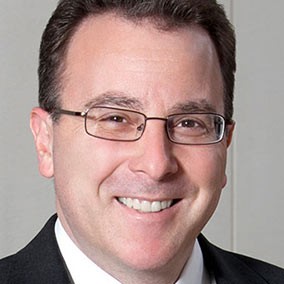
| Andrew Susser |
Andrew Susser is an Executive Managing Director and Head of the High-Yield Team at MacKay Shields. Prior to joining MacKay Shields in 2006, he was a portfolio manager with GoldenTree Asset Management and Head of High Yield Bond Research at Banc of America Securities. From 1999 to 2004, Andrew was named to the Institutional Investor All-America Fixed Income Research Team; from 2002 to 2004, he was ranked by Institutional Investor as the No. 1 analyst in the high yield gaming sector.
Susser manages the MainStay High Yield Corporate Bond Fund (MHCAX). Over the last 15 years, the fund has ranked in the 12th percentile of its Morningstar peer group. Over that period, its annualized return was 8.45%, 395 basis points ahead of the Bloomberg Barclays US Aggregate Bond total-return index and 95 basis points greater than its peer group average.
I spoke with Andrew on June 28.
Please discuss the mandate of the MainStay High Yield Corporate Bond Fund (MHCAX), as well as your portfolio-construction and risk-management processes.
The High Yield Group at MacKay Shields has been around since 1991 and currently has about $23 billion in assets under management, of which the Mainstay High Yield Corporate Bond Fund is about $10 billion. It is mandated to have at least 80% invested in high-yield bonds, which are bonds that are rated below investment grade by the independent rating agencies.
We have a simple and straightforward investment philosophy that has remained consistent since our group’s inception in 1991. We are bottom-up investors with a value orientation and a long-term perspective.
Because of the asymmetric reward and risk profiles, investing in high-yield bonds requires special attention to downside protection. Our investment process focuses on asset coverage, which we define as the value of a company compared to the amount of its debt it has. It is a similar concept as loan-to-value. We look for additional cushion, or “margin-of-safety” through that asset coverage.
We narrow the high-yield universe using our investment process into a focused list. From there, we assess relative value through our system of risk groups. Every bond in our portfolio is grouped into different risk buckets, each of which has an assumed long-term default rate. Group-one credits are our highest quality bonds which are least likely to default. We think of group-two credits as our typical high-yield bond. Group-three high-yield bonds are higher on the risk scale, and they are the most research intensive bonds, often trading at a discount to par. They still have one-and-a-half times asset coverage, of course. Last, we have a group four for special situations, which are typically a small part of the portfolio.
We compare the spreads of credits both within an individual risk bucket and also between risk buckets to determine whether or not we are getting paid appropriately for the risk. For example, the spread of a group-two bond would have to be sufficiently wider than a group-one bond to represent the better relative value to us, in order to compensate for the higher long-term default rate.
What are the trends in high-yield issuance and how have they changed over the course of your career?
The market has changed quite a lot. In the late 1990s, there was an increase telecom and technology company issuance. When the telecom bubble burst, a lot of companies defaulted and the high-yield market traded much wider. When we were hit with a recession in 2002, telecom and technology companies were over one-third of the index.
The US high yield market has experienced strong growth in recent years – it is about $1.6 trillion today, compared to about $950 billion at the end of 2008. It has also matured, and today’s high-yield market is very different than the one from less than a decade ago.
First, the overall quality of high-yield bonds has significantly improved. Larger companies with stronger credit profiles have become the most active issuers of high-yield bonds. Leveraged buyout, or LBO firms, used to be much bigger players in the high-yield market. During the credit bubble era, approximately one quarter of all new issuance was associated with LBOs. Those deals now account for only 5% of all new issuance.
The highly leveraged, often opaque, LBOs have been displaced by higher quality issuers, many of which are publicly traded companies. This trend has accelerated in recent years. Over half of the new issuance in the last two years has been rated BB or higher by the independent credit agencies, compared to a long-term average of about 40%.
High-yield capital structures are also often simpler today. Back then, many capital structures had both a secured term loan and a high-yield bond. Today, companies tend to either borrow in the bank loan market or the high-yield bond market; only about a quarter of new issues in high-yield bonds also have a term loan.
There are some undesirable trends. Bonds are coming to market with weaker covenants and call protection, which is not unusual in a strong market. In addition, an increase number of bonds are issued by 144A for life (a form of private placement).
Your largest holdings include Crown Castle International Corporation, Virgin Media Secured Finance PLC and Micron Technology Inc. Can you discuss why those bonds are attractive and how they fit within the guidelines of your portfolio construction process?
These credits all fit our investment process extremely well. We have a pretty simple investment philosophy based on the asymmetric reward and risk of a high-yield bond. We pay a lot of attention to downside protection by looking for an additional cushion, or “margin-of-safety” through asset coverage. We define the value of the company compared to the amount of debt it has.
For example, if we think a company is worth $10 billion and its debt is $5 billion, we would say the asset coverage is two-times. For us to consider investing in a high-yield bond, we need to have at least one-and-a-half-times asset coverage. Our investment process imposes this discipline.
Crown Castle is a very large tower company in which it owns the cell towers and leases out the space. It is pure free-cash flow. We bought the bond when it was high yield. It has now moved up to investment grade and remains in the portfolio because the yield is attractive while also serving as a liquidity buffer because it is relatively easy to sell if needed. Virgin Media is a large cable company and Micron Technology is a large technology company. Both of those bonds are first-lien notes and have significant asset coverage.
Where are high-yield spreads to “equivalent” Treasury bonds and how does that compare to historical values? What do you consider to be an equivalent Treasury benchmark, given that high-yield bonds are more volatile than equivalent-maturity Treasury bonds?
The high-yield market’s duration is approximately four years, so the five-year U.S. Treasury bond provides a reasonable point of comparison. Spreads in the high-yield market right now are about 390 basis points over Treasury bonds, which is about 125 basis points below its historical median. However, spreads are not at extreme levels and the market is not exuberant in the sense that there is an enormous amount of cash chasing bonds. There is discipline in the market.
We believe the level of spreads is consistent with periods of stable U.S. economic conditions. Because high-yield bonds are a combination of equities and fixed income, spreads have narrowed as the equity market hits all-time highs and as longer-term interest rates remain low. Importantly, volatility has been very low. High-yield spreads are correlated with volatility in both the equity and Treasury markets – low volatility has driven spreads tighter.
In regards to our high-yield strategy, we are not indexers. Portfolio construction is all about individual credit selection, an intense focus on downside protection and understanding the companies in which we are investing.
Your cash position, based on the most recent Morningstar data, was 5%. How does that relate to historical levels and what does that say about the prices and opportunities you see now in the market?
We don’t move the cash up and down based on our view of the market; we generally keep about 4% to 5% in cash and cash equivalents. We also have a certain amount of the portfolio that we know has been tendered or is going to get redeemed as well as investment-grade bonds, which have much better liquidity.
Perhaps the biggest risk factor in high yield funds is defaults. At a Grant’s Conference presentation last fall, Martin Fridson showed that defaults have happened in waves and that the last such wave was during the financial crisis, when the default rate was 17% over a two-year period (2007-2008). Do you agree with Fridson? What is your forecast for the economic conditions that could lead to a recession and another wave of defaults?
We agree that the default cycle is closely linked to the business cycle, credit availability, and the quality of issuance preceding the default wave. We believe most markets work in those cycles.
As bottom-up investors, we look at the individual companies as opposed to forecasting economic conditions. In general, credit profiles remain stable. If you look at the quality of issuance going into the high-yield market since 2013, 55% of it has been BB compared to a long-term average of about 40%. The market has not shown the exuberance that you will often find before a wave of defaults.
One of the themes in Fridson’s presentation was that the high-yield sector was still sensitive to the price of oil and to the health of the energy sector. What is your exposure to oil and energy and how do you view the associated risks?
We are currently underweight the energy sector in our clients’ portfolios.
Energy is about 15% of the high-yield market. Of that, about 10% are the more risky energy companies; the exploration and production companies and the oilfield-service companies.
On one hand, the quality of the energy sector is better than it was a couple of years ago. Weaker issuers have defaulted, replaced with larger “fallen angels.” Companies have also improved their balance sheets by issuing equity, selling assets, and reducing capital expenditures.
On the other hand, a prolonged period of lower oil prices could be a risk. Although the credit quality within the energy sector has improved, this is largely reflected in current valuations, which seem to be discounting higher energy prices. The energy sector currently trades at spreads comparable to when WTI was $90, even though WTI oil now hovers around $45.
Lastly, Fridson provided data showing that the recovery rate on defaulted high-yield bonds has not been declining in a secular fashion. Do you agree with him and how should investors view recovery rates in the context of your fund’s holdings?
In general, it is difficult to tell what exactly the recovery rate is because it depends on the exact point in time one is looking at it. It is difficult to draw the conclusion about any secular trend; it really depends on the types of companies and their capital structures. Most of the recent defaults have been in the energy and metals/mining sectors.
In terms of our portfolio, we have an intense focus on asset coverage. Our recovery rates tend to be higher than average. We focus a lot on capital structure, so we have more secured bonds in the portfolio than in the index and favor bonds with little to no bank debt ahead in the capital structure.
Importantly, it is also a matter of understanding management teams, their incentives, and what covenant protections you have. Given our long-term outlook, we see ourselves as lenders to the companies we lend to on behalf of our clients. Because of that, we are more likely to be involved in companies that have a longer-term enduring asset value even through a default, if one were to happen.
What is your exposure to the retail sector, given all the changes that are going on there?
Retail is not a large part of the high-yield index. It is only about 5% of the high-yield market. We are underweight, and our positions include companies like Yum! Brands and several auto dealership companies which are less exposed to losing demand to internet-based companies. The investment-grade area does have some large department stores and retail mall companies. The leveraged loan market has a fair number of LBOs – highly risky retail companies. Although there are some risky credits in the sector, we do not believe the sector is big enough to really move the needle in high yield right now.
What is the key differentiator between your fund and other comparable high yield funds?
Our key differentiators are our disciplined investment process that is focused on “margin-of-safety” in asset coverage and our stable, experienced investment team and the flexibility that it brings. The eight senior team members work closely with one another and have an average of 25 years of investment experience with deep knowledge of their sectors. The flexibility is important in the sense that we are not tied to making decisions based on what’s in the index. We are making decisions based on our investment process and the companies in which we individually invest.
The focus on “margin-of-safety” has really served us well in the recent selloff in 2015 and subsequent recovery in 2016. In 2014, when spreads were tighter and the majority of issuance was from the energy sector, we focused on the long-term value of the energy in the ground. That kept us away from a lot of bonds that did not have sufficient asset coverage to be included in our clients’ portfolio. Alternatively, we were able to shift into some higher yielding situations in late 2015 and early 2016 after looking at the long-term value of these companies compared to where the bonds were trading at the lows of the market, which set up the portfolio to perform well in the subsequent recovery.
Read more articles by Robert Huebscher