The Osterweis Total Return Fund (OSTRX) seeks to preserve capital and attain long-term total returns through a combination of current income and moderate capital appreciation. The fund invests primarily in investment-grade securities and employs tactical shifts in sector allocation, interest rate/yield curve risk and credit quality, attempting to capture return across credit, interest rate and volatility cycles. Its inception date was 12/30/16 and it is managed by lead manager Eddy Vataru.
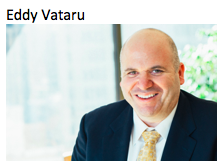
Eddy Vataru is a Vice President and Portfolio Manager at Osterweis. He graduated from California Institute of Technology (B.S. Chemistry & Economics) and from Olin Business School at Washington University in St. Louis (M.B.A.). Prior to joining Osterweis Capital Management in 2016, he worked in senior management positions at Incapture, LLC and Citadel, LLC. Prior to that he spent over 11 years at BlackRock (formerly, Barclays Global Investors), where his last position was as managing director and head of U.S. rates and mortgages. Mr. Vataru is the Lead Portfolio Manager for the Osterweis Total Return Fund.
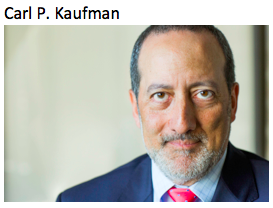
Carl P. Kaufman is co-President, co-CEO and Managing Director, Fixed Income at Osterweis. He graduated from Harvard University (B.A. in Music, cum laude) and attended the New York University Graduate School of Business Administration. Prior to joining Osterweis Capital Management in 2002, Mr. Kaufman was a senior member of the convertible bond team at Robertson Stephens, where he focused on technology and biotech securities. In his role as Managing Director, Fixed Income, Mr. Kaufman oversees the Osterweis Fixed Income team.
I spoke with Eddy and Carl on December 12, 2017.
Why would anyone launch a dedicated, investment grade strategy at the beginning of 2017 with rates at historic lows and the Federal Reserve in the process of trying to normalize interest rates?
Carl: At Osterweis, we have only launched new strategies when we feel they are solving a problem or where our non-traditional, benchmark-agnostic philosophy and expertise can benefit our clients. As a firm we had been thinking for some time that a dedicated absolute-return focused investment grade strategy would benefit our high-net worth clients. In this new strategy we wanted to use the same benchmark-agnostic approach as we do in the Osterweis Strategic Income Fund —the key is to have a flexible approach that can allow for absolute returns while mitigating downside risk. We deliberately designed the Total Return Fund to have access to a toolset to help manage exposures such as duration and interest rate risk, which could provide the Total Return Fund with the opportunity to potentially generate positive returns in all interest rate environments.
Eddy, tell me about your background and how you ended up at Osterweis.
Eddy: I spent the first 11 years of my career at Barclays Global Investors (BGI), which eventually merged with BlackRock. Throughout that time, I had the opportunity to work on a variety of strategies – and saw the fixed income group’s transformation from a strictly indexed business to one that developed flourishing active and hedge fund platforms. It was an interesting time.
At BGI I eventually became the head of mortgages and rates. This gave me a front-row seat to what happened in 2008 and as part of that experience I learned some important lessons. For most of my career at BGI I was primarily focused on agency mortgages, which is a hybrid asset class that requires an understanding of both macro factors that impact housing as well as the likely progression of rates and volatility.
I think that the perspective I gained during the Financial Crisis will help us manage through the upcoming Fed balance sheet reduction and interest rate hikes where there should be some interesting opportunities in both mortgages and rates.
What is the investment goal of the Total Return Fund, whether it is absolute, relative, or risk-adjusted returns? Which sectors of the fixed income market are candidates for investment?
Eddy: That’s a great question. As you know the mutual fund market has a lot of funds that are named “total return.” But when you look at the returns of some of these funds, they tend to be very highly correlated with the Bloomberg Barclays Aggregate Index (the BC Agg). In my mind, “total return” is synonymous with absolute return. It means you should be able to deliver a high-quality positive return, which some call risk-adjusted return, through all market environments, whether rates are rising or falling. At Osterweis we are also very focused on trying to manage downside risk. I have had experience with this type of approach during my time at BGI as well as at Citadel, where I ran hedge fund assets that were rate-agnostic.
In terms of sectors that are eligible for investment, it’s the entire investment-grade universe, which includes Treasury bonds, agencies, mortgages, corporates and investment-grade rated securitized products like CMBS and ABS. I would consider the trinity of the investment-grade market to be Treasury bonds, mortgages and corporates. These three sectors comprise the lion’s share of the investment-grade universe and are where I believe the sector-rotation opportunities arise.
Many people think that the investment-grade market is somewhat uniform. Do you agree with that assessment?
Eddy: I don’t. It’s easy to fall into that trap when you have low volatility and narrowing spreads – basically the environment we’ve had through quantitative easing during the last few years. But events like 2007 and 2008 show that security selection is obviously very important.
What a lot of people may not appreciate in the investment grade market is that there is a relatively low correlation of returns between Treasury bonds, mortgages and corporates. Their returns are all driven by changes in interest rate, but the drivers of each sector are quite different. Treasury bonds are a risk-off, flight-to-quality asset that is directly linked to Federal Reserve policy on the front end of the Treasury curve and macro themes on the longer end.
On the other hand, mortgages are reflective of interest rate volatility and prepayment expectations. The factors that drive those include interest rate changes, but also they can be driven by a variety of policy measures, such as changing lending standards and limits that may have little to do with the overall economy, or with the flight-to-quality flows that you see into the Treasury market.
Finally, looking at corporates, in and of themselves they might seem uniform in low-volatility environments where everything performs well. But I expect you will see some pretty significant dispersion among corporate credits, in both high-yield and investment-grade, as we progress through this tightening cycle.
How do you determine how you allocate assets between the various investment-grade sectors?
Eddy: Because we are focused on generating absolute returns, we are always looking for the most attractive risk/reward trade off at any given point in time. This requires an understanding the drivers of value in each of the sectors.
Corporates are broadly driven by investor sentiment and the business cycle. As such, they track the equity market more closely than the other parts of the fixed-income market.
Treasury bonds are largely reflective of government and Federal Reserve policy.
Mortgages are in the middle. They are a government-quality asset, but have volatility and prepayment risks associated with them, for which investors are compensated with higher yields than Treasuries. You can think of a mortgage bond as an amortizing government bond where the investor is also short a call option to the borrower, who can choose to refinance at any time rates decline. Understanding and properly evaluating this option uncovers opportunity in mortgages – sometimes limited to specific types of borrowers (stratified by geography, loan balance or credit), and sometimes more broadly as an asset class if interest rate volatility itself is mispriced.
In terms of positioning the fund, we look at opportunities by understanding Fed policy, where we are in the economic cycle and how corporates should perform in that context. Then we look at how volatility drives the path of rates, and where value might be in mortgages.
There are some pretty substantial performance dislocations among these sectors. Corporates have had a tremendous run over the last two years, while mortgages have had a relatively muted performance, and Treasury bonds have gone to and fro with investor sentiment in this risk-on-off environment. There is significant liquidity in investment-grade bonds that affords us the opportunity to rotate between sectors.
What is your approach to managing risk?
Eddy: The primary driver of bond returns, at least in investment-grade, is usually duration – that is, interest rate sensitivity. Curve risk is also particularly topical now given the dramatic shift you are seeing in the Treasury yield curve, resulting from Fed tightening. We’ve had a pretty substantial flattening, with short term Treasuries rising in yield while Treasuries with longer maturities are essentially unchanged. This is normal for this part of the economic cycle, and there is a consensus that the yield curve will continue to flatten – although not in a linear fashion.
The way we try to protect our portfolio in this environment is through the employment of interest rate futures. Interest rate futures allow us to tactically add and remove interest rate exposures that our core portfolio might have to the various maturities on the yield curve. In this particular environment, we think it’s very important to be able to do that. We want to protect our portfolio against rising rates.
What are your anticipated sources of alpha? Will they come from security selection, curve positioning, interest-rate exposure management or something else?
Eddy: I think it is going to be a combination of all three.
Interest rate exposure management is a key differentiator of our fund and is critical in helping us seek to achieve our total return objective. The BC Agg benchmark currently has a duration of around 6, which is basically at nearly its lifetime high. This is due to a prolonged period of low interest rates that saw higher issuance in lower coupons and longer maturities, and this presents significant risk as we enter balance sheet runoff and higher Federal Funds rates. I am not sure that most investors understand the interest rate risk they are onboarding by taking on benchmark like duration exposures.
Because we don’t want to take on that type of risk, we use futures to help us to achieve a targeted interest rate exposure. This also has the benefit of reducing the turnover in the portfolio, because to achieve flat or lower durations, we don’t need to sell physical assets. We can lock in a portfolio in which we have high conviction and use futures to try to protect it through the ups and downs of interest rate moves.
Another differentiator will be security selection. Our high-conviction portfolio has corporates, mortgages and some Treasury bonds. Security selection primarily impacts our mortgage and corporate assets, where we exhaustively search for assets that we intend to buy and hold over the long term. However within the Treasury market, we can use traditional Treasuries or inflation-protected Treasury securities (TIPS). TIPS provide the opportunity to maintain a fixed income exposure that should perform better than nominal bonds in a higher inflation environment.
You like mortgage-backed securities as an investment. As of September 30th, 2017 you had over 50% of the fund invested in mortgages. What makes this area of the market compelling?
Eddy: I would say there are three reasons. First, there is the current opportunity set that favors mortgages. When you look at the investment spectrum, corporates are at multi-year tight spreads. Mortgage spreads are at the tighter end of their multi-year range but certainly not at unsustainable levels they haven’t seen before. Treasury bonds are going to be vulnerable too as the Fed reduces its balance sheet and moves toward a higher Fed Funds rate. So mortgages afford a relatively nice area to earn some incremental yield while avoiding direct exposure to parts of the yield curve that should deliver negative performance. Prepayments are going to subside with the rise in rates that we are seeing, and thus mortgage supply should also abate as rates rise. Properly hedged, mortgages afford a strong carry profile that should allow us to deliver a compelling coupon return to our investors.
Second, the mortgage universe, as expressed by the index, is filled with pools of loans that are guaranteed by Fannie Mae, Freddie Mac or Ginnie Mae. There is negligible risk that any of these assets will lose their credit status, as Ginnie Maes are backed by the full faith and credit of the United States Treasury while Fannie Mae and Freddie Mac are in conservatorship whose implicit guarantee became de facto explicit in the financial crisis. As a consequence, I don’t have to worry about the credit quality of that component of the portfolio.
Finally, just as an asset class by itself, in mortgages there is an underappreciated opportunity in the variety and the customizability of the mortgage assets. There is a very large collateralized mortgage obligation (CMO) market in which mortgage pools are further carved up into customized cash flows that fit various investor types at various times. Some investors, like banks, are required to own very short duration assets, while insurance companies prefer long-duration assets that have higher yields. The segregation in that market creates opportunity for investors who can look between the cracks. A lot of securities are created out of the government guaranteed pass-through securities that have more customized or explicit exposures to a prepayment expectation or to a specific interest rate change, or even more interestingly, to the combination of the two. You might be able to purchase a security that embeds an exposure to both an interest rate move that you believe is highly probable as well as a prepayment profile that might match that particular move. You can amplify your returns through buying securities that have these customized exposures.
Putting this into practice as an investor, I know there is a strong linkage between prepayments and the level of interest rates. While it is difficult to predict the absolute level of interest rates going forward, you can at least predict the prepayment exposure of your assets based on the level of rates. Higher rates almost always equal lower prepayments, and lower rates (with the notable and predictable exception of 2008 and 2009) mean higher prepayments. It allows you to combine these views into investments that have targeted exposures that may deliver compelling returns versus a more vanilla type of investment.
Given your background, you must have some thoughts on the active versus passive debate. Can you provide your perspective on this topic?
Eddy: I started my career entirely in the passive context managing extremely large index funds. I moved into active and then hedge fund investing before my move to Osterweis. I’ve seen a definite shift from passive to active and then from active back to passive. It’s pretty easy to explain why. When you have an environment like quantitative easing – the rising tide that lifts all boats – it becomes more difficult to beat a benchmark. The investment-grade market appeared to be quite uniform when we were in a regime of quantitative easing and low interest rates. Spreads narrowed and everything performed well. That environment favored passive investing and indexed funds delivered fairly solid performance.
In my mind, there are at least two reasons why you cannot just rely on passive investing, at least in fixed income. Quantitative easing is over. We are moving into a period of quantitative tightening and the Fed is hiking rates. You also have a benchmark that is near its peak in duration. It sounds like a recipe for flat or negative returns for the index for at least the next couple of years. That is not an environment where you want to be passive.
Second, you should see more dispersion among assets. Within corporates you are likely to see more winners and losers. Within mortgages I think you are going to see differing performance among various types of mortgage pools and between lower and higher coupons. As the Fed unwinds its balance sheet, you should see more of these assets in our tradable float, certainly in Treasury and mortgage securities. While it might seem that owning mortgages during the unwind of the balance sheet is a bad idea, the mortgage spread more than compensates for any widening that I currently forecast over the next 3-5 years. The unwind is also going to create more opportunities that active investors can potentially take advantage of.
For us, the caveat is it’s not just active investing in terms of security selection, it’s also effectively managing interest rate exposure. We believe the combination of careful security selection with the ability to hedge our interest rate exposure and bring our duration down in a very targeted fashion – and possibly making it negative – offers the ability to deliver a positive return in a rising-rate environment.
Given that we are in a tightening environment, how are you positioning the fund in terms of duration and sector allocation? What is your expectation for rates across the curve over the next year? How does that affect your positioning?
Eddy: I believe that the yield curve is going to flatten almost completely and that inflation is going to approach 3% with a risk of going higher. But that also means that two-, five-, ten- and 30-year rates are going to be starting with a three handle. That’s a pretty significant move higher from where we are.
I think the key differentiator for next year is going to be interest rate management and watching the yield curve evolve as we go further down this tightening path. The duration of the fund currently is about 2.5 versus around 6 for the BC Agg. There are some seasonal factors that have it slightly long right now. But if inflation progresses, as I believe that it will, we will likely spend a decent amount of 2018 with a portfolio that is fully hedged with futures and running at a negative duration.
Right now I like owning TIPS, specifically longer-dated TIPS, 10- and 30-year maturities. Within investment-grade, we are long mortgages and underweight agency debt and Treasuries. We are also slightly underweight in corporates. While corporates have had a great run and may continue to tighten a little bit more, most of the easy money in corporates has been made. That said, we are maintaining some high-conviction holdings in that area.
How do you track inflation?
Eddy: Inflation is really the buzz word right now. There are the common measures that drive market movements – the consumer price index (CPI) and producer price index (PPI). It is also well known that the Fed tends to pay attention to the PCE Deflator.
One underappreciated part of the inflation data spectrum is the new measure by the Federal Reserve Bank of New York. It is something they had written a paper about three years ago, but have only recently started releasing. It’s what they call the Underlying Inflation Gauge (UIG). The interesting thing about this gauge is that it’s more robust than the headline CPI or PPI numbers.
If you look at the UIG over the last 15 or 20 years, it explains the history of the progression of prices that’s much more in tune with my intuition about what’s actually happened over that period. It eliminates some of the variation that specifically comes from energy, and how that impacts CPI. While CPI Core excludes food and energy, I think there are other biases in the methodology by which CPI is calculated that have caused it to appear artificially subdued. I believe the Fed is using the UIG to understand inflation and guide policy, which is why they’ve hiked and pointed to transitory factors that have depressed headline CPI in 2017.
The UIG has actually demonstrated that inflation has been strong and growing throughout the year. It is actually almost 3% now. On top of that, when the CPI was 0% in 2015, this measure was 2% - consistent with my estimate of price inflation at that time. With the exception of the calamity of 2008 and 2009, inflation has been at or north of 2% during the period of recovery, which again is consistent with my own view of what inflation has really been. I also believe that we are currently in the middle of a globally synchronous recovery, which could lead to policy error by failing to stem inflation soon enough – especially in Europe. This has the potential to drive rates higher in the coming years.
How do you expect investors to use your fund in client allocations?
Carl: We designed it to be the core investment-grade position for our clients, and we think advisors should look at using it the same way, because it should provide ballast in a declining return environment for investment-grade, given our ability to hedge. We believe it will be an absolute performer, consistent with the goal of the fund. So far it has been.
Eddy: For advisors who already have core established investment grade positions, I think that our fund is a nice complement to that exposure given our low correlation with the Bloomberg Aggregate Index.
We believe we are also a good fit for investors who are very sensitive to loss of capital. Our drawdowns year-to-date have been less than half of the index. Our maximum drawdown, on a price basis, year-to-date has been about 55 basis points. The index itself has had a maximum drawdown well north of 1.5%, with five separate drawdowns over 80 basis points. At the same time, we’ve been able to beat the benchmark by nearly 2%. If you look at the quality of the return and the minimization of drawdown, that makes it a compelling offering, not only versus other traditional fixed income investments, but as a standalone and primary investment in fixed income.