 On inflation and Fed policy, Jeffrey Gundlach disagreed with comments made by Treasury Secretary Steven Mnuchin and Fed Chairman Jerome Powell. But Gundlach’s views were in line with the consensus on those key issues – inflation will not spike dramatically higher and the Fed will continue with its planned rate hikes.
Gundlach is the founder and chief investment officer of Los Angeles-based DoubleLine Capital, a leading provider of fixed-income mutual funds and ETFs. He spoke to investors via a conference call on March 13. Slides from that presentation are available here. The focus of his presentation was the DoubleLine Total Return Bond Fund (DBLTX).
Mnuchin said rising wages aren’t necessarily inflationary. “Of course they are,” Gundlach said, which prompted him to title his presentation “Inflation is Inflationary.” But he also said he doesn’t see any strong inflationary threats, with one exception.
“Wage increases – coupled with tariffs – would be inflationary,” Gundlach said.
Gundlach also cited a comment by Powell that if inflation rises above 2% to 2.5%, it would make it easier to cut rates.
“That makes no sense,” Gundlach said. Gundlach hypothesized that what Powell meant to say was that increased inflation would give the Fed the flexibility to raise rates, so it could lower them later.
Let’s look at Gundlach’s comments about the economy and the markets.
The key driver of capital allocation
The primary driver of Gundlach’s capital-allocation decisions is the outlook for recession. He said that he and his team look at a dozen or so indicators that predict the likelihood of a recession over the next year or so. None of them are signaling a downturn.
The leading economic indicators (LEIs) are now at six and rising, he said. But they have decreased every time prior to a recession.
“There is no sign of a recession in the next 12 months,” he said, adding that it is almost impossible for the LEIs to turn negative in the next several months, given how slowly they move.
Similarly, the purchasing manager indices (PMIs) tend to go below 50 prior to a recession, he said, but they are rising.
Gundlach said that all four of the indicators of business confidence he follows are at a very high level. Yet all decline prior to recessions.
The “granddaddy” of recession indicators is the high-yield spread to Treasury bonds, Gundlach said. That spread had “massive moves” of about 400 basis points well in anticipation of the last two recessions. Now, he said, high-yield spreads are rising a little bit, but not nearly enough to give a “scare signal.”
“All recession signals are flashing ‘no caution’,” Gundlach said.
The Fed and the deficit
Gundlach’s career has spanned a regime of progressively lower rates and shorter Fed chairpersons. The latter streak ended with Jerome Powell, who is as much as a foot taller than his predecessor, Janet Yellen, who is 5’3”. Gundlach cautioned against inferring that the streak of falling rates would end as a result.
He said that deficits have historically shrunk in non-recessionary periods and risen during recessions. “We are late in the economic cycle,” he said, “and it is unusual that the deficit is expanding.” He said that this is driven by political reasons, and noted that the fact that we are adding stimulus “has never happened before.”
Deficit problems will move to the forefront by the end of this year, he said. The deficit is getting a lot worse and there will be “a lot of bonds supplied to the market,” he said. The supply of bonds was about $650 to $700 billion in 2017, he said. It will be $1.2 to $1.3 trillion in 2018, in addition to quantitative tightening (QT) as the Fed contracts its balance sheet, according to Gundlach. There could be another $600 billion in tightening, he added.
If there is a recession the deficit will get worse, he said, but QT will stop. Either way, investors should expect $2 billion in supply.
”If quantitative easing (QE) was a tailwind for financial assets, then QT must necessarily be a headwind,” he said.
The unique conditions that prevailed in 2017 are over, Gundlach said. The VIX is above 17, he said, which is higher than at any time in 2017. “We have lived the entire last month and a half at VIX levels higher than in 2017,” Gundlach said. As a result, the markets turned in the greatest Sharpe ratio ever in 2017, but he said that has flipped in 2018.
“We’ve gone from an easy to a very tough investing environment,” Gundlach said.
Gundlach predicted that the S&P 500 will have a negative rate-of-return this year. “My conviction is high,” he said, “higher than that the 10-year yield will break to the upside.”
As an aside, Gundlach noted that housing is very unaffordable due to higher rates and higher prices. Prices relative to income are higher than in 2000, he said, when the prior peak occurred.
Fed policy and inflation
The market-based forecast is 37% for four Fed hikes in 2018, and Gundlach said investors are “starting to take seriously” the possibility of quarterly hikes. The bond market is now aligned with the “dot” forecasts of Fed governors, he said.
Gundlach does not expect a dramatic move in inflation, but cited a number of indicators to watch.
The U.S. core CPI is at 1.8% (headline CPI is at 2.2%), but goods have been deflationary while service inflation is at 2.6%, he said. “Inflation is not trending higher,” he said, “and it is going sideways.” Powell said that inflation higher than 2% is okay, but Gundlach said the market would extrapolate further increases to inflation.
Core CPI (lagged by 18 months) correlates closely with real GDP, Gundlach said. If real GDP moves higher, it could signal higher inflation. He presented a similar analysis using the N.Y. Fed underlying inflation guide (with a 16-month lag), which gives the same signal; 2.3% to 2.5% inflation could be a “base case.”
Capacity utilization leads inflation in the U.S. with a 15-month lag, Gundlach said, and also suggests rising inflation.
Elsewhere in the world, Gundlach said that German inflation is “stuck” around 1.5%, which is about 75 basis points higher than bund rates. But that inflation could go higher, he said, because capacity utilization is at 88%. Japanese inflation is at 1.4%. Its producer prices are up 2% to 3% per year, which he said is signaling neither deflation nor inflation. Wages in other G3 countries are rising about 1.5% to 2.5% and are not deflationary, according to Gundlach.
The markets
The bond market, with the exception of floating-rate funds and some unconstrained bond funds, has had negative returns this year across all sectors.
Since early February, when the 10-year yield rose above 2.5%, the bond-stock correlation went from negative to positive, Gundlach said. That last happened in the taper tantrum. That means that bonds were no longer providing their historical diversification value relative to equities.
Stocks, Gundlach said, with their “lofty P/E ratios,” are having a problem. “If the 10-year breaks above 3%, there would be strong correlations, with both stocks and bonds having negative returns,” he said. “If inflation picks up it would also support a higher correlation,” he said, “based on historical data.”
Sales must go up for the S&P 500 to go up, according to Gundlach, given the high level of the price-to-sales ratio. Technology stocks (XLK) are back to their “manic” levels during the 2000 dot-com bubble, according to Gundlach, and financials (XLF) are back to their 2006 levels. “These are not great trade locations for these sectors,” he said, “based strictly on the charts.”
The Shiller CAPE ratio had risen to 33 and is now around 32, he said, versus 18 for the emerging markets. They could converge, he said, which would be very good for emerging-market investors. The emerging markets have been strong performers in the last year, he said, whereas Europe has had negative returns. Since 2010, however, the S&P 500 has been a “massive” outperformer relative to non-U.S. markets, according to Gundlach.
Who will buy our bonds?
Given his forecast that issuance of Treasury bonds will sharply increase over the next year, Gundlach turned to the question of who will buy our bonds.
He called it a “myth” that U.S. bonds are attractive to foreign investors. Once those investors hedge the currency risks, they have negative returns, he said. “It is not true that U.S. long-dated bonds are attractive to foreign investors,” Gundlach said.
The Japanese won’t buy our bonds, he said. They have been net sellers for the last three years. Japanese investors would earn 59 basis points on a currency-hedged investment in U.S. 30-year Treasury bonds, according to Gundlach. That is far less than they would earn on a hedged investment in European sovereign bonds.
A European investor would earn a mere five basis points on a currency-hedged investment in the U.S. 10-year Treasury bond.
Gundlach acknowledged that European banks were forced via regulatory requirements to be buyers of European sovereign bonds, and pointed to this being one driver in the low and even negative rate environment on the continent.
Read more articles by Robert Huebscher
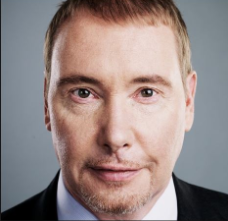 On inflation and Fed policy, Jeffrey Gundlach disagreed with comments made by Treasury Secretary Steven Mnuchin and Fed Chairman Jerome Powell. But Gundlach’s views were in line with the consensus on those key issues – inflation will not spike dramatically higher and the Fed will continue with its planned rate hikes.












