It has been 15 years since sabermetrics, the empirical analysis of baseball, was popularized by Michael Lewis’ bestseller Moneyball: The Art of Winning an Unfair Game, marking the beginning of Major League Baseball’s (MLB) data revolution. Today all teams in the league use it, but only Jeff Luhnow was able to turn a failing franchise into World Series Champions by going all-in on sabermetrics. What did he do differently? He combined quantitative analysis with active management.
With no baseball experience, Luhnow left his job as a McKinsey consultant to work for the St. Louis Cardinals at the beginning of the “Moneyball revolution.” After a couple of championships with the Cardinals, he was named general manager (GM) of the Houston Astros – and he turned that battered franchise into the 2017 World Series champions.
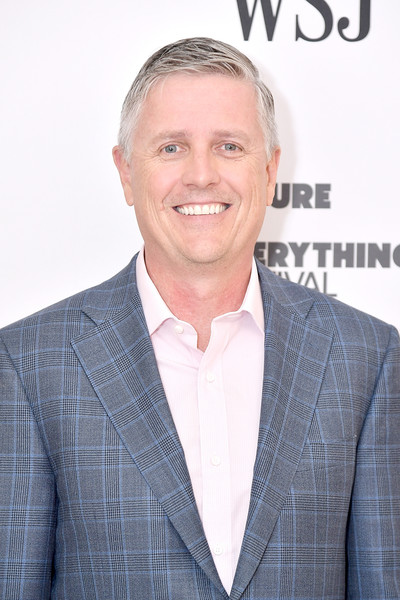
Luhnow spoke at the Wall Street Journal’s Future of Everything Festival on May 8 about how data wins championships.
He was proudly wearing an Astros World Series ring that is covered by so many diamonds it wouldn’t look out of place in a Kardashian lineup. Luhnow explained that it tells the whole story of the team’s turnaround. With 56 diamonds at the top representing the number of years the Astros were in existence until they won their first championship and 11 diamonds representing the team’s postseason wins against – the ring would clearly impede his ability to swing the bat.
I will review how Luhnow successfully rebuilt the Astros using an active management approach to sabermetrics, but first let’s look at how he ended up in baseball.
How did Luhnow end up working in baseball?
“I had three careers before I got into baseball,” Luhnow said. He had a quantitative background, working as an engineer. He went to business school and worked for McKinsey for six years. Then he worked for two high-tech startups as a senior executive.
“At no point did I think I was going to get into baseball,” Luhnow admitted. “But the opportunity came to me in 2003, and I joined the St. Louis Cardinals.”
At the time, the Cardinals had the most World Series victories in the National League, second only to the Yankees. So why did they want to hire Luhnow, who had no experience working in baseball?
Because analytics were changing the game.
Following the release of Moneyball, a data revolution changed MLB. Franchises quickly recognized the need to understand how sabermetrics were being used in the league, and managers were compelled to consider how statistical analysis could improve their team’s performance.
Interested in learning more about what Oakland was doing with Moneyball, the St. Louis Cardinals added Luhnow to their management team. “My task was simply to figure out what the future looked like, and how to help shape the Cardinals to be better prepared for the future,” he said.
Luhnow said he was brought in to figure out where technology and analytics were going, and what other areas would be important to the franchise’s survival. This last point was essential because, like a lot of clubs in the league, the Cardinals are considered a middle-level team. “They are never going to have the revenues and the payroll of the Yankees, Redsox, Cubs, Dodgers, etc.,” he explained. “So you have to find different ways to compete,” he said, “and that was my task.”
Throughout his time in St. Louis, the Cardinals were competitive. With all-stars like Albert Pujols on the cusp of entering their prime, they had a deep and talented roster. “The team, quite frankly, was great,” Luhnow said.
But it wasn’t easy for Luhnow to be inserted into the middle of a very successful baseball organization that had a lot of history.
A lot happened during his first few years dealing with the Cardinals’ senior-level operations management. Luhnow said he quickly realized he couldn’t convince anyone by just showing them data, especially when it did not align with widespread preconceived notions.
When data contradicted what everyone in baseball considered common sense, Luhnow knew he would face resistance from experienced managers who resented being advised on how to do their job by a consultant new to baseball.
“I realized the traditional methods of convincing people – using facts and data like I was used to doing in management consulting, business school and pitching personal computers for my start up – those didn't matter.”
After two World Series championships over his eight-year tenure with the St. Louis Cardinals, Luhnow came to understand the challenges of introducing quantitative analysis to managers and players constructively.
How data won a championship
In December 2011, Luhnow left the Cardinals and became the 12th GM in Houston Astros history, taking over a battered club that hadn't been to the postseason since 2005. He was tasked with turning around the franchise.
The Astros had never won a championship. Their farm system was weak, and they desperately needed a better system for evaluating players. Luhnow addressed this by finding a competitive edge for this mid-market franchise. He found ways to use new data that was becoming available about player performance.
After six seasons under Luhnow's direction, Houston had a team that was competitive and built to last. The Astros went from back-to-back 100-loss seasons to 2017 World Series champions.
While the rise of sabermetrics has prompted many MLB teams to implement data-driven strategies, none have done so as successfully as the Astros under Luhnow’s direction. He distinguished himself and gained a competitive advantage by sticking to long-term quantitative strategies, while simultaneously taking an active approach.
To do this, he adopted a disciplined investment strategy with a long-term outlook.
Luhnow was completely focused on his long-term goal of turning the Astros into champions, and he relied heavily on a methodic, data-driven strategy. He focused on having a winning team in several years, and disregarded short-term underperformance.
He made strategic investments to rebuild the farm system, with the goal of establishing a sustainable system that would generate future talent. He relied on data-driven strategies in the team’s scouting system, and he invested in coaching players during their developing years to change their technique based on statistical insights.
He invested in athletes so, after years of strategic skills development, they could join the competitive team he hoped the Astros would become years later.
But given the franchise’s financial limits, this meant allocating funds away from short-term priorities, like players that would help performance during the Astros rebuilding years. Although he faced a lot of criticism and managed the team through several losing seasons, Luhnow resisted style-drift. He kept assets allocated to long-term investments, avoiding investing in players that would only make marginal improvements in the short term.
The other distinct approach he took was to use active management to compensate for the limits of data.
Luhnow understood that there were inherent challenges when integrating new sources of data. The limits of new metrics were not well understood, so they need to be actively reviewed.
Consider scouting. Statistics can be used to recruit players, but a human element needs to be considered as well. Experienced scouts can recognize player traits, like subtle elements of a player’s technique, that can’t be captured by data. Similarly, coaches and players can offer a unique perspective about a new strategy, providing insights that were not captured in the statistics used to develop it.
Limits of data-driven strategies are also influenced by the dynamics of the team. This is constantly changing, with unpredictable variables like player injuries. Dynamically determining how data should be implemented to effectively improve a team’s outcome requires ongoing effort, and it is most effective when a team communicates constructively to identify important factors for analysis.
Most importantly, sabermetric strategies are most effective when they are implemented through strategic communication. He makes it a priority to have his quantitative analysts spend time on the field with players, and he prefers to hire people who can bat and know software technology such as SQL.
Luhnow said there are many paths to work closely with people and convince them of the value of data.
Connecting with people and discussing situations can allow you to make it their idea, he said.
According to Luhnow, it is most important “not to try to be smarter than the other person, and not to try to reveal that the other person doesn’t have the information.”
Marianne Brunet is a financial markets analyst at Advisor Perspectives.
Read more articles by Marianne Brunet
 It has been 15 years since sabermetrics, the empirical analysis of baseball, was popularized by Michael Lewis’ bestseller Moneyball: The Art of Winning an Unfair Game, marking the beginning of Major League Baseball’s (MLB) data revolution. Today all teams in the league use it, but only Jeff Luhnow was able to turn a failing franchise into World Series Champions by going all-in on sabermetrics. What did he do differently? He combined quantitative analysis with active management.