David Littleton is a founding principal of the Vestmark Manager Marketplace (VMM). He formerly served as the chief financial officer of Fortigent, an investment research and technology firm servicing financial advisory practices throughout the United States.
Mr. Littleton worked at Fortigent through a period of sustained growth with multiple capital-raising events, culminating in the sale of Fortigent in 2012 to LPL Investment Holdings, Inc. (NASDAQ: LPLA). He also managed Fortigent’s cutting-edge performance reporting operations for its unified managed account platform.
I interviewed David a couple of weeks ago.
Please describe how VMM works. What was the underlying need in the market to which VMM is responding?
Vestmark Advisory Solutions, Inc. (VAS) is a registered, wholly-owned subsidiary of Vestmark, Inc. VAS was created to provide a set of services that complement Vestmark’s industry-leading software-as-a-service (SaaS) technology. The first service introduced by VAS was the VMM, which is a hub where third-party managers upload their models for use by advisors. This hub addresses a need on the part of many current and prospective SaaS users to have third-party manager content integrated and available with Vestmark’s technology, saving them from having to contract with and manage third-party manager relationships themselves.
VMM also addresses a frustration voiced by third-party managers who otherwise have to log in to multiple Vestmark SaaS installations one-by-one to upload model changes. To solve that problem, VMM offers a single upload to the manager. In addition, models uploaded to VMM can be delivered to platforms outside of Vestmark as well, offering further efficiency gains for managers.
VAS recently added to the VMM offering by launching a model trading service (MTS) that can handle full implementation and rebalancing of the models that third-party managers upload to VMM. This more comprehensive offering addresses the needs of advisors who do not have trading capacity, or who appreciate the benefits of outsourcing that function.
What’s new and important about VMM?
VMM and MTS were built to complement Vestmark’s flagship tech offering. Our approach to the market is different from hub-type services designed as pure profit centers.
For example, we value our relationships with managers as well as advisors and strive to deliver an excellent experience to both. We provide enhanced transparency to managers, including daily reporting of asset levels and accounts utilizing their strategies. We generally allow managers to set their own prices. Our pricing for the service layer that we add is reasonable.
MTS implements models with an eye toward effectuating the manager’s intent. We encourage managers to include notes and guidance when uploading model changes. Our trading team has expertise running Vestmark software, so they can take advantage of sophisticated features designed to generate performance that more closely tracks the manager’s composite performance.
What about for model access and implementation?
Managers are growing tired of logging on to numerous platforms to deliver their model. Each platform has its own rules and processes, making the delivery chore a significant burden. Model-rotation issues also cause headaches for managers delivering to multiple platforms and advisors. As a result, with increasing frequency, we are seeing managers refuse to provide a model to an advisor who cannot commit a very large amount of assets to the strategy; it’s just not worth the increased workload on the manager’s operations team. And managers who do agree to provide a model to an advisor without a large asset allocation will often charge a higher fee for that model, in light of the operational burden.
VMM addresses this issue for managers by enabling them to reach multiple end points with a single upload. VMM addresses this issue for advisors by allowing them to access sought-after strategies without having to contract directly with each manager.
On a related note, some strategies require careful implementation so as not to squander precious trading-related alpha, or unintentionally move illiquid markets in a way that harms other investors in the strategy. VAS’s MTS helps address those issues by retaining control of the implementation process. Managers with heightened sensitivity to trading-related issues now have a distribution option that does not require them to “upload and hope” – i.e., send their model to an array of model consumers who may not trade that model in a manner that the manager would consider appropriate.
What are the typical fees paid by an advisor for investment products offered through VMM? Where do those fees go – to the manager, the sponsor or Vestmark?
The client, or the advisor in a wrap program, pays the fee charged by the manager for the strategy delivered as a model by the manager to VAS. The manager sets that fee typically at a significant discount to what would be charged for the same strategy in a mutual fund or traditional separately managed account (SMA) traded by the manager. VAS adds its own fee for the services it provides in this context. That additional fee can range from 2 to 10 basis points, depending on the types of services provided by VAS, which can include some or all of the following: manager contracting, vetting, relationship management, fee calculation and billing, collection, payment, reconciliation and full implementation of the model by the VAS trading team. VAS collects the total combined fee, remits the manager’s portion to the manager, and retains the remainder.
Many advisors prefer the simplicity of using open-end mutual funds or ETFs, as opposed to SMAs. For example, the fees and account minimums tend to be lower and there are no K-1s for tax reporting. How do you respond to those concerns?
In many if not most cases, an investor who accesses a strategy through VAS will pay significantly lower total fees compared another investor who accesses the same strategy in a mutual fund. Depending on the strategy, some investors may not be able to meet the minimum and will have to use the more expensive mutual fund. Minimums are as low as $25,000 for most strategies.
The VAS offering does not generate K-1s; investors receive a 1099 from their broker or custodian. The VAS offering can, however, offer significant tax benefits versus mutual funds and even ETFs. Mutual funds, for example, may distribute gains to an investor that were earned before that investor bought the fund, and ETFs offer limited opportunities to harvest tax losses. Through tax-loss harvesting and intelligent tax-lot selection, VAS has the ability to deliver better tax efficiency to investors.
What tools are available for assessing the track records of the investment products offered through VMM?
VAS gives advisors easy access to performance information provided by each manager, but we do not offer analysis or recommendations. VMM is designed to supplement, not replace, the research and related tools deployed by most advisors.
What is your growth strategy?
We plan to roll out the VAS offering to existing SaaS clients, who collectively manage over $850 billion in AUM, and our hope is to have more than $1 trillion on the platform reasonably soon. We will proactively sell model delivery to advisors who trade and the full implemented service to advisors who do not. We will distribute as a sub-advised product throughselect intermediaries..
How many managers have signed-up? What is your minimum AUM and how many financial advisors have access to VMM?
To date, 120 managers have signed up to deliver 500 strategies. We do not impose a minimum AUM requirement, but AUMs at the firm and strategy levels are disclosed, and AUMs below $300 million (firm) and $100 million (strategy) are highlighted so that advisors can make appropriate decisions for their clients.
Read more articles by Robert Huebscher
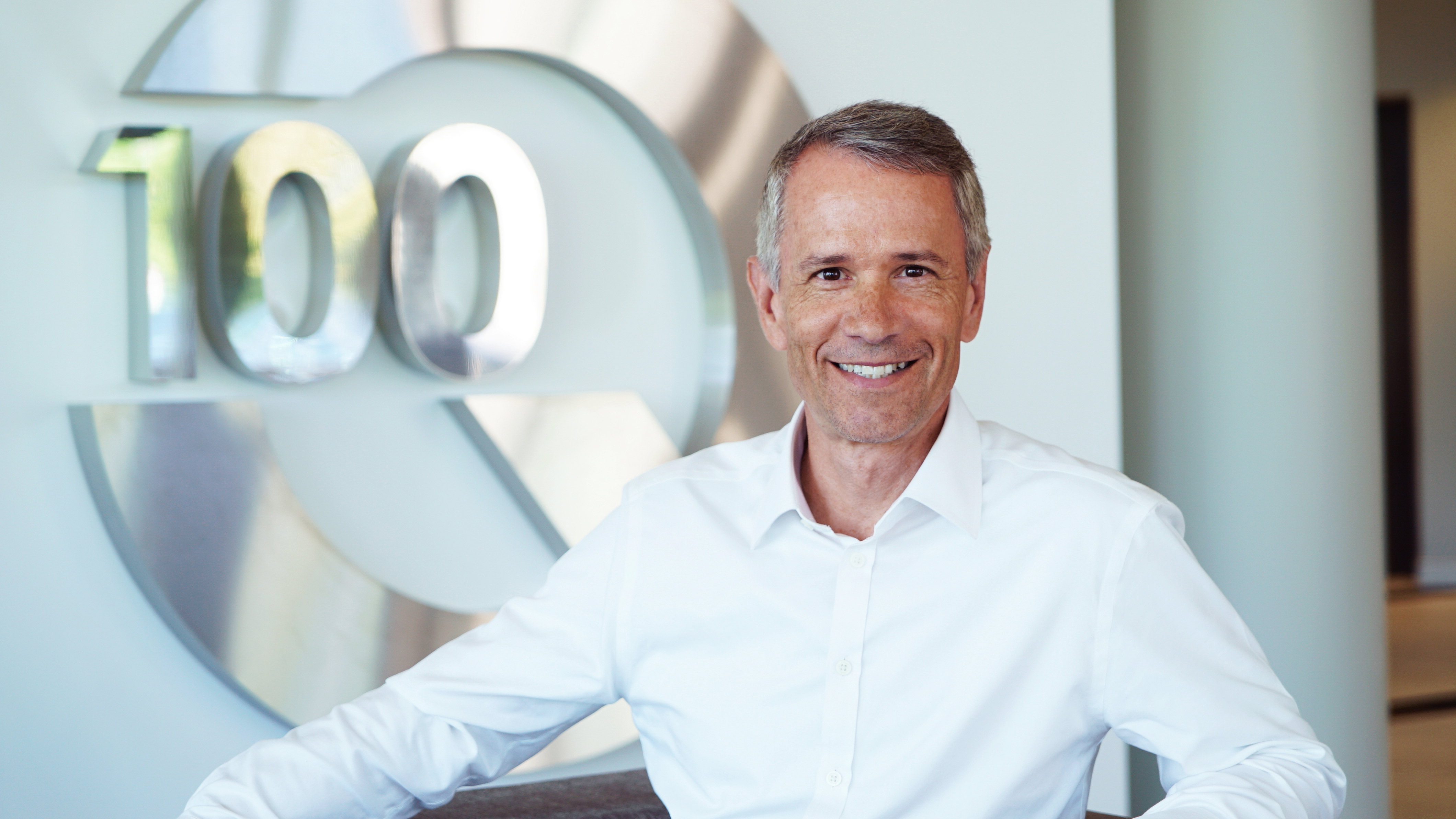 David Littleton is a founding principal of the Vestmark Manager Marketplace (VMM). He formerly served as the chief financial officer of Fortigent, an investment research and technology firm servicing financial advisory practices throughout the United States.