 Bob Browne is an executive vice president and chief investment officer for Northern Trust. He is a member of Northern Trust's operating group and management group. He is also co-portfolio manager of the Northern Global Tactical Asset Allocation Fund (BBALX).
Bob chairs the firm’s investment policy committee, which sets investment policy for all Northern Trust groups in all asset classes. He is responsible for the investment group which manages multiple investment strategies including fixed income, active equity and passive investments. Bob joined Northern Trust in January 2009 and has more than 25 years of investment experience.
From 2004 until 2009, Bob worked for ING Investment Management and was the firm’s chief investment officer for fixed income and proprietary investments. In this capacity, he oversaw $120 billion in assets under management across retail and institutional clients, as well as the firm’s own insurance assets. From 2002 to 2004, Bob was founder and managing partner of Picador Capital, an alternative investment firm. From 1999 to 2001, he was co-head of Americas fixed income for Merrill Lynch Investments and he also worked in the firm’s London office from 1997 to 1999 as a senior portfolio manager. Bob spent the first eight years of his career, from 1989 until 1997, at JP Morgan Investment working as a global fixed income and currency portfolio manager in the firm’s Tokyo and London offices.
Bob holds a B.A. with a major in economics from the College of the Holy Cross. He also has a Masters in international business studies from the University of South Carolina. Bob is a holder of the right to use the Chartered Financial Analyst® designation.
As of March 31, 2018, over the last 10 years, the BBALX’s annual return was 5.84%, versus 5.15% for a benchmark consisting of 60% MSCI All Country World Index and 40% Bloomberg Barclays U.S. Aggregate Bond Index, and versus 4.74% for its Morningstar peer group. Click here to see current Fund Performance. It is in the 16th percentile of its Morningstar peer group over that period and has an overall four-star rating from Morningstar.
What’s the objective of the Northern Global Tactical Asset Allocation Fund and how does it seek to meet it?
BBALX is a multi-asset strategy that seeks to provide long-term capital appreciation and current income by investing primarily in ETFs and mutual funds. In addition, the fund looks to outperform a balanced (60/40) mix of stocks and bonds while assuming a lower risk profile. To do this, we have three levers: strategic allocation, tactical investing and the use of factor-based investing. Our strategic approach includes asset classes such as high yield and real assets to increase diversification. We also can be responsive to changing market conditions through tactical investing, where we may choose to overweight or underweight our longer-term strategic views. Finally, we select factor-based investment strategies constructed using equity factors that have historically demonstrated the ability to outperform the broad market or traditional cap-weighted indexes.
The common denominator across all three is a focus on taking risks for which we will be compensated in the form of excess returns.
What differentiates this fund from others in its world-allocation category and for whom is it best suited?
As the investment advisor, we take a very transparent approach to multi-asset investing. There is no black box here. Through our monthly Perspective commentaries posted on our website, our investors know exactly our views on the markets and how we are positioning the portfolios. In formulating these views, we operate at the intersection of quantitative and fundamental by employing a “forward looking, historically aware” approach. We understand the historical relationships between asset classes and what drives returns, but we also look to identify how those relationships may change in the future given the market environment.
We believe the fund can work well for anybody who wants a fully diversified investment. Also, the potential tax efficiency through the use of ETFs can make the fund attractive for taxable investors. The fund’s diversification and focus on risk may also be attractive to investors near retirement who want to combat longevity risk, which we define as the possibility of outliving retirement savings, with a more aggressive risk/return profile than a simple bond portfolio.
When the fund began nearly 25 years ago, ETFs were not in existence. What did you invest in previously? When did you decide to invest in ETFs and why?
The fund has really gone through three stages. It started as a balanced fund – 50% managed by our equity team and 50% managed by our fixed income team – invested in individual securities. In March 2008, we decided to diversify into other asset classes beyond just stocks and bonds and incorporate our tactical decision-making process. We used index mutual funds to reflect tactical decisions to reduce costs versus selling hundreds of individual securities when a tactical decision was made. Finally, we moved to include ETFs in the fund beginning in 2011 with the launch of Northern Trust’s FlexShares ETF lineup, which offer those same benefits of mutual funds, in addition to increased tax efficiency and liquidity.
Why do you tend to use ETFs with factor tilts? What metrics do you use to protect against the possibility that the historical advantages of certain factors, such as the value factor, have not been arbitraged away due to asset flows into funds that “tilt” toward those factors?
We seek to get paid on the risks we take by identifying factors that have persistently provided a statistically-significant return premium over time. In the equity markets, we focus on six factors: size or small-cap stocks, value or inexpensive stocks, momentum or outperformers, low volatility, dividend yield and quality. The quality factor can be difficult to define, so we have a proprietary process to find the best companies that fit the quality profile. We combine these factors in an effort to smooth out the unique cycles of each so as not to be too dependent on any one. We continually assess how the factors behave to help ensure that their excess returns have not been arbitraged away and/or become too expensive.
How often do you make strategic and tactical adjustments and what were the most recent ones you made?
We review our strategic asset allocation annually through our capital market assumptions process and meet monthly to review the tactical outlook. We usually make three to four changes a year. These moves are meaningful and reflect changes in our tactical outlook. Most recently, we have slowly reduced our significant investment-grade bond underweight exposure. Since the last U.S. presidential election, we had been fully “risk-on.” However, global equities have had strong gains over the past two years and we think interest rates have reached a longer-term ceiling. So we are starting to see more opportunities to take interest rate risk through fixed income investments. Still, we remain overweight equities, especially those outside the U.S.
A key difference with BBALX compared to most other world-allocation funds is your allocation to real assets – natural resources, real estate and infrastructure. What’s the reason for including them?
BBALX is focused on diversification and getting paid for the risks we take. Real assets help us with both. Including natural resources, REITs and listed infrastructure in the portfolio gives us additional exposure to different “flavors” of equity risk. While all of these asset classes carry equity risk exposure, they also bring unique investment elements to the portfolio. Natural resource stocks have historically offset some of the inflationary effects of economic expansion. REITs and listed infrastructure provide income and lower correlation to other asset classes when the broader equity markets get choppy and interest rates fall. We can tactically adjust these asset classes, giving us another lever to generate outperformance and manage risks.
Over the last few years, you’ve made a shift from U.S. equities to international and emerging markets. Why?
U.S. and. non-U.S. equity markets have a well-established history of going through long and pronounced cycles. One may outperform for several years before giving way to the other for several years. Prior to 2018, U.S. stocks outperformed for most of the previous seven years. Investors may have forgotten that those non-U.S. markets outperformed for much of the eight years before that. We think the pendulum now is swinging back to non-U.S. equities because of attractive valuations, more accommodative central banks, a longer runway for economic growth, strengthening political leadership and corporate reform in Japan. We expect to see more stable emerging market economies over the next five years, with better growth prospects (i.e., no hard landing for China) and less dependence on external financing. These improving fundamentals alongside attractive valuations support an overweight to emerging market equities.
Are you concerned about high valuations in U.S. equities?
Yes and no. We believe that higher valuations put U.S. equities at risk of underperformance, increasing our interest in non-U.S. equity markets. However, we do not believe the valuations in the U.S. will lead to poor or negative returns. Equity markets globally are supported by a “valuation superstructure” because of muted economic cycles and low interest rates. At the peak of the technology bubble in 2000, investors could get more than 6% yield on a 10-year Treasury bond. Today the yield is 3%. In fact, relative to the interest rate environment, equity valuations are actually cheap on a historical basis – but certainly cheaper overseas.
You have written about the danger of a trade war. The U.S. economy has a relatively small manufacturing sector as compared to other developed and emerging markets, and only a small portion of our GDP consists of tradable goods and services. How severe a threat is a trade war, in terms of rising unemployment, falling income and slower GDP growth?
For us, the risk surrounding trade pales in comparison to our primary risk case of the Fed hiking rates too much. In fact, we think the worst of the trade fears have passed and we are now entering into a period of negotiation for the next couple months - albeit with rhetoric that dominates the headlines.. The more concrete trade issues around deficits and tariffs will be easier to solve than the tougher issues around the protection of intellectual property. The recent trade tiffs are emblematic of the larger battle between the U.S. and China for global political and economic influence that will be a persistent, but manageable, risk for years to come.
On the fixed-income side, you favor U.S. over non-U.S. bonds. Why?
As a matter of investment philosophy, we avoid taking on currency risk with investment-grade bonds. While currency risk is a small in equity markets, it’s large in bond markets. If we were to invest in non-U.S. bonds, we would have to hedge currency exposure. Non-U.S. bonds aren’t attractive enough to justify the cost of hedging. U.S. fixed income provides some of the highest yields in the developed world, and we think those yields are at a peak.
What are the keys to the fund’s strong risk-adjusted performance over the last decade?
We believe our disciplined investment process drives the solid investment results. Our strategic outlook allows us to take a long-term view and focus on portfolio diversification. Meanwhile, our tactical asset allocation approach allows us flexibility to respond to changes in the market environment but within the construct of the strategic asset allocation. We manage more than $950 billion across asset classes and investment strategies. Globally, we have a broad collection of investment and capital markets experts to call upon. For example, in the days leading into the global financial crisis, our fixed income team had a very sobering understanding of how poorly the credit markets were functioning. This led us to materially reduce risk in the portfolio and provide downside protection during the worst of the 2008/2009 downturn.
Simply put, we understand the power of process and what that can mean for risk-adjusted returns.
Read more articles by Robert Huebscher
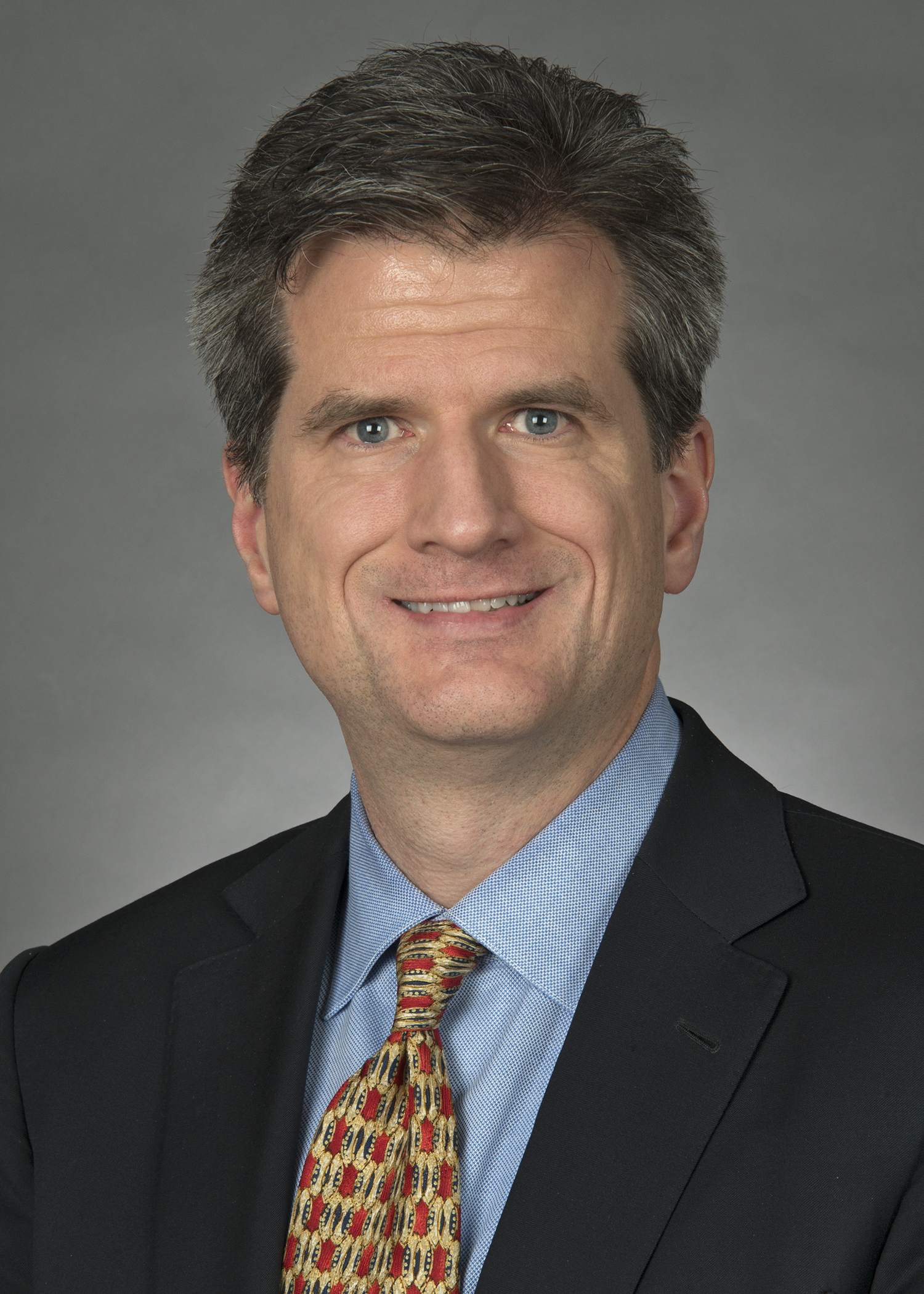 Bob Browne is an executive vice president and chief investment officer for Northern Trust. He is a member of Northern Trust's operating group and management group. He is also co-portfolio manager of the Northern Global Tactical Asset Allocation Fund (BBALX).












