 Peter Zymali, vice president and senior portfolio manager on the Global Equity Team, is responsible for the implementation of several quantitative equity strategies specializing in Quality ESG, Tax Advantaged Equity, and Quality Dividend Focus. Pete has extensive experience working with high net worth families, foundations, settlement trusts, insurance companies, and other taxable and tax exempt clients. In addition to his work as a portfolio manager, Pete is also a member of the Northern Trust Sustainable Investing Council and the Proxy Committee. Prior to joining the Global Equity Team in 2007, Pete was an investment consultant within the Global Family Office Group responsible for designing asset allocation strategies utilizing an open architecture platform. Pete received a BS in Finance from the University of Arizona and an MBA in Finance, Economics, and Managerial & Organizational Behavior from the University Of Chicago Booth School Of Business.
I interviewed Peter last week.
October marked the one-year anniversary of the U.S. Quality ESG fund. Can you give me some background on why the fund was introduced and how it has fared in its first year?
The fund was introduced to address an important disconnect we observed in the marketplace for ESG (environmental, social and governance) investing. Namely, products in the market tended to focus solely on the ESG content of the strategy, neglecting any measure of financial health of the companies they were investing in. This led to many of the available investment options simply varying their approach to exclusions, often leading to underperformance. For companies to be truly sustainable, they have to incorporate not only at the non-financial ESG risk profile but the financial risks as well. By incorporating financial sustainability, we not only have the opportunity to keep up with the fund’s benchmark. We also have the ability to potentially outperform it. Indeed, the fund has historically outperformed both the capitalization weighted benchmark, Russell 1000 Index, as well as other ESG benchmarks, such as the MSCI USA ESG Leaders Index, during its first year.
What is the fund’s primary objective and strategy?
The primary objective of the fund is to provide long-term capital appreciation. We invest in large and mid-capitalization U.S. companies that we believe have favorable environmental, social and governance (“ESG”) characteristics and exhibit strong business fundamentals, solid management and reliable cash flows. We seek to achieve this through a thoughtfully designed, quantitative approach to investing at the intersection of financial and non-financial sustainability. We target high-quality companies that have high ESG ratings with the goal of improving risk-adjusted returns. We also aim to systematically reduce the carbon footprint of the portfolio, in terms of emissions and reserves, by more than 50%.
What is a key political, economic or social trend that serves as tailwind for the quality and ESG risk factors?
Climate change comes to mind as a theme that ties economic, social and political risks and is very much top of mind for our investors. We don’t know how society ultimately will mitigate climate change. However, we find that when it comes to managing climate change risk, ESG investors hope for the best, but plan for the worst. This means investors in our strategy ask questions such as 1) “How are companies incorporating climate change risk into their strategic planning, if at all?” or 2) “Are companies thinking about innovation in terms of a future low carbon economy?” and, 3) “How does this relate to financial quality, where outsized future capital expenditures relative to peers may not be viable?”. This theme continues to be highly politicized as we are seeing a substantial interest in how we employ our approach to carbon after the U.S. said it will withdraw from the Paris Climate Accord.
Who do you consider the fund’s target investor and what is the appropriate way for that investor to use the fund within a diversified portfolio?
The fund provides U.S. large cap equity exposure and is designed to be a core long-term holding within an investor’s overall asset allocation. Given our objective of long-term capital appreciation, we believe the fund will appeal to not only ESG investors but to any investor looking for a core holding.
Each facet of our portfolio construction process may appeal to different investors for different reasons. For example, an investor may gravitate towards the fund due to its approach on targeting both carbon emissions as well as carbon reserves, thus significantly lowering the investor’s fossil fuel exposure. Another investor may find that ESG helps to improve the overall risk profile of the portfolio by incorporating material non-financial information into the portfolio’s construction, potentially avoiding company specific headline risk. Others may take interest in our approach on restrictions, excluding tobacco and civilian firearms — and dozens of other low ESG-rated and controversial companies — while positively rewarding those companies doing better than their peers. In the end, we believe the fund will appeal to both traditional ESG investors and investors focused on total return.
Morningstar has said that the fund is the first ESG fund to incorporate a quality overlay. Why do you think it hasn’t been done before and why did you do so?
We have been employing the quality factor in strategies since 1994 and managing ESG mandates for over 30 years, but other investors are only recently recognizing how quantitative ESG investing techniques can be used to achieve multiple objectives. We recognized this gap in the market place back in 2014 when we first published research suggesting that integrating quality and ESG could indeed help clients achieve ESG and investing objectives. That paper, titled “Doing Good and Doing Well,” was the foundation for what ultimately became the U.S. Quality ESG Fund.
You describe the fund as using a quantitative approach, yet you also say it’s actively managed. Please explain that.
Certain factors such as quality, value and momentum historically have provided excess risk-adjusted returns over time. We take a quantitative approach to defining these factors and implement them systematically into the fund. However, it is highly important to have active oversight to determine the appropriate portfolio, even for a systematically driven process. It is the job of the portfolio manager to determine when and how much to trade, as well as to understand any instances where the data may not be telling us the whole story. For example, a company’s quality score may improve due to one-off events, such as changing tax legislation that we saw earlier in the year. Other such infrequent events, such as pending mergers and acquisitions, may not be fully reflected within a company’s ESG profile and the completion thereof may lead to a material change. Ignoring these items may cause unnecessary turnover and may provide imperfect information.
Describe your holdings, how you select them and expectations about portfolio turnover?
Our approach targets high quality, highly rated ESG companies within the U.S. large-cap equity space. Our process begins by eliminating companies with more than 10% of sales from tobacco and civilian firearms. Next, companies that are not managing their ESG risks and opportunities well relative to sector peers are excluded, as well as those involved in severe controversies.
We then rank the remaining universe and eliminate the lowest quality companies, as our research shows that the lowest quality companies have significantly underperformed the market historically. We then optimize to a portfolio of companies that jointly have high quality and high ESG ratings, and we manage sector and industry biases that can pervade ESG oriented portfolios if left unchecked. Importantly, we also manage climate change risk in the strategy by reducing carbon emissions and reserves of at least 50% of the benchmark’s carbon footprint. Turnover tends to fall within 15% to 20% annually.
How do you manage risk?
Risk management can be viewed as the unifying theme throughout our investment strategies at Northern Trust Asset Management. Stated simply, we believe that investors should be compensated for the risks they take and we apply that philosophy to everything we do, including the fund. Risk is either compensated or uncompensated. Uncompensated risks typically include heavy sector bets, significant factor exposures and concentrated stock positions. Portfolios with these characteristics tend not to get rewarded with excess returns.
We seek to achieve the highest excess return per unit of tracking error, in other words a high information ratio, a measure of risk-adjusted return. This leads to a portfolio construction process that limits our sector exposures versus the benchmark to +/-2%, is sufficiently diversified with anywhere from 175-200 securities, and does not make concentrated industry or stock bets. The resulting tracking error, or deviation from the benchmark, has ranged from 150 to 200 basis points. Our research shows that this is a range that has historically allowed for consistently high information ratios along with a sufficient amount of outperformance.
ESG has evolved over the years from exclusionary or negative screening to a best-in-class or more holistic approach, with a focus on the good that companies are doing. Yet, the fund has some exclusionary screens. Why?
We do not view the various techniques for ESG integration as being mutually exclusive. Indeed, we believe that a strategy that incorporates exclusions, integration of best-in-class ESG ratings and financial information, and thematic investing is best aligned with where we see investor demand. Historically, ESG investors have excluded companies because of outsized risks associated with certain businesses they found objectionable. Two examples that we focus on are tobacco and civilian firearms manufactures. We have expanded exclusions beyond business involvement to include companies that are worst-in-class at managing ESG risks and opportunities along with companies linked to severe business controversies. What you don’t own is as important as what you do own. We find this is no less true in ESG portfolios than it is in any other kind of portfolio.
What does the future of ESG investing look like and how does the fund fit that framework?
We are still in the early stages of the next generation of ESG investing, as investors are only now recognizing that ESG doesn’t mean sacrificing returns. Further, ESG data and metrics are expected to improve with time, a critical foundation for this type of investing. We think ESG metrics will permeate into other asset classes such as fixed income and private equity, which are further steps toward allowing investors to include ESG throughout their portfolios.
Read more articles by Robert Huebscher
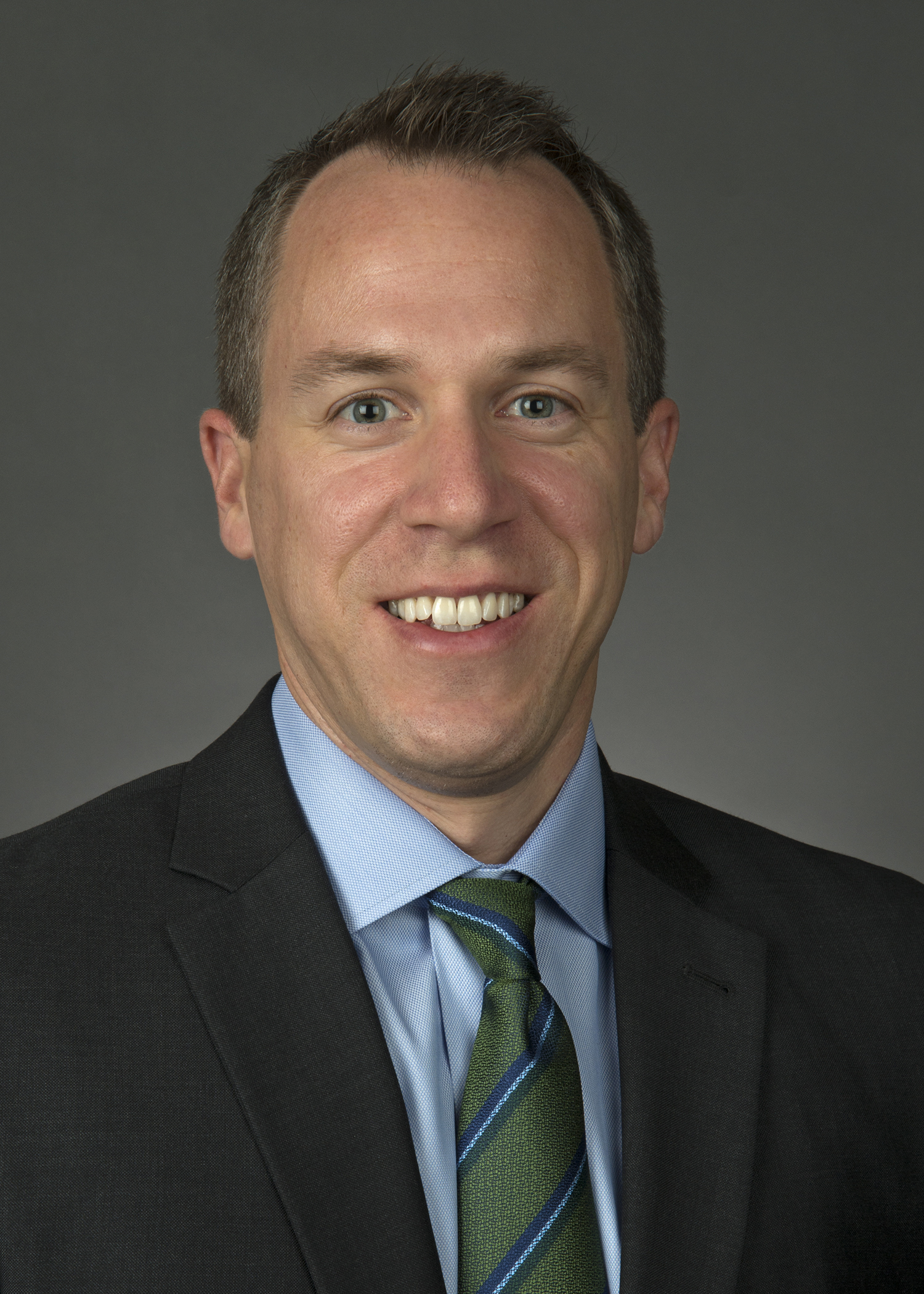 Peter Zymali, vice president and senior portfolio manager on the Global Equity Team, is responsible for the implementation of several quantitative equity strategies specializing in Quality ESG, Tax Advantaged Equity, and Quality Dividend Focus. Pete has extensive experience working with high net worth families, foundations, settlement trusts, insurance companies, and other taxable and tax exempt clients. In addition to his work as a portfolio manager, Pete is also a member of the Northern Trust Sustainable Investing Council and the Proxy Committee. Prior to joining the Global Equity Team in 2007, Pete was an investment consultant within the Global Family Office Group responsible for designing asset allocation strategies utilizing an open architecture platform. Pete received a BS in Finance from the University of Arizona and an MBA in Finance, Economics, and Managerial & Organizational Behavior from the University Of Chicago Booth School Of Business.












