Southeastern: A Compelling Time to Invest Outside the U.S.
Membership required
Membership is now required to use this feature. To learn more:
View Membership Benefits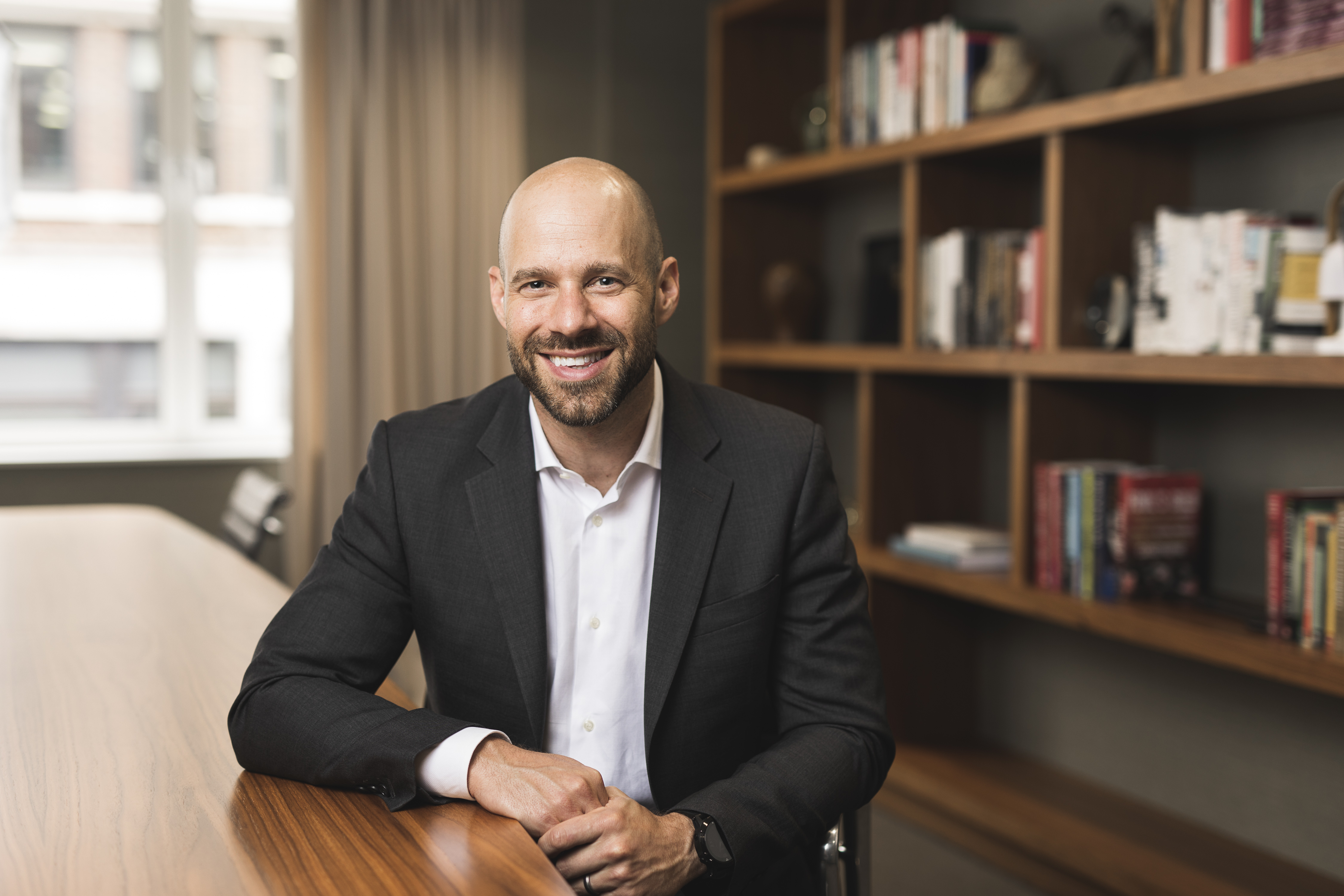 Josh Shores, CFA serves as a principal and director of Southeastern Asset Management, Inc. Mr. Shores has been with the firm since 2007 and joined as senior analyst. He is a C.F.A. charter holder. He received a B.A. in Philosophy and Religious Studies from University of North Carolina in 2002.
He is a manager of the Longleaf Partners International Fund (LLINX).
I spoke with Josh on December 6.
I’d like to start off with the last sentence from your most recent commentary: “Given the deeper discounts and broader opportunity set, the payoff patterns outside of the U.S. could be particularly compelling.” The mix of industries, particularly in developed Europe and Asia, explain at least some of the differences in valuations from those in the U.S. What else are you seeing outside the U.S.?
As you know, we very much view the world from a bottoms-up point of view. While we'll look at the macro and top-down environment, and the multiples on market indices, we fully recognize that there are others who are much better placed to make a call on that. We question how reliable making those type of macro calls can be.
We're purely looking bottoms up, as would a private equity investor, at what companies are worth, how competitively advantaged they are and how durable that is. Are the people good operators and capital allocators? And can we buy it at a sufficient margin of safety?
When we do that, we end up with hundreds and hundreds of appraisals on different companies across the world. We aggregate those on an equal-weighted basis, and say “Okay, here's roughly where these regions – Europe, Asia Pacific broadly, the U.S., the Americas ex-US – are trading.” On that metric, we compare cheapness to full value.
That tends to be not overly dissimilar from the top-down approach, but it washes through most of the noise. Because when we do this on a bottoms-up basis, the $8 billion cap is equal weighted with the $800 billion cap. We're not trying to outsmart the index methodology per se; we're just looking for great bottoms-up best ideas and where we should allocate our time.
On that perspective, the U.S. is fully to overvalued. That hasn't changed at all, despite the volatility in recent weeks – severely so, in some regards. Europe has gone from being about fairly valued over the last six months. But with a 10% to 20% country-by-country retracement, it is slightly undervalued. The Asia Pacific region is broadly the cheapest in the world, for understandable reasons from a bottoms-up point of view. There's a lot of opportunity in that environment.
When you read that last sentence of our commentary, we're basically saying where we want to allocate capital today. The broadest, deepest opportunity set is in European and Asian Pacific markets.
You're perfectly right that the S&P 500 has a much higher weight of global champion tech companies. Leave aside whether those are cheap, fully valued or fairly valued. We're not trying to answer that question. We're just asking, “What is the biggest, broadest, deepest opportunity set?” That we see as outside the U.S.
According to the latest data from Morningstar, your cash position is slightly above 7%. How does that compare to historical levels and is this reflective of the expanded opportunity set you are seeing?
We are perhaps different from other funds in that our decision making is purely bottoms up. Cash isn't set top down. Whether we have 10%, 5% or no cash is driven by whether we are finding things that meet our criteria from a business, people, price, engagement, margin of safety, private-equity-in-a-public-market point of view. If we are, we buy it, irrespective of where the cycle is or whether there's some big macro call. If you've got a great opportunity with a great business and great management, you don't try to guess, for example, if there's going to be a downturn in Germany or how Brexit's going to play out. You look out five or 10 years, and say, "This is a great opportunity."
Cash builds from the bottom up, and over our 20-year fund history, it's averaged about 10%. For us, having a 5% position in cash is essentially fully invested. Opportunities, when they come are sometimes fast moving. As Buffett says, "If you want to shoot rare, fast-moving elephants, you need to have a loaded gun." We need to have 5% cash to take advantage of opportunities.
We were at 7% as of our last filing. Today, we're more around 2.5%, which to us is fully invested. We have more ideas than we have capital to put to work. The average of 10% over the last 20 years encompasses a few exceptionally high cash periods, somewhat correlating with the big market peaks over the last two decades and reflective of the state of our non-U.S. business and how that's grown and matured.
Most of the people reading your publication probably think of Southeastern as a U.S. large-cap manager, because that's where Mason founded the company and that's where the focus was over the first several decades. It’s what we were best known for. But starting in 1998 after the Asian crisis, we saw so much opportunity in that part of the world, that we wanted to invest there with our own money, which is always the impetus for how we think about our strategies and funds and where we want to go.
We truly are investing our capital and inviting clients to come alongside of us. There's no personal accounts; I don't have a personal account on the side. Our own money all has to be in our funds. If we see things we want to own, we have to have a fund to go do it.
In 1998, there was so much to do outside the U.S. that we started a non-U.S. focused fund, and we started building a team there. We put boots on the ground in Tokyo, then that office moved to Singapore, and in 2001 we opened a London office. We have spent two decades broadening and deepening our local knowledge and expertise to apply the same approach that we always had in the U.S.
We want to triangulate via our local network an understanding of business quality, positioning, competitiveness, people, quality and outlook to see where the good opportunities are. But it takes a long time to build and deepen those networks. You can't do it quickly.
This is a long winded way of explaining why our cash averaged 10% over that time. From here, it's likely to average less than that, because we've got the deepest, broadest, most capable research network outside the U.S. that we've had in the 43-year history of Southeastern, because we've been investing in it and growing it for two decades.
We're generating so many good ideas and opportunities that a single-digit cash level will probably be the norm going forward.
One of your larger positions is in Belmond (BEL). It announced in August that it was seeking a buyer, after which its price jumped significantly. What opportunities do you see for additional price appreciation?
Belmond is a collection of trophy hotel and leisure assets that we've known for a long time. It was spun out of Sea Containers in the early 2000s, which was put together by the entrepreneur-businessman Jim Sherwood. We've known him, Sea Containers and these assets for decades, and when they were spun out, they had an interesting double-vote corporate control, which was Jim Sherwood's cost of spinning it out – so he would maintain the control.
We don't love those arrangements, although we understand them when you're a founder –that's his right. We were not involved early on, but followed the company for years. Two or three years ago things started to change. Jim Sherwood had retired and a new management came in with the directive from the board to see if there was a possibility to create a brand – the Belmond brand – and platform that was worth more than the sum of the parts of all the different trophy hotels.
That was a three-year process. We knew the chairman of Belmond pretty well from some other investments that we'd made in the U.S., which highlights the benefit of having a big U.S., European and Asian-Pacific presence, because we were able to research some diligence-related things and work our network across the globe. That came in handy in this case.
We became convinced that Belmond had the right people in position to make the right decisions on whether it was either going to succeed in building a brand that was worth more than the sum of the parts, or whether that wasn't going to work and we would get the asset value, because eventually it would become clear that these assets would be better off in the hands of a larger company.
We had reached that inflection point.
Building a position, engaging with the company and having a dialogue on where it is in that process is a core part of what we do. I mentioned earlier that we think like private equity owners. The key word there is “owner.” We're thinking and acting like owners in any of the investments we make. In this case, our dialogue with management and the board from an ownership point of view had to answer the question of whether it would succeed in creating an umbrella brand.
They were very responsive, not solely because of us, and that resulted in this strategic review. Once we started this strategic review process, during which we rated the share price pretty rapidly, we changed the paradigm. No longer was it an operating-company value; it was a take-out value. It has some of the best, most desirable historic hotels in the world, like the Cipriani in Italy and the Copacabana Palace in Rio de Janeiro – phenomenal trophy assets.
Even from this level, we think that once a deal is consummated there will be adequate upside to make it well worthwhile to hold. We did trim a bit of our position to “risk adjust,” but still feel pretty good about the potential from here. [A week after this interview, Belmond and LVMH announced a deal at $25 per Belmond share, a 40% premium over the then-current share price.]
That slug of cash, when the deal does finalize, will be greatly useful in taking advantage of the opportunities that we see.
What are some of the investment themes you are seeing, particularly outside the U.S.?
From a top-down perspective, there's a few themes that have stood out over the last several years. In Europe, there's a process of de-conglomeratization, which is the awkward word that we use for ugly, historically-built conglomerates that are in the process of slimming down, focusing on core key businesses and releasing a lot of value. There's a huge amount of opportunity around those in Europe.
Conglomerates play a role in immature capital markets. The more mature the capital market gets the less useful that structure can be, for example in the U.S., there's a lot less conglomerate weight. In the Asia-Pacific region, there's a much higher conglomerate and family-controlled weight, because you need the discipline of that conglomerate-family influence structure in the immature capital markets to provide governance, credit and equity access in financing.
But as the capital markets get deep and wide enough that you don't need the cost of a conglomerate structure to generate the governance and credit market access, then all of a sudden those firms start splitting up and releasing some latent value.
The U.S. is at the tail end of that curve. Asia is on the early part of that curve. Europe's right in the middle of it and that’s where we're seeing a lot of de-conglomeratizing. We've been involved in companies like Philips that are very much in that wave, as well as Exor, a company that we've been involved with since 2012. It's going through kind of a similar process.
The tensions in Europe always throw out opportunities. That includes the uncertainty around the Brexit vote and process, and Italy and the uncertainty about how the debate between the government and Rome and the European commission will play out on its budget forecast. We'll take advantage of the volatility those tensions create.
We saw this in 2012 – the last time there was a big European crisis. We're not going into these situations trying to correctly call how they will play out. We don't have an advantage in doing that. I have no edge in predicting how Brexit is going to develop.
But we love to find opportunities where companies have been unfairly discounted because of the overhang – however it plays out they're going to be okay. In the last 18 months, we've been involved with a company, Hikma, that's listed in the UK, but actually most of its business is in the U.S., in dollars. Hikma was unfairly discounted because of the Brexit overhang. The currency mismatch was driving a lot of confusion. It had a presence in generic drugs in the U.S., which is very much under pressure. All conspired to hammer the share price.
We were able to take a look at it. Hikma has a big family ownership, people who think and act like owners. It's not actually about the generic drug business. That's a very small part of the value, but a big part of the headlines. Instead, the driver of the business and the value opportunity was their sterile injectable business, which is a high barrier to entry, long-term durable franchise. It's pretty U.S.-centric.
No matter how Brexit played out, that business was going to be worth substantially more than the market was giving it credit. That was a phenomenal opportunity. We actually didn't hold it as long as we normally like to, because it re-rated by 70% very quickly, once the family made some very respectable, owner-oriented moves to bring in a new outside CEO who's got a phenomenal reputation in the industry, and level set the expectations around the company.
Big geopolitical events throw out opportunities. We run towards those, not trying to predict how they'll play out, but identifying the things that have been unfairly discounted, like Hikma. That's what we're doing in the UK. We have a long list of companies that are potentially Brexit-impacted that could become interesting. The same is true in Italy and in the Asia-Pacific region, including anything that is exposed to the trade tension between China and the U.S.
We've got lots to do. It's a good time to be doing it and we're excited about things from here.
Our readers may not know that you run concentrated portfolios; at the moment your top 10 positions make up roughly 60% of your portfolio. What do you say to financial advisors who favor diversification?
There are different philosophies on that, but we are not trying to surf the market’s beta. If you're a financial advisor who is investing in a fund that's essentially a closet indexer and surfing the market’s beta, but charging you an active management fee, that's a terrible idea. You should be in an index fund.
We are specifically looking to add value above and beyond what the index is going to deliver, as well as the absolute-return hurdle that we set for ourselves over five- and 10-year time horizons. We're going to do deep research and diligence with a private equity mentality, think and act like owners, and get involved with companies, appraising them well, and helping them bring about good outcomes. It would be irrational to dilute that focus across 50 companies.
We have to be diversified to an extent; we want diversification from our personal capital point of view. But with more than 15 fairly uncorrelated factors, we feel like we're getting the bulk of the diversification value. Beyond that, we are diluting the effectiveness of our work in diligence.
It's a very different approach. We're trying to generate excess return, not tag along with the market return. That's certainly not for everybody, but for people to whom it is appealing, we want to be concentrated in our best ideas.
Some of your positions are also held in other Southeastern funds. For example, OCI is held in the Global and Small-Cap funds. What distinguishes investments that go into multiple funds?
That's more opportunity set-driven than anything top down. The way to think about Southeastern broadly is that we have our global fund at the top; then U.S.-focused and non-U.S.-focused; and then underneath those we have our regional focus – U.S. small cap, Europe-focused and Asian Pacific-focused. It's a shrinking funnel. Global is going to invest in the best 20 ideas from across the world.
If OCI is owned in our non-U.S. fund, and the price is right, the opportunity lines up, global has cash and the portfolio managers want to buy it, then it might be under the global fund as well. The ideas tend to flow up.
The past 10 years have been challenging for value investors. Do you have any thoughts on why and do you see any reason that the situation might change?
The last 10 years have been very interesting for value investors. This is less of a forecast and more of an observation. I suspect several years from now, we'll look back on this as an inflection point of sorts as it pertains to growth versus value, U.S. versus non-U.S. and dollar versus non-dollar. These trends go in big, broad cycles. We believe we are at the tail end of a U.S.-led, dollar-led, growth-led market cycle.
It's been about 10 years while value has had a pretty big headwind. That correlates with the period of heavy global central bank intervention, which is an indiscriminate thumb on the scale, broadly pushing up risk assets and driving a wealth effect. That is what quantitative easing was supposed to do in the U.S., as well as by the ECB and the BOJ. The cleanest way to do that has resulted in pretty tight correlation and tight index-led outperformance.
By definition, value tends to focus on the out of favor, falling through the cracks opportunities that are less appreciated by the masses. That goes against what's driven an index-led market for a decade.
My personal view is that we're very close to an inflection point. Now is the time to be looking at non-U.S., non-dollar and value. The dollar is also overextended from a historical point of view versus global currencies. That's why I'm enthusiastic about where we are, what we're doing and how the opportunities line up over the next five to 10 years.
I don't know if the inflection point is today, four months from now or if it will be in 12 months. But broadly, we're approaching it.
What outside sources of information do you and your team rely on, either for investment or economic insights?
We use all of the things that you would stereotypically expect: Bloomberg, FactSet, various data sources and analytics. But most of our competitive advantage comes from our built-up knowledge and qualitative understanding of the competitive advantages of the businesses that we've spent decades evaluating, and of the people operating them, who we've gotten to know. We have been informed by our deep, broad global network of companies, individuals and clients who have helped build up this worldview.
The information sources for us are like table stakes that get us to where we need to be focused. Bringing our qualitative perspective on the future of these businesses and how the people are going to operate them and allocate capital is where the value will be added.
We invest in meetings with companies and management, talking to customers and clients and bouncing all of those off each other over time. A CEO obviously can't give us any specific inside information about her firm because then I'd be locked up and unable to trade on it.
But she can tell me all kinds of things about competitors, people she admires in the industry and some of the things that the market does not tend to accurately weigh, such as barriers to entry over long periods of time and super-high-quality people who allocate capital and run businesses well. Those qualitative things are only ascertained by deep work compounded over a long time horizon.
That's where our edge is, rather than in processing the FactSet data or short-term noise more efficiently than the next person.
Asset flows over the last four years have favored passive over active products. What guidance do you offer to advisors who are deciding between a passive and an active approach such as yours?
I don't presume to tell advisors how to do their job. It's very client specific. My clearest decision frame would be if you want passive, get passive. Don't pay active fees for closet indexing. If you want active, find very high active share, differentiated investment approaches that generate excess returns for the extra fees that you're paying.
Fees directly correlate to the value being added. Ten years ago there were a huge number of closet indexers with active share below 60% charging active management fees. That rightfully has been arbitraged by index funds and ETFs.
To generate outperformance you want 95% to 99% active share, with a well-defined process that matches the outcomes over a decade or two. That is where you're going to have an opportunity to outperform.
If an advisor has a client who is risk averse and just wants to track the market and preserve capital, you think about it one way. If they want to generate outperformance and do better than the market, then by definition you need to do something differently than the market. You need managers who are doing something differently than the market, which means generally an understandable, differentiated, replicable process.
Membership required
Membership is now required to use this feature. To learn more:
View Membership BenefitsSponsored Content
Upcoming Virtual Events View All