As investment management has become increasingly commoditized, many advisors are turning to TAMPs or model-market solutions as a way to outsource their asset allocation and investment decisions. But a simpler and less costly approach is a multi-asset strategy, which can include mutual funds, ETFs or even individual securities.
 Gene Podkaminer oversees one of the largest offerings of multi-asset products in the financial industry. He is a senior vice president in head of multi-asset research strategies at Franklin Templeton. He directs research activities across markets and asset classes, strategic and tactical asset allocation, manager due diligence and selection, including quantitative and fundamental approaches. Gene chairs the Investment Strategy Research Committee, which informs asset allocation strategy across multi-asset solutions.
I spoke with Gene at the Inside ETF conference in Hollywood, FL, on February 12.
Tell me a little bit about yourself and your role at Franklin Templeton.
I have a bit of a nontraditional background, given how I landed at Franklin. After spending about a decade working on the institutional asset management side, I moved over to an institutional consultancy with $2 trillion under advisement where I worked directly with large asset owner clients on some of their most important decisions: how to balance risk and return in their portfolios. A lot of that had to do with risk budgeting and constructing portfolios of managers, including plenty of quantitative techniques and optimization.
I joined Franklin a little over a year ago. The skill set that I brought combined deep client knowledge, an appreciation for asset allocation, and an understanding for how to structure portfolios of managers. I also understood manager selection and how to manage an investment research process. One of my areas of interest has been studying and writing about risk factors in the long-only (smart beta), and long-short (risk premia) spaces and how a factor approach can be coupled with traditional asset allocation methods.
I bring to the table a little bit of everything. Mainly, though, it's intellectual curiosity and an interest in advancing the conversation with clients about investing.
What are the broad themes that are going to impact the market over the next year?
The themes that we're working on are centered on big macro factors.
I'll start with global GDP growth converging lower. While we don’t forecast negative growth, we think it’s likely that actual global GDP growth is going to be lower, where even traditionally higher-growth regions will converge with lower U.S. GDP growth. China’s GDP growth is expected to come down. But again, that doesn't mean it's going to be negative. We believe that the growth in the U.S. and developed markets is going to converge with those from other economies.
A second theme is that we believe inflation will be relatively moderate. For some that's a bit unexpected because at this time last year we thought that there was the distinct possibility that inflation could enter the system from either wage or cost pressures or via commodity prices. But neither of these two avenues panned out. For the now we expect that inflation will be low for the next 12 to 18 months. The moderate inflation we expect has real implications for portfolios.
As anybody who's followed the Fed or other central banks knows, it's devilishly difficult to forecast the direction of interest rates and associated central-bank policy. That has certainly proved to be the case over the last five or six months. We do see that the Fed has taken a more dovish stance. They use the term “data dependent” to understand how the U.S. economy is doing and then try to react. This dovish stance was a little bit of a surprise given that at this time last year it looked like the Fed was initiating a series of rate hikes that the market was pricing in. What we see for the rest of this year is a pause in hiking before resumption, though not a reversal. As a result, monetary policy will be looser and that provides a boost to some assets. It also implies its own set of risks.
The one I want to focus on is what this monetary policy means for currencies. For unhedged investors, currency is crucially important when you're thinking about investing in overseas assets, especially emerging market equities and fixed income, and of course developed markets, too. The relationship between interest rates and currency markets makes certain regions or countries look different through a relative-value perspective in U.S. dollar terms versus how they did even six months ago.
To recap, our big macro themes are: GDP growth converging lower; inflation moderating; and more dovish central bank policies.
Picking up on the last theme, the central bank policies you talked about impact currencies. Where do you see opportunities arising where currencies might be undervalued? More broadly, what is your view of the impact of central bank policies on investor portfolios?
As investors, we are all “return takers” rather than “return makers.” But central bankers literally are “return makers.” Their policies directly impact the short end of the yield curve through the application of monetary policy, which impacts the rate of unemployment and how fast the economy is growing. The impact of interest rates on a portfolio can't be understated.
It's not just the mechanical linkage with mortgages for home sales or for fixed-income investors. Interest rates also affect the equity market. Companies can choose how much of the increase in input prices to ultimately pass on to consumers, and how much to raise wages for workers – both of these choices potentially impact stock prices. Thus inflation impacts all assets and investors simply can't ignore interest rates, even in equities.
You asked about the relative value of currencies. What we've seen is that the attractiveness of emerging markets over the last year turned around in part due to developed central bank policy compared to the previous year. Last year you could make the argument that maybe emerging markets were not the strongest place to invest. But given what's happened with a more dovish developed central banks, you can clearly see the implications in the currency markets, especially in the intermediate term.
So yes, we think that there's opportunity to overweight emerging markets.
You mentioned earlier that you see inflation as being fairly benign over the next 18 months. Where did it go and will it come back in 18 months?
That is another good question. It's one that I ask myself all the time because I feel like inflation is incredibly important to portfolios.
You and I have been around long enough to know that inflation is a real issue for investments. If you've lived through the 1970s, 1980s and even 1990s, you've experienced inflation that's much higher than it is now. That higher inflation has a real impact on not just fixed income, but the equity part of portfolios for investors.
Inflation is lower in other economies, too. Japan has been inflation starved for a long time, although you even see a tiny uptick there. We’re starting to see healthier inflation numbers in the U.S. We've been bumping up to that 2% to 2.25% inflation level that the Fed looks at, but we haven't penetrated that level. With the state of the economy and our monetary policy, inflation probably won't enter the system over the next year or so.
You spoke earlier about an opportunity in emerging markets. What are some of your broader views on the regional opportunities in equities in developed versus emerging markets?
My team puts together a model portfolio consisting of all the global equity and fixed income components.
Let me offer some of our relative views on global equities. We're still overweight U.S., although not as much as we were three months ago. We are underweight Japan and neutral Pacific ex-Japan. And based on the comments I made earlier, we are overweight in emerging markets. We also prefer UK equities to Europe (ex-UK), even with the uncertainty around Brexit. That's a very broad-based view of what we see.
We adjust our portfolio on a monthly basis with a horizon of about one year. Those positions have changed over time as you would expect in this dynamic process.
What is your positioning across assets among global equities, fixed income and alternatives?
This is something as we think about regularly, because the cross-asset position is very impactful. We tie ourselves to a long-only, fully invested benchmark, and currently our approach is neutral to the “risk on or off” question. Every month we ask ourselves: “Is this the time to take risk off the table and is it the time to do so by cutting down equity exposure?” So far the answer has been “no.” But we will do so at some point. Right now I don't know if it's going to be this quarter or later in the year.
It’s likely that as the economy eventually turns to recession we will want to increase our short-term fixed income positions. Those are the some of the considerations we're evaluating all the time. And one place that we're starting to lighten up is credit.
Looking at the fixed income market, and specifically investment-grade credit, high-yield, and bank loans, we try to understand how those spread assets will react in advance of equities in the case of an economic downturn. That's somewhere that we're looking at potentially decreasing some allocation.
Let's talk about the fixed income sleeve of your of your allocation. Where are you positioning yourself duration-wise?
It should not come as a surprise that we're short duration. We're about one year under the duration of the benchmark that we use for the portfolio. If you take the short end of the yield curve and examine the probability and impact of rate rises versus rate cuts, we have found that going into relatively short duration has been a really good trade, versus going longer.
Something that we're actively thinking about is modestly reallocating out of the U.S. yield curve and into Europe because of how those markets have performed over the last few months.
Even with the short end of the yield curve in Europe many places in Europe at or even below zero?
That reason we do that is because in our model portfolio we hedge back to the U.S. dollar. We’re very careful to separate out the value of an asset from its underlying currency. That is true whether it's emerging market equities or UK fixed income. We believe it is more transparent to purchase assets that are unhedged and take out the currency volatility – which sometimes plays out really well, but other times it doesn't. We try to be as thoughtful as we can in putting together our portfolio, and to that end we have tools at our disposal that allow us to effectively hedge our currency exposure. And we understand that while not all investors can, or want, to hedge, that’s a good starting point for our conversation.
More Mutual Funds Topics >
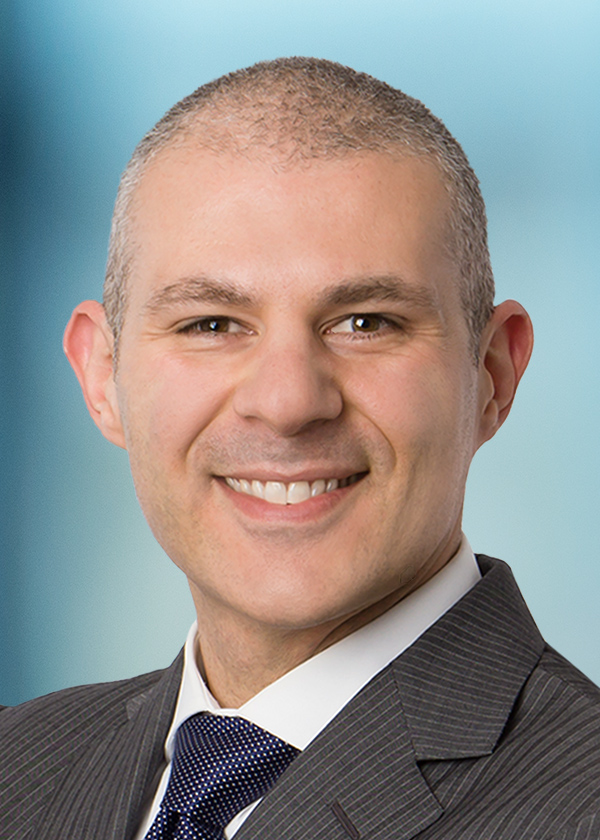 Gene Podkaminer oversees one of the largest offerings of multi-asset products in the financial industry. He is a senior vice president in head of multi-asset research strategies at Franklin Templeton. He directs research activities across markets and asset classes, strategic and tactical asset allocation, manager due diligence and selection, including quantitative and fundamental approaches. Gene chairs the Investment Strategy Research Committee, which informs asset allocation strategy across multi-asset solutions.