 I doubt anyone reading this article will attempt something as risky as Alex Honnold did when he “free soloed” El Capitan. But those seeking to achieve highly ambitious goals can learn a lot from his experience.
El Capitan is a 3,000 foot granite wall in Yosemite National Park, CA. It has been scaled many times by teams of climbers using ropes – the first such ascent, in 1958, took 46 days. Honnold did this feat on his own, without ropes – hence the term “free solo.” It took him just under four hours on June 3, 2017. The experience was depicted in the movie Free Solo, which won an Academy Award for best documentary.
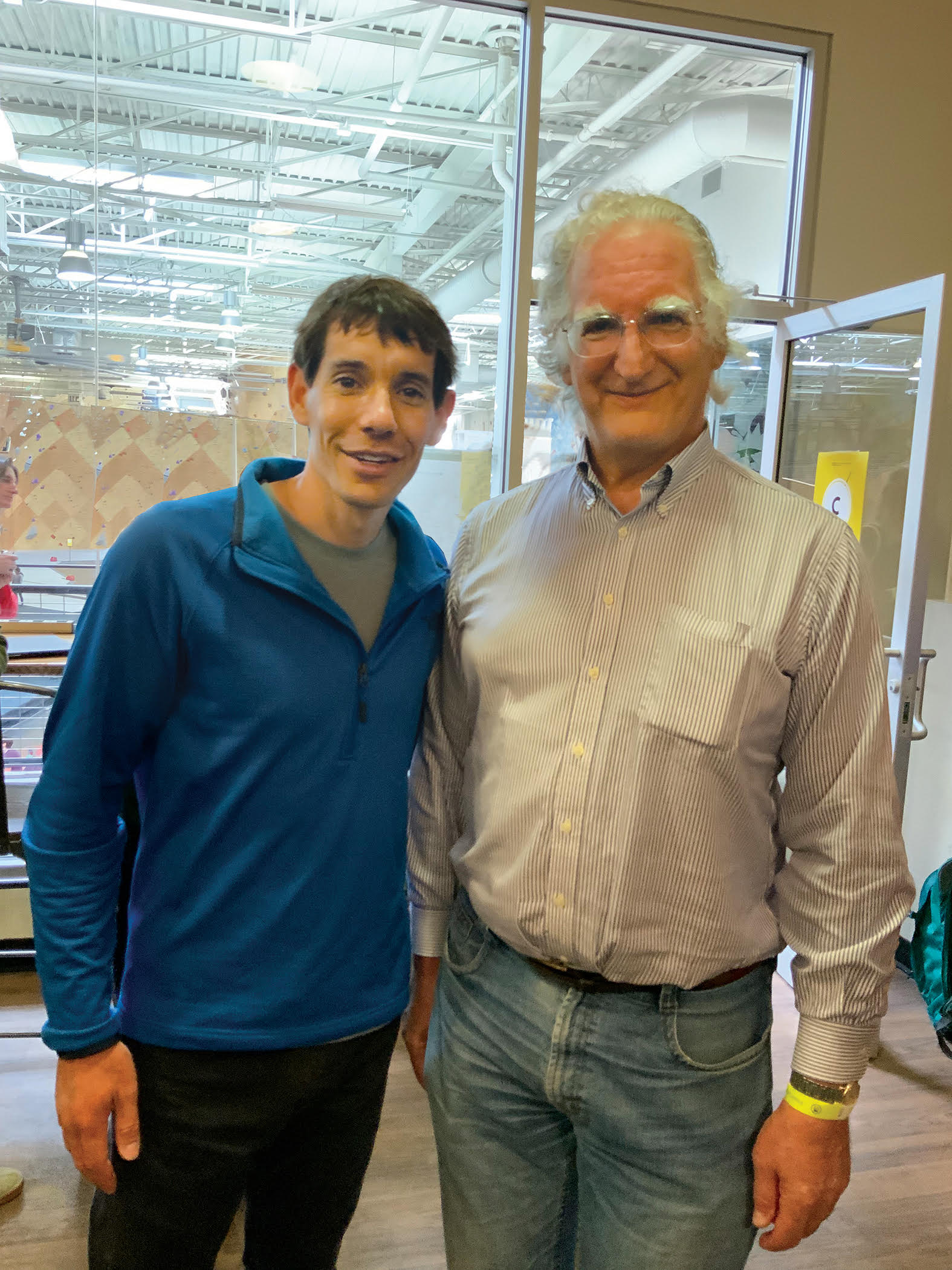
I was invited by Lexington Wealth Management to spend a day with Honnold at a rock climbing gym, where he spoke about his experience and demonstrated his climbing skills.
What struck me the most about Honnold was his humility and his calm and thoughtful demeanor – something that is accurately portrayed in the movie. He is clearly a gifted athlete, but strength and agility were not enough to complete the most difficult rock climb ever attempted.
One misstep is deadly in a free solo climb. But through his intense preparation, Honnold got to the point where he was 100% confident that he would succeed. He said he knew, realistically, that the odds were “99 point something,” and he felt at the time that the risk was “very low.”
When compared to other types of mountaineering, free solo climbing is not as risky as one might think. The movie shows a series of free solo climbers – many of whom Honnold knew – who have died. But Honnold said this depiction was inaccurate and that traditional “Alpine” climbing is statistically more dangerous. In a free solo ascent, the climber knows exactly what to expect. The conditions, the rocks and footholds are always the same. But Alpine climbers face risks they cannot foresee – changes in the weather, other climbers on the route or equipment failures.
Knowing what he was up against, Honnold did a number of things that helped him succeed.
How to achieve the impossible
Honnold grew up in Sacramento, CA, and began climbing at age 18 or 19 (he is now 33). He doesn’t consider himself a natural climber, but said he enjoyed the “culture,” which is a big part of the California lifestyle.
Over the years, he chipped away at a range of climbs, encountering different conditions and degrees of steepness. He said he pushed his comfort zone in different directions, including doing some Alpine climbing in Patagonia and Alaska.
“It changed my perspective on what big means,” he said. “Those 5,000-foot climbs made El Cap look not so big.”
He set his free solo goal about six years prior to his ascent and started training in earnest over the final two years, which is the period covered in the movie. By the time he did the free solo, he had climbed El Capitan approximately 80 times – all with ropes – but some on different routes.
There are only about 40 days in the year when he could train, when the weather was neither too hot nor cold and there was no rain, so Honnold had to be super-efficient. He focused his training on the most difficult and riskiest portions of the climb. On those days, he would climb to the top on a foot path with his film crew and descend by rope to the location where he wanted to focus his training. He would practice the sequence of moves he needed to execute until he could do them flawlessly.
In addition to practicing the climb he used mental visualization to play through his head, over and over, every step of the ascent. Indeed, he said that by the time he did the free solo climb, he had memorized each move on the course.
His film crew was an important contributor to his success. It consisted of six or seven people who were exceptionally skilled climbers and accomplished photographers. Honnold said they were among a select group of people with those skills. The crew was able to transport his gear to the top, lessening the workload on Honnold.
The film crew also held him accountable. National Geographic sponsored the film and Honnold knew that everyone was counting on his success. They added “helpful pressure,” he said, and they provided feedback that proved helpful.
For a couple of months leading up to the climb, Honnold erased his social media and stopped responding to email. He said the “empty time” was important to do the necessary analysis without any distractions.
He was asked how he managed the fear. It is not something that can be overcome, he said, by “amping myself up,” like one might do with public speaking or skydiving. “No matter how amped you are,” he said, “it’s still pretty scary.”
The only way to overcome the fear, he said, was through systematic preparation, by consistently broadening and increasing his comfort zone. “There is no way to cheat,” Honnold said.
Even with the best preparation, Honnold said he could get a “creeping dread,” in which case there is nothing you can do but compose yourself and take a deep breath. But he knew he couldn’t tolerate that on El Capitan. He over-prepared himself and imagined those situations where he might fail. Having thought through every situation, he said he felt that he had dealt with it already.
The takeaway is that seemingly impossible goals can be achieved by carefully identifying each step in the process, and then focusing on the riskiest ones first. Those risks can be overcome by grinding them down through repetitive attempts, altering your approach until you know all obstacles have been eliminated. Enlist help from experts who will hold you accountable, and tune out all distractions.
What is next for Alex?
As you would expect, the most frequent question Honnold is asked is what he will do next.
He spends a lot of time working with the best climbers in the world. “Better people push me the right way,” Honnold said. He has tried speed climbing, and teamed up with Tommy Caldwell, a well-known climber, to set the record for El Capitan – just under two hours, with ropes.
Honnold said the real pleasure in his pursuits has been in “putting in a lot of effort and executing very well. I can enjoy that feeling in other contexts, like my foundation and family life.”
He created the Honnold Foundation to promote solar energy in third-world locations.
Honnold doesn’t know what he will do next. But he said he won’t free solo El Capitan again, “at least not on the same route. There will never be a climbing objective that means as much as El Capitan.
More Tax Planning Topics >
 I doubt anyone reading this article will attempt something as risky as Alex Honnold did when he “free soloed” El Capitan. But those seeking to achieve highly ambitious goals can learn a lot from his experience.