Uncovering Hidden Opportunities in Japan
Membership required
Membership is now required to use this feature. To learn more:
View Membership Benefits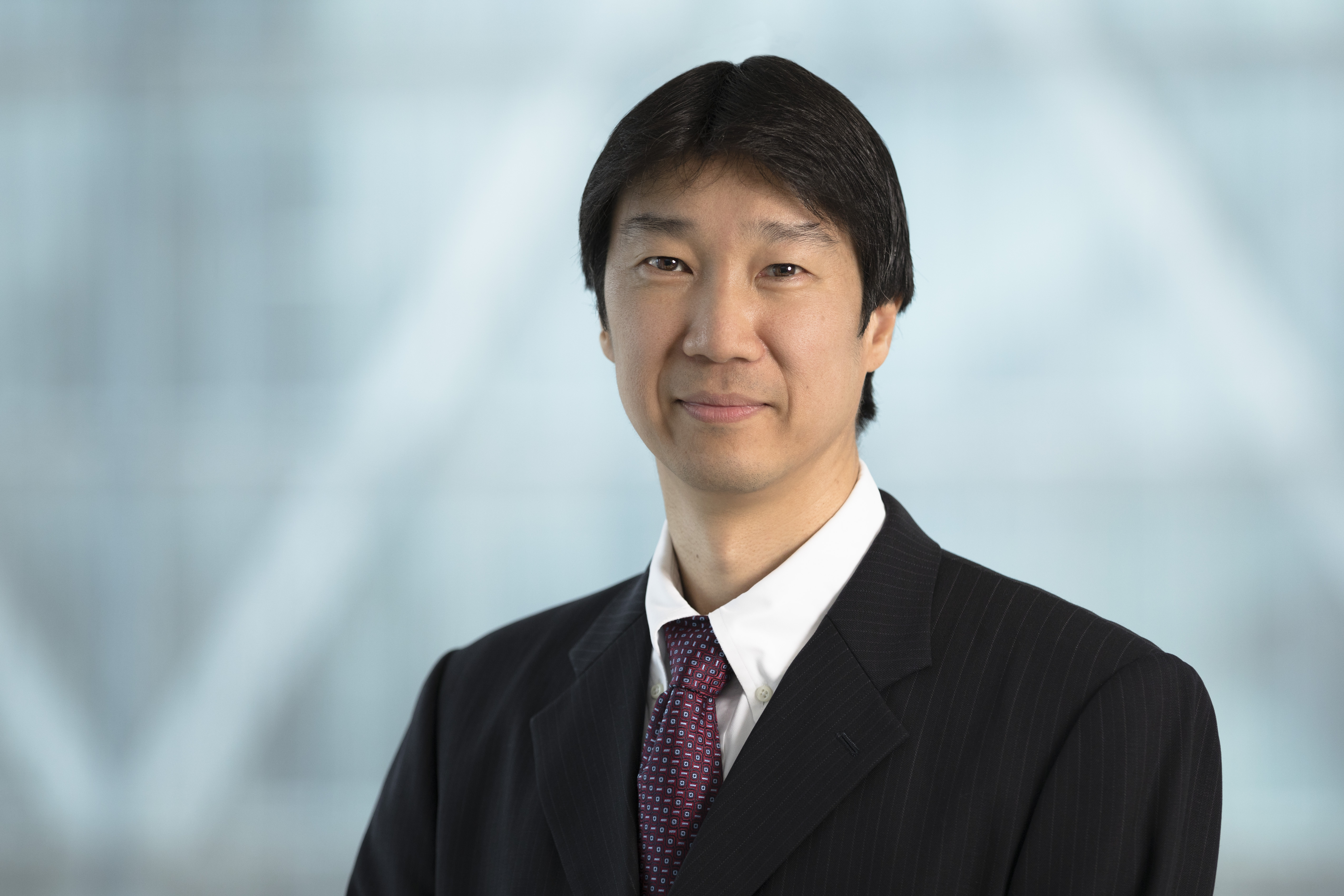 Masakazu (“Masa”) Takeda is a portfolio manager for Tokyo-based SPARX Asset Management Co., Ltd., sub-advisor to the Hennessy Japan Fund, and he has managed the Fund since 2006. Prior to joining SPARX in 1999, Masa was employed by the Long Term Credit Bank of Japan (currently Shinsei Bank) and LTCB Warburg (now UBS Securities). Masa received a BS in Liberal Arts from International Christian University, and he is a CFA charterholder and a chartered member of the Security Analysts Association of Japan.
I spoke with Masa on April 26, 2019.
Tell me a little bit about your background and your role in managing the fund.
I have been with SPARX for 20 years, having I joined the firm in 1999. Prior to joining SPARX, I worked at a Japanese bank for three years. I graduated from university in 1996. When I joined SPARX, I didn't know anything about equity research, let alone investments, so I started from the beginning. SPARX is a bottom-up, fundamental stock-picking company, and I spent my first few years at SPARX visiting companies to understand how the corporate world works.
I quickly realized that there was, in terms of an investment approach, no role model that I aspired to in Japan. So I tried to learn from the U.S., from the likes of Warren Buffett and people who follow his principles. It resonated with my investment approach and way of thinking. When I became an active manager in 2003, I tried his approach of looking at investing in stocks as being a fractional owner of a business. I focused on the long-term economic characteristics of the business rather than short-term earnings trends or trading pieces of paper. That approach has worked quite well.
I became the senior portfolio manager of the Hennessy Japan Fund in 2006. I've been in charge of the Fund for over 10 years, now.
What is the mandate of the Hennessy Japan Fund?
The mandate of the Fund is to generate above-average returns for shareholders through an active strategy. My approach is to invest in stocks of great companies at prices below the intrinsic values of those companies. We don’t focus on re-rating or relative valuation or anything of that sort. We are true bottom-up stock pickers, focusing on owning great companies.
Since its inception on October 31, 2003 through 3/31/19, the Fund (HJPIX) has had an annualized return of 9.39% and that's 473 basis points better than the TOPIX benchmark, which returned 4.66%. To what do you attribute that outperformance?
It is predominantly stock selection. I'm a big believer in capital compounders, whereby you invest in great companies that have the ability to compound their capital, quickly. The average return on equity for the portfolio is around 12% and that's about 200 basis points higher than the average Japanese company. As those companies retain their earnings and reinvest for future growth, earnings also grow around the same rate, high single digits to 10%. That should translate into increasing intrinsic value, which in turn should lead to an increase in share price. That has been the main driver of the Fund’s outperformance.
At the beginning of this year, in one of your commentaries you wrote that you expected the Japanese economy to continue to grow steadily and that inflation should remain comfortably above zero. How has that played out thus far in 2019?
Last year, 2018, was a bit of a tough year for the Japanese economy. Coming into this year, in the first quarter we saw recovery in the GDP numbers, as we saw in the fourth quarter of last year as well. That is due to domestic consumer spending, which makes up 60% of total GDP. Exports were a bit lackluster, but looking ahead, I expect improvement in the Japanese economy. Exporters should also rebound.
In terms of inflation and the economic indicators, we are still seeing mixed signals. For example, the unemployment rate is at a 26-year low, which means the labor market is healthy, but wage growth remains stagnant. It's only up a fraction of a percent in terms of real wage growth. As such, CPI inflation is at around half of the government’s target of two percent. Hopefully as exporters come back and as that trickles down to more domestic industries, inflation will creep up. I don't know at this point when the government can reach its 2% target, but consumers have yet to shake off their deflationary mindset. The economy has been holding up well, but it's still fragile. We still have a long way to go.
Thankfully the government is very pro-growth, pro-inflation, very reform minded and pro-business. That's a strong combination. I'm reasonably optimistic.
Speaking of government policy, can you comment on the progress that's been made on any of the structural reform initiatives? And, where does the government stand with respect to tax increases on consumer goods?
There have been dozens of structural reform initiatives that have been hammered out already. Some of them worked quite well; others failed. But because in Japan the structural issues are so severe, there's no single policy measure to fix the whole problem. By implementing a number of initiatives and policy measures, some of them will work and in the aggregate will start to move the needle.
The last year was also very productive in terms of new reforms. For example, in June there was a series of labor market-related reforms to promote more merit-based compensation among Japanese-based companies. It also removed wage inequality between workers and reduced mandatory overtime work. These are important steps for Japan to improve labor productivity, because we often rank as one of the lowest labor productivity countries among the OECD nations. Perennially long working hours has been a cause, so that is one key development.
More recently, the government passed a bill to bring in more low-skilled foreign workers to help address staff shortages in labor-intensive industries like restaurants, nursing care, and shipbuilding. That should also help over the long term.
The sales tax hike is another event to watch in 2019. The government is committed increasing the rate from 8% to 10%. When Japan had a similar tax hike in 2014, there was a rather severe reduction in domestic consumer spending. Learning from that mistake, the government this time around is drafting countermeasures to minimize the negative impact from the sales tax hike. They're budgeting about $25 billion dollars to do this. The expected increase in the tax burden on households is about $50 billion dollars, so you can see the scale of the countermeasures that the government is contemplating.
While everyone is focusing on the tax hike as a negative headwind, we believe that it's going to be largely a non-event.
I want to come back to the labor productivity issue in a second. First, I want to ask about your outlook for how trade wars will affect the Japanese economy and the stocks that you own. I saw in the news today that President Trump is meeting with President Abe and one of his goals is to provide access to the Japanese market for American farmers. Where do you expect things to end up with respect to trade wars?
The concerns around trade wars thus far has been around China and the U.S. Japan does a lot of business with both countries. There was some pressure on the stock market last year related to this, but Japan produces things that are largely differentiated, high-quality products. I have always told my investors that Japan should be able to weather this headwind much better than average commoditized businesses.
One potential second-order impact we should be worried about is a slowdown in the Chinese economy as a result of the worsening trade war. The Fund is currently invested in names that are close to China, to some extent, and we saw some slowdown in their businesses last year because of this. But that said, I have been relatively optimistic because the consumer stocks that we own do a lot of business in China. They focus on personal care goods – cosmetics, baby diapers, and so forth, and those products are very much in demand by Chinese consumers. We're talking about small ticket items, like baby necessities and everyday items. I do not think they will be severely impacted, and they have been holding up quite well.
The production of these products is done either at local factories in China or in Japan for export into China. They're not directly subject to ongoing tariff negotiations.
With regards to the Japan versus U.S. emerging trade war, the biggest thing that people in Japan are worried about is that Mr. Trump is unhappy with Japan’s trade surplus with the U.S. There will be pressure on Japan to accept a currency provision in the trade agreement, because the U.S. claims that Japan is guiding the Japanese yen lower in order to gain advantage in trade.
If that is to happen, then there will be upward pressure on the Japanese currency, and that will be negative for the exporters, at least form the sentiment point of view. But Japanese companies have been growing resistant to currency risks over the last 10 years because of their aggressive cost restructurings and by diversifying their global production basis. We're not too worried about the potential outcome.
I will not speculate on the potential outcome of ongoing negotiations, but as a stock picker, it's not a major concern.
Stepping back and looking at the plight of the Japanese economy over the last 30 years, the conventional wisdom has been that it has suffered from excessive debt that's led to zombie companies, and from unfavorable demographics. But there's an alternative view that Japan has been too slow to transition from a manufacturing- to a service-based economy. Related to that, its productivity growth has been very slow, which is something that you discussed earlier. What is your view of the long-term structural problems in the Japanese economy? Have there been any successful market reforms in Japan to address labor productivity other than what you mentioned?
When Prime Minister Abe’s reforms came along in 2012 and 2013, they were designed to solve three key issues: get the country out of deflation; achieve nominal GDP growth of 3% to 4% with inflation of 2%; and bring the fiscal house in order.
We still have a long way to go. While I do not have a strong opinion as to when these issues will be resolved, at least Japan is moving in the right direction, albeit slowly. The point is that compared to 10 or 15 years ago, the difference is night and day. We have a government that's very reform-minded and a central bank that's pro-growth, pro-business. Before, in the mid-2000s, the revolving door of prime ministers and central banks were not acting in the best interest of businesses and investors.
It's quite a difference now. We still need to give the government the benefit of the doubt because structural reforms, by definition, take a long time to deliver. But meanwhile, businesses have been doing quite well, thanks partially to favorable currency trends. In 2008, the yen was 75 or 80 to the dollar and it was really a nightmare for corporate Japan. That's what got companies to streamline their cost structure and become more lean and profitable.
Now, 10 years on, the yen is 111 to 112 to the dollar, and that's very comfortable for Japanese companies. They're generating lots of cash flow, which is being reinvested into core business activities. That creates a positive virtual cycle for sustained growth in Japanese exporters that will trickle down to more domestic-oriented industries going forward. With favorable earnings and government initiatives, hopefully we will get there.
But the point I want to make is that our investment process doesn't rely on that scenario. Japan has been a difficult environment for many decades. We've continued to look for investment opportunities, companies that can grow regardless of economic conditions, and we have uncovered many. We invest independently of macro considerations.
You mentioned the Japanese currency. I noticed that you do not hedge your currency exposure in your portfolio. Is it your view that the Fund is naturally hedged against currency fluctuations?
That's correct. The Fund is heavily invested in global companies in Japan, and that is a conscious decision on my part. We have a strict investment criteria. We are long-term investors with concentrated positions in our portfolio, which means that when we commit capital to a stock, we believe the business can survive through ups and downs and economic cycles. We also look at the geographical exposure of the business as part of our investment research process.
I want to be invested in international growth potential rather than a business that's solely dependent on Japan. Because of this, the portfolio is naturally hedged against currency fluctuations. From the dollar-investor’s perspective, when the yen depreciates it will reduce the dollar return on equity, but it actually helps improve the international competitiveness of the businesses that we own. Our shareholders are compensated by that. On the other hand, when the yen appreciates, it will increase the dollar return on equity right away, while reducing international competitiveness of the businesses that we own.
If you own high-quality, well-run companies with high margin, globally diversified production, they have the ability to overcome currency headwinds over time. That's how we think about currency impact. We are naturally hedged and we just leave it to our investors as to whether to hedge.
What is your outlook for Japanese equities over the coming year and why should U.S investors consider investing in Japanese equities today?
In terms of valuations the Japanese market has become very attractive. Just to give you some numbers, between 2013 and the start of the first half of last year, corporate earnings and the stock market rose together in tandem, up roughly 150% during that period.
In the second half of 2018, those two numbers started to decouple. Earnings slowed down and went from high to low single-digits, but the stock market corrected even more. As such, today Japan is trading at 13x this year’s earnings. That's the lowest level we've seen in many years. And, Japanese valuations are favorable to U.S. valuations. With an improving economy, we believe Japan offers a very attractive buying opportunity.
Japan has some of the most globally competitive franchises. They are exposed to developed and emerging economies. Our shareholders can benefit from the growth of these countries with better transparency and corporate governance. With good liquidity, Japan is a big market with reasonable valuations. That is the value proposition.
You're a locally-based, active manager. Why is that important when it comes to investing in Japan?
Japan, perhaps unlike the U.S, is still a great place for active managers like us. If you look at the composition of indexes in Japan, they are still largely dominated by very large, old school, mature companies, like traditional manufacturing, financials, and electric companies, with few growth opportunities. But if you look under the hood, even within the large-cap space, we see a wealth of growth opportunities. Many of those are the international companies that I mentioned.
As an investor in Japan, you don't want to own the index. You're not going to benefit from that. But if you carefully select the right companies, you can make a lot of money.
We are professional, active managers. Japan’s domestic institutions are mostly large financial institutions like banks. At those institutions, fund managers come and go. There is a job-rotation system, so there's not a lot of experienced, truly professional money managers. Whereas at SPARX, this is the only business that we do. We are specialists in this field.
Japan it is still a big mystery for most global investors because of our peculiar culture and language that's very difficult. But we think, with a local presence and 30 years of expertise, that we understand the workings of corporate Japan. We speak the language. That's where our competitive edge comes from.
What is the profile of the ideal investor for your Fund?
The approach we take is a long game. I look at businesses over a three- to five-year time frame, at a minimum, and we aim to achieve superior returns over the long haul. Our strategy may not be for investors chasing short-term performance, but the important point is that this long-term approach works in Japan. Our approach really sets us apart from the competition.
Membership required
Membership is now required to use this feature. To learn more:
View Membership BenefitsSponsored Content
Upcoming Virtual Events View All













