 The U.S. economy is in a “good place” and the baseline outlook is “favorable,” according to Richard Clarida. To further allay fears, he called the much-discussed September 17 action by the Fed in the repo market a “technical, central bank 101 operation, not to be conflated with large-scale quantitative easing (QE) operations.”
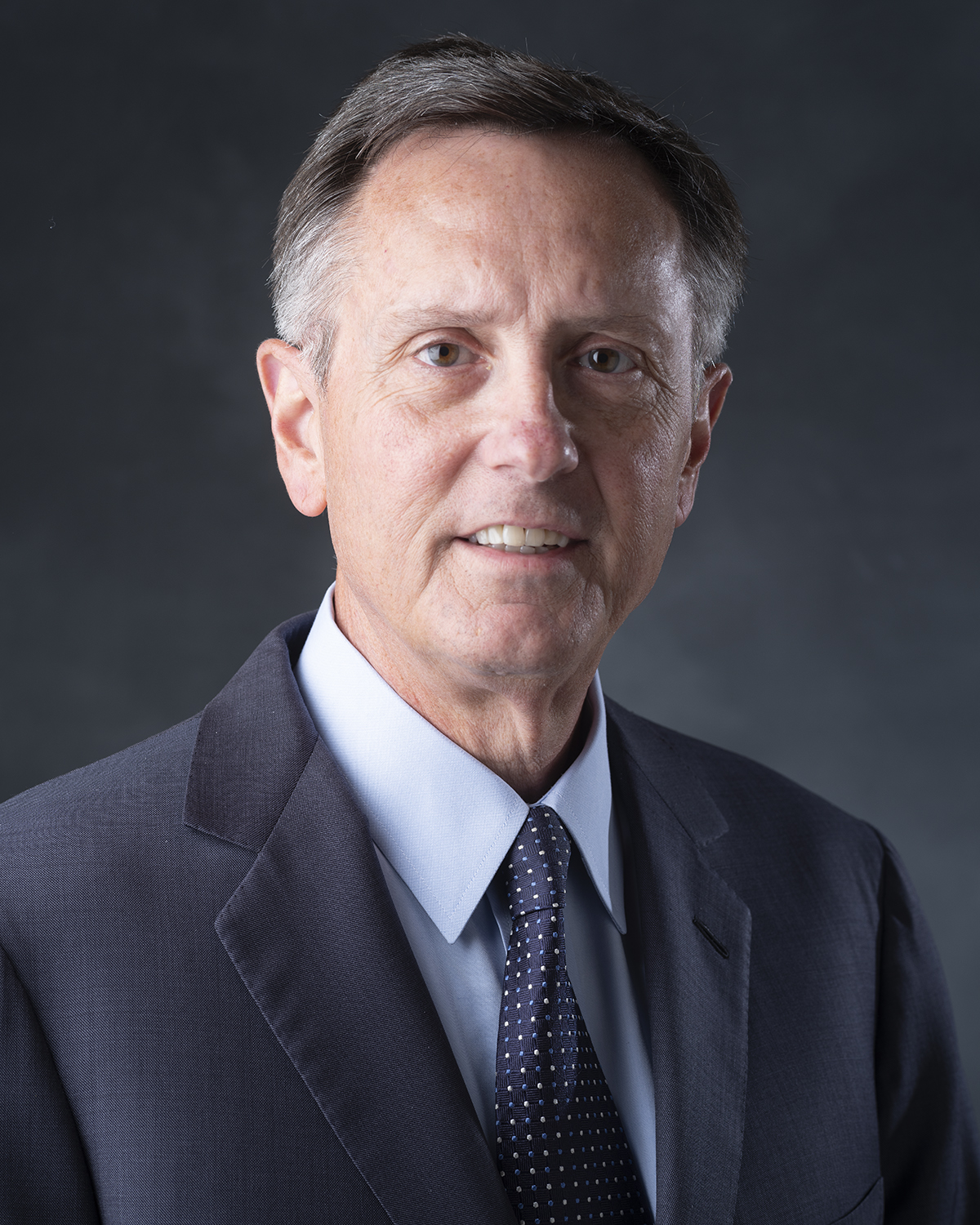
Clarida is a vice chairman of the Federal Reserve Board, having been appointed in September 2018 by President Trump to replace Stanley Fischer. He spoke at the CFA Society’s annual fixed income conference in Boston on October 18.
Clarida did not reveal any secrets.
He read from a prepared statement and was then interviewed by Marc Seidner in a “fireside chat” format. Seidner is a managing director at PIMCO and the two were colleagues before Clarida left to join the Fed.
GDP is growing at 2% on an annual basis and inflation is “rising to get there,” Clarida said. Unemployment is at a half-century low and wages are rising with it. There is no evidence of “cost-push inflation,” according to Clarida. He said the PCE, the Fed’s preferred measure of inflation, is at 1.4% with a core value of 1.8%.
In the first half of the year, GDP grew at 2.5%, but the second half will be slower. The consumer is in “very good shape,” he said, with household income and saving growing. “I cannot think of a time when consumer in the aggregate was in better shape,” Clarida said.
There was a “downshift” in overall growth, starting in July. But the weakness in the business side will not translate to the consumer side, Clarida said, under the “appropriate policies.”
The global economy was slowing for two years, he said, from late 2016 to early 2018. Indeed, he said, 2018 was a “disappointment” and that process continued. He characterized the global economy as “muddling through” and not facing anything dire.
With Germany in a recession, Clarida said, it was good the ECB eased. “It was a positive for the EU outlook.” Europe and the ECB were “very lucky” to have Mario Draghi for the last eight years.
He said there is no evidence of recession risks being elevated. The retail sales level was below expectations, but is still a strong contributor to GDP growth.
Clarida acknowledged that the U.S. faces risks – business investment is slowing, and manufacturing and exports are weakening. “Global disinflationary pressures cloud the outlook,” he said.
At its July and September meetings, the Fed voted to lower its benchmark target Fed funds rate by 25 basis points to 1.75% to 2%. This was done to respond to the economy, Clarida said.
Monetary policy is not on a preset course, according to Clarida. The Fed will act to sustain growth, a strong labor market and 2% inflation.
Referring to the September 17 incident, he said the Fed acted to provide liquidity to the repo market. It is now trying to maintain a higher level of bank reserves. The week he spoke, the Fed began purchasing Treasury bills to accomplish this. Moreover, that action does not represent a change in the stance of monetary policy, according to Clarida.
Clarida discussed the working environment within the Fed. When you are inside the building, he said, the “complexities of the plumbing are much more important than they appear as an outsider.” It’s not just a matter of setting the Fed’s target rate; Clarida said much of his work is focused on regulation and supervision. He said he did not realize the extent and rigor of the process that is behind every meeting.
Entering the room where the Fed meets is like walking inside a baseball park for the first time. He compared the experience to Yankee Stadium and Fenway Park, which located in urban settings in in New York and Boston. The transition from a “dirty outside” to the lush, green park inside was an “emotional experience,” Clarida said.
All meetings are now two days, with the 12 governors and five regional Fed presidents participating.
Given that monetary policy acts with “long and variable lags,” according to Milton Friedman, Seidner asked Clarida how he gauges the policies he recommends. “You never know for sure,” he said. “It is about making judgements, and more an art than a science.” Clarida said the Fed should be evaluated on outcomes related to its mandate.
Seidner ask Clarida to define “data dependency,” an often-cited standard upon which the Fed bases its decisions. In and of itself, Clarida said, it is just one piece of monetary policy. That policy needs to “react to current data, like inflation and GDP. But you must have a view of where it is going and under different policy options.”
Monetary policy, Clarida said, is formulated based on variables that are only “inferable” and cannot be observed in the market: the level of full employment and the neutral-policy rate, where the economy has no inflation growth or unemployment. He said he is learning where those data points are, as is the rest of the committee.
Clarida said he looks at the TIPS market as one input toward how he thinks about inflation. He also looks at “soft” data, such as the Michigan consumer survey, which goes back 40-plus years. Market pricing is real time, he said, but there are deficits like liquidity and term premiums. Anchoring inflation expectations at 2% is an important part of price stability. He said he can observe expected inflation only within a range, and that we are at the “lower part of that range.”
He also looks at credit spreads and valuations as indicators of distress. By those measures, he said financial conditions are “quite good.” The equity markets are doing well and reasonable in the context of earnings and other metrics. Private sector non-financial leverage is in very good shape. Corporate leverage is high, he said, but servicing costs are not elevated.
“You need to draw a balance between hard and soft data,” he said, “like surveys. There is a tendency to read too much into asset price movements. We try to smooth through daily changes to distinguish signals from noise.”
The inversion of the yield curve was about the global economy more than the U.S., he said. The inversion resulted from capital flows from economies weakening abroad to the U.S.
The committee is unanimous that its primary tool is the Fed funds rate, Clarida said. But it is engaged in other operations. Since July, when the contraction of its balance sheet ended, the Fed determined that the level of reserves was insufficient to provide a good buffer. He said the Fed plans to buy Treasury bills through mid-2020 in order to provide sufficient liquidity to the market.
More Fixed Income Topics >
 The U.S. economy is in a “good place” and the baseline outlook is “favorable,” according to Richard Clarida. To further allay fears, he called the much-discussed September 17 action by the Fed in the repo market a “technical, central bank 101 operation, not to be conflated with large-scale quantitative easing (QE) operations.”