The First Eagle Global Fund (SGENX) reflects the teachings of Benjamin Graham and Warren Buffett: Its managers believe there is a persistent market failure to recognize a company's intrinsic value. The Fund attempts to exploit this failure on behalf of investors through a bottom-up, fundamental investment approach. Since its inception in 1979, the Global Fund has outperformed the MSCI World Index by more than 300 basis points annually.
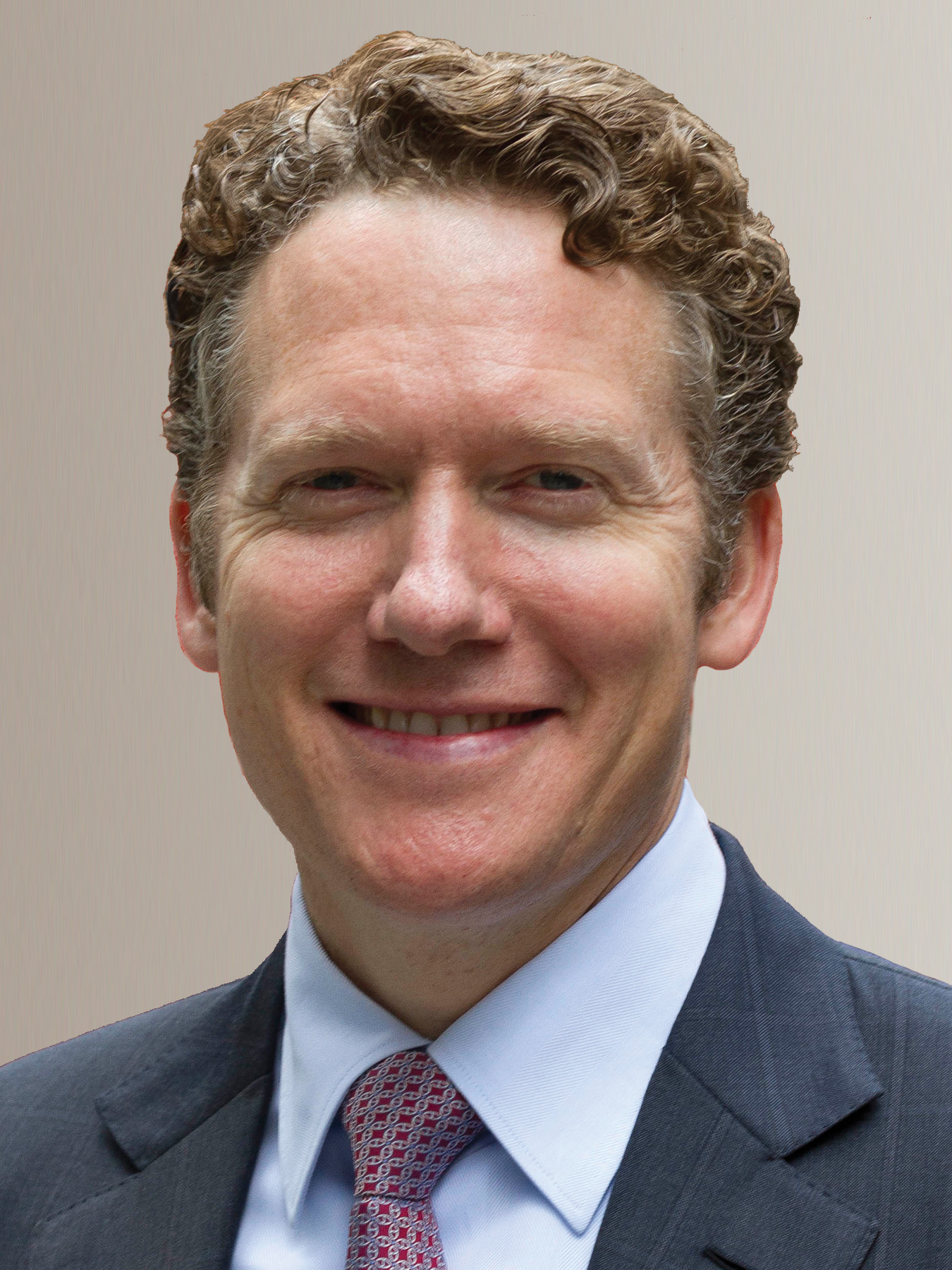 Matthew McLennan is head of the Global Value team at First Eagle Investment Management and portfolio manager of the Global, Overseas, U.S. Value and Gold funds. Prior to joining First Eagle in September 2008, Matt worked for Goldman Sachs Asset Management in London, where he served as co-portfolio manager of Global Equity Partners, a group he co-founded in 2003 that ran a focused global equity portfolio for offshore private wealth clients.
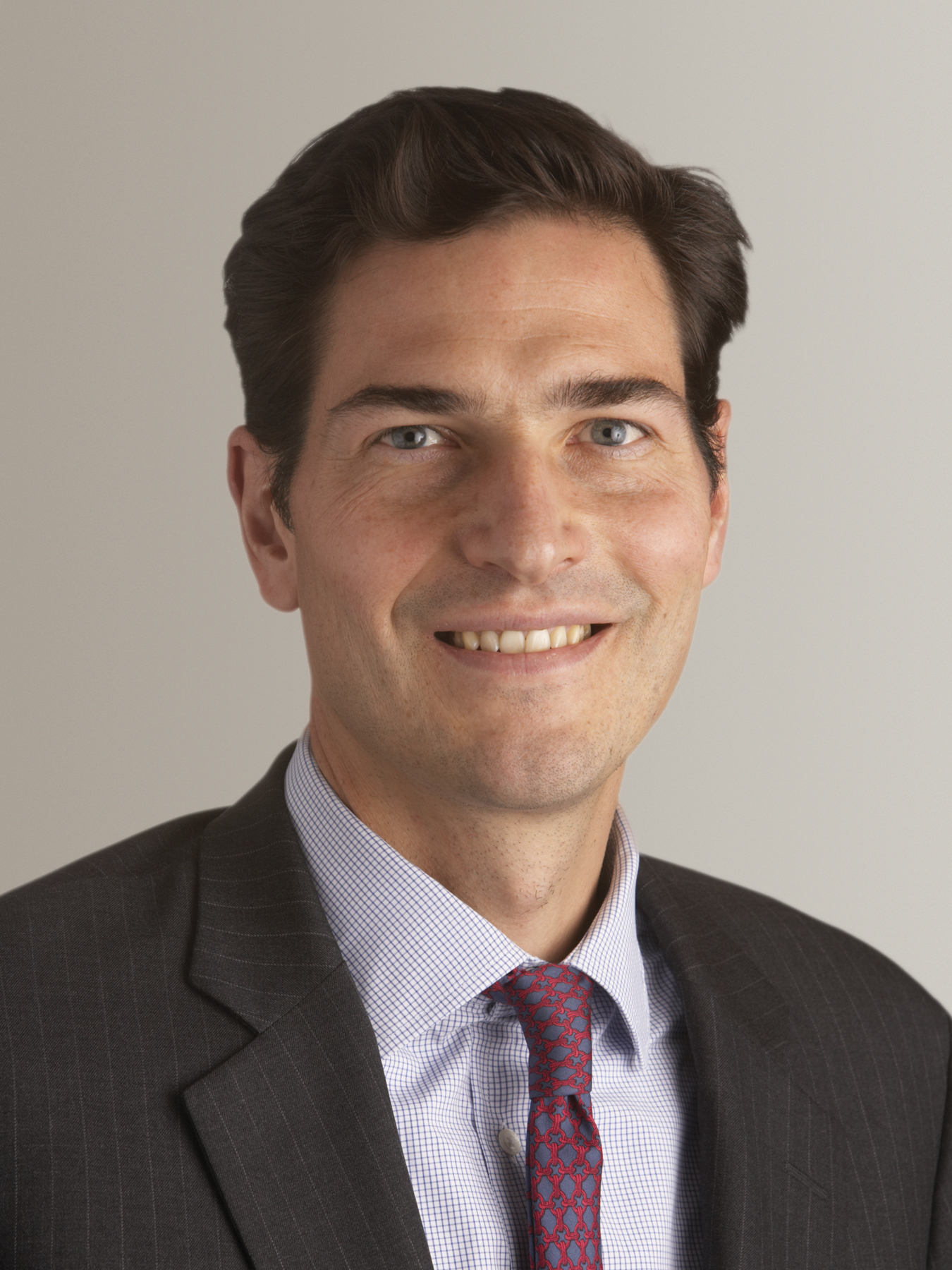 Kimball Brooker, Jr. is deputy head of the Global Value team and portfolio manager of the Global, Overseas, U.S. Value and Global Income Builder funds. He is also a senior research analyst covering banks, financial services and holding companies. Prior to joining First Eagle in January 2009, Kimball was chief investment officer at Corsair Funds, a multi-billion-dollar private equity fund spun off from J.P. Morgan.
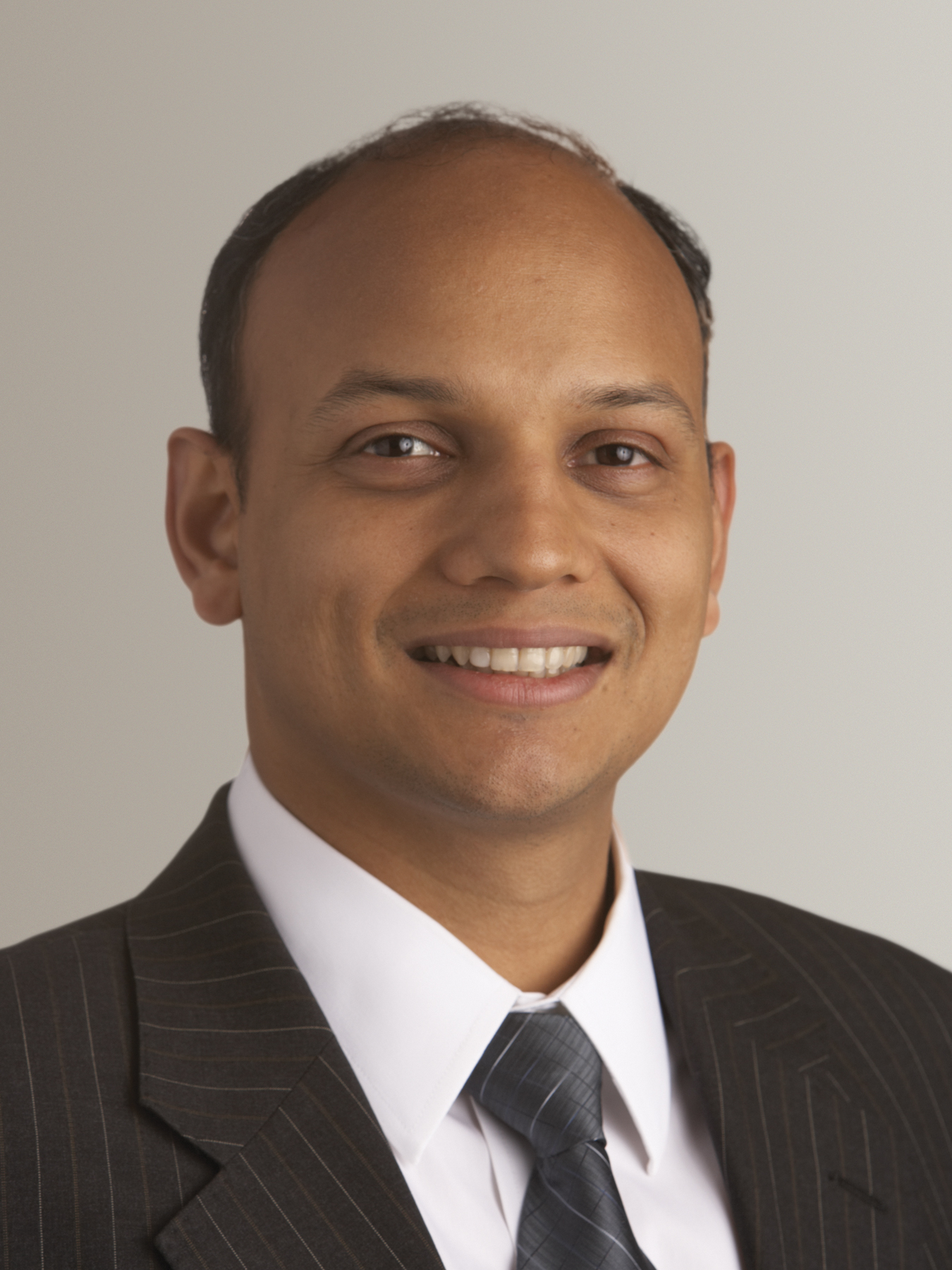 Manish Gupta is associate portfolio manager of the Global Fund and a senior research analyst on the Global Value team covering technology (hardware, equipment, software & services). Prior to joining First Eagle in October 2009, Manish was an equity research analyst at Cantillon Capital Management, where he covered technology, professional and commercial services, transportation and select industrials.
I spoke with Matthew, Kimball and Manish on October 3.
From 2001-2008, the Global Fund did extremely well on both an absolute and relative basis. Since the financial crisis, the environment has been more challenging for most value funds. Nonetheless, it still ranks in the top 8% of its Morningstar peer group for the last 10 years. What changed? Do you expect the capital markets to revert to an environment that would be more favorable to value funds such as yours?
Matthew McLennan: As we reflect back on the long-term track record of the fund, one of the things that we remain most focused on is not just the level of returns, whether it's absolute or relative, but the resilience of the return profile through time, particularly in windows of crisis. We've continued to allocate capital in a manner consistent with history, and that's been a tried-and-true approach.
Over the last decade, which has been a difficult one for value in general, one of the changes in the wake of the global financial crisis was a marked shift to experimental monetary policy. We wound up with negative interest rates in Europe and Japan, and we had an extended period of zero interest rates in the United States. That period of extended low interest rates arguably has had some influence on asset pricing. We've seen markets more willing to pay higher prices for long-dated expected growth, and that's been beneficial for growth stocks that may not be as profitable in the near term or sustainable as companies with stronger balance sheets and more resilient business models today. Markets have been more willing to value their expectations for future earnings power.
The second thing is that, given not only low interest rates but also quantitative easing, it's fair to say throughout much of the last decade we've had more liquidity flushing around markets than we would have had otherwise. The depth and magnitude of the episodic crises one would ordinarily expect may have been muted by this surplus-liquidity environment. To the extent that liquidity diminished risk perceptions and led to tighter credit spreads, it's aided and abetted the valuation of growth earnings by virtue of lower risk premiums.
Within growth, we've seen some business models achieve a scale that, perhaps, was even greater than the high expectations of the market. Think of some of the names in the internet and social media space and the like.
The flip side is that there have also been cyclical forces at work. In the late 1980s and late 1990s, toward the end of those business cycles, global value also had a tough time versus growth. As business cycles get extended, markets tend to discount the sustainability of earnings and pay a premium for visible growth. What we saw in the late 1980s and the late 1990s was a period of weakness in value that preceded the yield curve inverting and credit spreads widening, and ultimately weakness in payrolls in the broader economy.
There may be some warning signs in the underperformance of value versus growth. This has been an environment that has been very strong for the dollar. There's been a little distortion in that because we had some procyclical fiscal easing in the U.S. that kept interest rates higher than what they otherwise would have been and attracted carry-trade flows to the dollar.
There have been a host of factors going on, but one thing we know for sure at First Eagle is that trees don't grow to the sky. We're in a situation where the value universe is conservatively valued relative to the broader universe, and where international stocks are conservatively valued relative to some of their U.S. counterparts. What's been a headwind in the rear-vision mirror is a source of opportunity as we look forward to the future. We are sailing a steady course.
The persistence of low interest rates has kept alive certain businesses and pockets of excess capital that might have otherwise gone away. That's had a depressing effect on profitability in a number of industries, from banks to certain commodities. As easy monetary policy has become more secular than cyclical in nature, First Eagle has maintained our very strong focus on identifying companies that have strong market positions and prudent stewards in management roles. There's a dose of self-help in terms of how we allocate capital. We're not simply waiting for things to statistically revert.
When we last spoke, in May 2018, the fund had approximately 20% in cash. It now has approximately 14%. Does this reflect a more attractive set of investment opportunities?
Kimball Brooker: Yes it does, incrementally. When we last spoke, the environment was quite different than it is today. It was characterized by extraordinarily low volatility and a somewhat stabilized geopolitical situation, which helped support investor confidence and resulted in a focus on a small group of growth companies that were propelling the market.
Since then we've seen a bit more market volatility. At a bottom-up level, more businesses that we've been following have drifted into valuations that merit allocating capital to them. Our cash level has come down a bit. You've seen the exposure to international equities increase a little bit. It's moved up by roughly 200 basis points since we last spoke.
The opportunities have broadened, both in terms of geography as well as business variety, from energy companies to consumer products. We’ve tried to take advantage of these more attractive valuations, which has resulted in the cash coming down. But I wouldn't say it's been a broad-based drop in markets that’s caused a tremendous amount of enthusiasm.
The Global Fund has approximately 9.6% in gold bullion, which sets it apart from most funds and especially most value funds. Your largest position is in gold ounces. Do you own physical gold and if so, how do you buy and store it? Gold produces no income. How do you value it?
Matthew McLennan: If you look at the First Eagle's portfolios overall, today and historically, the primary driver of our real returns has been the ownership of businesses, which represents approximately 70% of our invested capital. We take a position in the ownership of what we believe are solid companies at sound prices. But you're right that the largest individual position is in physical gold bullion.
Not only do we have over 9% of the portfolio in physical gold bullion, but we have approximately 4% in gold-related equities. Those positions are a potential hedge against the other businesses that we own.
We talked about the fact that we could be in a later-cycle environment. We've spoken consistently over time about our concerns for the global financial architecture. The reason we have low interest rates around the world is that levels of debt are high around the world. That's a headwind to nominal growth.
Kimball mentioned the complicated geopolitical dynamic. As we look to the decade ahead, we have more modest return expectations for assets. We expect there to be more volatility than what we've experienced of late. Our need for a potential hedge in the portfolio is not a market timing call. It's the acknowledgment, as a long-term capital allocator, that we'd like some ballast in the portfolio. We view gold as the least-bad long-term potential hedge that we can identify. It's a real asset. There are no counterparty risks. We're not paying option premiums. And gold has been scarce historically, so its real price generally has drifted up not down.
As you correctly stated, gold produces no income. But that doesn't mean it has no return over time. In fact, if you go back to the early 1970s when the Bretton Woods agreement broke down, there was a material yield on sovereign securities. But that yield hasn't compensated investors for money supply growth. The ownership of sovereign securities, while they had a yield, has been offset by monetary dilution.
On the other hand, gold, which offers no yield, is relatively scarce in supply. The aggregate above-ground stock of gold has been growing only between 1.5% and 2% a year, well below money supply growth. The equilibrium price of gold has moved up over time and has produced a more attractive real return than sovereign paper.
Gold has tended to have its valuation peaks when risk assets are depressed and real interest rates are low. There's a countercyclical advantage to when gold earns its returns, which makes it a valuable store of deferred purchasing power and a potential hedge.
We own physical gold. We own it in a very secure vault, and in our view we have it stored at very low cost. It's cheaper for us to do that directly, given the scale of our gold ownership, than to do it indirectly through an ETF or other means.
It's impossible to come up with an intrinsic valuation for gold. Gold is different from other commodities in that it's not produced just for current use; there's a 50-year stock of gold above ground. What matters is investment demand for gold. The price of gold historically has been tightly negatively correlated with real interest rates in the short term. Last year, when real interest rates were moving up through September, the price of gold was under pressure. Over the last six months or so, as real interest rates have come down, gold has done very well.
As we extend the time horizon, gold has kept pace with global nominal activity. You can compare it to other assets that have kept pace with nominal activity over the long term, like world equities. We saw in 2018 that gold reached a decade low relative to world equities, back to where it was in 2008 before the last crisis. That's what you'd expect in a risk-on environment.
The valuation of gold has improved somewhat this year. But on a relative basis, it is reasonably modestly valued relative to where it's averaged over the last decade and reflective of the move down in real interest rates.
We don't have a directional view on gold. While we have added to gold during periods of weakness, we recently trimmed a little gold so that it wouldn't become an outsized allocation in our portfolio and reflect a directional view. But it still remains a meaningful position and it exists as a potential hedge.
Going back to Jean-Marie Eveillard days, First Eagle has always considered gold to be a potential hedge. Can cryptocurrencies perform the same role?
Matthew McLennan: That's up for debate. No one knows the answer. Cryptocurrencies are early in their evolution. They've only been around for about a decade, and gold has been used as a store of value for millennia. Conceptually, some of the cryptocurrencies, like bitcoin, have been designed to have scarce supply similar to gold.
However, gold has certain physical attributes that make it interesting. It's beautiful; it's malleable, suitable for coinage; and its chemical inertness means that it doesn't have economic risk characteristics like other commodities.
Bitcoin is a digital idea. That is the best thing that can be said. It's a call option on being digital gold. It's too young.
One of the problems with bitcoin is that there are many substitute cryptocurrencies. While the supply of bitcoin has been relatively scarce, it has forked, and there are other forms of cryptocurrency. It's lost roughly half the market share of the crypto universe since its creation.
There are also other complexities, such as the fact that the majority of mining for bitcoin is done in China. It sits on computer networks and may not be as secure as many people think. All of that gets reflected in the very high volatility for bitcoin relative to things like gold. That impedes it as a store of value. To the extent that bitcoin's prices contain an expectational component, it has been, in some windows of time, more correlated with things like growth equities. That is not true of gold, which tends to be uncorrelated or negatively correlated with equities in general.
We don't yet see it as a potential hedge. We understand the arguments for why it could become that in the future, but it's too early to tell, too volatile, and it remains speculation in our minds.
You also are overweight gold mining shares. Which types of miners do you favor and why? What are some of the key characteristics you look for?
Kimball Brooker: Our exposure to miners is in two categories. One is companies that actually own gold reserves and mine them and produce gold bullion from their reserves. The other category is royalty businesses. These are companies that don't physically operate the mines, but they own royalties on mines that other companies are operating.
In terms of the operating companies, our approach is to focus on the quantity and quality of the reserves that they own in the ground. We analyze them on a mine-by-mine basis to understand exactly what the market is imputing with respect to the value of those companies' gold in the ground. We recognize them as equities with all of the idiosyncratic risks that come with equities. But we think of them as a way to achieve exposure to gold bullion. The royalty companies are a more direct way of getting exposure to the price of gold, but they require a different set of analyses. In these cases, we’re focused on the quality of the portfolio of royalty contracts and the exposure they provide us to the price of gold, with the quality of the underlying mine operators as a secondary, but still important, consideration.
Matthew McLennan: The last time we had a meaningful upward move in the gold price it was coincident with a bull market in the broader commodity complex. That was an environment that disappointed many investors, because competition for capital goods and labor meant that those companies didn't always get the cost leverage that was expected in that cycle. That came after a period of sustained weakness ending in the late 1990s for gold. Many of the management teams running those gold companies were not as disciplined as we would like from a capital allocation standpoint.
The recent uptick we've seen in gold prices has not been coincident with a bull market in the broader commodity complex. In fact, China has been slowing down. This lack of capital cost pressures is usually a propitious development for gold miners.
Secondly, we've seen some very meaningful consolidation in the gold mining industry. We've seen assets transition to better management hands. It's easier to focus on the risks of mining and forget the potential rewards. The environment has been a little better for long-term investors.
Your team follows artificial intelligence (AI) very closely. AI is clearly driving greater efficiency and productivity. But are there examples where it has led to investment opportunities for the Global Fund?
Manish Gupta: There's not any one investment that comes to mind. This is more of a thematic question, and we're not thematic investors. We're bottom-up investors.
Many of the pure AI companies have been small, point-product startups that have been acquired by larger companies. This is true in the field of semiconductors, such as Intel buying Nervana Systems, or software, for example Google buying DeepMind. For the companies or consumers of AI technology, it's not about a point product or a single solution. It's about the suite of technologies they need to improve productivity.
Customers need massive amounts of data to make AI learning models work, so integration with existing applications and databases, and ease of use are critical. Ease of use is very understated given the hype surrounding AI.
There are not many trained engineers or expert scientists that a particular enterprise can hire. That talent is scarce. AI is a new field, in terms of the makeup of demand, and most of the world's top engineers and scientists work at four firms: Microsoft, Google, Facebook and Amazon. That is why our view on this AI theme has been very different from the broader investment community.
Our view is that AI will be embedded within the software and hardware ecosystems so customers can harness its power. It has certainly played out that way, if you look at the tools that are being offered in the enterprise software space, whether it's on the cloud or on premises. Companies like Oracle, Facebook and Taiwan Semiconductor (TSMC) have invested in AI technologies to help their customers. They use similar technology to improve their own businesses.
Take Oracle, for example. Their new autonomous database and applications technologies are built using AI, and these products provide substantial productivity gains. Oracle uses its AI-powered technology to run its own business.
Facebook uses AI to better target advertisements. They use AI to filter content and to create a good customer experience.
The world's largest semiconductor manufacturer, TSMC, is likely to be among the top choices for any semiconductor design company, be it an AI product or otherwise. This emergence of AI autonomous automation and big data, from factory floors to selling and tracking cars, has required a lot of semiconductor content. Both Analog Devices and Texas Instruments are very well positioned in the analog semiconductor market.
The most important point to remember, for thematic investors especially, is that revenue from AI for almost all tech companies is still a very small portion of their overall business. It is important for investors to focus on valuation, the quality of the business and the duration of the franchise.
Matt often talks about how most businesses are melting ice cubes over time. We look for market share persistency to get a sense of the economic moat around the business. Our holding period is close to a decade, so the duration of franchises is incredibly important.
The other way to look at AI and the broader technology industry is to assess the risk of destruction to the existing holdings in our portfolio, from retail businesses to auto companies to services businesses, including financial services. We want to own companies that can survive and thrive over the long term.
Your third largest position is in Exxon Mobil. I’d like to understand the investment case for it. But I’d also like you to answer that in the context of a growing movement toward ESG/SRI investing, which typically embraces the idea of fighting climate change by divesting from fossil-fuel companies. What guidance do you offer to advisors who evaluate the Global Fund through an ESG/SRI lens?
Matthew McLennan: When we think of ESG, we separate the governance element from environmental and social considerations. Governance has always been a very important part of the investment approach at First Eagle.
We typically have over 1,000 company visits a year. As investors who take a decade-long horizon to the ownership of business, we carefully monitor how thoughtfully management teams are stewarding those businesses, whether it's the identification of their core competitive advantages, how they draw concentric circles around their core competencies, their focus on cash flow and cost, or their willingness to distribute surplus cash flow to shareholders. Governance is incredibly important to us.
Governance is not just about costs and cash flows. Effective stewardship of a company is mindful of emergent trends and second-order effects, both environmentally and socially. We don't try to impose our own moral framework on companies. We seek to invest in companies that operate by the letter and the spirit of the law, but we notice, to Manish's prior comment about the duration of businesses, that companies are more likely to be sustainable and to generate cash flows for longer if they're mindful of their environmental and social obligations.
As value investors, we weigh how a company is positioned across governance, environmental and social considerations against the price we're paying. As fiduciaries, we pursue sound, real returns for our clients by identifying an attractive balance between price and prospects.
As it would relate to Exxon, it is a stock that might come to mind in light of the climate change movement. But there's a certain element of naivete on the part of folks who say, "Well, you shouldn't invest in fossil fuels at all." The reality is that no commodity is more needed on the planet than oil. If you stopped producing oil, the world would experience an economic crisis like we've never seen. Many of the other problems that we're trying to solve – health, social and economic problems – would become more manifest without oil.
The world is spending a lot of time and resources to transition to non-fossil fuels. But if we consider the history of energy transitions, they've taken generations to play out; these are not transitions that happen overnight. Meanwhile, if we look at the universe of energy producers, their developed producing reserves will typically deplete over a decade or so.
Exxon exists within the context of an industry that's needed. We believe Exxon stewards its assets very thoughtfully. It is very strong on governance, and it spends billions of dollars a year on environmental compliance, remediation, environmental support of communities, and research of biofuels and other alternative energies. It employs over 2,000 PhDs. There are not many organizations, other than governments, that devote the resources to these long-term challenges that Exxon does.
As I mentioned earlier, one has to balance their view on the sustainability of a business against its price. With Exxon, if the oil used for fueling cars is at risk over a generation as we transition to more electric vehicles, that only affects about 30% of its oil business. Most of its oil is going into higher value-added products, from specialty industrial lubricants to jet aviation fuel and specialty chemicals.
Secondly, half of Exxon's upstream business is natural gas. If you think of an electric vehicle, you plug it into the grid at night. Most of the incremental power in the grid is coming from natural gas. While Exxon may face some long-term volume headwinds in the petroleum business, that can be offset by growth in the natural gas business. Upstream energy exploration is only 70% of Exxon's asset base. It has very valuable downstream assets.
Exxon has very long duration assets. It tends to have much longer producing well and field lives for natural gas than its competitors. It has larger scale positions. Not only does it have long duration assets, but it is well positioned on the cost curve. Combine that market position with good management, and we believe the stage is set to compound capital over time. And in a world where long-term government bond yields are below 2%, Exxon offers a 5% dividend yield.
In Exxon you have the combination of a business that is more sustainable than people give it credit for and a stock more attractively priced than it has been for quite some time. That asymmetry between price and prospects is important for investors. That's how it fits into our governance framework.
In your recent commentary, you wrote that, “Through their domestic equity bias many U.S. investors are missing out on opportunities to own great international businesses and failing to make the most of the potential portfolio diversification benefits foreign markets historically have offered.” Where are the best opportunities outside the U.S.?
Kimball Brooker: The gist of that piece was the value of selectivity in investment and the potential benefits of international equity exposure. There are some excellent businesses that happen to be headquartered abroad. Although the portfolio allocation is important, the quality and the durability of individual businesses that you own are just as important and have a very important effect on the overall risk and return of the portfolio.
In terms of the opportunities we see internationally, in some ways they're the same as they are in the U.S. We look for businesses that have dominant local franchises, and those can come from a variety of different industries. But they have local knowledge that often allows them to compete effectively. Often that's paired with scale economies, in terms of distribution and marketing for example. We have some companies that fit that core category of businesses, like Orkla, which is headquartered in Norway, although it serves all of the Nordic region and elsewhere. Its product line is mainly food services, and it is a market leader in a number of the categories in which it participates.
We have some businesses that are headquartered abroad, but they're global franchises and they tend to dominate a niche or a market on a global basis. These businesses include companies like Shimano, which is headquartered in Osaka, Japan. It is the largest designer and producer of bicycle components that range from braking systems to derailleurs. It has more than half of the world market for those parts and components.
We own a diverse range of businesses in a variety of countries, but they tend to have common characteristics, which include large market shares in whatever niche they operate. We look for conservatively financed businesses with operators who have a reasonably conservative view about capital allocation.
Successful value investing relies on taking contrarian positions. But value investing, particularly over the last 20 or 30 years, has become very popular. Indeed, many business schools have classes dedicated to value investing. Can the success of value investing persist when so many investors have been schooled in the works of Graham and Dodd?
Matthew McLennan: There are many people who have learned Graham and Dodd value investing, in part through colleges, in the past decade or two. Those numbers are more than dwarfed by the folks who have gone on to get MBAs and take other courses and are pursuing growth-oriented trends. Most people I meet socially are excited by their personal dotcom, app, software, venture capital or crypto adventure; very few are captivated to devote a lifetime to the practice of value investing.
Secondly, sometimes people take the wrong lessons from instruction. There's a large pool of capital that has tried to replicate historical value returns through a purely statistical approach, focusing on low price-to-earnings strategies. But we recognize that sometimes the most important assets of a company are intangible in nature – the strength of market position and the quality of governance, for example. We spend a lot of time on things that you can't simply quantitatively screen for, and that's an important differentiating factor.
To invest globally, many of the opportunities we find are held by holding companies or have complex capital structures where just a pure, quick filtering of the numbers won't highlight the underlying economic reality. There's no way to take the simplified public history and statistically identify those opportunities. If you're going to be a value investor, you've got to commit yourself to being an expert as an analyst. That takes a long time, and there are not that many people willing to do it.
As important as the analysis is, the thing that is even more scarce is temperament. We observe very few people who are willing to invest with a five- to 10-year horizon. Most people are investing over far shorter horizons. To apply a value approach to find good businesses, you must have a flexible global opportunity set and to be willing to sit on the sidelines when opportunities are lacking. We don't see many people willing to be global or willing to not force money to be put to work.
In general, there's not a lot of humility in investing, and the vast majority of the industry spends its efforts trying to predict the future with precision. We, on the other hand, value humility and thus spend more time taking advantage of market moves after they happen rather than trying to predict them.
The bulk of incremental flows have not been to value. They have been to passive strategies, which are, by their nature, price agnostic. We view a strategy allocating passively all-in to markets as risky, given valuations and where we are in the cycle, including the geopolitical and debt risks. On the other hand, being all-out of markets is also risky because the return on cash is well below money supply growth. There's no substitute for a thoughtful, selective, curated participation in the world’s opportunities. That's what we spend our time doing at First Eagle. I encourage people to study value investing, but unfortunately many more people are captured by the allure of the lotto ticket.
|
Average Annual Returns as of 9/30/2019 |
Year |
1 |
5 |
10 |
Since |
Expense |
|
First Eagle Global Fund Class A (SGENX) w/o sales charge |
14.89% |
5.13% |
5.53% |
7.68% |
12.82% |
1.11% |
|
First Eagle Global Fund Class A (SGENX) w sales charge |
9.15% |
-0.12% |
4.45% |
7.13% |
12.71% |
*The Fund commenced operation April 28, 1970. Performance for periods prior to January 1, 2000, occurred while a prior portfolio manager of the fund was affiliated with another firm. Inception date shown is when this prior portfolio manager assumed portfolio management responsibilities.
The performance data quoted herein represents past performance and does not guarantee future results. Market volatility can dramatically impact the fund’s short-term performance. Current performance and expense ratios may differ from figures shown. For performance data current to the most recent month end, please call First Eagle Funds at 800.334.2143 or visit us at www.feim.com. The average annual returns are historical and reflect changes in share price, reinvested dividends and are net of expenses. “With sales charge” performance for Class A Shares gives effect to the deduction of the maximum sales charge of 3.75% for periods prior to March 1, 2000, and of 5.00% thereafter.
The annual expense ratio is based on expenses incurred by the Fund, as stated in the most recent annual report.
The opinions expressed are not necessarily those of the firm and are subject to change based on market and other conditions. These materials are provided for informational purposes only. These opinions are not intended to be a forecast of future events, a guarantee of future results, or investment advice. Any statistics contained herein have been obtained from sources believed to be reliable, but the accuracy of this information cannot be guaranteed. The views expressed herein may change at any time subsequent to the date of issue hereof. The information provided is not to be construed as a recommendation or an offer to buy or sell or the solicitation of an offer to buy or sell any security. The information in this piece is not intended to provide and should not be relied on for accounting, legal, and tax advice.
The holdings mentioned herein represent the following percentage of the total net assets of First Eagle Global Fund as of September 30, 2019: Oracle, 2.4%; Exxon Mobil, 1.9%; Microsoft, 0.9%; Alphabet, 0.7%; Facebook, 0.6%; Shimano, 0.5%; Taiwan Semiconductor, 0.5%; Orkla, 0.3%; Amazon, 0.0%; Intel, 0.0%. (Note that Alphabet Class A stock had a weighting of 0.3%, while Alphabet Class C had a weighting of 0.4%.)
Reprinted material is used with permission.
There are risks associated with investing in securities of foreign countries, such as erratic market conditions, economic and political instability and fluctuations in currency exchange rates. These risks may be more pronounced with respect to investments in emerging markets.
Investment in gold and gold related investments present certain risks, and returns on gold related investments have traditionally been more volatile than investments in broader equity or debt markets.
The principal risk of investing in value stocks is that the price of the security may not approach its anticipated value or may decline in value.
All investments involve the risk of loss of principal.
Environmental, social and governance (ESG) issue may be factors, among many, that are considered as part of our fundamental research process. However, we do not seek to invest in companies based on performance on ESG criteria.
2019 Morningstar, Inc.© All Rights Reserved. The information contained herein: (1) is proprietary to Morningstar; (2) may not be copied or distributed; and (3) is not warranted to be accurate, complete or timely. Neither Morningstar nor its content providers are responsible for any damages or losses arising from any use of this information. Past performance is no guarantee of future results. First Eagle Global Fund Class A: The Morningstar percentile ranking for the First Eagle Global Fund was derived using the total return of the performance figure associated with its 1-, 3-, 5- and 10-year periods, as of 09/30/19. Morningstar percentile rankings were: 15% for the 1-year (72/450), 33% for the 3-year (114/376), 5% for the 5-year (12/307), and 8% for the 10-year (13/179) periods when compared against the Morningstar World Allocation category.
Investors should consider the investment objectives, risks, charges, and expenses of a fund carefully before investing. The prospectus and summary prospectus contain this and other information about the fund, and may be obtained by contacting your financial adviser, visiting our website at www.feim.com or calling us at 800.334.2143. Please read the prospectus carefully before investing. Investments are not FDIC insured or bank guaranteed and may lose value.
First Eagle Investment Management is the brand name for First Eagle Investment Management, LLC and its subsidiary investment advisers.
First Eagle Funds are offered by FEF Distributors, LLC, a subsidiary of First Eagle Investment Management, LLC, which provides advisory services.













