On December 12 at 5:45pm ET, the section on Bryce Skaff was edited based on feedback from Dimensional.
MarketCounsel’s Summit, held earlier this week in Miami, lived up to its reputation as the “all-star game” of financial advisor conferences, attracting top-level executives from throughout the investment industry. Here are three highlights from Tuesday’s sessions.
 What drives advisor growth and profitability?
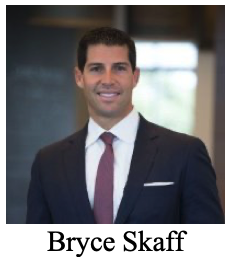
Bryce Skaff, co-head of the global client group at Dimensional Fund Advisors, presented the results of his firm’s research into the drivers of growth and profitability among advisory practices. Dimensional conducts an annual advisor benchmarking survey, collecting data about how much firms spent on key functions. It then divides the results to separate the high-growth and low-growth firms. (In his presentation, Bryce was clear not to equate growth with success. For example, he said it is not Dimensional's position to say that a lifestyle practice for a sole proprietor is any less successful than a supercharged enterprise firm. It aims to help all types advisors deliver on their individual goals.)
Of approximately 400 firms with more than $1 million in revenue, the bottom quartile grew revenue 2% versus 36% for top quartile on average. The number of households served, full-time employees and AUM were not very different. The data showed that high-growth firms spent more on human capital and the client experience than their low-growth counterparts. They spent about the same on business development and technology.
“Most firms use same technology,” Skaff said. But the successful firms “institutionalize” their use of technology, fully integrating it into their processes and workflows. Top-growth firms have a “culture of growth,” he said. They track sales growth, prospecting pipelines and even the number of digital “touches” they have with prospective clients. Those firms also offer more services, such as charitable giving advice, account aggregation and retirement planning.
Top-growing firms have younger clients in accumulation phase, Skaff said. They also raise fees more often in 2018, and are more deliberate about articulating their value proposition. Top firms attract a smaller percentage of new business from existing client referrals and more on scalable sources of marketing, such as digital prospecting, events and M&A. Top-growth firms acquired 12% of new clients through M&A. If you took a subset of the universe of just firms that have acquired any clients through M&A, 71% of the top-growth quartile new clients came from M&A.
“High-growth firms are not maximizing profits in the short term,” he said. “They are growing to improve their value delivery and improve outcomes for clients and employees.”
Why Joe Duran sold to Goldman Sachs
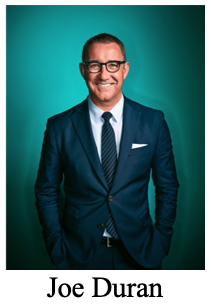
Joe Duran, the CEO and founder of United Capital, sold his firm earlier this year to Goldman Sachs for a price reported to be $750 million. He provided some details behind that transaction, but more interestingly provided some lessons on leadership and what it takes to build companies that have strong competitive advantages.
Your business is built around one proposition, Duran said: What problem are you solving? In the case of United Capital, he decided that the typical problem solved by most advisors was insufficiently compelling: How do you make sure your clients don’t run out of money? Instead, he chose to solve the problem of how you make the most out of your money. That vision is what guided him to build the systems and processes at United Capital, and ultimately became its core value proposition.
He said that most of Goldman Sachs’ clients are above their “freedom line.” They can choose to make more money, but it will not change their lives. Those clients are focused on the same problem he solved at United Capital – making the most from their money, in terms of personal enjoyment, philanthropy or leaving a legacy.
Duran acknowledged that timing was a factor in the sale of his firm. “When they are handing out apple pie, you want to get a slice,” he said. What got Goldman Sachs interested, he said, was that United Capital had created a “community” that became really hard to leave. He said that truly successful companies can “own” the consumer. Apple did this with the iPhone and Amazon did this by creating a shopping portal to “own” the way consumers make purchases. Duran said he was guided by making his relationship with his client so all-encompassing and inevitable that they will never leave him.
Duran seemed to have a vision of building United Capital to a much bigger level, but he did not say what that was. “Your life is centered on about five apps that you will use for an increasing array of products and services,” Duran said. In addition to Apple and Amazon, those include Google, Netflix and Uber. You can’t build an app of that scale as a small firm, he said. “Clients will stay with you,” he said, “but you won’t grow organically.”
He said United Capital doesn’t offer any Goldman Sachs products. Indeed, he said, “products are being commoditized, but delivery is not. All wealth managers are offering the same thing and the consumer knows it.”
Duran said there are four “pillars” that comprise his leadership style, which conveniently comprise the acronym “cash”: Clarity (explaining why he does things a certain way and creating a culture of how things should be done; “If you have to explain how to do something, you have the wrong people”); Adaptability (recognizing that you have to change and evolve to grow; Duran has a personal commitment to learn something new every 18 months); Sustainability (the business will thrive and grow without you); and Humility (the willingness to be wrong, which means that everyone owns the solution and people tell him when he is wrong).
Private equity is a “steroid pimp”
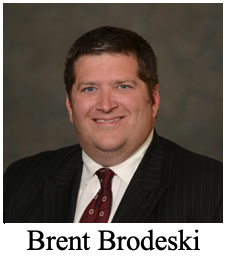
Brent Brodeski, the chief executive of Savant Capital Management, spoke about his journey to find the right buyer for his Rockford, IL-based wealth management firm.
After considering the full range of options, he settled on partnering with a “billionaire sugar daddy.” He raised capital from a family office. He chose that option because the family office was investing with a long time frame. It was among the lowest offers he received and the transaction was complex. He said his criteria were to maintain some control, have access to follow-on capital and be able pay dividends. His most important criterion was the alignment of interests with the family office, which he was confident would ensure the ongoing success of his firm.
Along the way, he rejected the idea of taking capital from a private equity firm, which he call a “steroid pimp.” He said the P/E firms offered great multiples, but no easy path for employees to participate in future successes. He was confident that the P/E firm would “cut a bunch of costs,” which meant that he couldn’t promise job security to his team.
Brodeski said a P/E firm would put him on a treadmill, crank up the speed, “pump you full of steroids and ultimately pimp you out to the highest bidder.” Their time frame for a liquidity event could be as short as three to five years, much less than his billionaire sugar daddy.
Do we need a Twitter ticker?
There was one way the conference could be improved.
An annoying feature was a “Twitter ticker” that was displayed on each of the two large screens on either side of the main stage. They displayed, in real time, Tweets from attendees that had used the hash tag for the conference. At times, this turned into a conversation among a small group of attendees over some point made by one of the speakers. More often, those Tweets restated a “sound bite” from a previous talk.
Not only did this distract from those presenting, it added no value to the overall proceedings. I’m sure that the speakers would have turned this ticker off if they could.
Read more articles by Robert Huebscher
 What drives advisor growth and profitability?
 Why Joe Duran sold to Goldman Sachs
 Private equity is a “steroid pimp”











