Northern Trust – It’s Dangerous to be Prematurely Cautious
Membership required
Membership is now required to use this feature. To learn more:
View Membership Benefits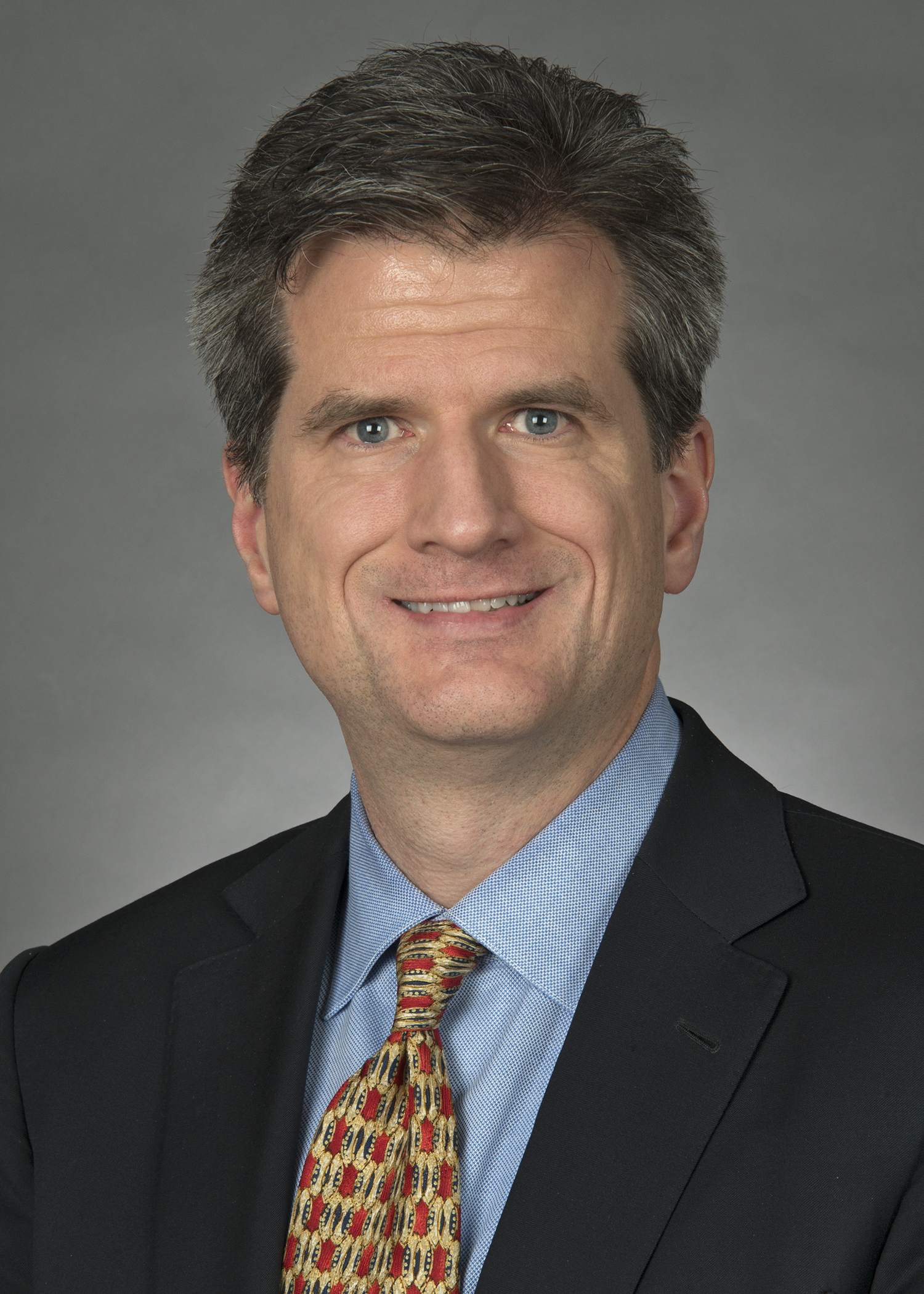 In his position as chief investment officer, Bob Browne sits atop one of the world's largest asset management firms, Northern Trust Asset Management, which has more than $900 billion in assets under management. He chairs the firm's investment policy committee, which sets investment policy for all Northern Trust groups. This spans a vast array of asset classes from equities and fixed income to real assets and alternatives. Bob joined Northern Trust in January 2009 and has more than 25 years of investment experience.
Here is a link to Northern Trust’s economic outlook that we discussed in this interview.
I interviewed Bob on February 28.
Tell me a little bit more about your role within Northern Trust and the types of activities that you oversee.
You've already mentioned some of the hats I wear on a day-to-day basis. I oversee the investment group at Northern Trust Asset Management. I have the pleasure and honor of working with my team on equities, fixed income, alternatives, and multi-asset class strategies. The latter is the area, from an investment perspective, I'm most closely involved with, as I'm still a practitioner. I'm a co-portfolio manager of our global tactical asset allocation fund (BBALX).
I'm the chair of our investment policy committee that oversees all of our investment activities from a governance perspective. It also approves the models and asset allocation changes that come to the group from the asset allocation committee, which I'm also a member of. It's a group of senior investors who determine how we think about the world and how we should be positioned tactically.
Besides those two roles, I also help in meeting with clients, getting to understand them better and telling them about what we do. Finally, I'm on the executive team of not just the asset management group, but of the Northern Trust corporate management group.
It's been really interesting to sit at the top of the management structure of this $1.2 trillion financial enterprise. From that perspective, I receive a macro view of the world and develop a better understanding of the regulatory environment. Those are the things that I'm up to on any single day.
That's a busy day. We're going to talk about your investment outlook. Tell me how you and your team put that outlook together.
There are two parts, because we have what we call a two-horizon view of the world, short-term and long-term or more formally, tactical and strategic. Let's start with the latter.
Once a year we get together to update our capital market assumptions. That's our five-year-plus view of the world – what we think is a good global investment cycle. Given that horizon, it is an investment cycle that’s driven more by demographics and potential GDP, acknowledging in particular the potential for productivity gains, and longer-term or secular inflation. Those are factors that are different from what drives the market over a shorter-term horizon. Shorter-term for us is one year, a month or even a day, and that's where we look for earnings momentum, which is driven by growth, monetary policy and fiscal policy.
We're always in a “yin and yang,” as we call it, of comparing strategic needs driven by our capital market assumptions and those assumptions that drive our long-term forecast for asset classes around the world, assuming some type of normalization and de-levering that we know is in place in any single day. Every month, when the tactical asset allocation committee meets, we identify where we think the market's making a mistake relative to our own sense of value. We've done a pretty good job of combining our long- and short-term view into this holistic approach to managing asset allegation.
I've had the privilege of interviewing you before as well as your colleague, Jim McDonald, who is Northern Trust's chief investment strategist. I went back and I looked at some of Northern Trust's predictions for 2019. You and your team were right on your key calls. You were bullish on U.S. equities, which returned just over 31% based on the ETF SPY. You also were bullish on investment-grade bonds, which returned over 17% based on the ETF LQD and also on junk bonds, which returned almost 15% based on the JNK ETF. You were also correct in forecasting low inflation and a relatively flat yield curve. When you look back at the accuracy of those 2019 predictions, was there anything that surprised you?
The thing that surprised me was the magnitude of those moves. We were bullish, as you said. We were certainly not in the recession camp, as many people were in the beginning of 2019 and would like you to forget now. They certainly thought by the end of 2019 we would have seen incipient, if not already emerging indications of recession. But we were never in that camp. We felt pretty comfortable it would be a good environment for risk assets, but I'd be kidding myself, as well as your readers, if I was forecasting 30% returns. Our principle is that you get your return in a very lumpy way. You want to be diversified and if you have a positive view, you should be diversified across a variety of asset classes. That's what kept us fully invested.
Growth continued to outperform value. As much as we don't forecast factors, we have a very large and impressive quantitative team that spent a lot of time on this. I was probably in the camp along with many investors that 2019 would be the year that value started to stage a comeback. Instead, if you simply look at the Russell 1000 value versus the Russell 1000 growth index, value underperformed by almost another thousand basis points in one year.
That's one I would put at the top of the list of things that surprised me. In a year equities were up 30%, I would have thought that would be a year where the value premium finally started to come back. That did not happen.
We're going to turn to your forecast for 2020. The title of this year's market outlook is “Everything in Moderation.” Tell me about that title and what it reflects in your outlook.
It starts with our view that, while there's not going to be a recession, growth is going to be low. For the last five years, GDP growth annualized in the U.S. has been 2.6% and now we think it's going to come in just below that. But let's pause for 2020 at 1.5%. I am always reluctant to promote the false image of a precise forecast. But 1.5% to 2% is certainly lower than 2.6%. I think the market is underestimating what that slower growth feels to central bankers and decision makers throughout the economy. That will continue to keep inflation and yields relatively low and earnings growth positive but modest. We think earnings growth will come in about 2% around the world and that this will be enough to support equity performance in the mid-single digits. A year of moderation is what we're forecasting, but not a year of negativity.
There are lots of folks who seem to think that after such a strong year, we need to have payback the following year. That's not the way it works. I always remind our clients, and encourage advisors to do the same with their clients, that 2013 was the last time we had a 30%-plus year in equity markets. I then ask them to remember what happened in 2014. Equities were up between 13% and 14% across a variety of indices. One great year followed a good year and it wasn't that long ago. We're probably headed for a similar environment in 2020 – a modest year, but a positive one.
Market outlooks from asset management firms are all unique. What differentiates your 2020 outlook?
We continue to believe that rates will remain low and that this will drive the economy. We think this moderate environment is going to feel bigger than people realize. We're already coming off what is arguably a recession in the manufacturing sector after 2%-plus growth. What happens when we get to 1.5% to 2% GDP? There's going to be more parts of the economy that feel like they're in a recession. A 2.5% to 3% GDP growth environment is very forgiving. A 1.5% to 2% GDP growth environment is less so.
That is the core view. That growth environment has implications for Fed policy and interest rates overall. We think the 10-year is going to end the year around 1.5%. We already saw that in January, so it wouldn't be the first time that we underestimated our ability to get our one-year forecast realized fairly quickly. This is perhaps our real differentiated view relative to the marketplace.
We still assign a very low probability to a recession in 2020. Maybe the market is starting to catch up to us, but as recently as December, a recession this year was increasingly the base case for many of my peers in the industry.
There's certainly no shortage of analysts who are calling for recessions. I'm going to come back to Fed policy in a minute. But let's start with some of the key themes in your outlook.
The longer-term themes need to be looked at in conjunction with our shorter-term themes. Let me start with a theme that we call “Stuckflation 4.0.” The “four” means our fourth year in a row; it is at the intersection of many of our other themes – it is causing the other ones or they are the result of it. We're very much in a camp that in a technology-driven world, secular inflation forces which are low and deflationary will trump the inflationary ones, even with unemployment continuing to decline on a steady basis. It's amazing that we're only at the beginning of the impact of advance computing power and artificial intelligence being applied, not just to the manufacturing sector, but to the service sector. It's going to be that much easier to replace current workers or fill the need for future workers where there's a shortage through the use of technology. That's been the case for many of the past years and we don't think it's going to change.
Two other themes, “Global Growth Restructuring” and “Irreconcilable Differences” speak to the globalization trend and the nature of the relationship between China and the U.S. – in particular, where the global trade dynamics are changing. Without going into too much detail, it is changing in a way that everything else being equal, it will be a dampener on growth. Companies have to re-calibrate and try to figure out what it means when the U.S. is no longer leading the growth of multilateral institutions, and is actually an opponent of institutions such as the World Trade Organization. The U.S. is looking out for its own interest more so than global interest. It's simply outsourcing manufacturing to places in China. It's no longer going to be a given good for corporate America or elsewhere. Companies will recalibrate. That's going to slow things down.
The nature of the relationship between China and the U.S. may change forever. The integration between those two economies is starting to reverse or at least slow down and will no longer be what people would have thought even as little as three or four years ago. That will also be a dampener on growth. It doesn't mean that these strategic competitors will become strategic threats. It's premature to assume that, though it is possible. As everyone knows, both countries are now viewing themselves as strategic competitors. This has implications for and an effect on the decision-making of economic players around the world.
What type of business do you have in China? Where do you place your manufacturing? What can the Chinese export to the U.S. and vice versa? All these things are being re-calibrated and the bottom line is slower growth.
Shorter term, over the next year, our base case and key theme is fundamentals versus geopolitics. We think fundamentals will win out. The geopolitical risk will always be there and will once in a while be the only headline risk that will develop. But the fundamentals of the U.S. are pretty solid – 2% economic growth isn't bad. People have their jobs; they feel secure. The longer they're working, the more secure they feel. It's a highly diversified, service-space economy. We're not that dependent on the manufacturing sector. We're not vulnerable to unexpected increases in interest rates, because we're not as interest rate-sensitive.
Fundamentals win out and they are fully supported by structural monetary accommodation. The Fed is on hold – we think they're going to cut. The ECB is in accommodation mode and so is almost the rest of the central banking world. A low-rate environment is very supportive of risk assets.
When will that end?
The true risk cases over the next year start with the U.S. election. We call it “U.S. election clairvoyance.” It's hard for investors to be focused on the risk of a change in the White House and government more broadly in November because we don't know who the Democratic candidate is going to be. When we come out of the Democratic convention in the summer, there'll be a lot more clarity around this. We will know what the world will look like, positively and negatively, with or without President Trump. That’s going to cause more volatility and we don't think that risk is priced in the market right now.
Finally, even before the coronavirus kicked in, we felt that the risks associated with China might be bigger than we were assuming or thinking after the trade war, just because of the lack of transparency and discomfort we all feel with regards to the accuracy of its data. Given what's going on, there's even more reason to believe that risk might emerge as an important theme for investors over the next year.
Your outlook includes a strategic asset allocation recommendation, something that you review monthly for possible tactical adjustments. I see you're currently overweight developed market equities, global real estate and infrastructure, as well as high yield. What's the reasoning behind that?
Despite the recent carnage, we still think all those asset classes will return positively for the year, with modest, mid-single digit returns in most cases. We think cash will be the worst performing asset class yet again. But you want to be diversified, to say the least. We also have a bias to overweight the least risky risk assets – high-quality U.S. equities and high yield. We also like real assets as we call them – public infrastructure equities and global real estate.
When you do the math – and for your quant readers, the term exposure with the sensitivity of rates in particular – the opportunities are pretty attractive given our view that we will actually will get more bang for our risk budget by being overweight rates.
I want to be clear, though, in our tactical portfolios we underweight bonds, because in order to buy all those asset classes that you just mentioned and to overweight them, we need to sell something. We underweight cash, TIPS and investment-grade bonds. It’s not because we're negative on the bond market; it's simply because we prefer to be in rates and U.S. equities more so than wanting to own bonds.
Let's come back to a topic that you touched on a couple of times already – the Fed. What is your view on interest rates among central banks, particularly the Fed?
We think the 10-year Treasury will trade between 1.25% and 1.75% most of the year. We're a little bit above the midpoint of the range. Our year-end point forecast is 1.5%. We made that forecast in December. We already hit it and now we've backed off a little bit from it. That's the short answer to your question – we think rates will be relatively well-behaved. But we don't think that means we will have a flat curve, because we think the Fed is going to cut not just once but twice, which is a non-consensus view.
The Fed, along with everybody else, will start to realize that inflation is not going to be an issue. The curve will invert, not just because of the forces in the U.S., but from forces around the world. The market and the Fed will feel uncomfortable with the curve inverting in a low-inflation environment. The Fed may consider 2% to be trend growth, but the U.S. economy is going to feel weak and generate more deflationary pressure than the Fed appreciates.
That's how we get the two cuts. We realize it's a bit aggressive. Maybe we won't see the second cut until the first quarter of 2021. We're practically correct, since the market has already discounted the move a couple of months ahead of the Fed. Our view is that the Fed continues to follow the market in terms of monetary policy. If the market is discounting a Fed cut at 85% to 90% a month before the Fed meeting, the Fed is going to cut.
That was certainly the case last year.
You've touched on the fact that you expect inflation to be low and the probability of a recession is fairly slim in the U.S. Please expand on your thinking. What is driving your lack of concern about inflation and a recession?
It's best to start with an anecdote. I like to talk to people about their daily experiences, like using mobile apps to pick up coffee at Starbucks. It's hard for traditional data from the Departments of Labor or Commerce to capture that efficiency. Maybe you feel like you wasting more time, but not everybody is. Some people are getting to work more quickly or they're doing something more productively. If you use Amazon, you're not dealing with cashiers anymore. You're getting things delivered to your home that you never got delivered even one or two years ago. All these things are adding up and they are deflationary forces.
The power of logistics is converging with technology, making all of our lives easier like getting things from A to B as quickly and as cheaply as possible. And guess what? It is actually working – not just for Amazon, but for all technology-driven companies. With the migration toward the cloud, all those inefficient data centers that companies had been operating on their own are becoming obsolete. You can do it more efficiently, with better cyber security, by doing it at least on a hybrid basis through the cloud.
The reality is globalization is giving large multinational companies an incredible tool to maximize their business models in terms of where they have their production and how they scale their intellectual property into a variety of markets. People often think about China as being the major beneficiary of globalization in the last 20 years. In many ways, that's true in terms of the impact on their society and on broad economic development. But who have been the real winners of globalization? It's world-class, large, primarily U.S. multinationals. They can scale intellectual property around the world and open multiple markets for literally tens, if not hundreds, of millions of people – and that has also been a deflationary force.
As regards to a recession, the U.S. economy is highly diversified. I always try to get people to focus on the more-likely risks. The more-likely risk in the U.S. is not a recession. It is a bit more likely that we get stuck in a 1% to 2% growth environment, or a 0.5% to 1.5% percent growth environment, not a recession. It won’t require emergency policy measures from DC, but it won’t feel that great for many economies, companies, workers and society.
What is important for economies around the world is still China. We're all assuming its government, a totalitarian decision-maker, can always pull levers to avoid a recession. But the reality is it is more dependent upon the interest-rate cycle, because it is more manufacturing- and inventory-driven. It's a much more cyclical economy. If there is going to be a recession from a cyclical perspective, keep an eye on China more so than the US.
Lots of people don't appreciate the fact that high productivity is actually a disinflationary driver in all the ways that you just discussed, even though it's not necessarily picked up in some of the data that gets reported.
This was not a factor when you generated your outlook, but reading the data this morning, there have been about 3,000 deaths from the coronavirus and approximately 88,000 people reported as being infected. Has this caused you to revise anything?
Not yet, but it has made me a bit more cautious. We had been saying for weeks that you need to be a little humble as an investor on this one about coming to a premature conclusion on the impact. In general, our view is that geopolitical risks are usually exaggerated, especially when the economic fundamentals are solid. The markets work past them pretty quickly. Most recently, the U.S. assassination of the Iranian general Soleimani was a perfect example. It's all we talked about for a few days, but now no one talks about it. It could be a human tragedy, but Iran is a relatively small country in terms of GDP and impact on the global economy.
China is not. That's why I'm cautious. China is the second largest economy in the world. It has a huge consumer market, not just for the Chinese but for the global economy. It has been the number one contributor to GDP growth on a weighted basis for the last 10 years.
I am worried about how the virus has slowed things down in China, where people aren't going to work, restaurant chains and Apple stores have closed, flights have been restricted, and its tourist dollars are no longer being spent elsewhere. It's the headline news every single day, not just the first, but the second and third article. It's all the Chinese think about and their behavior is changing. The magnitude of these developments is important, at least for a quarter or two. And with the virus having recently starting to spread to other countries, including the U.S., we now need to be concerned about a much more global financial impact.
It will have a bigger impact on the Chinese economy in Q1 and maybe Q2 than people appreciate. The consequences for the rest of the world remain to be seen. But we all say that the unintended victim of the slowdown in China is usually the German manufacturing center. It's very export-driven and dependent on China. It's one of the reasons why the economic data from Germany is coming out on the low end.
Putting this all together for advisors who are working with clients in the accumulation phase and have relatively long time horizons, what's the overall asset allocation that you would recommend for them?
Our most popular multi-asset class strategy is our growth and income model, which is similar to the BBALX fund I co-manage. It works for a variety of clients. Some clients may be better off in a target-date-style model, where they have a set retirement date in mind and they want to follow a glide path. Some clients may be income-oriented or max-growth-oriented.
But I think growth and income is most often the right combination – the proverbial 60/40 portfolio that meets a variety of needs. It's a good starting point to have a discussion with clients who want to be a bit more conservative than income-oriented, or a bit more growth-oriented and have more risk assets. That type of portfolio for us is domestically-oriented on the fixed income side. We don't think we should take currency risks with a strategic fixed income portfolio that is meant to provide balance and security. Fixed income should never be a source of pain in times of stress. It should be a source of comfort. That's why we consider high-yield to be a risk asset. We don't want our clients thinking about high-yield bonds being part of their fixed income basket, because high- yield is not going to help you in times of stress.
That portfolio strategically has about 41% high-grade bonds, a combination of investment-grade bonds, TIPS and a little bit of cash. We're 12% underweight in what we call the “risk control portfolio,” because we want to be overweight U.S. equities. On a global reach, we want to be overweight global listed infrastructure and global real estate, which are rate-sensitive equities, and we want to be overweight U.S. high-yield. We're overweight U.S. equities by 6%, overweight high yield by 5% and overweight global listed infrastructure by 2% and global real estate by 3%.
High-yield is a 10% position for us. It seems high, but it's still a lot less risky than a 10% position in some of the equity markets.
I think a growth and income portfolio of high-quality asset classes that are diversified gives clients the opportunity to generate income but still participate in the upside and have more downside protection than an equity only portfolio. That's our starting point for any conversation with clients.
Bob, is there anything else you'd like to add?
It's dangerous to be prematurely cautious. The opportunity cost of being too much in cash ends up being very painful. There were plenty of investors who were quite cautious at the beginning of 2019. But if you miss a 30%-plus year, you never get the long-term return of 5% or 6% or 7%. You need the 30% year. We're in the job of managing risks, not avoiding it. That is my takeaway comment for all the advisors in the field.
Membership required
Membership is now required to use this feature. To learn more:
View Membership BenefitsSponsored Content
Upcoming Virtual Events View All