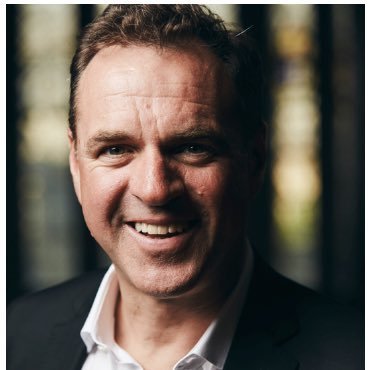
 According to Niall Ferguson, the lesson from history we should embrace is that, despite the noble work of scientists, we won’t find a vaccine for COVID-19. As in the past, this disease is something we have to manage and live with.
Indeed, he said, there is no guarantee that the world will have an “after COVID-19” era.
Ferguson is a senior fellow at the Hoover Institution, Stanford University, and a senior faculty fellow of the Belfer Center for Science and International Affairs at Harvard. He spoke via a webcast hosted by the Munk forum.
As a historian, he said he is among a profession that has been left out of the policy debate. Pandemics are a disaster, like earthquake and wars, that vary in size and frequency and are extremely hard to predict. There were two pandemics – the Antonine plague in ancient Greece and the Black Death – that each killed two thirds of the world’s population. The Spanish flu killed about 3% of global citizens, by contrast.
In January, he was saying that we could not rule out an “utterly disastrous scenario” for the Coronavirus and needed to behave with “absolute urgency.” Now, he said, it’s clear it is not as bad as 1918; “it’s more like the flu pandemic of 1957-1958.” That pandemic, he said, had no lockdowns and minimal closures. The economic and political impact was very minor.
The reaction to the Coronavirus has been much more extreme. “We’ve really radically changed our attitudes in ways that would have baffled President Eisenhower,” he said.
Ferguson argued that the policy response in the U.S. to the virus placed a historically high value on preserving lives. We are in a strange relationship with death, he said, to the point of denying it. “It’s clear that very few people have no idea how many people die where they live.” Previous generations regarded excess mortality as something that “life dealt you,” he said.
He said the U.S. and UK “dithered around” early on – on a bipartisan level – in response to the threat posed by the Coronavirus. “We failed to appreciate how fast the flu traveled – by boat – in 1918,” he said. Many people warned that a pandemic was possible, even likely, given global integration.
With Covid-19, our leaders and scientists “messed around” for weeks, he said, until mid-March, when they “freaked out” and closed down our economies. The economic hit has been harder than the pandemic itself, according to Ferguson.
The country that handled the virus the best was Taiwan, he said, which reacted extremely quickly and contained the pandemic, suffering barely any fatalities.
Ferguson said the U.S. “completely screwed up” its response to the virus.
“It’s clear that the shock to developed economies is significantly greater than that of the financial crisis,” he said. We may have unemployment rising faster than in the Depression. But policymakers think it is a rerun of 2008-2009, and they need to “dust off” the playbook of monetary and fiscal policies to offset the effects of the lockdowns, he said.
“Sometimes it’s the consequences of disasters that are bigger than the disasters themselves,” he said.
Our economy won’t be durable for much longer. “You can’t stop an economy for too long and expect it to come back to life,” he said.
A V-shaped recovery would be extraordinary. “It will take much longer than people assume for the economy to recover,” Ferguson said. Pandemics are at least a two-year event, not a four- or five-month passage.
There is no reason to think a pandemic is bad for democracies, according to Ferguson. After the Spanish flu, democracies flourished, he said, although they didn’t last in central Europe. The pandemic is a direct response of the actions of China, which lied and covered up the pandemic. “It revealed the pathologies of China’s one-party, authoritarian rule, much like Chernobyl did for Russia,” he said.
Some democracies – notably Taiwan, South Korea and Israel – have handled this well, he said. The pandemic “underlined the benefits of democracies” – at least those that knew what they were doing.
The countries that had some sense of the dangers of SARS and MERS did the best in 2020. Those focused only on H1N1 did badly, he said. They didn’t understand that a deadly and contagious virus requires a rapid response. Science has gotten significantly better, but our failure is in public policy.
Turning to the academic world, he said the question for higher education is how universities will adapt if it turns out that remote learning works – or how they will adapt if it doesn’t. He is skeptical that campus life will return to normal in the fall. Universities are supposed to be the places that do the best thinking about pandemics, but he has not been impressed by researchers, who have been “too timid and unprepared.”
On the relationship between China and the U.S., he said that the pandemic has reinforced his view of increasing tensions resembling a Cold War. That tension was exacerbated by China’s misinformation campaign about the origin of the virus, which he said will lead to adverse economic consequences for China, inflicted by the U.S. and its other trading parties.
Cold War II is coming, he said, but it is not the worst possible outcome (which would be war). “It might even accelerate a technological war between China and other developed nations,” he said.
The lessons we need to learn are not about viruses, he said. They are about the “bloated bureaucracy” that should have had a plan to respond.
Big government failed epically, he said. “No superpower is coming out of this well.” There are diseconomies of scale. Decentralization is a good thing, he said, and it has already happened in the U.S., as state and local governments have handled key decisions. That is why China will ultimately failed, because it is built on a highly centralized system. Decentralized, democratic states do badly in the beginning of a crisis, he said, but over time get to better solutions. “You want distributed networks, not highly centralized ones.”
Ferguson is worried about the role of technology in this crisis, which should have contained the virus by using digital data, as was the case in Taiwan and Singapore. The correct policy mix is large-scale testing and contact tracing, he said. That policy does not requires a substantial forfeiture of privacy. The problem is that companies, like Facebook, treat our data as theirs, not ours. In Taiwan, when data is used for a public purpose, it is still protected. It is only made public when it is needed. The U.S. should have an advantage in its data, but did not because its data wasn’t made public.
Russia is battling a very bad outbreak of the virus across its population. Putin thought he could “hush up” the problem, according to Ferguson. But pandemics are a “moment of truth” for regimes like Putin’s because they can’t hide the facts. “No dictator is unassailable if they really screw up,” he said.
The most important way to contain COVID-19 will turn out to be social distancing, he said, more so than lockdowns. Many of the coercive measures by governments came too late. Data on the stringency of government rules does not correlate with the spread of the disease, he said; changes in personal behavior is what works.
Will countries sacrifice environmental benefits for growth in order to revive the economy? Ferguson was not very sympathetic to climate change activists. He said that climate change is not the only threat we face, and is relatively unimportant compared to a pandemic. “It you want to stop climate change,” he said, “a pandemic is the way to do it, but it turns out this is not ideal.” The environmental movement needs to understand they can’t be “manically focused” on a single issue at the expense of others, such as economic growth.
Nor was Ferguson very respectful of what he called the “virtue-signaling diversify brigade,” which included those who advocated for a presidential virus committee that was gender balanced. He said that was less important than getting the best possible experts. In regard to studying the co-morbidities of the virus, he said genetic research would be useful. But, he said, “You get kicked out of universities if you bring up the role of genetics.” He called for a revival of “meaningful freedom of speech.”
Parties and crowded bars, restaurants and lecture halls may be a long way off, he said. “It will be much harder to get rid of the virus than many people are assuming.”
But, he said, it will make it possible for people like him to speak and lecture, without the carbon footprint of traveling.
Read more articles by Robert Huebscher
 According to Niall Ferguson, the lesson from history we should embrace is that, despite the noble work of scientists, we won’t find a vaccine for COVID-19. As in the past, this disease is something we have to manage and live with.












