Humility and Patience: Understanding the Long-Term Outperformance of the First Eagle Overseas Fund
Membership required
Membership is now required to use this feature. To learn more:
View Membership BenefitsThe First Eagle Overseas fund (SGOVX) has an exceptional 27-year history. Since its inception, it has returned 9.15% versus 4.03% for the MSCI EAFE index. It was originally managed by the legendary Jean-Marie Eveillard. I spoke with its current management team about how the fund has performed during the coronavirus crisis and why financial professionals should look to diversify outside the U.S. markets.
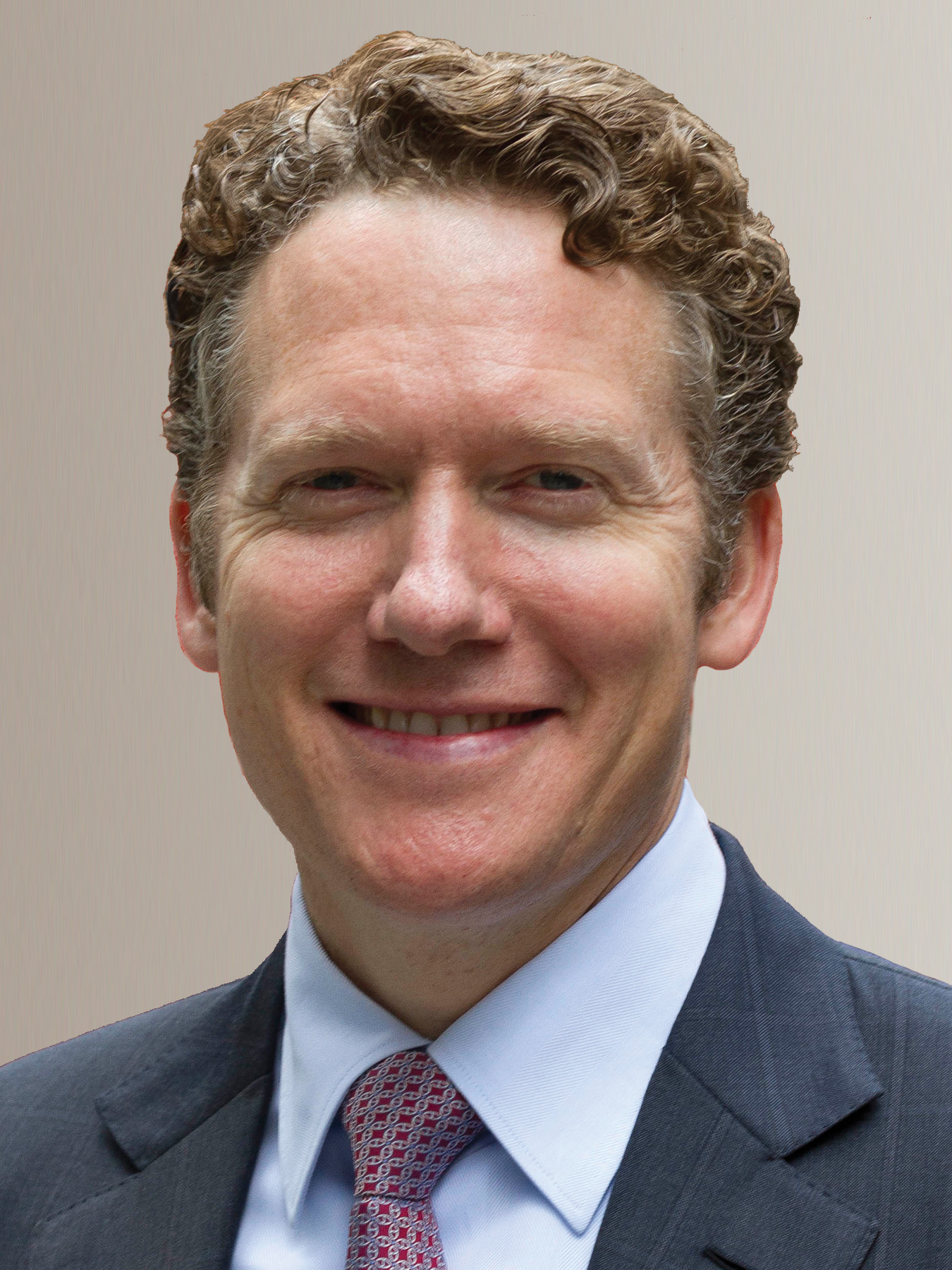 Matthew McLennan is head of the Global Value team and a portfolio manager on the Overseas Fund, Global Fund, Gold Fund and U.S. Value Fund. Matt joined First Eagle in 2008 to lead the Global Value team. Previously, Matt worked for Goldman Sachs Asset Management (GSAM) in London, where he served as co-portfolio manager of Global Equity Partners, a group he co-founded in 2003 that ran a focused global equity portfolio for offshore private wealth clients. Earlier in his career, Matt was equity chief investment officer of the Investment Strategy Group for Goldman Sachs’ private client business. He joined Goldman Sachs in Sydney in 1994. Matt started his career in 1991 in Brisbane, Australia, with the Queensland Investment Corporation and was ultimately responsible for the firm’s international equity exposure. He was born in Rabaul, Papua New Guinea, and grew up in Queensland, Australia. He received his bachelor of commerce with first-class honors and master of international commercial law from the University of Queensland.
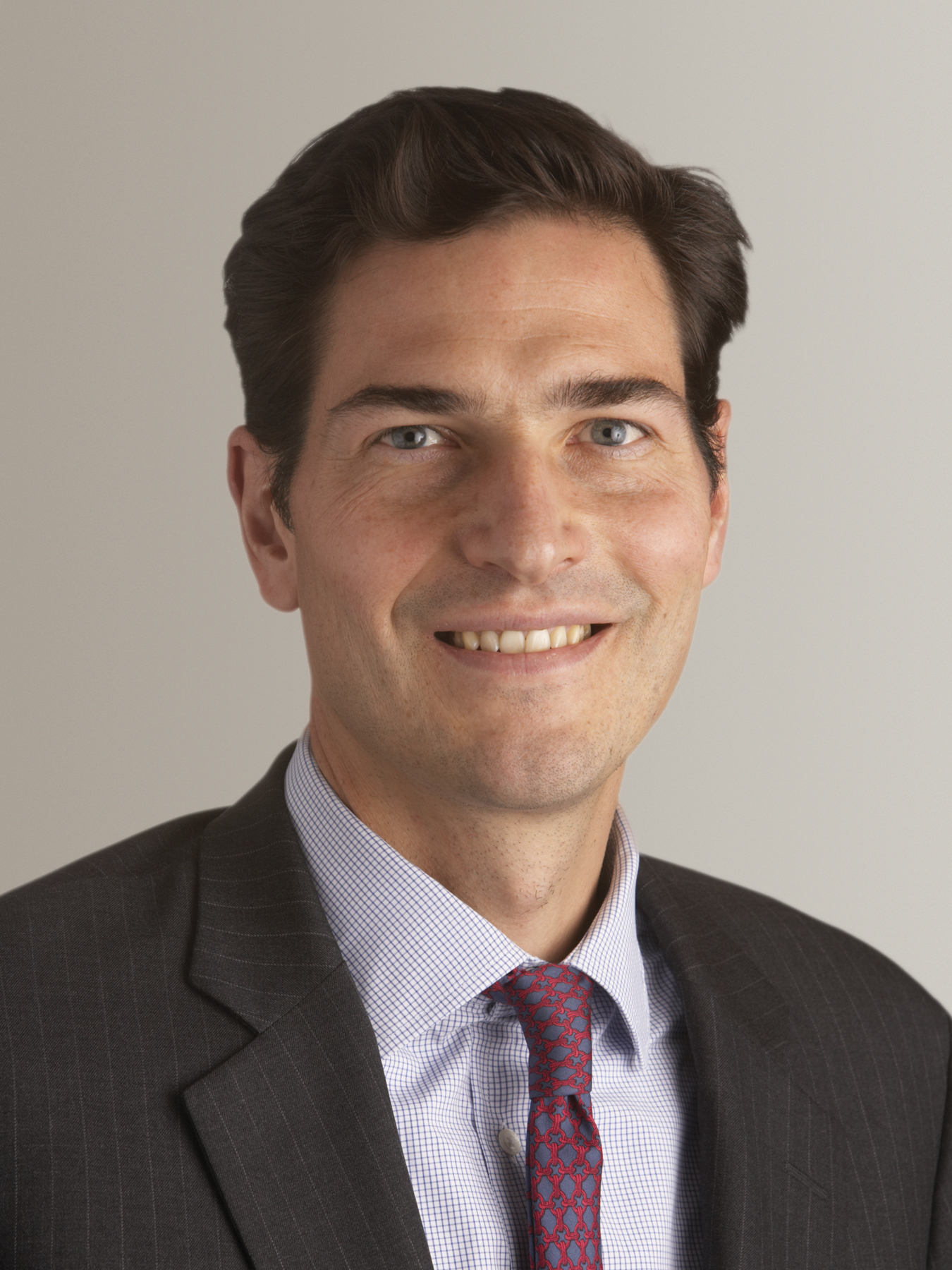 Kimball Brooker, Jr. is deputy head of the Global Value team and a portfolio manager on the Overseas Fund, Global Fund, Global Income Builder Fund and U.S. Value Fund. Kimball joined First Eagle as a senior research analyst in 2009, and he continues to be responsible for coverage of banks, financial services and holding companies. Previously, he was chief investment officer at Corsair Funds, a multi-billion-dollar private equity fund spun off from J.P. Morgan. Kimball began his work at Corsair in 1994, when he joined J.P. Morgan as an associate in the Investment Banking Department’s private equity group. Kimball started his career in 1992 as a financial analyst at Lazard Frères & Co. He received his BA from Yale University and his MBA from Harvard University.
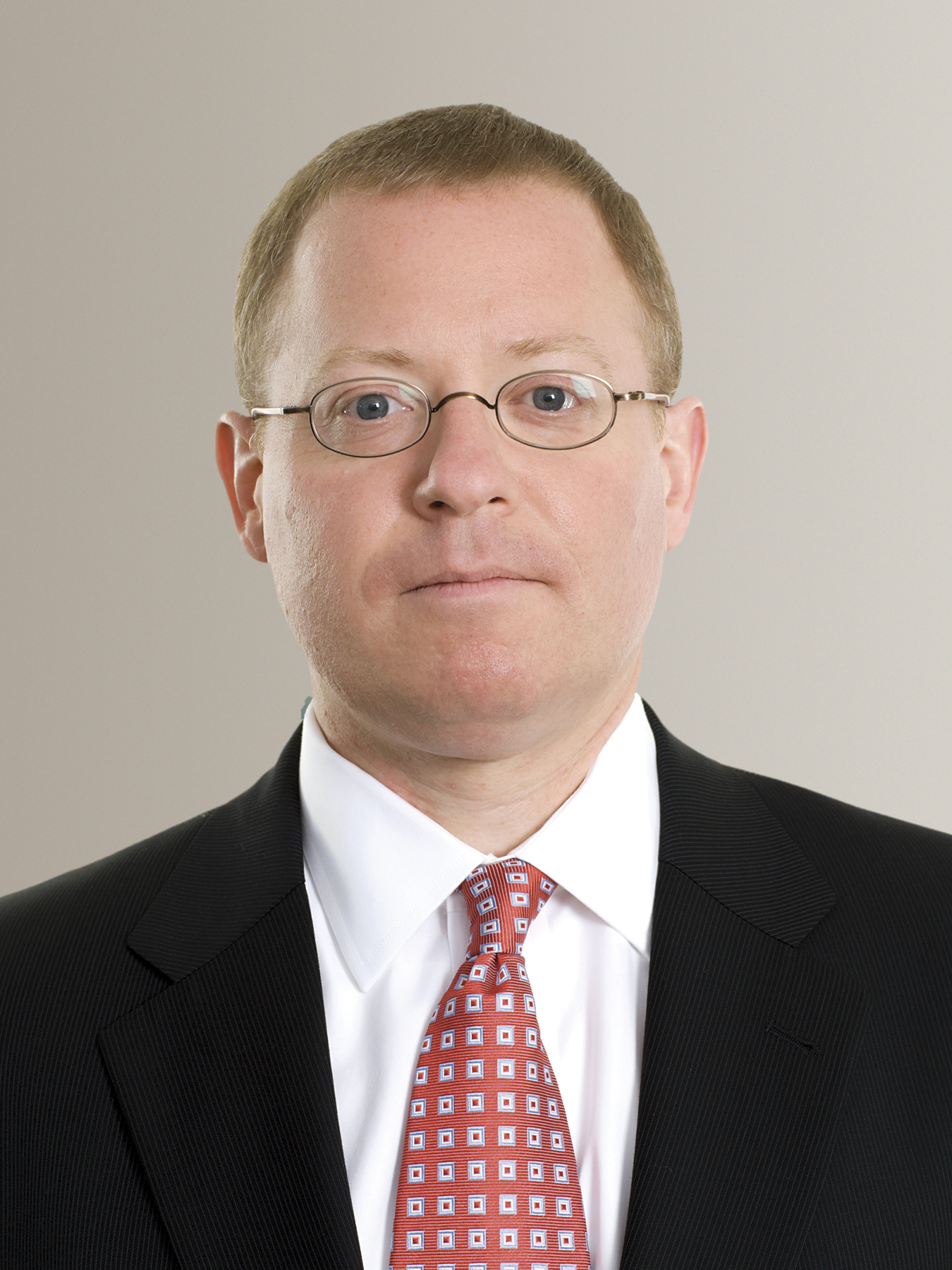
Alan Barr is an associate portfolio manager on the Overseas Fund and a research analyst on the Global Fund, Global Income Builder Fund and U.S. Value Fund. Before joining First Eagle in 2001, Alan spent seven years at Rittenhouse Financial Services and four years at PNC Bank as an equity research analyst. He holds a BA in communications with a minor in economics from Temple University.
I spoke with Matt, Kimball and Alan on April 28.
The First Eagle Overseas Fund has a 27-year history. What is its mandate and investment process? What are its risk controls?
Kimball Brooker, Jr.: The fund was established in 1993, and the idea was to provide clients with the means to invest internationally using the same investment principles that we had been using for our Global Fund, which was established a little bit earlier, in 1979. The same philosophy, mandate and processes apply. We think of ourselves as value investors, and although the primary mandate of the fund is preservation of purchasing power, we look to achieve that in a way where the goal is avoiding losses. We're looking to find companies that have durable characteristics, and we're looking to acquire those at enough of a “margin of safety” in valuation that can prevent permanent impairment of our capital and our investors' capital on the downside.
When it comes to underwriting individual securities, which is central to our investment process and risk control mechanism, we're looking to identify companies that embody a “margin of safety” in two different dimensions: price and the business itself. The first is fairly simple to understand. It's around valuation, and we're looking for companies that are trading at a discount to our sense of intrinsic value. Typically, we'd look to commit capital only when that discount is in a double-digit range. Our typical rule of thumb is that there must a minimum 25% price discount.
The other dimension to create a “margin of safety” in our investment activity relates to the characteristics of the business itself. We're looking for companies that are durable, and that we believe are persistent and capable of withstanding the vicissitudes of macroeconomic changes and trends, as well as competitive changes and trends. That typically involves companies with reasonably strong competitive positions in the industries that they operate in. They don't need to be the most glamorous businesses, but they need to be well-entrenched in terms of their role within their economic ecosystem. Further, we like the balance sheet to be as clean as possible, more or less unencumbered by debt and/or other sorts of contingencies like unfunded pension liabilities. Finally, we like to have a competent and realistic management team making decisions, and we spend quite a bit of time evaluating the capital allocation skills of the teams that we consider.
We also have quite a broad level of diversification within the portfolio. It's not uncommon for us to have more than 100 positions in the portfolio. It would be very unusual for a position to reach a size north of 3% or 4%. As we'd rather not risk any material diminution in the value of the portfolio, diversification is quite important to us.
Then there are two other elements essential to our portfolio construction process. We're very happy to hold cash if we're unable to find opportunities. We view cash as a default position. But it's a byproduct of the investment process; when there aren’t companies that meet our criteria, the size of our cash position may grow. Conversely, when we're finding businesses that fit the bill, cash will be deployed in equities and our cash position will be lower.
Gold is a fourth area and is meant to serve as a potential hedge for the portfolio. We have a combination of both gold bullion as well as gold-related equities, which include gold mining companies as well as gold royalty companies.
Matthew McLennan: We don't view risk as tracking error. We think of risk as the permanent impairment of capital. And that's what we're seeking to avoid with our bottom-up approach.
The fund has an exceptional long-term track record. As of March 31, its annual return since its inception in 1993 was 9.15% versus 4.03% for the MSCI EAFE index. That's an outperformance of 512 basis points. To what do you attribute that outperformance?
Matthew McLennan: These points are going to follow on from what Kimball has said. If you look at our performance over the decades, it's been a tale of winning by not losing, of practicing what Ben Graham would refer to as the “negative art” of avoiding permanent impairment of capital.
The core engine for our returns has been our equity investments. And while we are equity investors, first and foremost, we start out more like bond investors, being focused on what can go wrong. We focus first on the balance sheet and avoid businesses that have excessive capital-structure risks, and those that are subject to other contingencies or excessive accruals. It’s helped us avoid many companies that went out of business or had to dilute or heavily recapitalize in business downturns.
One of the reasons the broader MSCI EAFE index has suffered is that entire sectors have been beset by financial recapitalizations. As a team, we've managed to sidestep some of those key issues, such as technology in the late 1990s, some of the problems with financials in the mid-2000s and later on some of the boom-and-bust enthusiasm for the BRICS.
We look at balance sheet considerations and downside risk. We shift our attention to the most valuable, intangible assets that aren't on the balance sheet. This is the stability of market position for the company and its management acumen. To reinforce what Kimball said, we've been far more focused on the persistence of attractive market shares than on companies that display short-term rates of growth. Our stock-selection alpha comes from the avoidance of fads and companies that are in secular fade because of our focus on systematic, attractive market position.
Managers who act as long-term owners over time tend to be more adaptive and deploy capital sensibly and in an accretive way, as opposed to promoters who may be more in the media spotlight in the short term but have a track record of being more dilutive in their management behavior. When you look at all those factors―the focus on the balance sheet, the nature of the business and its market position, and the degree to which management behaves as owners―they are all important drivers of our stock-selection returns.
But most importantly, it's been the “margin of safety” that we've paid in price when we've committed capital.
When you buy persistent businesses at modest multiples, you find yourself getting mid-single-digit free-cash-flow yield and mid-single-digit long-term growth in line with the broader nominal economy. It's those two factors that are the arithmetic of how we've produced 9%-plus returns, while the market has produced returns closer to 4%. Good investing comes down to arithmetic, and Ben Graham reminded us of that lesson.
We have been willing to countercyclically hold cash in our portfolios when it hasn't been an opportunity-rich environment. In the short term, we get low returns from cash, but we have the option value of deploying that cash during windows of market stress. When you think about our performance through full business cycles, the fact that the cash gets deployed in moments of market distress means that it can potentially generate much better returns than you would think. Likewise, the fact that we've chosen gold as our potential hedge has been helpful. Over the last 20 or even 50 years, gold has had high single-digit annualized returns. It's been a good store of value as a potential hedge and it has operated countercyclically.
One of the things that we're proudest of, aside from the absolute level of alpha, is the fact that we've achieved those results with much lower risk than the broader market and smaller drawdowns in times of crisis. We've tried to generate resilient real returns through full business cycles.
I'm going to ask about how you have repositioned the fund in response to the virus. But, first, tell me about the environment in your office in mid -to late February, as the market started to respond to the threat. At what point did you realize that this was as disruptive as it turned out to be? How different was the way your investment team operated during that period as compared to the pre-crisis environment?
Matthew McLennan: We've always believed that markets are inherently unpredictable. Nothing brought this more into focus than the fact that there were no economists who were calling for a pandemic to end this business cycle back at the tail end of the 2019 and early 2020. We expressed publicly our concerns around market valuations and sovereign debt accumulation. The business cycle was as good as it gets, as evidenced by generationally low levels of unemployment. While we couldn't specifically predict that COVID-19 was going to occur, we were ready for a less-than-perfect market environment. This is key to understanding how we behave, because you want to buy umbrellas when it's not already raining, and you certainly don't want to be looking for hurricane insurance in the middle of a storm.
Our sensitivity to bottom-up valuations and the top-down macro concerns meant that we entered this storm owning resilient companies along with double-digit positions in both cash and gold as a percentage of our portfolios. If you look at our portfolios on February 19, when markets peaked in 2020, and how they've behaved since then, the MSCI EAFE was down around 20% to its close on April 24. We were not unscathed during this bear market, but we were down a more modest 11% during that period. What largely determined our results was not frenetic trading activities since the crisis struck, but rather the structural positioning of the portfolio leading into it. That's an important distinction.
I can remember in late January, I started to inquire with the Harvard School of Public Health, where I've served on the board of Dean's advisors, about what leading epidemiologists were thinking with respect to this virus. That included Professor Marc Lipsitch, who serves at the Harvard School of Public Health and was well ahead of the curve highlighting the risks.
We have modest portfolio turnover―nearly a decade average holding period, so around 10% turnover annually. Given the fact that the progression of this virus was exponential in nature and was telescoped into a brief month, unfortunately there wasn't much that one could do to avoid the storm. But it certainly helped that we weren't ignoring the risk. We weren't blindly doubling down at the first signs of market trouble.
We were patient and waited to become far more active net buyers later in March, when markets were more distressed and starting to better reflect what we perceived to be the very real risk posed by this pandemic. If you could have stepped into our offices at First Eagle, you would have seen the team behaving as usual. It's far more like a library than a locker room around the halls of First Eagle. As we started to appreciate the gravity of the situation, the firm’s management committee decided in the second week of March to move toward everyone working remotely.
We spent the better part of a decade building our business contingency plans and IT capabilities. We were fortunately in a position to move to remote working without business interruption. But let's make no mistake―our business, like most others, will suffer in the short term. I know times are going to be tough for many who cannot work remotely, and we cannot help but be sad to hear the many stories of business and personal struggle. As an organization, we take our hats off to those who fought on the frontlines to keep the rest of us well. It's certainly a troubled time.
How has the coronavirus crisis affected the types of investments that you're making in the fund? For example, are there industries that have suffered a permanent, structural impairment that you're now avoiding?
Kimball Brooker, Jr.: I don't think it affected the investment process that we have or the kinds of investments that we make on a ground-up, with respect to looking for persistent, well-financed businesses. There are some industries that seem to be obvious suspects, but even there it's difficult to generalize too broadly. It's often the case that, when we look at an industry, it gets more complicated in the sense that there are different components of the value chain that aren't necessarily homogenous and can be impacted differently.
Retail is one example that's talked about quite often. There are many parts of the retail landscape that are being negatively impacted by this pandemic. It's arguable as to whether it's the pandemic that's impacting it or whether there are business models in that sector that were already under a threat from the development of online commerce. But it's a very mixed picture. Look at certain areas of retail, like grocery stores, which are obviously benefiting. They might be quite low-margin businesses, but the asset turnover they're experiencing is making them quite resilient.
It's difficult to characterize it by industry. We're more focused on individual companies. That said, we’ve avoided areas like retail or hospitality, or some parts of travel, where the norm is for operators of those businesses to combine relatively high level of operating leverage with financial leverage. In the case of travel businesses, we have preferred to look at online businesses.
We're more nuanced. There's no industry that we're taking a complete pass on. When you get into the weeds, which is what we do, there are often many different pieces of a given part of the economic ecosystem. There are some that are vulnerable; but often, there are businesses that fit our criteria. We continue to look broadly.
Alan Barr: I can add a little in terms of some of the activity that's going on in the portfolio. It has been a very active quarter for us, mostly after the market started to decline. It's been one of the most active quarters that we've had since the global financial crisis. There's been eight new positions that have been started in the portfolio. There's been 29 positions that we've increased and 21 that we've decreased. Four have been eliminated, and most of those we were already in the process of selling down prior to the markets’ decline.
But when you look at the positions that we've initiated and the ones that we've increased in the portfolio, it cuts across virtually every sector. It's been broad-based, but there's been more in the consumer staples area than some of the other areas within the portfolio.
What did you like about those companies that did become attractively priced as a result of the market correction?
Matthew McLennan: It's difficult for us to mention individual names, given the proximity to our trading window. But one of the characteristics of those businesses that led us to some of the trades that Alan and Kimball discussed was that this economic downturn is very different in character from a normal business recession. It wasn't about demand being hit 10% or 15% in different industries; it was about entire sectors having to shut down for a period of time. If you run a business that has single-digit margins, is mature and is only worth a single-digit multiple of cash flows, and if it is shocked for a few months, if you have any leverage, you can quickly lose your equity intrinsic value.
It's been an important environment to selectively focus on buying into businesses that in our view have advantaged market positions, better margins and higher levels of intrinsic value relative to their revenue. If they lose revenues for a period of time, it's not as meaningfully negative to our estimate of their long-term intrinsic value.
We haven't selectively gone into businesses that were negatively impacted in the first-order sense. But we've evolved slightly at the margin in the character of our portfolio. The net effect is that we exited the market selloff with less cash and more higher-quality businesses and, incidentally, a higher weighting to gold by virtue of its appreciation.
The fund holds approximately two-thirds of its assets in non-U.S. equities, with the biggest chunks in Europe and Asia. To what extent do you hedge your currency exposure? I recognize that you're a bottom-up value investor and you insulate your process from macroeconomic factors, but to what extent do you worry about a scenario where global economic conditions worsen and that causes a flight to safety and a rise in the value of the dollar?
Kimball Brooker, Jr.: We do hedge our currency exposure, and we do so in a way that's different from many other firms. The typical choice that many managers take is that they either hedge 100% of their notional exposure or none of it. We have a more middle-of-the-road approach, which is driven by our sense of the underlying valuations of the currencies that we're exposed to, which can fluctuate depending on those valuations.
For our main currencies, which consist of the euro, the Japanese yen and to a lesser extent the British pound, we are typically hedged. We try to hedge the actual economic exposure that we're taking, but we do so with levels that are linked to our view on individual currencies. The dollar has been very strong for the better part of the decade. It has become the de facto reserve currency and recently the Federal Reserve has become the de facto global central bank. But that can change. The U.S. fiscal situation, in terms of its deficit, is quite fragile. The dollar is not necessarily going to maintain its position of dominance.
Currency hedging is important, but it's another reason why we want a bit of gold in the portfolio. We want to protect the absolute purchasing power of the liquidity that we have and not make a bet too strongly, one way or another, on any currency or group of currencies. It is a hedge, but the implementation of the hedge is linked to our fundamental assessments of the underlying currencies.
Matthew McLennan: Our currency hedge levels today are below average. The behavior of markets in the early part of 2020 had some similarities to the second half of 2008. When both crises got into the heat of illiquidity, we saw some strange things happen. We saw real yields actually going up on government inflation-protected securities, not down as one might expect in a weakening economic environment.
This was reflected in 2008 and March 2020 by broker-dealers struggling to free their capital to make markets, while banks and foreign-reserve accumulators were seeking liquidity by selling longer-dated bonds to meet shorter-term dollar-funding requirements. Real yields on TIPS went up both in 4Q08 and mid-March 2020. The dollar strengthened, as you implied in your question. What happened then and now is that the Fed intervened in the markets with massive liquidity facilities. Kimball referred to the Fed as the central bank of the world, but this time it wasn't just zero-interest rates and government bond-driven QE; current facilities extended to high yield and municipal bonds. It created a massive FX swap and international repo facilities. Fed efforts in 4Q08 and March 2020 led to an alleviation of liquidity pressures, which in turn lead to real yields reversing and falling through their prior lows.
After the 1Q20 selloff, in the latter half of March and April, real yields fell, the dollar started to weaken a bit, and gold rallied, as it did in Q4 of 2008. This leads us to a moment where we might actually face the prospect of dollar weakness for the first time in a while. The U.S. dollar is already trading well above its long-term real average cross-rate relative to most international currencies. We have a large current-account deficit. Kimball referenced the massive fiscal deficits we have. The Fed, by moving rates to zero, has given up the interest-rate carry that supported cross-border portfolio flows to the dollar. The central bank removed the key liquidity shortage of dollars. We're not going to speculate on when this will happen, but we may be at a point when international diversification makes real economic sense. We saw this play out quite a bit after the Internet bubble burst in the late 1990s, when the dollar weakened for some period.
The U.S. has a wonderful economy, but it doesn't have a monopoly on either great businesses or currency strength. Diversification into international currencies makes a great deal of sense.
As of March 31, the fund held slightly less than 13% of its assets in cash and cash equivalents. Historically, you've invested those assets almost entirely in commercial paper. Is that still the case? How should one think about investing in an asset class that's being propped up by the Federal Reserve Board's commercial paper funding facility (CPPF)?
Kimball Brooker, Jr.: We don't have to use commercial paper. We can use other instruments to manage our liquidity. We manage it ourselves, which is distinct from many funds. We don't entrust it to a money market fund or a third-party manager of liquidity. We deploy the same fundamental analysis that we do across the rest of the portfolio as to how we think about managing our liquidity. The use of commercial paper historically―and we're still invested in it―has not been to try to achieve yield. It's been more for liquidity and stability.
There were parts of the commercial paper market that came under some pressure during the recent market turbulence. The Fed emerged with a commercial paper funding facility that bore quite a lot of design resemblance to the one established during the financial crisis. It had a slightly different wrinkle, in the sense that in 2009, when the first commercial paper funding facility was created, it was designed as a result of impending maturities of commercial paper. There was a need to prevent disruptions to money market accounts as a result of impending maturities from some very large corporate commercial paper issuers, mainly in the United States. This time, the commercial paper funding facility was directed to maintain market order and stability. The Fed achieved that goal.
The commercial paper market may have been propped up by the Fed for a brief period of time in the middle of March, but the market is functioning reasonably well at the moment. We are not wedded to it. We're very willing and able to use other forms of cash. There was a period of time when intervention was quite helpful, but that's beyond us.
Matthew McLennan: Regarding the assertion is that the Fed propped up the commercial paper market, where is the Fed now? The Fed is in investment grade debt. It's in high yield debt. It's in municipal debt. There's the Main Street lending facility. Equities have rallied sharply on the back of all this liquidity.
The multitrillion dollar injection of liquidity from the Fed is distorting asset prices across the board.
You have a large position in gold, about 17.5% as of March 31. I noticed that the allocation increased from December 31, 2019, to March 31, 2020. What is the role that gold plays within the fund? Gold prices did not rise as dramatically as some would have expected during the peak of the crisis, given the scope of the crisis and the economic threats posed by it. How do you explain that?
Matthew McLennan: We own gold as a potential hedge in our portfolios, and we feel it's worked admirably this year. From the beginning of the year, gold is up over 10%, whereas risk assets are firmly in bear market territory. In the moment of maximum liquidity pressures, when real rates were going up and the dollar was strong, as we discussed earlier on, gold was resilient relative to other commodities and risk assets. As those real rates came down, gold rallied strongly. The reason gold acts as a potential hedge and a long-term store real value is because its supply is uniquely stable. The demand for gold, unlike other commodities, is not driven by the business cycle. It's driven by investment demand.
Let’s stretch out the time horizon over which we think about gold's inherent characteristics and look over the last 50 years, since the breakdown of the Bretton Woods Agreement. Gold has compounded out at an annualized return just shy of 8%, outpacing a return on Treasuries of around 6% and M2 money supply growth of nearly 7%. It's no surprise that man-made money has underperformed gold over the long term. As we look forward, the quality of man-made money is likely to be more fragile, as we will have double-digit fiscal deficits to finance on top of what's already generationally high levels of government debt relative to GDP. Central banks will likely resort to various methods monetizing that excess, given the practical challenges of raising taxes in a soft economy.
Gold has already served its role as potential hedge. But let's not forget that it was pretty depressed in value relative to risk assets a couple of years ago, as the business cycle was peaking in 2017, 2018 and 2019. Even after it staged a pretty strong recovery over the last year or so, the Fed started to ease interest rates during the trade and tariff disputes. More recently, the Fed has become more ambitious with its liquidity facilities. Gold is at least still some 10% below its prior peaks in 2011. That's against the backdrop of money supply having doubled and sovereign finances deteriorating. While we don't forecast the price of gold, we acknowledge that its best days maybe ahead of it.
You also own slightly greater than 5% position in precious metal mining companies, including a relatively minor position in gold royalty companies. During this century, both gold and the royalty companies have outperformed the miners. Has anything changed to make you think that the miners are a better investment now?
Matthew McLennan: Our philosophy has been that, if we're willing to hold gold in the vault, we should be willing to hold it in the dirt using equities, if we get it with a “margin of safety”. In the rear-view mirror, there was a better part of a decade when both bullion and royalty companies outperformed the miners. That was in part due to the superior business model of the royalty companies, which secured optionality on land packages that had exploration potential, without having to spend the further exploration and development expenses required to expand those mines beyond their existing reserves. The market has progressively recognized these investment merits and the inherent resilience of these free-cash-flow-generative businesses.
Meanwhile, during that period when the market was recognizing some of the attributes of the royalty companies, many mining companies suffered from cost pressures and poor capital allocation decisions. Those were doubly dilutive forces, as gold prices corrected down after 2011. Having said that, one of the things that Jean-Marie Eveillard, who ran the fund from its inception until 2008, reminds us is that gold mining has offered rewards and not just risks. We've seen that this year. The gold miners have performed very well. In fact, they're up over 20% this year. What's different this year is that many other commodity industries are weak and they're cutting capital expenditures. Likewise, the cost for key inputs, like diesel for running the operations, has gone down. The capital and operating cost pressures are less for the miners.
Meanwhile, we've seen consolidation in the gold-mining sector with quality assets transitioning to better management teams. The combination of rising gold prices this year, with better operating leverage and more capital discipline, set the stage for what has been a very strong performance for these equities in an otherwise down equity market. It's easy to forget that, in a world economy that has industries and technologies coming in and out of existence over decades, gold mining is an industry that's existed for millennia. Owning well-positioned assets run by capable managers in a perennial industry has its own investment merits, independent of the potential hedge value of the underlying gold.
British American Tobacco (BAT) is one of your largest holdings, but you don't have a position in Japan Tobacco. Why only one and not the other?
Alan Barr: This is a good comparison that will provide an idea of how we take a broader approach to value than perhaps some others do. We don't look at value as just being a quantitative exercise. There are a lot of factors that go into managing the risk side of the equation, as well as what we're paying for taking that risk. BAT is a global business. It's diversified, with only about 40% in the U.S. It has large emerging markets exposure in the conventional cigarette business. We all know the dynamics of that industry; prices rise by more than volumes fall, which over time should generate a higher margin. Even if you look at those markets where there is a high price on the product, there still is relatively low elasticity of demand. We think the price increases may continue over time.
In addition, we look at where the industry is going in the future and how to be positioned. BAT is positioned in a more diversified manner to play in the next-generation products that consumers are going to use more. Arising out of its more diversified global footprint, it has not made a one-way bet on one of the technologies to the exclusion of others. The heat-not-burn technology is big in Asia but not in the U.S. The vaping product is big in the U.S. and the UK but not so much in Asia.
It has products that are appealing to these local markets. It has a toe in each depending on how markets develop in the future, and we don't know what the future is going to be. When we look at the valuation, it is cheaper than most of the others in the industry while having a better profile from a qualitative standpoint.
Japan Tobacco, on the other hand, is priced a little cheaper than BAT. But when we look at the characteristics that it has relative to BAT on the risk side, it's in slower-growing markets. It's in tougher markets like Japan, the UK and Russia. Even if it leads in some of those markets, it's lost some market share in Japan. It's been late to the markets in delivering new technologies.
Japan Tobacco may be cheaper, but does it offer better value? The quality and the diversification of BAT tips our scale of thinking. In our view, it has better value, even though quantitatively it might not show up that way.
I may be mistaken, but it appears that the only bank you hold a position in is Lloyds Bank Group, PLC. Why own that bank? Is there something about other overseas banks that makes them unattractive?
Kimball Brooker, Jr.: We actually own more banks than Lloyds. We have a stake in Bangkok Bank in Thailand. We also have a stake in Svenska Handelsbanken. Indirectly, we have a stake in a company called United Overseas Bank (UOB), which is in Singapore. One of the issues one can struggle with banks―not just in overseas markets but in the U.S.―is that some are inherently levered and quite opaque in terms of the business lines that they operate. It's quite difficult to understand exactly how they're making money or precisely the risks that they're taking.
Some banks are competing in subsets of markets that are so competitive that their returns are driven down to their cost of capital. They may appear to be cheap, in the sense that they trade at a low price-to-book-value multiple, but they're often not very good businesses. The banks that we're looking for and we own are different and have the opposite characteristics. We prefer companies that are quite transparent. The banks that we own are very simple, conservatively run businesses that are gathering deposits in their local markets and lending them to their customers in those markets.
What's important is that the banks have a high market share in those local markets. Lloyds has almost 30% of the UK deposit market, which gives it scale advantages in terms of costs. But it also gives it some informational advantages in terms of lending. If it has the scale to operate with that degree of market share, the odds are quite good that it knows its customers quite well, and it is able to price its loans effectively. There's simplicity to it and its business is quite basic, without a lot of hair on it. The local market share is quite good, which gives it scale and informational advantages on the lending side. The ones that we own are quite conservatively capitalized.
In the case of UOB, we own it through a holding company called Haw Par Corp, which is controlled by the Wee family in Singapore. One of our biases in the overseas fund is we like to own companies that are controlled by, or at least have founders and families present in, the capital structure. It's not only because there is economic alignment―and in the case of UOB there is because the Wees are large shareholders and own the same class of shares as the public―but families tend to share our time horizon. They're often focused on multi-generational issues, which is consistent with our view of business development. They tend to be focused on things like their reputation and their involvement in the community. Their thinking along those axes provides an interesting element of risk management to an outside shareholder because they're less likely to do something ill-advised for short-term gains. They tend to be very long term in their thinking.
Our investment criteria are met by only a winnowed down segment of the broader overseas banking sector. We're quite a bit smaller than the index, as we've exercised a very high degree of selectivity around the banking sector, which can end up being quite risky if one isn't very careful.
Value investors have been challenged for the last decade, significantly underperforming growth. What were the reasons for that? Did those reasons affect your fund’s performance? Is it likely to change as a result of the economic and market response to the virus?
Matthew McLennan: It's definitely been an uphill challenge for value investors to generate market-beating returns over the past decade. We've fortunately done it, but we've had to do it the hard way, one stock at a time. What's helped us was the identification of persistent businesses at modest prices. It was a pretty sharp gap over the last decade. Among international stocks, it's truly been a victory for growth versus value. The MSCI EAFE has been up just under 50% in the past decade. But that is bifurcated into an 80% gain for the MSCI EAFE for growth universe and only 20% gains for the MSCI EAFE for value. That gives you a sense of the scale of the mountain that we had to climb here.
Part of this has been from the secular challenges presented by a world of excess capital after the global financial crisis, which has led to pricing pressure in more mature businesses. Part of this was also reflected in the low interest rate response of central banks, which has kept zombie capacity alive and eroded the earnings power of financials, which are a big part of the value universe. Those low interest rates have also made investors more willing to pay up for companies that may not be profitable today but offer the hope of high future profits. Part of this has been creative destruction, with the range of new internet platforms and cloud software solutions disrupting sectors from retail to media. A final force has been the ESG movement, which has led many investors to shun energy and materials and other sectors, irrespective of price.
It's tempting, given this history over the last decade, for investors to project growth trends continuing to grow to the sky. But I have a word of caution for extrapolating those trends. Warren Buffett often talks about the difference between experience and exposure. There's also been a cyclical component to value underperforming in the past few years, as the more mature segment of the world economy is typically first to feel the tremors. It was the tremors from trade tensions that first weighed on the industrial sector of the economy. More recently, the demand shock from COVID-19, which was readily understandable for mature businesses, affected the oil price and the yield curve in different markets around the world. We saw this pattern in the late 1990s, with growth dramatically outperforming value from then to at the tail end of a decade-long business cycle.
Ironically, it proved to be a wonderful time to invest in value securities. They had already discounted the recession and were more resilient through the following sluggish years, when growth companies were punished one-by-one for not living up to elevated expectations. In investing, as in life, happiness equals outcomes divided by expectations, and expectations are very depressed for the value universe today. Expectations are relatively elevated for some of the high-flying growth stocks. We would suggest particular caution for some of the cash-flow-negative growth stories.
What are the key issues financial professionals should consider and the questions they should ask as they plan their non-U.S. allocations in this crisis period?
Kimball Brooker, Jr.: One of the key questions that they should be thinking about is in terms of valuation and where we are with respect to the U.S. versus international equities broadly. Since the bottom during the financial crisis, the S&P 500 is up almost four times, but the ex-U.S. index is up about one and a half. There's quite a dramatic underperformance of international versus U.S. equities. That difference has also manifested itself in current valuations. Looking at relatively simple metrics like earnings, EBIT and sales multiples, or dividend yields, all are lower, both currently and as a discount to the U.S. over both a 10-year period and a 25-year average.
The international markets, partly because they have underperformed the U.S. so much, appear to be trading at much more attractive metrics. I will caveat that statement by pointing out that the indexes contain different companies. In the U.S., you have some of the market darlings that Matt alluded to, in the form of a number of growth companies. Some of them are fairly big and fairly important components of the S&P 500, yet not so much in markets abroad. But the relative valuations in international equities are something to be considered and worth exploring.
The main reason for advisors to consider investing in overseas stocks is that there are a lot of very good international businesses that can stand on their own in a global context. For a diversified portfolio, why would anybody shut the door to some very interesting, unique and often well-priced investment opportunities? Along the lines of Matt's comments about the U.S. dollar not having an eternal monopoly on superiority relative to other currencies, the U.S. doesn't have a monopoly on the best businesses.
Lastly, what differentiates your fund from its peers?
Kimball Brooker, Jr.: We talked about some of the attributes in this interview, such as looking for companies with a reasonable degree of persistence, healthy balance sheets, competent management teams and cash deployed in a manner that can provide some countercyclicality in terms of volatility. Gold has led the First Eagle Overseas fund to be less volatile than many of our competitors. If one’s goal is to have exposure to reasonably high-quality, albeit mature, businesses internationally with a lower-octane outcome in terms of the actual results, that differentiates us from our peers.
Matthew McLennan: If you're trying to get to the heart of what's differentiated First Eagle over decades, it's been as much a matter of temperament and behavior as a stylistic approach. It's incredibly important that investors have the willingness and the humility to accept uncertainty. Until you cross that threshold, you won't be as rigorous in demanding a “margin of safety” in business, character and price. That's an important attribute that differentiates First Eagle, along with our inherent flexibility. We started out as a global fund back in 1979, and we've always been willing to look for good businesses wherever they may be. That has manifested itself in a willingness to countercyclically deploy liquidity and have a potential hedge in gold. All of those things require a fairly flexible temperament, rather than being dogmatically linked to a certain style and benchmark.
The other thing that's truly different about us from a behavioral standpoint is patience, as I referenced earlier on. We have very low turnover and a decade-average holding period. A lot of alpha in investing comes from having a longer time horizon than the market. The market is short on patience. Whether it is valuation anomalies correcting themselves, a good business gradually taking market share, or sound management teams pursuing accretive policies over time, the alpha that comes from all those things plays out gradually over time. Having a long holding period and being willing to wait five or 10 years to buy good businesses at a good price is critical.
Because we started as global investors in 1979, we're the beneficiaries of a lot of institutional memory, including our wish list of businesses that we wanted to own at the right price. It's hard to replicate that institutional memory.
Alan Barr: We do not underestimate the benefits of continuous risk management. When you go into difficult markets, like we've just been through, we don't have to shift into a crisis mode. We've been managing the risk all along. When you do that, you can maintain a more level head when the rest of the world is losing theirs.
Membership required
Membership is now required to use this feature. To learn more:
View Membership BenefitsSponsored Content
Upcoming Virtual Events View All













