An Outstanding Hedged-Equity Fund
Membership required
Membership is now required to use this feature. To learn more:
View Membership BenefitsThe Absolute Capital Opportunities Fund (CAPOX) seeks to achieve long-term capital appreciation with a lower sensitivity to traditional financial market indices such as the Standard & Poor’s 500® Index. It uses a flexible approach to value investing and seeks to generate returns from multiple sources. It is sub-advised by a team at Chicago-based Kovitz, led by Mark C. Rosland and Joel D. Hirsh. The team at Kovitz varies the fund’s net exposures (long and short) and utilizes tail-risk hedging to potentially benefit from volatility.
The fund’s minimum investment is $2,500.
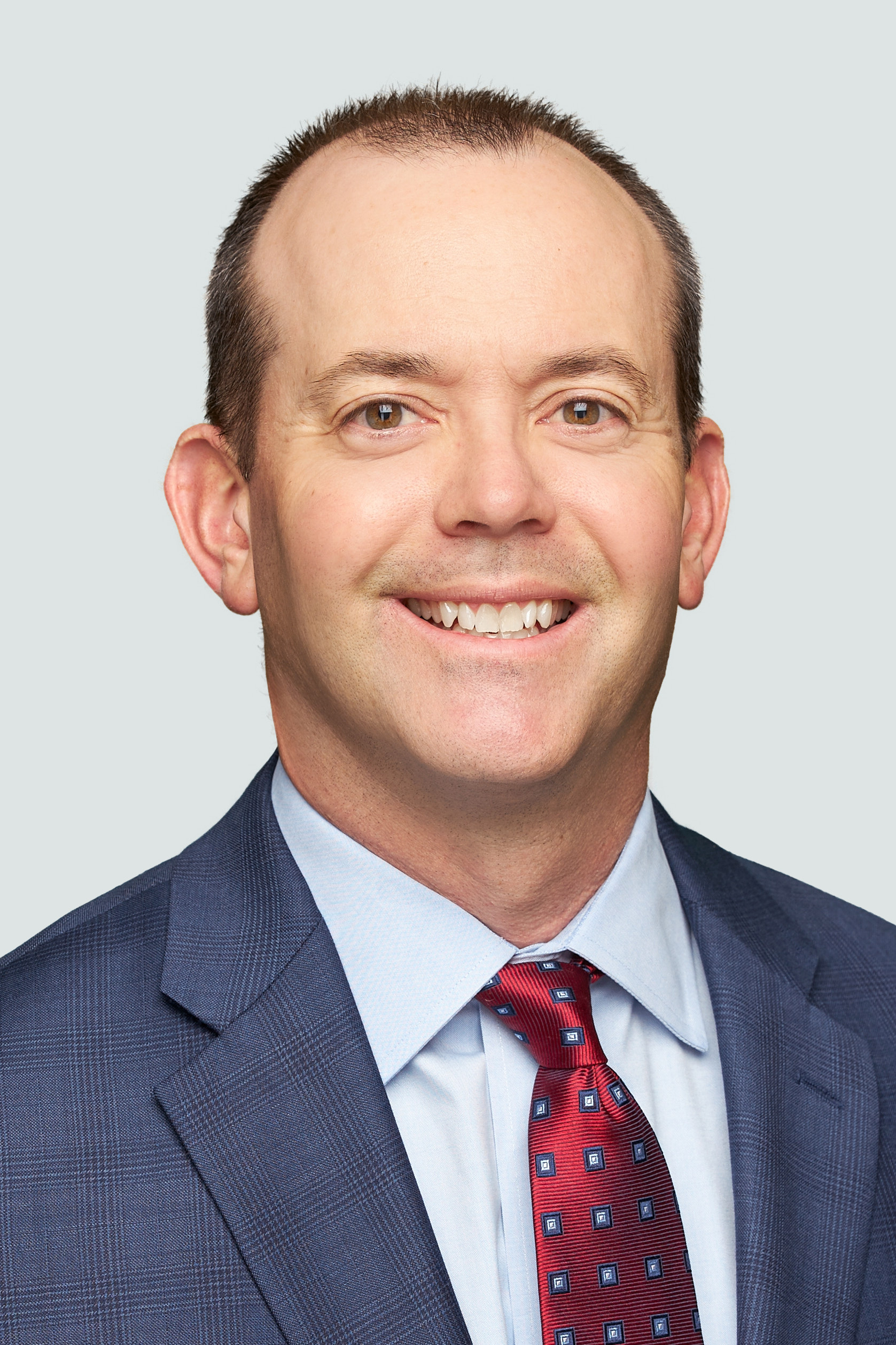 Mark C. Rosland is a principal and investment committee member at Kovitz. He serves as a portfolio manager for the Kovitz Hedged Equity strategy. Mark manages the wealth management division of Kovitz and is also a member of the firm’s executive committee, supervising firm-wide operations and business strategy. He also serves on the firm’s marketing and risk management committees.
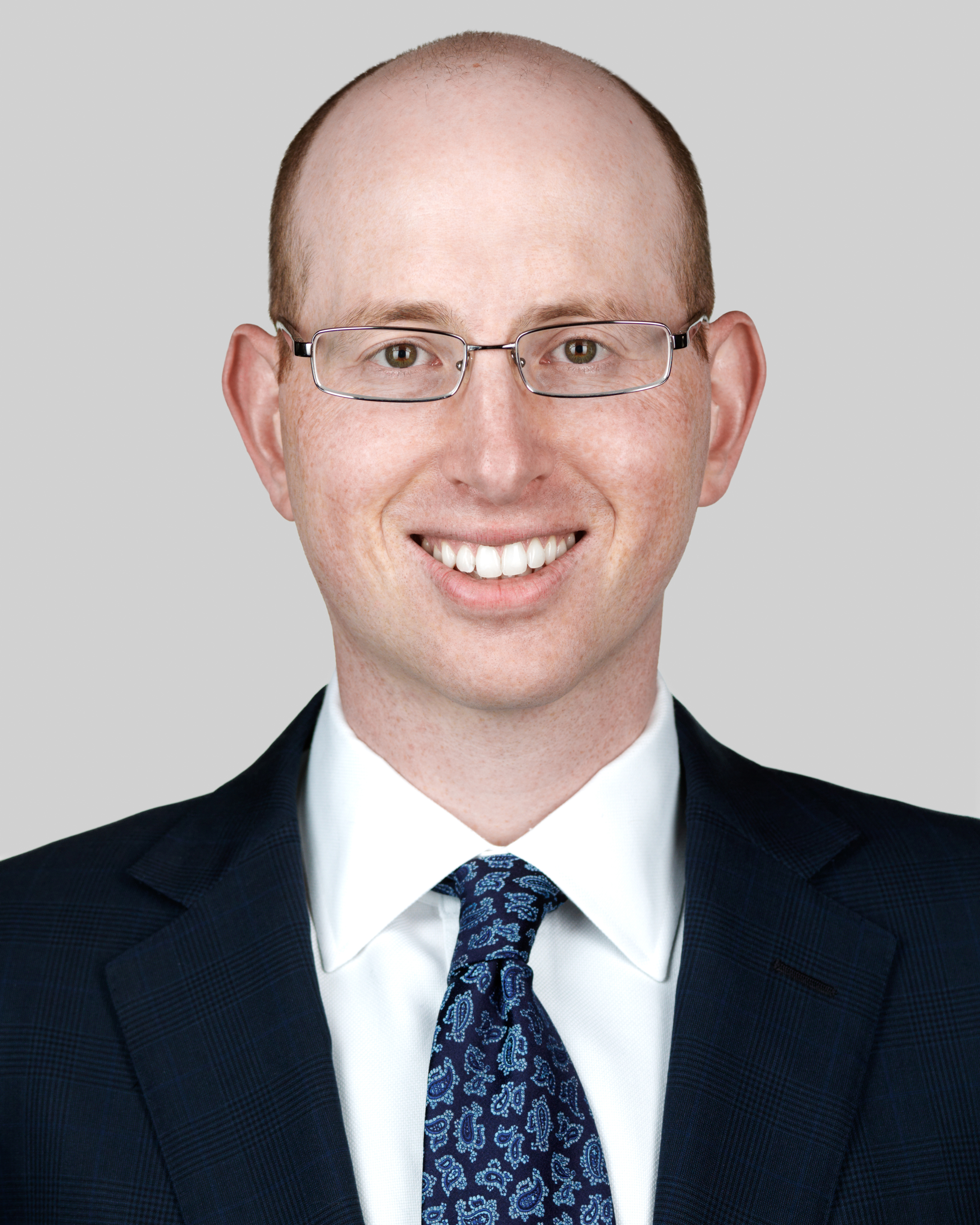 Joel D. Hirsh serves as principal and co-chief investment officer of the investment team in Chicago. In this role, Joel is responsible for leading the firm’s equity research process, as well as developing portfolio construction for Kovitz’ Core Equity and Hedged Equity strategies. He also serves as a member of the firm’s fiduciary board and executive committee, supervising daily operations and business strategy implementation.
I spoke with Mark and Joel on July 6.
Tell me about the Absolute Capital Opportunities Fund, ticker symbol, CAPOX. What is the fund's mandate?
Joel: We're looking to put together a fund with the goal of generating capital appreciation, but the secondary goal is to have less risk than unhedged equities have historically produced. We think about that by having a fundamentally driven portfolio of stocks and wrapping a hedging program around it. In our opinion, this has the opportunity to produce a payoff profile that goes up and down, but can be more attractive than a typical 60/40 allocation to equities and high-quality fixed income, especially in the historically low interest rate environment we find ourselves in today.
Kovitz is a subadvisor to the fund. What is Absolute Investment Adviser's role in the fund? What is the history of Kovitz and what led you to introduce this fund?
Mark: Kovitz has been managing a hedged-equity portfolio since the late 1990s in a private partnership fashion. In 2007, we partnered with Absolute Investment Advisers, which has been one of the pioneers of alternative investment strategies in the mutual fund space. We served as a sub-advisor for its multi-strategy fund and implemented our hedged equity strategy in a mutual fund format, so we have a lot of experience in managing this strategy within the confines of the 40 Act restrictions and providing daily liquidity to investors.
The Absolute Capital Opportunities Fund was started in 2016 as an alternative mutual fund to be focused solely on the equity space versus all the other alternative strategies that were part of the multi-strategy fund. Absolute Investment Advisers is the sponsor of the fund. It handles most of the marketing and back-office operations, while Kovitz is the manager in charge of managing the fund’s assets.
The fund’s returns are solid since its inception on December 31, 2015. As of May 31st, 2020 its cumulative return was 29.49% versus 1.03% for the HFRX equity hedge index. That's a cumulative outperformance of 2,846 basis points, net of fees. How did you so well compared to that benchmark?
Joel: It's hard for us to know exactly the attribution versus the HFRX, because we don’t have a position-by-position of the constituency. But generally speaking, we try to structure a payoff profile for the fund in a way that there are multiple ways to generate a return. We can benefit either from long-stock relative performance versus underlying investments we use to hedge, from large movements in equities up or down, or increases in volatility. Those are the three different ways we attempt to generate a return.
This period from 2015 to 2020 was when being somewhat humble in questioning whether the U.S. stock market could keep going up proved to be helpful. Within this overall time frame there have also been periods when the fund benefited from each of the three return drivers, and I think we generally see one to two of them in any given period. There were periods when increasing stock market volatility was helpful. Obviously the stock market has also made very large moves (both up and down), so there were periods when that's been helpful as well.
As of May 31, 2020, your annualized performance for this year was 3.5% and that compares to -8.33% for the HFRX equity hedge index and -4.97% for the S&P 500. How did you navigate the economic uncertainty and market volatility this year?
Mark: There wasn’t really a large difference in the way we constructed the portfolio during any of the four years since the fund’s inception. We've been running the fund with a very low net exposure and, most of all, we were accustomed to understanding and implementing some tail risk trades. During most time periods since the fund’s inception, volatility has been extraordinarily cheap and that provided an advantageous tailwind for someone who's been purchasing out-of-the money options overlaid on top of an equity portfolio that maintained a very low net exposure. The important thing for us is if we can structure the fund with a payoff profile in advance, so if and when larger movements happen, we can monetize both the upside and downside moves.
We've been very careful to recognize that stock market upside is a significant risk to a fund maintaining a very low net long exposure. During the past four years, these outsized market moves have occurred three specific times: during January/February of 2018, during Q4 of 2018 and now during Q1 of 2020. We’ve been focused on this possibility and managed the fund in a way that anticipated these events could occur at any time, rather than trying to predict when they will happen.
How is the fund constructed? What do you look for in your long and short positions and what are the risk controls for the fund?
Joel: On the long side, we're looking to build a concentrated portfolio (usually 30-40 equity positions) of very high-quality businesses and we think about it as if we were going to buy the business in its entirety. What is the business’ competitive advantage? What produces the cashflow? Are there good reinvestment opportunities at a high return on capital? Is there is some sort of discount we can arbitrage over a three- to five-year period?
We believe our advantage is having a longer-than-average time horizon. If we can understand the business and price it accordingly, there are often opportunities in very high-quality businesses where something short term in nature will happen. We think that short-term events can produce a mid-teens internal rate of return (IRR) over a 3-5 year time period. This return is in exchange for the risk of a potential 20% price decline if we are proven incorrect in our analysis. If we can find this risk-reward ratio, we think we can be successful over time knowing that we will still have investments where our thesis proves to be wrong. The track record of investors who have run concentrated portfolios in which they view themselves as business owners has been extraordinary.
Mark: Sometimes we'll take short positions. But since the fund’s inception, we've generally had a small exposure to outright short positions. One of the main reasons for this decision has been the low level of interest rates. Shorting becomes very expensive when there is no short interest rebate to be earned. We've preferred to synthetically create short exposure using listed equity options. We don't trade any over-the-counter options, as we’ve not wanted to take on any counterparty risk. The use of options allows us to construct stock market levels where our short exposure can begin be added to or even be covered. The key is that it all can be constructed in advance. The short exposure might last for a certain amount of a stock market drop and then it might turn off or even increase. Additionally it might be in place for a certain amount of a stock market rise, and then it can be covered so that the fund participates in further advances.
Running the fund this way has allowed us to construct a portfolio with a dynamic net exposure profile. The fund’s net exposure can radically change as the stock market advances or declines without having to add new trades. It's been quite advantageous for us to have these dynamic net exposures since the fund started. We’ve seen multiple out-sized stock market moves during the last three to five years. When they have happened, they have done so very quickly, so having a portfolio with the ability to shift its net long exposure based on a market movement has been very helpful.
Joel: While generally we agree you can find the 30 good long ideas, we think the consensus view that you can find 50 to 100 good short ideas is wishful thinking. There are just not that many great shorts to be had, and we feel you’re taking on tremendous amounts of risk to run a short portfolio. When we're able to use our hedging program and construct synthetic shorts, we think you end up with a much more attractive pay off. That goes a long way towards explaining our relative performance versus the industry.
Mark: A lot of the shorts that people are looking at and using are very crowded. The short interest on various stocks you might be interested in shorting is very high. There's been lots of short squeezes, and we feel that also explains some of the lack of performance over the past few years in the long-short space. Our analysis has shown that entering very crowded short positions has not been a successful strategy over time.
Can you give an example of a holding or two that stands out as representative in CAPOX?
Joel: We own Phillip Morris International, the international cigarette maker. It's the name with undoubtedly the best brand in its space. It has a very significant advantage in terms of distribution and brand, and it is also the company that has a lead in what they call “IQOS.” It's a heated cigarette replacement. Some companies are actually saying Phillip Morris is doing the most in replacing cigarettes. IQOS has been particularly popular in Japan and in Europe. Yet the stock is out of favor basically because all of the cash flows come from abroad. But the dividends are paid in U.S. dollars. There's the risk that if the U.S. dollar appreciates, you could have dividends cut.
If you look at the fundamentals of the business, there is some chance that if the dividend is cut, it is more than priced into the stock. In exchange for that, we're looking at a very attractive IRR. In fact, we think it has one of the highest potential IRRs in our portfolio, which owes to a combination of growing free cash flow and very timely decisions relative to its customers.
We also own American Express and this one is pretty straightforward. Obviously there's a pandemic and the fear is twofold: How many people will cancel their credit card and no longer need them because traveling isn't very popular in the midst of a pandemic? How much will they lose in terms of the uncollectable bad debt that is tied to what's going on with COVID-19?
When you look at the balance sheet it had coming in, it instructs us that it's well prepared for even what happened in 2008 and 2009. It's very unlikely that the balance sheet presents an issue.
If you look at what its behavior has been thus far, in the second quarter there were not mass cancellations of Amex cards. If you're able to stretch your time horizon out three years, you're left with a brand that has resonated for a very long time. It compounds value at a pretty significant rate because you get an increase in the number of transactions per year. The nominal price of transactions goes up and it is able to grow their own franchise. While we've currently got the current period of depressed transactions, on the other side of this, we've got an incredibly cheap stock.
You've covered this already a little bit, but explain why you use options on the short side.
Mark: Using options to synthetically create hedges marries well with the long-term thinking we use on the long side of the portfolio. Our average long holding period is somewhere between three and five years. We're not active traders, but we do become active based on larger stock market movements. If there's sizable stock market movement (up or down), once it has occurred we like to react to it. The optionality of having an overlay lets us set these bands ahead of time and helps predetermine levels where we'd want to add some long exposure versus levels where we want much more hedging in place.
It fits our mindset well, versus someone who is much more active in their trading and looking at short-term catalysts for trading back and forth. That is not how we manage our long portfolio.
Nassim Nicholas Taleb, the author of Black Swan, recently said that investors should be hedged against so-called tail risks. Do you agree with him? If so, what are the most effective and cost-efficient ways to hedge against extreme risks, particularly risks in one's equity positions?
Joel: We generally agree, but everything is relative to its price. When everybody's asking about tail hedging, the attractiveness of the hedges tends to decline. Now is a good example of that. Depending on the environment and depending on how you would piece it together, hedging can be attractive. But our preference is having a long portfolio that's likely to compound in the single digits with a large amount of hedging for if/when the disasters come. That is preferable in our thought process and our investing philosophy and that's what we've stuck with.
Mark: We find it interesting that after a large downward move in stocks happens, hedging becomes popular. Our preference is to have tail hedges before these drops happen, when they are much, much cheaper. It all comes down to the cost or what your give up is.
Joel: That's actually one of the great ironies. The longer the market goes without a significant correction, the cheaper it is to find tail-hedging opportunities.
What should an adviser look for in your fund? What is the proper analytical framework they should use when they evaluate it?
Mark: We think Morningstar does a great job on its risk page in helping advisors understand how we’ve managed the fund over time. While we don’t really target a specific risk metric for the fund, CAPOX has had an extraordinarily low beta of 0.1 to the S&P 500 over the past three years. This means the fund itself has not really been sensitive to the overall market. Interestingly, the fund has exhibited a standard deviation of around 7.14, which is less than half of the overall stock market, but perhaps higher than one might expect considering such a low beta. In our opinion, this is a by-product of the hedging program. Another quite interesting statistic is the fund has a very low upside-capture ratio of 18%, but has actually produced a negative downside-capture ratio of about -4%.
For advisors who are looking for an alternative to equities and fixed income, having something that produced a negative downside capture to the stock should be quite attractive as long as it is still producing enough of a positive return over time. In the future, I suspect we will not always produce positive returns from large stock market drops, but when we say we're hedging, we mean we are trying to avoid large losses that simultaneously occur when stocks drop. If we can do that while capturing some upside, we will consider the fund very successful.
Joel: Broadly speaking, I like having CAPOX as part of a portfolio when I know there is a high likelihood it will act differently than stocks. Its return profile on an absolute basis should still be attractive. By having a different timing of those returns versus other standard asset classes, I find it quite attractive. It can be a normal part of someone’s portfolio that can allow for rebalancing opportunities.
How does CAPOX fit within a broader portfolio and what are the allocations that you're typically seeing advisers use for it? Where are those allocations coming from?
Joel: Generally it fits from a risk and return profile in-between those of stocks and bonds. We’re trying to manage the fund to be less risky than stocks, but there is significantly more risk than high-quality fixed income. Given that fixed income yields are so very low relative to their historical levels, we feel CAPOX fits in well and we've seen flows trapped somewhere around the 60/40 mix, meaning the money's coming partly from stocks and partly from bonds, depending on the client's situation. It is generally a 5% to 15% allocation. At that level, especially if the money comes from fixed income, it's very likely to be additive to the client's goals.
Mark: With a traditional 60/40 portfolio or whatever the specific mix is between equities and fixed income, we like having the alternative sleeve included. In Q1, there were some severe dislocations in the fixed income markets. Even if the advisor had clients who were willing to rebalance into equities during the large stock market drop as their asset allocation would have dictated to do, there were many dislocations in the fixed income market that made that prohibitive, as the liquidity in many bonds dried up and sellers would have taken some large haircuts
Meanwhile CAPOX displayed complete liquidity. If someone had a mix of stocks, fixed income, and CAPOX, this portfolio would have been able to rebalance using CAPOX
Is CAPOX appropriate to consider for those seeking downside protection with their equity or overall portfolio allocation?
Mark: As you know, Kovitz is in the wealth management business as well. We do not manage CAPOX to be a true equity market substitute. We want the fund to truly be an alternative investment. The reason we do not recommend it be all of someone’s equity exposure is we might not produce the long-term return of unhedged equities, yet if the fund displays the risk/reward ratio that we have produced since inception we will consider the strategy to have been successful.
It's most advantageous for somebody rebalancing out of stocks and/or fixed income, who's not willing to take on the full equity risk profile.
Membership required
Membership is now required to use this feature. To learn more:
View Membership BenefitsSponsored Content
Upcoming Virtual Events View All