The Federal Reserve's resolve to fight inflation could be tested even before a recession hits by dislocations in certain corners of the market that are not well understood. This is about more than just a bear market in stocks or an implosion in cryptocurrencies. Rather, this is about the “plumbing” that keeps markets running smoothly and facilitates the flow of money in and out of the financial system. Because it’s when cracks occurred here in the past that the Fed has been forced to adjust course -- often with little advance warning.
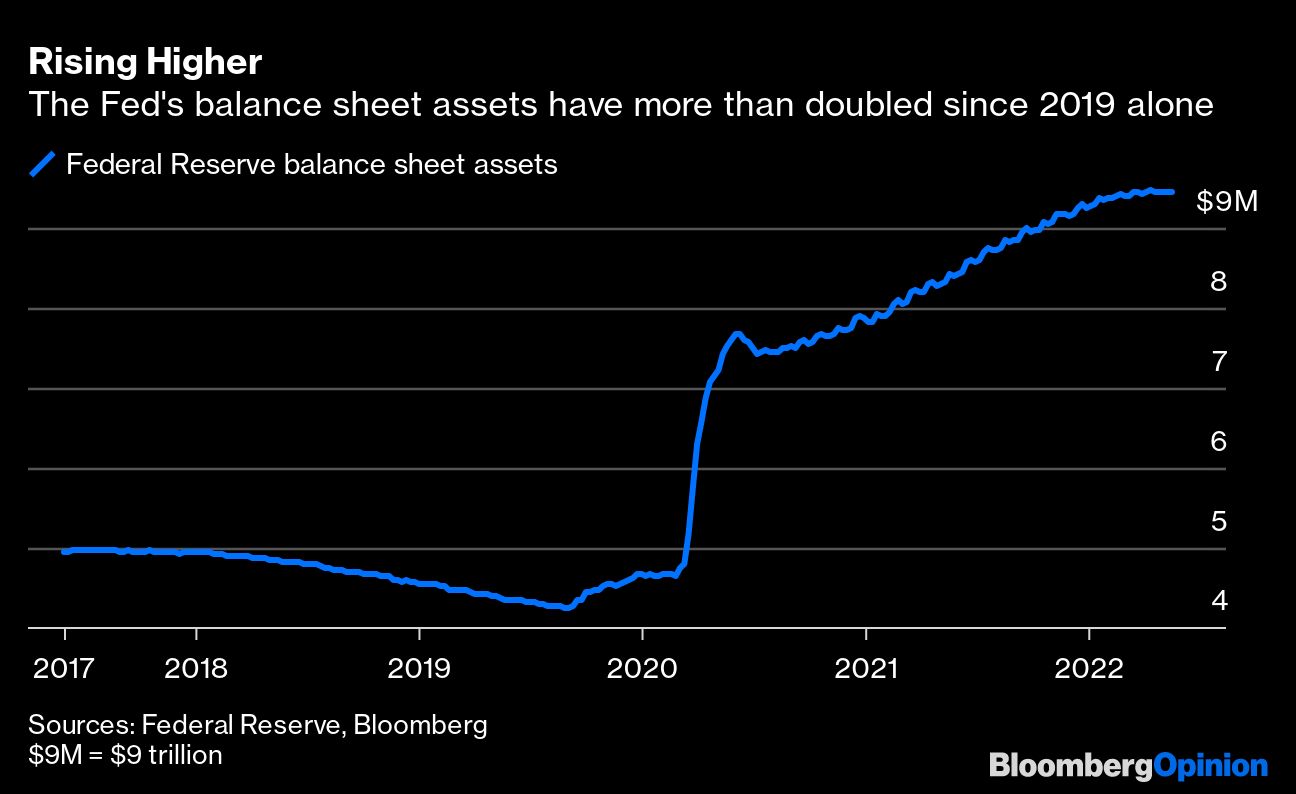
A look at the episodes in the past that prompted the Fed to alter its policy path or take emergency action reveals that disruptions in the smooth functioning of the money markets and the US government debt market have been the main triggers. Concern about these markets, which are essential to the stability of the financial system, will only grow as the Fed in just a few weeks begins to withdraw liquidity from the markets by reducing its $8.9 trillion balance sheet.
The problem is that what was once a rare occurrence is becoming more common. In 2019, the market for repurchase agreements seized following months of dwindling bank reserves as the Fed unwound its Treasury holdings. Then in March 2020, as the pandemic sent panicked businesses, consumers and investors in a dash for cash, liquidity in the then $17 trillion market for Treasuries suddenly vanished. The Fed responded with unlimited bond purchases that didn't come to a halt until this year. The Treasury market has since grown to $23 trillion.
Starting next month, the Fed will begin trimming its bond holdings, which consist almost exclusively of Treasuries and mortgage-backed securities. Although policy makers hope that the reduction won’t disrupt market functioning, it will come alongside what is expected to be aggressive interest-rate increases at the central bank’s next two policy meetings to get runaway inflation back under control.
The risks are higher now given the Fed's large presence in the bond market and how its role as a so-called liquidity provider has grown exponentially, with its balance sheet more than doubling in size since late 2019. Plus, the Fed is not alone in pulling back. The European Central Bank, Bank of England and Reserve Bank of Australia, are also wrapping up quantitative easing programs. During the Fed’s balance sheet runoff in 2017-2019, the ECB was still buying bonds.
Two things can go wrong when the Fed starts winding down its bond portfolio. One is that it also needs to balance its liabilities, part of which are bank reserves. While these are ample now, banks need to constantly set aside enough reserves to meet ever-stricter regulatory requirements. But even when these reserves are sufficient, they're not equally disbursed among lenders. It was this imbalance that caused the repo market to seize in 2019. Assuming the Fed's balance sheet shrinks by some $500 billion this year, bank reserves could decline by about $1 trillion by year-end from about $3.3 trillion currently, according to Barclays Capital money market strategist Joseph Abate.
Only three months before repo rates shot up to double digits in September 2019, Fed officials were reassuring investors that reserves were plentiful and that the balance sheet reduction would continue to run on autopilot. Then, on Sept. 17, repo rates climbed to 10%, forcing the Fed to backpedal, end the balance-sheet runoff prematurely and purchase Treasury bills. At the time, some rates strategists even suggested that the Fed would have to launch some type of permanent quantitative easing to manage market liquidity.
The Treasury market would not be immune from dislocations. The Fed's purchases have helped improve liquidity in an unloved segment of the market: so-called off-the-run Treasuries that are no longer the benchmark maturities.
It's not that the Fed hasn't learned its lessons. There is now a permanent standing repo facility to address emergency cash needs and help smooth out potential dislocations. And the Fed has been taking a cautious approach toward the reduction of its balance sheet this time around, largely due to the troubled experience in 2019. Fed Chair Jerome Powell has promised to slow or stop the decline of the balance sheet before reserves drop below levels considered to be "ample."
But what those levels are and how quickly they would shrink is anyone’s guess. By its own admission, the Fed is uncertain how its actions will impact liquidity or how the standing repo facility, which is untested, will be used. “I cannot tell you how this will actually work out," Federal Reserve Bank of Chicago President Charles Evans told Bloomberg News on May 18.
What is certain is that once the Fed starts shrinking its balance sheet while still raising rates in successive half-point hikes this summer, there will be an unprecedented scale of tightening. If the backbone of the financial system starts to crack, expect the Fed to alter its course.
Bloomberg News provided this article. For more articles like this please visit
bloomberg.com.