When Results Don’t Matter
Membership required
Membership is now required to use this feature. To learn more:
View Membership Benefits Advisor Perspectives welcomes guest contributions. The views presented here do not necessarily represent those of Advisor Perspectives.
Doyle Brunson won the 1976 and 1977 World Series of Poker with the same hand – a 10 and a 2.
Naturally, that means that 10-2 is one of the best hands in poker… right?
Right?!
The trap of results-oriented thinking
Not so fast. Let’s talk about results-oriented thinking.
Results-oriented thinking occurs when you forgo logic and instead use the individual outcome of a decision to determine whether the thought process was right or wrong.
It’s all about process versus outcome.
We can ask a poker simulation program whether 10-2 is a good hand. It’s not! It’s worse than approximately 60% of other potential starting hands.
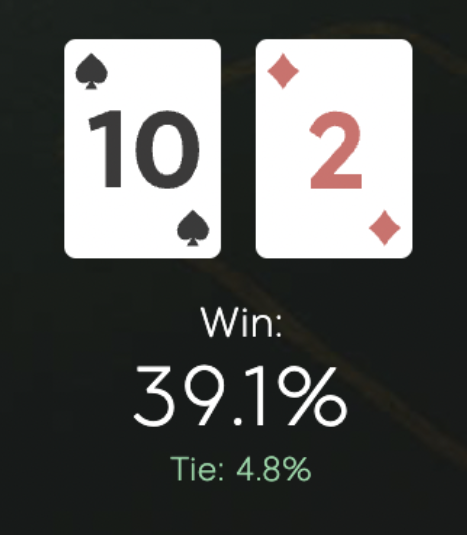
Doyle Brunson made suboptimal decisions to play those two hands. His process was bad (though, to be fair, some would argue he had such a big chip lead that he should have played every hand). Luck swooped in both years and bailed him out.
This is why games that combine luck and skill are challenging.
It’s hard to ask yourself, “Am I really smart? Or did I just get lucky?”
It’s far easier to just say, “Man! I’m super, super smart!”
Investing is one of those games
The global investing market is the most consequential luck/skill game on Earth.
Famed investor Howard Marks once said, “Skill and luck are the prime elements that determine the success of portfolio management decisions. Without skill on an investor’s part, decisions should not be expected to produce success.”
And famed poker player Annie Duke wrote in her book, Thinking in Bets, “there are exactly two things that determine how our lives turn out: the quality of our decisions and luck.”
Skill, in other words, pushes the cream to the top over the long run. A skilled process leads to good outcomes, given enough time.
Luck stirs that cream, temporarily clouding the mixture. Luck creates noise in the short-term. And if we’re not careful, that noise creates false signals, like looking at a single investment over a one-day period.
The new client’s dilemma
I have a bunch of new clients who began working with me in the past year. Some are retirees in 50/50 portfolios, others are young professionals in 90/10 portfolios, and all manner in between.
All of them are down right now, and most by more than 15%.
But thankfully, I’m not hearing complaints like:
So Jesse – your team at Cobblestone has lost me 15% of my money. What the hell are you guys doing over there!?
Instead, I’m hearing questions like:
Tough timing…but we knew it was coming. When do we execute the rebalancing you told us about?
Why aren’t they complaining? How do they know what’s coming next?
Our client education focuses on eliminating results-oriented thinking.
We teach our clients our portfolio-construction process (goals-based investing). We get their buy-in and agreement that the process makes sense for them. We show them how the process has worked in the past and reasonable anticipation of how it will work in the future. We get them to “trust the process” – emphasis on trust.
We also show them how uncooperative capital markets can negatively affect their portfolios over the short periods. It’s a direct parallel to how unlucky draws can negatively affect the best poker players in the world. Sometimes the deck (or market) works against you.
An educated client knows that a smart process – given enough time – leads to positive returns. They’re also aware that the same smart process can lead to negative returns in the short run.
If a client trusts the process, periods of negative return won’t bother them (or at least won’t bother them too much!)
But if a client doubts the process, then a period of negative returns will surely have them bombarding your Inbox.
Apply this to your practice
How can you apply this to your clients? Educate, educate, educate.
My boss likes to say, “An educated client is an excellent client.” I wholeheartedly agree.
You need to teach your clients about results-oriented thinking and the process-vs.-outcome mental model. Specifically, you need to apply these ideas to your specific processes.
Hopefully, your investing process has remained steady over these past few years when capital markets were mostly bullish (perhaps too bullish).
Educate your clients that your same smart process brought them outstanding returns over the past few years. If your clients are investing in a diverse swath of the U.S. stock market, your process has done them well for over a decade.
But stock investing, like poker, has its “bad runs.” The only way to win during the good times is to stick it out during the bad times. Show your clients how the stock market has taught us this lesson repeatedly over its history.
If poker isn’t your clients’ analogy of choice, then use sports. Every single sport has its “bad hop” or “lucky spin” or “right place at the right time.” Luck – a force out of human control – impacts the outcome.
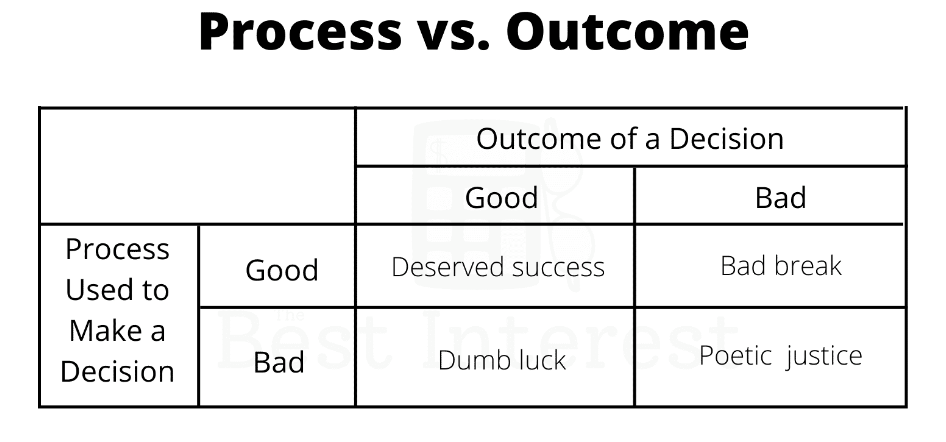
It can be tough to start client education in response to a bear market. Clients might interpret it as a reactionary effort or “too little, too late.” Ease into it and avoid any tone of “I told you this might happen.”
Without client education, you might get lucky and win a few “10-2 hands” in your practice.
But ongoing client education – through bear and bull markets – is a surefire process that brings long-term, positive results.
Jesse Cramer is a relationship manager at Cobblestone Capital Advisors, an RIA in Rochester, NY. He writes a weekly newsletter to 5,000+ subscribers from his personal investing website, The Best Interest. You can reach Jesse at [email protected].
Membership required
Membership is now required to use this feature. To learn more:
View Membership BenefitsSponsored Content
Upcoming Virtual Events View All













