Carbon Prices and the Impact on Your Portfolio
Membership required
Membership is now required to use this feature. To learn more:
View Membership Benefits Advisor Perspectives welcomes guest contributions. The views presented here do not necessarily represent those of Advisor Perspectives.
Findings from the UN Intergovernmental Panel on Climate Change (IPCC) Synthesis Report on the Sixth Assessment Report that were released in March clearly illustrate the drastic impact climate change could have on current and future generations if the world doesn’t act now to reduce its carbon footprint.
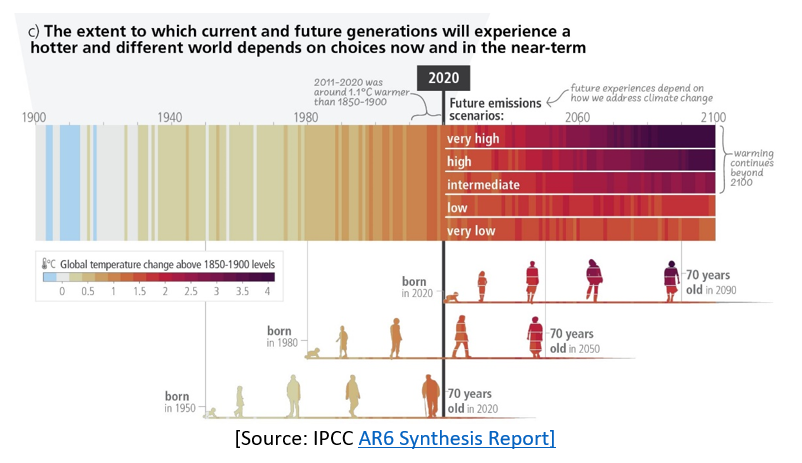
Activists, scientists, governments, and corporations around the world remain committed to calling attention to the looming climate change crisis that gathers speed and urgency as global temperatures continue to rise. The consensus is that current initiatives are simply not doing enough to meet the temperature goals set forth in the Paris Agreement, which aimed to limit global warming to well below 2°C, preferably to 1.5°C, compared to pre-industrial levels.
Carbon pricing is an effective policy tool that governments can use to address global warming. With a better understanding of the power behind these regulatory frameworks, investors can assess whether carbon prices could have an impact on their portfolio. But I believe more discussion of carbon pricing is needed to educate the investment community. To help advisors and investors get started, below are some key questions and answers about carbon pricing that might help the broader investment community learn more about carbon pricing and its potential impact on portfolios as the world aims to create a greener and more sustainable future:
- What is carbon pricing and why is it important? – Carbon pricing imposes a cost on emissions to incentivize emitters to shift away from high-emissions activities and products to low-carbon or no-carbon alternatives. Governments can implement carbon pricing with a carbon tax or establish an emissions trading system (ETS) that sets a cap on the total greenhouse gas (GHG) emissions to be generated by specific industries each year.
According to the World Bank, about 23% of global GHG emissions are covered by carbon pricing initiatives. At COP27 in November 2022, Canada and Chile announced a Global Carbon Pricing Challenge with the goal to have carbon pricing cover 60% of global emissions by 2030.
- How does an emissions trading system (ETS) work? - In an ETS, emission allowances, also sometimes referred to as carbon allowances, equal to the annual emissions cap are freely allocated and/or auctioned to emitting companies by the governing entity. The number of new allowances is reduced each year so that climate goals are met. The supply and demand for these allowances establishes a market-based price for emissions. When the price of carbon allowances is sufficiently high, companies have an incentive to invest in lower-cost clean energy alternatives.
The ETSs established by various jurisdictions collectively form the compliance carbon markets. According to Refinitiv, the transaction value of the global compliance markets has grown from approximately $268 billion in 2019 to about $910 billion in 2022, a compound annual growth rate (CAGR) of around 50% over three years.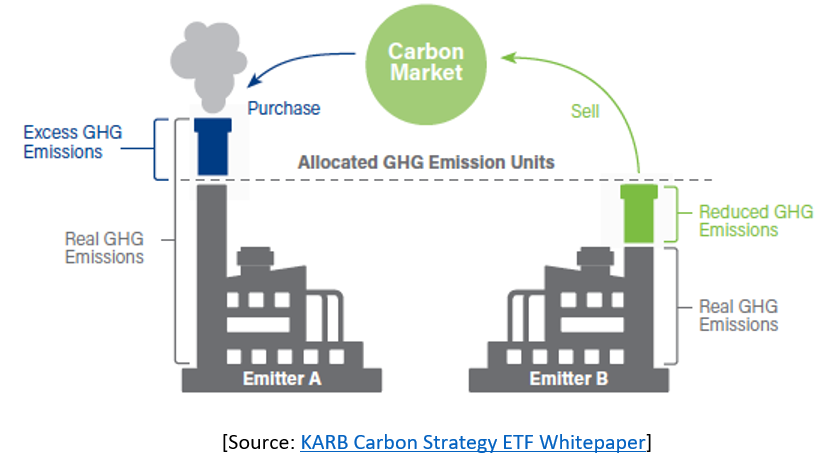
- What impacts can carbon pricing have on a portfolio? Some countries have already set carbon taxes that are scheduled to increase annually. In addition, over the next few years, some existing ETSs intend to update rules, introduce new measures and/or expand to new industry sectors to achieve more aggressive climate policy goals. This may lead to higher carbon prices that need to be paid by regulated companies. Furthermore, new ETSs are expected to be established over the next few years which could impact companies that may currently be unregulated.
Exposure to carbon pricing can act as a hedge against the impact rising carbon prices may have on companies in a portfolio. In addition, the asset class of carbon has historically had a low correlation to other asset classes. Overall, I think investors should consider carbon markets as a potentially attractive investment because studies have shown that higher carbon prices are needed to achieve the goals of the Paris Agreement.
- How do investors gain exposure to carbon pricing? There are three different ways to invest in the compliance carbon markets. First is becoming registered in an ETS to directly buy or sell carbon allowances for that particular ETS; however, it may be difficult for unregulated entities to hold accounts for certain ETSs. The next option is the active futures markets, which provide investors with exposure to certain ETSs. Carbon allowance futures contracts allow for the trading of the underlying carbon allowances of specific ETSs. However, similar to gaining direct access to an ETS, many investors may find it difficult to gain access to derivative markets. Plus, there can be risks associated with this type of investment strategy, particularly for the average investor. Therefore, I believe a more accessible option is an exchange-traded fund (ETF) that invests in a portfolio of carbon allowance futures across different ETSs. By investing in an ETF, investors can gain exposure to carbon prices though any investors looking to gain access to this market segment should contact a financial advisor to assist with determining their risk tolerance and investment objectives.
I believe the importance of carbon pricing on reducing the world’s GHG emissions simply cannot be overstated because imposing a price on carbon can spur the innovation and investment needed to reach net-zero. I also believe that now is the time for investors to better understand carbon prices, which are expected to increase as governments tighten environmental regulations due to more aggressive climate policies, and the potential impact carbon prices could have on portfolios and ways to hedge that risk.
Tim Collins is the president of Carbon Fund Advisors Inc., which is the fund sponsor of the Carbon Strategy ETF (NYSE: KARB)
Membership required
Membership is now required to use this feature. To learn more:
View Membership BenefitsSponsored Content
Upcoming Virtual Events View All