A global surge in demand and subsequent shortage of key industrial components has turned companies like Nvidia Corp., Taiwan Semiconductor Manufacturing Co. and ASML Holding NV into hugely influential names. Hidden from sight, though, is a booming industry of private-label chips that will never go on sale to consumers or corporate customers.
Arm Holdings Ltd.’s imminent return to public equity markets highlights a 10-year trend that has gone largely unnoticed, but which could upend the way chips are created and sold. Amazon.com Inc., Alphabet Inc., Alibaba Group Holding Ltd. and Meta Platforms Inc. are busy designing, manufacturing and deploying advanced semiconductors for their own use. They all license the core chip technology from Cambridge, England-based Arm, which name-dropped each of them in its prospectus released last week.
With the exception of tiny side hustles in smartphones (Alphabet), virtual reality goggles (Meta), and e-book readers (Amazon), these are internet companies with no business dabbling in the nuts and bolts of components and computer systems. Yet their competitive edge, and profits, very much depend on ensuring the hardware they install is customized for their own use.
That’s why they’ve opted to use Arm’s semiconductor architecture called reduced instruction set computer (RISC), a direct competitor to the x86 technology deployed by major vendors including Advanced Micro Devices Inc. and Intel Corp. Cutting out intermediaries like Nvidia, AMD, and Intel allows companies to optimize chips specifically for their unique tasks whether it’s streaming videos, serving up search queries, or managing massive databases.
Alphabet’s Google was one of the first to start down the path of independence as early as 2013, using Arm technology to build chips for its massive server farms. By utilizing its own designs, Google could better manage the interactions between hardware and software, squeezing out the kind of efficiencies expected from optimized car factories or industrial food processors. Amazon also has its own hardware and says its Graviton chips are 40% more efficient than their x86 counterparts.
Generative artificial intelligence such as ChatGPT, which requires massive amounts of number crunching to create language, image and audio models, makes this specialization more urgent. While Nvidia has been the biggest beneficiary from this AI gold rush, a shortage of its specialized graphics processing units has highlighted a need among cloud-service providers to go it alone.
Google in 2015 started deploying its own tensor processing units, tailor-made for a branch of artificial intelligence called neural network machine learning. Microsoft Corp. entered the fray more recently, and is expected to make its self-developed processors more widely available internally and with industry partner OpenAI, the startup behind ChatGPT, The Information reported in April.
Beyond custom design and greater control over the entire computing system, there’s a very real financial reason for internet companies to try making chips: margins. Nvidia is expected to earn 56.51 cents of operating profit for each dollar of revenue this year, making it one of the most profitable technology companies in the world. As Amazon.com founder Jeff Bezos once said, “your margin is my opportunity.” Instead of handing these profits over to chip brands, cloud providers can benefit by expending time and money to take control of an increasingly important part of their cost structure. It’s not easy. Amazon.com bought Israeli chip designer Annapurna Labs for $370 million eight years ago, recognizing that building a development team from scratch is challenging.
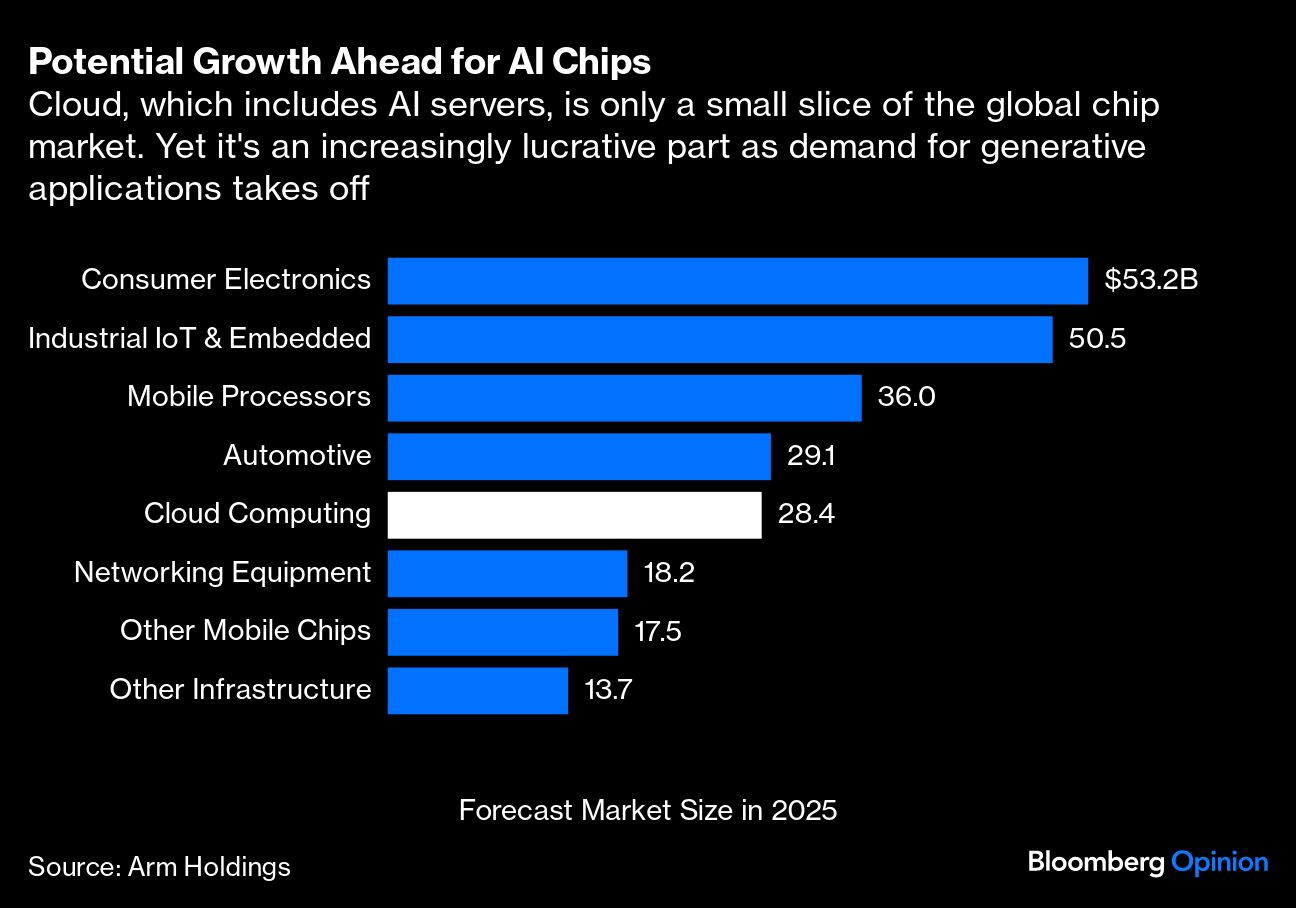
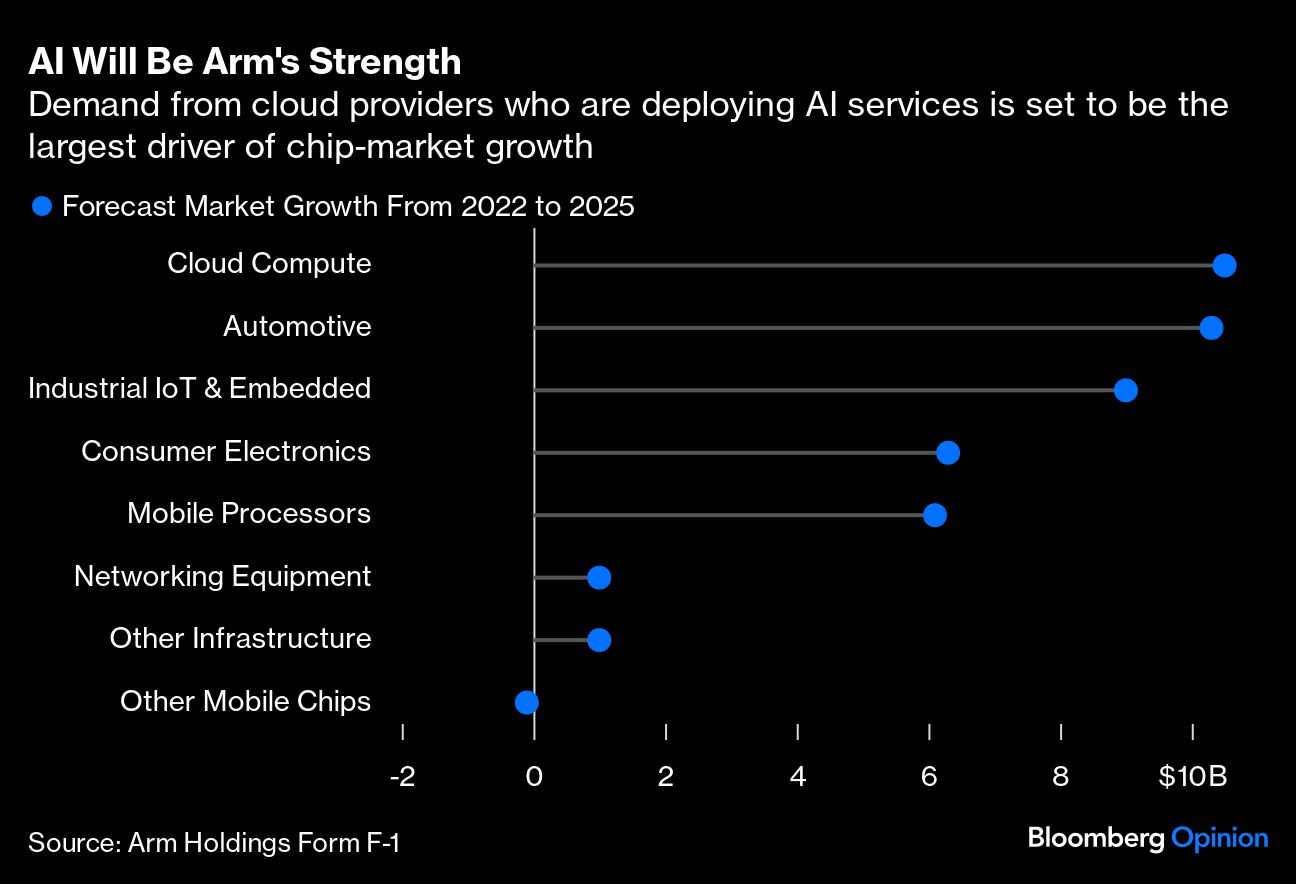
Nvidia is still likely to capture the largest slice of the AI semiconductor market. A recent deal to make more of its chips available for use through Google’s cloud service shows that even Alphabet isn’t ready to dump the chip designer. Yet the cloud sector, driven by AI demand, is expected to be the largest single contributor to industry growth over the next few years. This means more opportunities for off-the-shelf suppliers like Nvidia and AMD, and rising usage of private-label components developed in-house by service providers such as Alphabet, Amazon and Microsoft.
Benefiting from this shift will be TSMC, the world’s largest chipmaker, and leading equipment supplier ASML. The Taiwanese company is suffering its worst downturn in more than a decade, largely because of continued weakness in the markets for smartphones and computers. Yet it’s likely to get orders for AI chips no matter who designs them, and right now capacity for the necessary leading-edge fabrication technology remains tight. And ASML is shipping expensive chipmaking equipment as fast as it can in order to keep up with the exploding demand for advanced manufacturing.
As artificial intelligence integrates itself more deeply into every industry on the planet, a shuffling of the decks will continue in the chip sector with more of the key components hidden inside the massive server farms tasked with crunching the numbers and delivering the results.
A message from Advisor Perspectives and VettaFi: To learn more about this and other topics, check out our most recent white papers.
Bloomberg News provided this article. For more articles like this please visit
bloomberg.com.