For the past 18 months, Federal Reserve Chair Jerome Powell has frantically been trying to break Americans' borrow-and-spend habits. It’s critical to his fight against inflation.
In C-suites across the country, though, CEOs and CFOs aren’t getting the message.
Not only have they displayed little desire to pay down debt that's become more expensive after 11 interest-rate hikes, but many of them have heaped more of it on their books, borrowing cash in bond markets to upgrade their operations, expand their businesses and fund share buybacks.
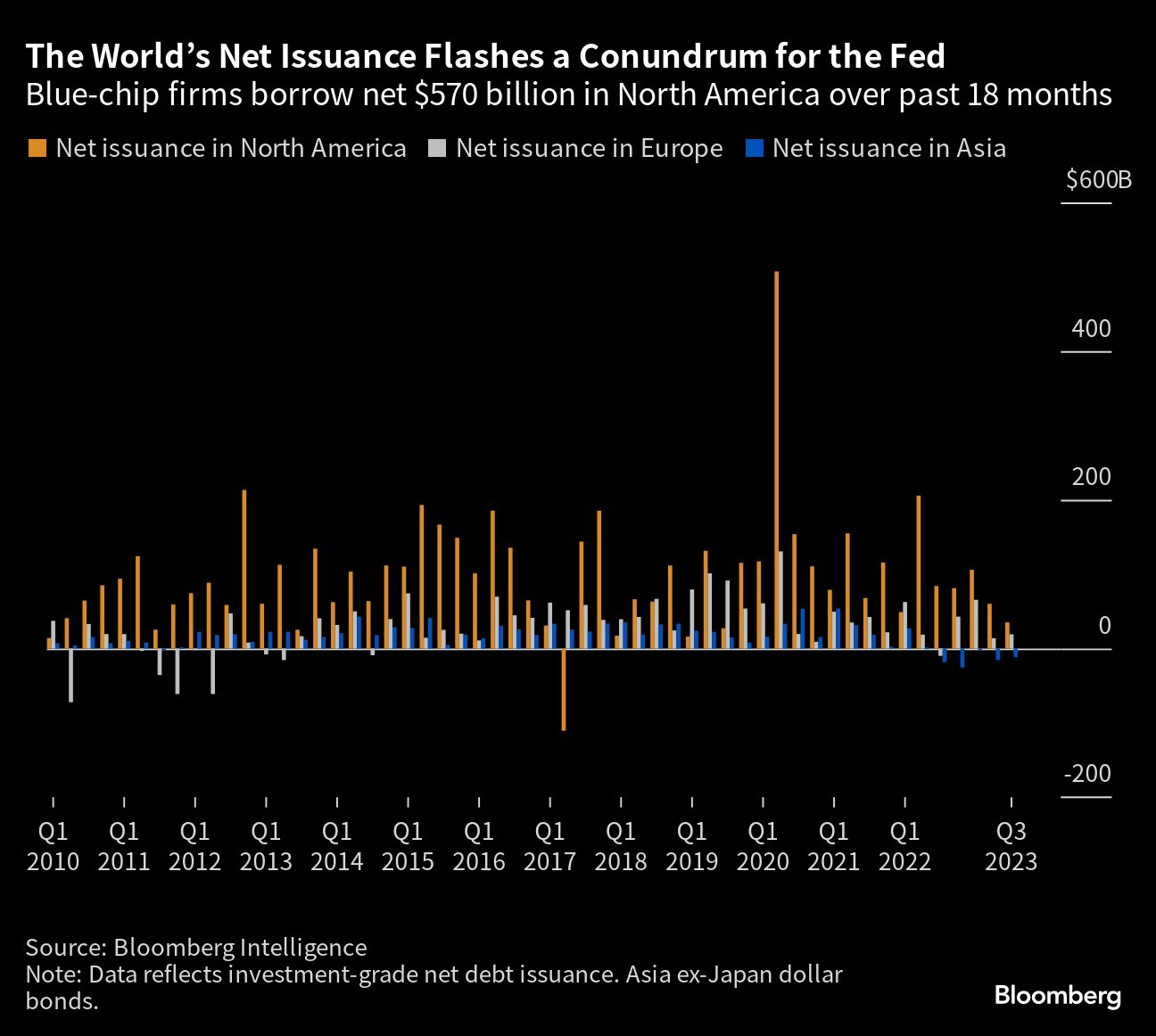
Since the first rate increase back in early 2022, companies with investment-grade credit ratings — powerhouses like Pfizer and Meta Platforms that play an ever-growing role in driving the US economy — have added more than half a trillion dollars of net debt, according to data compiled by Bloomberg Intelligence. Even companies with shakier finances — those rated sub-investment grade, or junk — have been ratcheting their borrowing back up this year after scaling it back in 2022.
To Edward Altman, finance professor emeritus at New York University’s Stern School of Business, this is a reflection of just how ingrained the borrow-and-spend model became in Corporate America during a two-decade period in which Fed policymakers kept benchmark rates pinned near zero for long stretches.
Many of the executives managing balance sheets today began their careers during those easy-money years, which, Altman notes, makes it even more difficult to undo the mindset.
For them, this is “Corporate Finance 101,” he says.

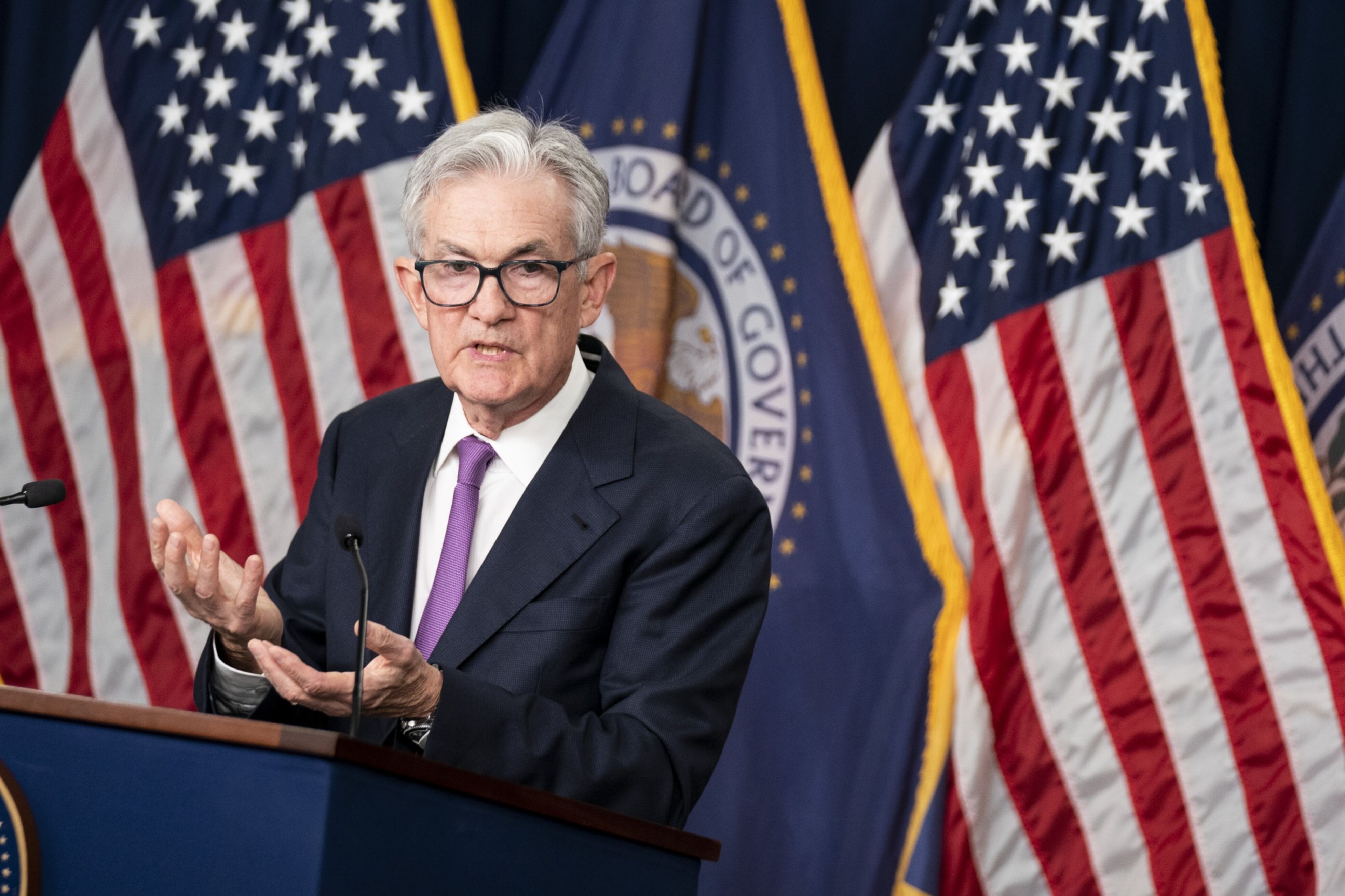
Jerome Powell, chair of the Federal Reserve, during a news conference on Sept. 20, 2023. Photographer: Sarah Silbiger/Bloomberg
And so while all the chatter on Wall Street has been that the Fed's hiking campaign is essentially over, the debt boom has signaled that Powell may have to keep pushing rates higher to break the fever and curb the behavior. Or at least maintain them elevated for longer than anticipated. The spike in benchmark 10-year bond yields over the past two weeks, which has cooled the debt-sale push for the moment, is a sign that investors could now be waking up to this fact.
The risk, of course, is that Powell winds up going too far and sinks the economy into a recession that's felt most acutely by the companies that piled on the debt.
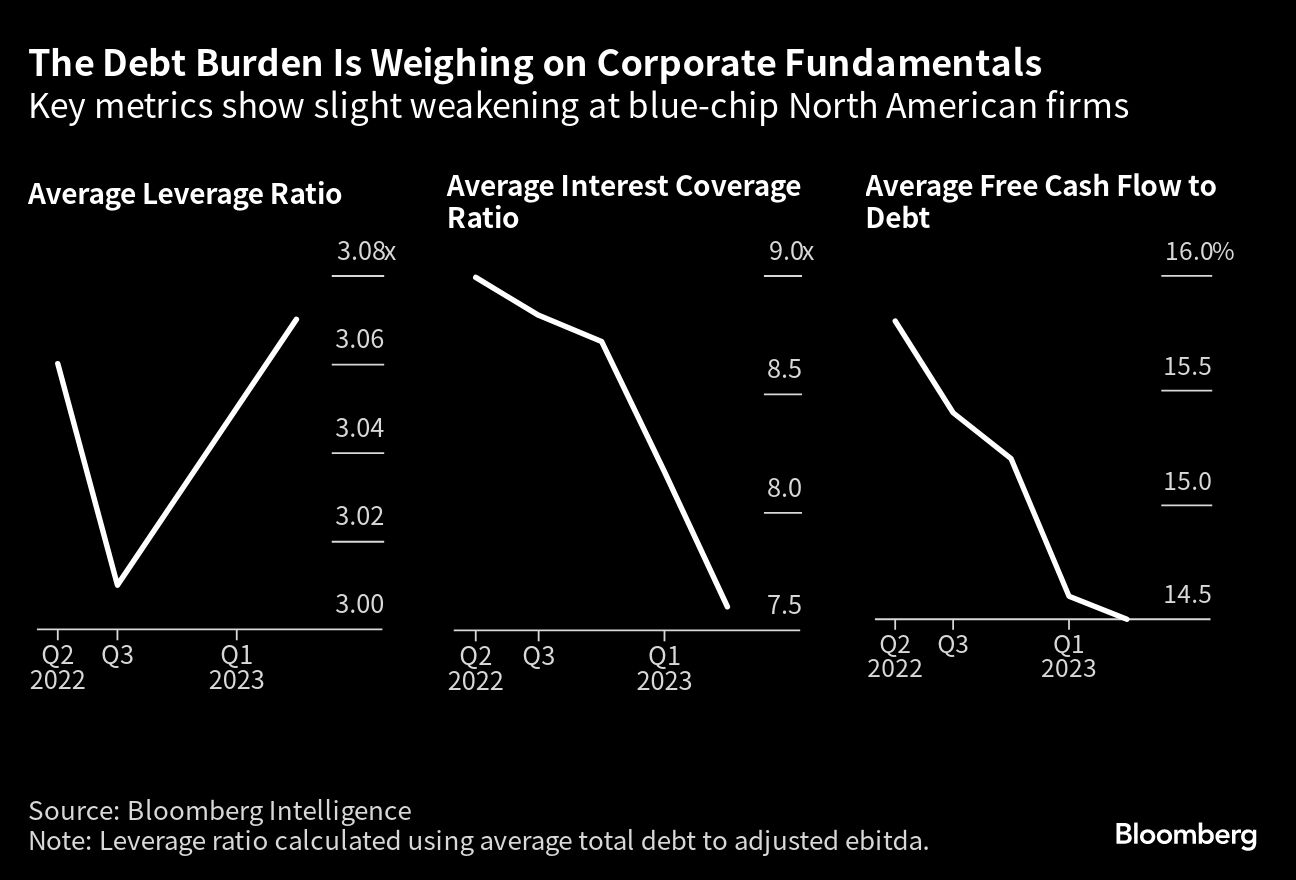
Indicators of the financial health of investment-grade companies have begun to deteriorate, according to BI data. As their leverage ticked up between the end of March 2022 and mid-2023, a key gauge of their ability to make payments — known as interest coverage — edged lower, the data show.
And for less-creditworthy businesses, the strain is building even faster. Defaults have risen in some corners of speculative-grade debt markets, like real estate and retail. Household names Bed Bath & Beyond and Party City are among more than 150 companies with at least $50 million of debt that have filed for bankruptcy this year, according to data compiled by Bloomberg.
While it’s exceedingly rare, corporate upheaval is even possible among investment-grade companies. Silicon Valley Bank failed in March after the surge in interest rates triggered a run on deposits at the regional lender.
Given the extreme nature of the borrowing spree over the past decade, it's likely that other meltdowns are lurking in ordinarily safe corners of the market, said Hans Mikkelsen managing director of credit strategy at TD Securities. “It has to be that there will be things that blow up,” he said. Years of easy monetary policy meant that “the amount of risk-taking was extreme.’’
The corporate borrowing binge during these past 18 months is, for the most part, a North American phenomenon. Investment-grade borrowers in Europe added a much smaller amount of net debt over that time — $150 billion — while in Asia, their net borrowing declined by about $70 billion, BI data show.
To be clear, the Fed has had some success in reining in Americans' spending in certain sectors of the economy. There’s been a pullback in the leveraged loan market that finances mergers and acquisitions and a decline in mortgages and other consumer loans.
But in general, the urge to take on debt shows few signs of wavering. Even after a spike in long-term bond yields triggered a slowdown in debt sales the last couple weeks, September was still one of the busier months of the year. Companies raised a gross $124 billion in the bond market.
Higher-for-longer interest rates are, of course, little fuss to industry behemoths that are rich enough to borrow no matter the cost. Pfizer and Meta, for instance, increased their net debt by a combined $45 billion since the first rate hike, according to BI data. Representatives for the two companies declined to comment.
More noteworthy is the way mid-investment-grade businesses — those deemed a little less financially stable — have continued to tap debt markets. The average annual interest cost to borrow $1 billion in the US high-grade bond market has climbed to $62.7 million, from $17.4 million at the end of 2020.
Dozens of such companies in North America have increased overall debt while buying back shares on the open market, according to BI data, a signal they have ample cash and a confident outlook.
“Interest rates are higher, but still attractive as a means to raise capital,” said NYU’s Altman, who's best known for the Altman Z-score, a popular tool for predicting bankruptcies that he created decades ago. “The boards see it as a way to increase their return on equity to their shareholders.”
Drugstore chain CVS Health, which is scored BBB by major credit assessors, borrowed $11 billion this year to boost spending and acquire Signify Health and Oak Street Health. CVS’s board also approved an increase of its stock-buyback program by $10 billion. CVS’s debt load, meanwhile, has risen to 3.3 times a key measure of earnings as of the end of June, compared to 2.8 times in mid-2022, according to BI data.
A representative for CVS declined to comment.
And even firms that have historically taken a more conservative approach, like financial conglomerate Marsh & McLennan Cos., have been willing to keep tapping the market. “Look, interest rates are high, but we don’t get paid to time the market,” Mark McGivney, the firm's chief financial officer, said after selling $1.6 billion of bonds ahead of debt maturities next year. “We get paid to fund the company.”
Powell acknowledged last week the challenges that come with using interest rates to try to change behavior and steer the economy in the direction he wants. “One of our goals is to influence spending and investment decisions,” he told a group of teachers in Washington. “That will only be the case if people understand what we are saying and what it means for their own finances.”
The Fed, in other words, needs people to hear — and heed — its message.
A message from Advisor Perspectives and VettaFi: To learn more about this and other topics, check out our full schedule of upcoming CE-approved virtual events.
Bloomberg News provided this article. For more articles like this please visit
bloomberg.com.
More Real Estate Topics >