US CPI Rises Less Than Expected, Keeping Fed on Track to Cut
Membership required
Membership is now required to use this feature. To learn more:
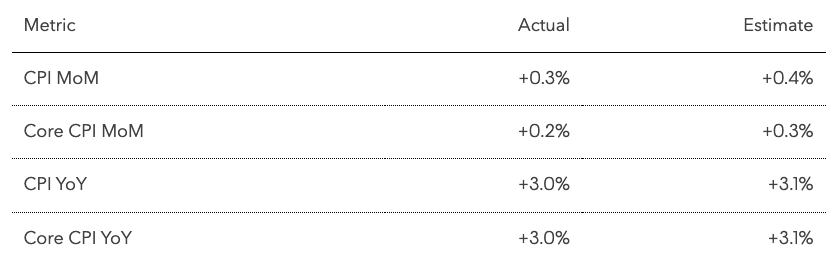
View Membership BenefitsUnderlying US inflation rose in September at the slowest pace in three months, keeping the Federal Reserve on course to lower interest rates next week.
The core consumer price index, excluding the often volatile food and energy categories, increased 0.2% from August, according to Bureau of Labor Statistics data out Friday. That was restrained by the smallest increase in a key measure of housing costs since early 2021.
The September CPI report was initially scheduled to come out on Oct. 15 but was delayed because of the ongoing federal government shutdown. While most BLS operations have ceased since the Oct. 1 closure, the agency recalled staff to prepare this release so the Social Security Administration could tally its annual cost-of-living adjustment.
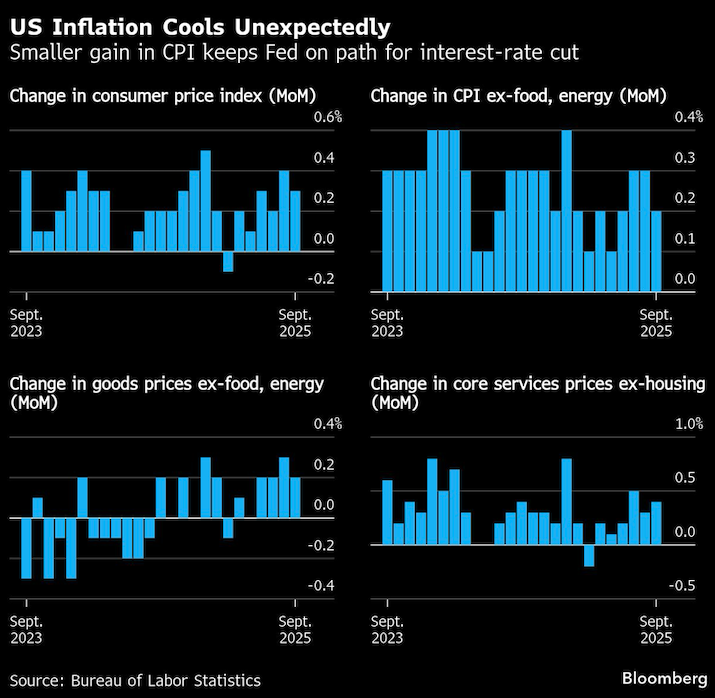
The lower-than-expected reading is a welcome surprise, especially for several Fed officials who are leery of cutting rates further. While the central bank was already widely expected to lower borrowing costs at its meeting next week, the report may help convince policymakers that they can do so again in December — especially in the absence of other official reports should the shutdown continue.
Stock futures climbed while Treasury yields and the dollar fell after the report. Investors boosted bets that the Fed will cut rates again in December.
Goods prices, excluding food and energy commodities, rose at a slower pace, dragged down by cheaper prices for used cars. Categories that are more exposed to tariffs, including household furnishings and recreational goods, advanced. Apparel prices climbed at the fastest rate in a year.
Services prices excluding energy climbed 0.2%, in part reflecting a slower advance in airfares. Shelter prices were tame after rising by the most since the start of the year in the prior month. That included just a 0.1% increase in owners’ equivalent rent — which accounts for roughly a quarter of the overall CPI.
Household expenses were mixed. While grocery inflation slowed, prices for key items like cereals and nonalcoholic beverages picked up. Gasoline costs jumped, while car insurance prices fell.
While the inflationary impact of tariffs has been much less than many economists feared, several forecasters and policymakers are still wary that the duties will continue to put upward pressure on prices — which was evident in some private-sector gauges of inflation in September. President Donald Trump’s latest tariffs, aimed at household goods like kitchen cabinets and upholstered furniture, took effect earlier this month, and retailers like RH have warned of price increases to come.
Companies across the country have largely reported higher input costs due to tariffs in recent weeks, but the hit to consumers has been uneven, the Fed said in its latest Beige Book survey of regional business contacts. Procter & Gamble Co. is now expecting a more muted impact from tariffs and commodity prices, while O’Reilly Automotive Inc. said they adjusted selling prices to account for the increase in tariff-related costs.
BLS staff will only be available to take calls from the public on CPI until 12 p.m. in Washington due to the shutdown, the report said.
In a separate report, the Social Security Administration said on average, Social Security benefits will increase by $56 to $2,071 per month starting in January. That’s a 2.8% adjustment.
A message from Advisor Perspectives and VettaFi: Thinking about starting your own RIA, making a move to a different firm, or specializing in a new area? Read our latest articles on financial advisor transitions.
Bloomberg News provided this article. For more articles like this please visit bloomberg.com.
Membership required
Membership is now required to use this feature. To learn more:
View Membership BenefitsSponsored Content
Upcoming Virtual Events View All