Advisor Perspectives welcomes guest contributions. The views presented here do not necessarily represent those of Advisor Perspectives.
It’s basketball playoff season. The San Antonio Spurs are playing the New York Knicks in the 2026 NBA Basketball Finals that started June 3rd. The Spurs team is looking to return to basketball's mountaintop for the sixth time, and the Knicks team is looking for its first championship in 53 years.
Key Takeaways
- The S&P 500 is up 11.2% YTD, on track for a fourth consecutive double-digit return year.
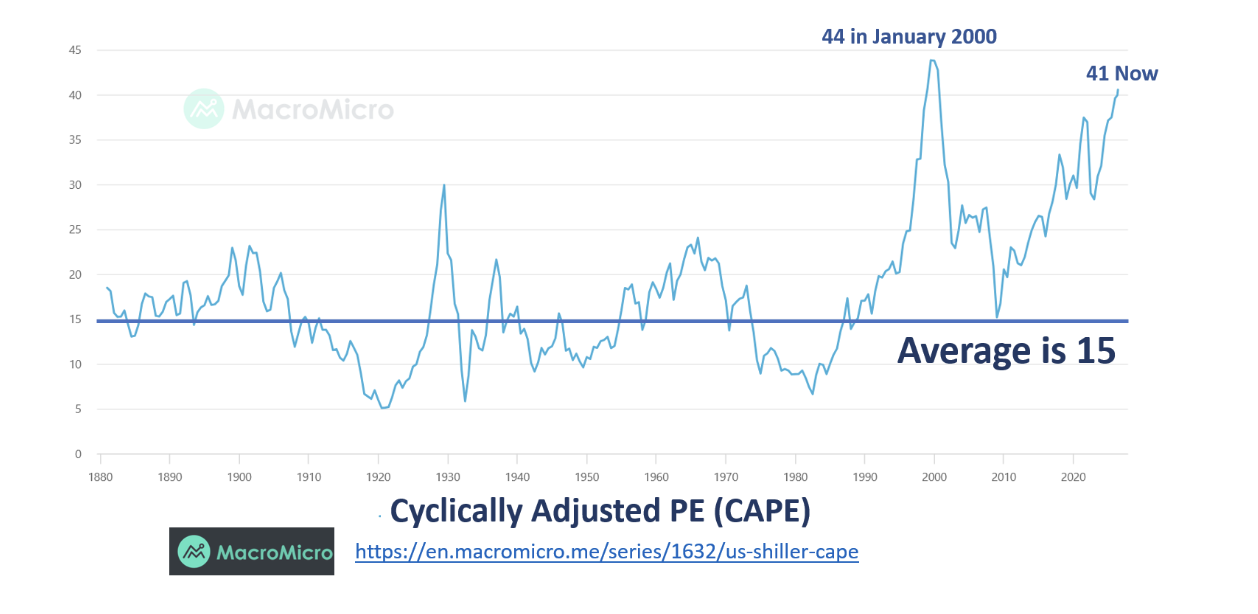
- Sustaining 2026’s rally requires persistently high P/E ratios, which have reached 41 — well above the historical mean of 15.
- High P/Es typically precede market corrections, so continued investor optimism is crucial for further gains.
- Diversification beyond U.S. stocks has improved risk-adjusted returns this year and remains advisable regardless of U.S. market outlook.
Basketball has a history of dynasties over time, when teams have dominated for years:
- 1957-1969: Boston Celtics
- 1980-1991: Los Angeles Lakers
- 1991-1998: Chicago Bulls
- 1999-2014: Those same San Antonio Spurs in this year’s finals
- 2015-2022: Golden State Warriors
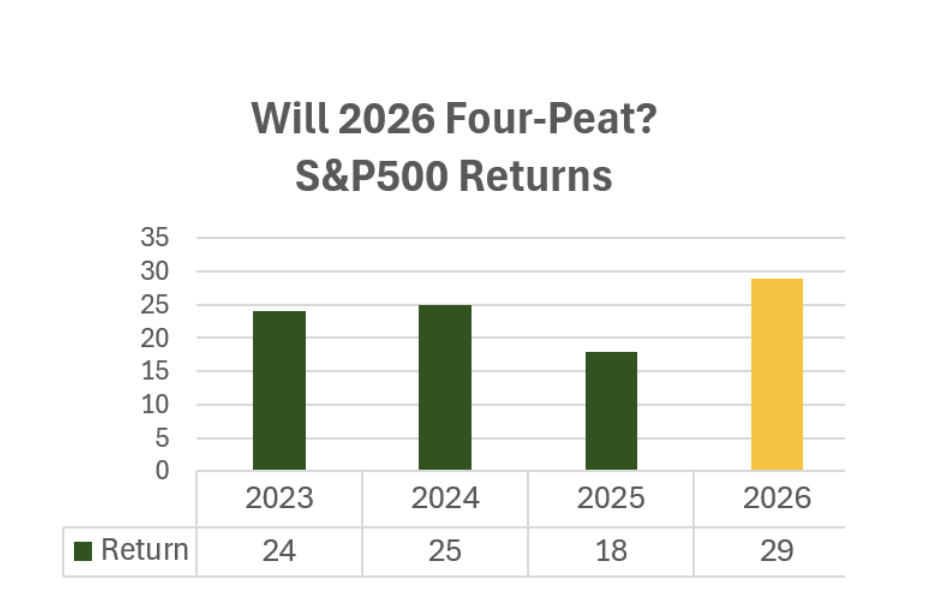
Like these basketball legends, the U.S. stock market has been a stock market dynasty for the past 18 years, consistently outperforming most other stock markets around the world. Recently it has chalked up three double-digit winning years in a row and is currently on track for a four-peat in 2026, with another double-digit return.
Source S&P Dow Jones Indices
The S&P 500 is up 11.2% through May 31, which annualizes to 29%. The U.S. stock market is on track for another winning year. What will make it so? What could ruin this party? It all depends on which way Price/Earnings ratios trend — up or down.
Momentum or Regression to the Mean?
Many currently believe that AI-fueled earnings growth will continue to deliver high returns in 2026. High earnings growth is certainly happening, and it is good for stock prices. However, the critical factor is investor behavior, as revealed in the stock market’s Price/Earnings ratio. Greed drives up P/Es, while fear reduces them.
High earnings growth of 28% so far this year is fantastic and should have lowered P/E by increasing the “E”— but it did not. P/Es have increased to 41, the highest level ever.
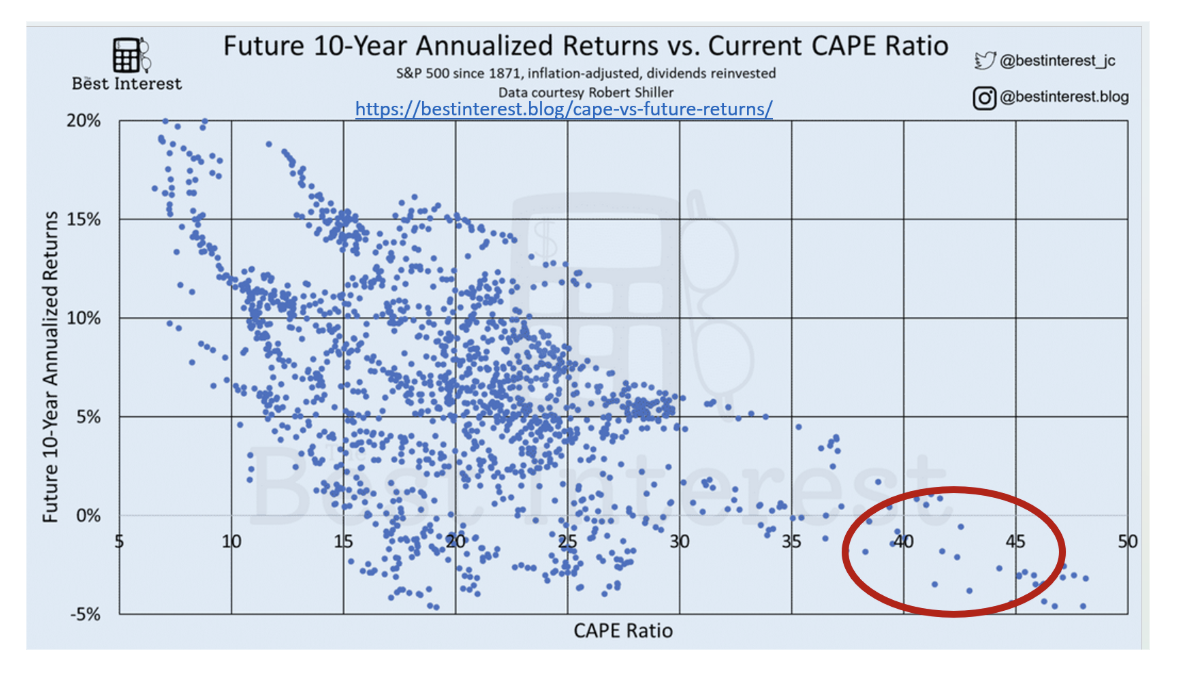
High P/Es typically signal low subsequent returns, because high P/Es typically decline from their frothy levels, regressing toward their historic mean of 15. The average historic price for a dollar of current earnings is $15, not $41. It could be that a dollar of earnings has become more valuable for some reason. Can you think of one?
High P/Es have historically preceded market declines as prices stabilize. In other words, it will require upward momentum in stock prices to sustain the current rally this year.
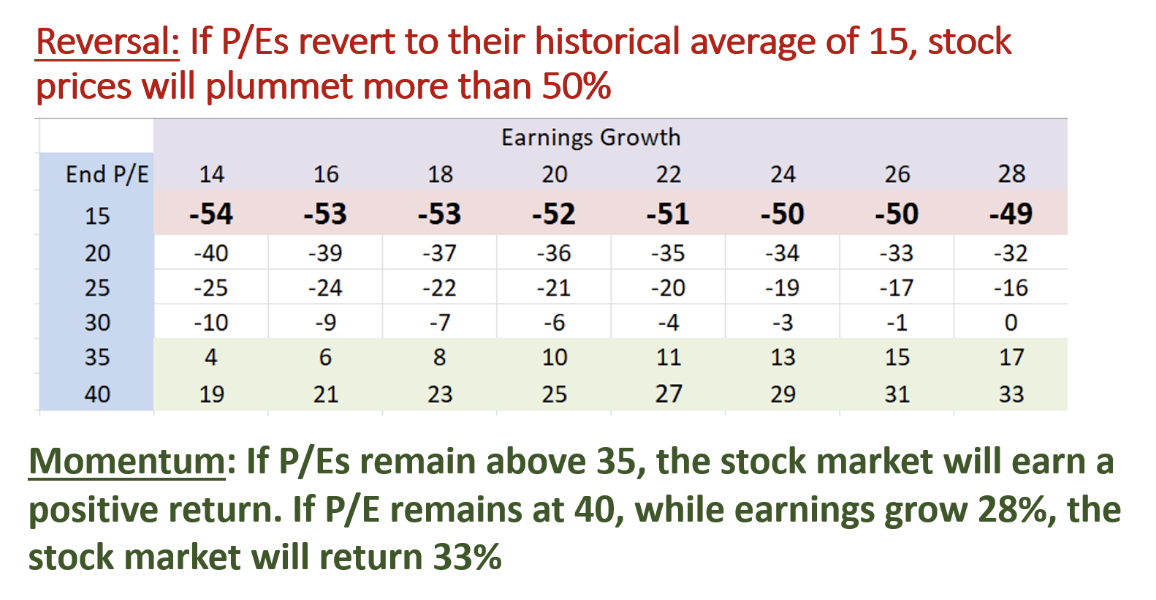
The table below brings the market’s puzzle pieces together. Earnings growth matters, but investor greed and fear matters even more, as reflected in P/E.
Which do you think will play out in the rest of 2026 — momentum or regression toward the mean? Hint: Momentum may have run its course, because P/Es are at their highest ever. Is it really “different this time”?
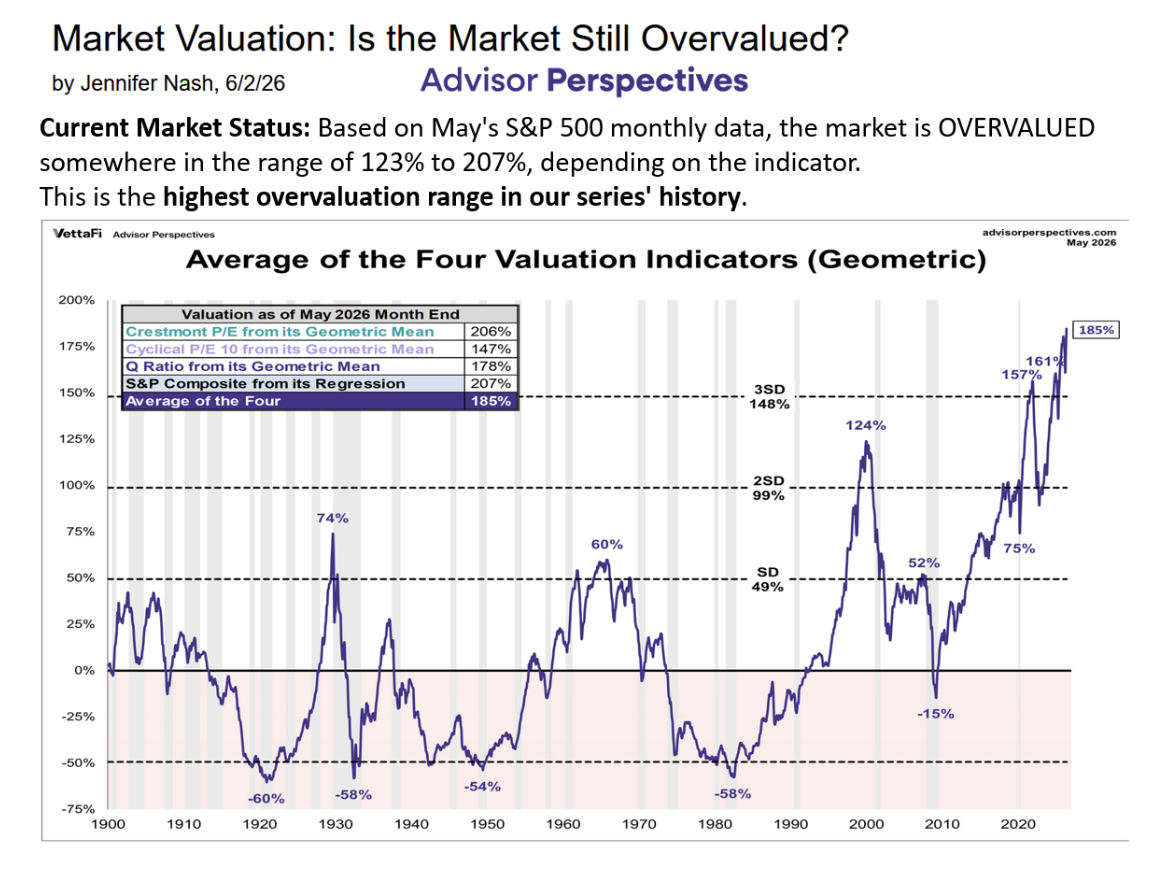
P/Es Are at Their highest
In a recent Advisor Perspectives article, Jennifer Nash reported that P/Es are currently at their highest level ever, based on four different P/E measures, which suggests that they are more likely to decrease than to increase. How high can we go?
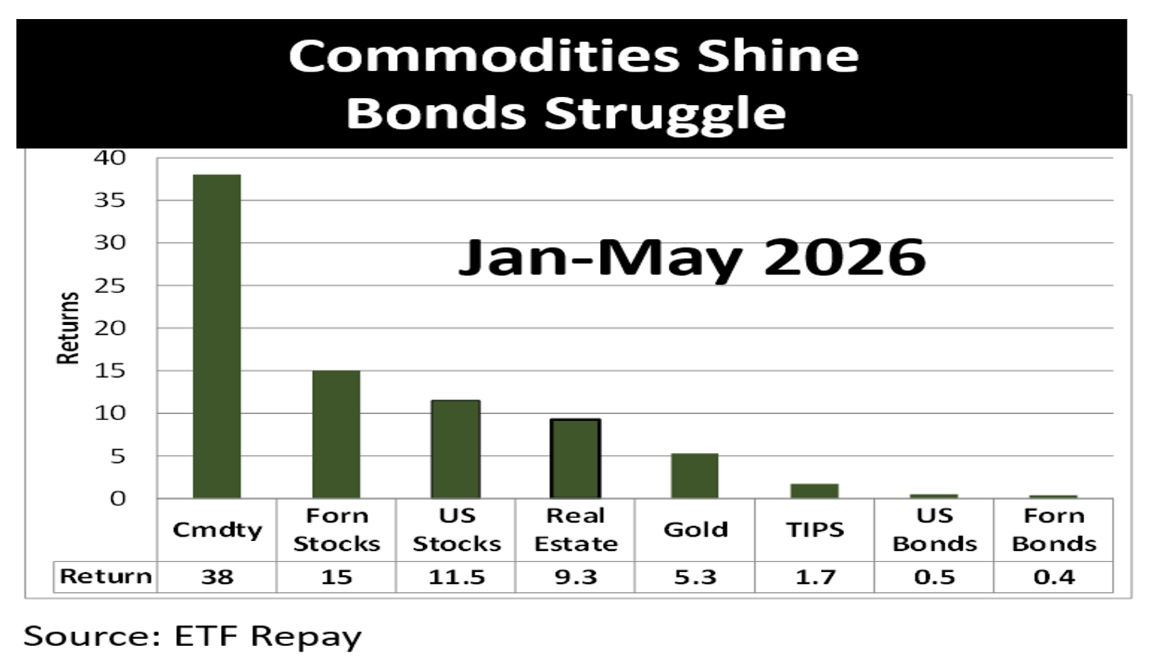
Investors are hedging their investments by moving away from U.S. stocks and bonds into alternatives like commodities and gold.
Diversification Is Working This Year
As shown below, diversification beyond U.S. stocks has worked so far this year.
Even though this article is about the return on U.S. stocks this year, investors can and should diversify their investments, because doing so improves their reward per unit of risk.
Outcomes Remain Uncertain
2026 is heading toward a four-peat of double-digit returns on U.S. stocks, but it will require P/Es to remain high — investors need to remain optimistic. In the past, when P/Es were high, investor fear kicked in and P/Es declined, causing stock market losses. Time will tell, but diversification is a reasonable strategy no matter the outcome.
More articles by Ron Surz:
Ron Surz is president of Target Date Solutions, developer of the patented Safe Landing Glide Path and Soteria personalized target date accounts. He is also co-host of the Baby Boomer Investing Show. Surz’s passion is helping his fellow baby boomers at this critical time in their lives when they are relying on their lifetime savings to support a retirement with dignity, so he wrote a book, “Baby Boomer Investing in the Perilous 2020s,” and he provides a financial educational curriculum.
For anyone who relies on TDFs — or advises those who do — Surz’s new book is a must-read guide to understanding the risks, solutions, and future of a secure retirement.
A message from Advisor Perspectives and VettaFi: Discover something new! Click here to register for our upcoming webcasts.
Read more articles by Ron Surz
 Advisor Perspectives welcomes guest contributions. The views presented here do not necessarily represent those of Advisor Perspectives.
 Source S&P Dow Jones Indices