 Advisor Perspectives welcomes guest contributions. The views presented here do not necessarily represent those of Advisor Perspectives.
Consider an advisor a few years into her career. She’s smart, motivated, and enthusiastic about helping clients make better financial decisions. Her clients bring everything from tax and estate questions to business succession and family dynamics. They don’t compartmentalize their financial lives, and they expect their advisor won’t either.
The newer advisor feels like she has to be an expert across every planning domain, but she lacks a meaningful support system. So, she does what others like her do: She narrows her focus to what she knows best and projects confidence where she can. The clients sitting across from her may never know in the moment what was missed, since incomplete advice often shows up only years later as an avoidable tax issue, a broken estate plan, or a delayed retirement.
This scenario plays out every day at firms that haven’t figured out how to make their best thinking available beyond a handful of senior people. According to Cerulli, more than a third of advisors, controlling 41% of industry assets, are expected to retire within the next ten years1.
The Problem Is Judgment, Not Headcount
Inside any firm, organic growth and finely tuned instincts concentrate around a small group of senior advisors. The deepest client relationships and networks are heavily tied to individuals approaching retirement. They can become bottlenecks.
Newer advisors may be smart and capable but take longer to become productive. The learning and credibility-building curve can take at least five years. Meanwhile, nearly seven in 10 rookie advisors leave the industry within that timeframe, frustrated over a broken apprenticeship model2. For high-potential, newer advisors with other career options, an advisory path can feel uncertain.
A firm’s future depends on a thin layer of talent that may not be ready in five years.
Wealth management firms are aware of the looming retirement wave and have put real effort into mitigating it through recruiting, training, succession planning, and technology to modernize the advisor workflow. But what’s truly at risk of being lost is the judgment that senior advisors have accumulated over decades, along with pattern recognition and instincts that allow them to see what matters in a client situation before anyone else does. That judgment lives in conversations, coaching, and personal experience, none of which are easily scaled across an organization.
The Structural Problem Prior Technology Can’t Solve
A firm’s best thinking has several layers. Domain expertise includes tax and estate planning and investment strategy. Pattern recognition entails seeing the recurring issues in complex situations — business owners, executives with concentrated stock, and families planning for a child with special needs — and knowing which questions might reveal a client’s potential tradeoffs and risks that are easy to miss. Firm philosophy encompasses a firm’s preferred strategies, how it frames recommendations, and standards for thinking through decisions. Moving these layers into an organizational asset requires structure, and the knowledge has to be documented, governed, updated, and made usable in context.
That last part is critical. While traditional software was built for structured tasks such as storing data or enforcing workflows, advice requires understanding and incorporating nuance across planning domains, family dynamics, behavioral finance, and client communication. The next leap is judgment support.
A planning portal or training library contains useful information, but neither can hold the entirety of a client’s situation — their goals, tax picture, estate dynamics, family relationships, liquidity needs, and open decisions — and reason across all of it simultaneously against every relevant planning domain.
That’s a structural limitation of how knowledge has been stored and retrieved. AI changes the underlying architecture. It can work across the full complexity of a client situation in context, surface the connections a human might not reach in the moment, and deliver guidance aligned with how the firm wants advice structured and communicated.
When the Technical Floor Rises, Human Work Gets Better
When newer advisors can access better thinking much earlier, they ramp faster and can handle more complexity. The technical foundation lets them focus on the human work — asking better questions, listening for what the client is really worried about, building trust that no technology replaces. For the client, the advice becomes more complete and more consistent. The right questions get answered regardless of how long the advisor has been in practice, and how one decision affects another becomes visible before it becomes a problem. The firm benefits from there as well, though faster development, less dependence on senior advisors as backstops, and a scalable path to growth.
AI raises the technical floor across the organization, while preserving the role that no technology will replace. More advisors can recognize planning opportunities, evaluate tradeoffs, and bring high-quality recommendations into client conversations. As that happens, the uniquely human capabilities become more valuable, not less.
It’s a solvable problem that starts with recognizing that when a senior advisor retires, what leaves is both experience and judgment. And judgment can be scaled.
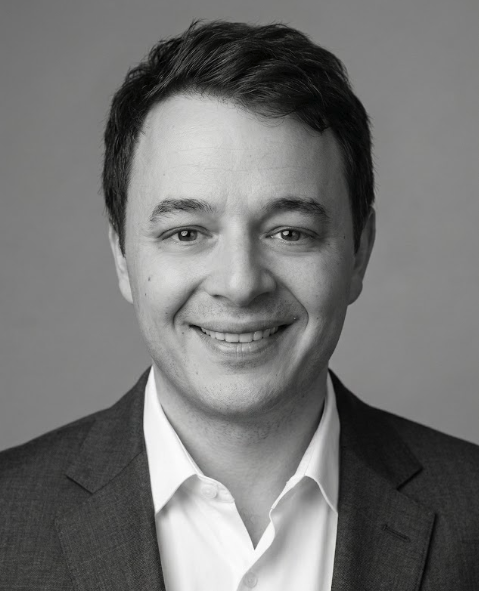
Dan Daum ([email protected]) is co-founder and CEO of WealthStream, an advice intelligence platform that enables wealth management firms to scale their best advisory judgment. Prior to founding WealthStream, he was SVP and global head of sales at Charles River Development. His expertise spans fintech, enterprise growth, and wealth management.
1Cerulli Associates, July 2025. https://www.cerulli.com/press-releases/new-wealth-management-research-finds-transition-support-services-critical-to-retaining-assets-during-advisor-moves
2Financial Advisor, January 2025. https://www.fa-mag.com/news/nearly-71--of-new-advisors-drop-out-within-5-years--cerulli-says-80860.html
A message from Advisor Perspectives and VettaFi: Discover something new! Click here to register for our upcoming webcasts.
More ETF Topics >
 Advisor Perspectives welcomes guest contributions. The views presented here do not necessarily represent those of Advisor Perspectives.